Japandi Decor: 15 Ideas for Calm, Minimalist Warmth
If your home has been whispering for calm, Japandi might be exactly what you’re looking for. This beautiful blend of Japanese minimalism and Scandinavian warmth creates spaces that feel serene but never cold — clean lines softened by natural textures. These Japandi decor ideas will help you bring that quiet, grounded feeling into your own home.
1. Start with a Warm Neutral Palette
Japandi rooms are built on soft, warm neutrals: warm whites, oatmeal, greige, and gentle stone. Unlike stark minimalism, the warmth keeps simplicity feeling cozy and human rather than clinical. 🎋
2. Choose Low-Profile Furniture
Low sofas, platform beds, and floor-level seating are Japandi signatures. Keeping furniture close to the ground creates calm and groundedness, and makes rooms feel more spacious because sightlines stay open.
3. Embrace Natural Materials
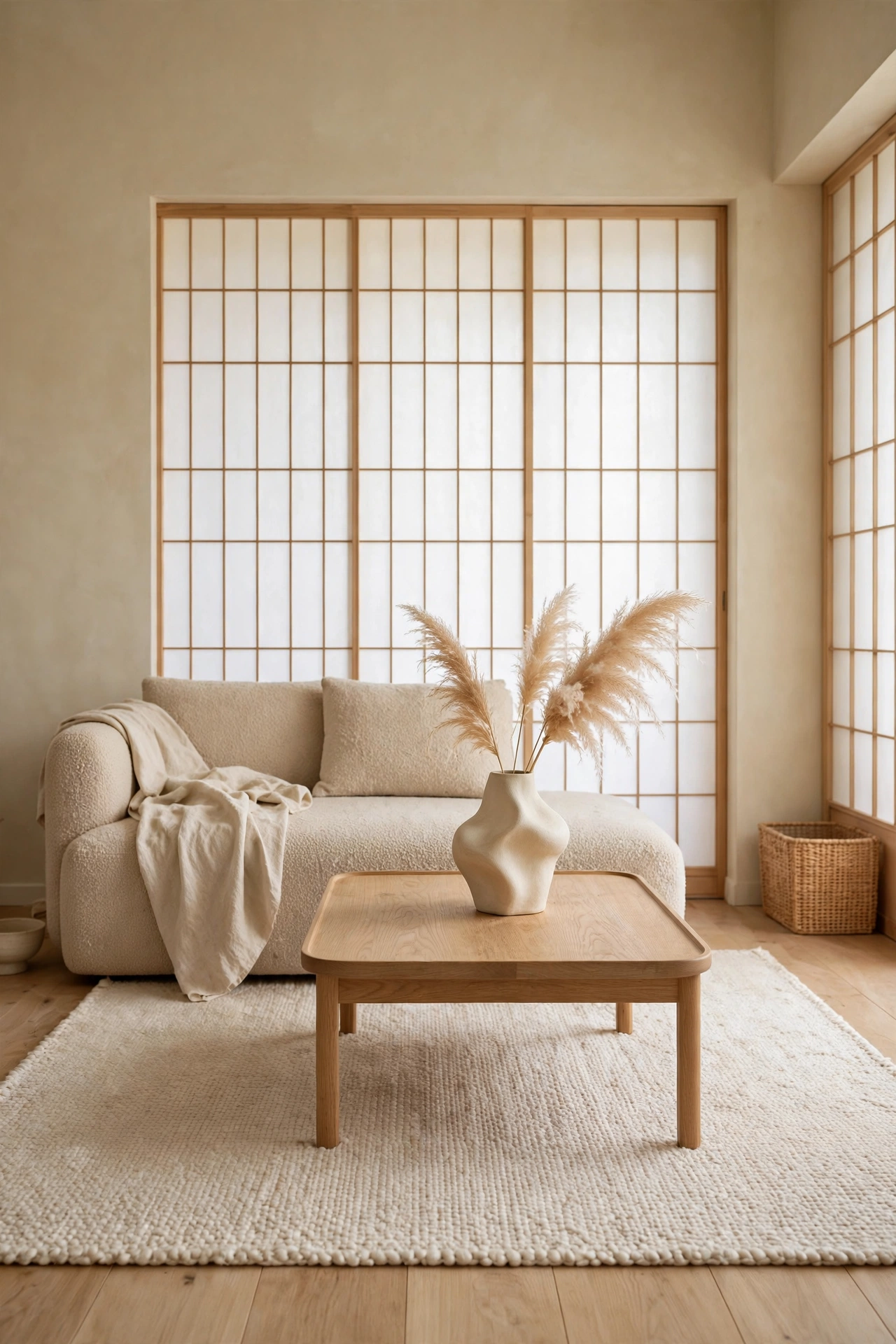
Wood, bamboo, rattan, linen, wool, and stone — Japandi celebrates materials you can feel. A light oak coffee table, a linen sofa, a woven rug: each brings organic texture that keeps minimal rooms from feeling flat.
4. Declutter with Intention
The philosophy isn’t about owning nothing — it’s about everything having a place and purpose. Go room by room and keep only what you use, love, or find beautiful. Fewer, better things. These kitchen organization ideas apply the same “a place for everything” mindset.
5. Add One Statement of Craftsmanship
Japandi honors the handmade. A hand-thrown ceramic vase or a carved wooden bowl becomes the soul of the room. One beautiful crafted object says more than a shelf of generic decor.
6. Use Soft, Diffused Lighting
Harsh overhead light has no place here. Paper lanterns, linen-shaded lamps, and candles create the soft glow that makes Japandi rooms feel like evening, all day. A rice-paper floor lamp is practically the mascot of this style. 🏮
7. Bring in Greenery — Sparingly
Unlike boho’s jungle approach, Japandi uses plants as quiet accents: a single olive tree, one sculptural branch in a vase, a small bonsai. Each plant is chosen and placed with intention, like art.
8. Layer Subtle Textures
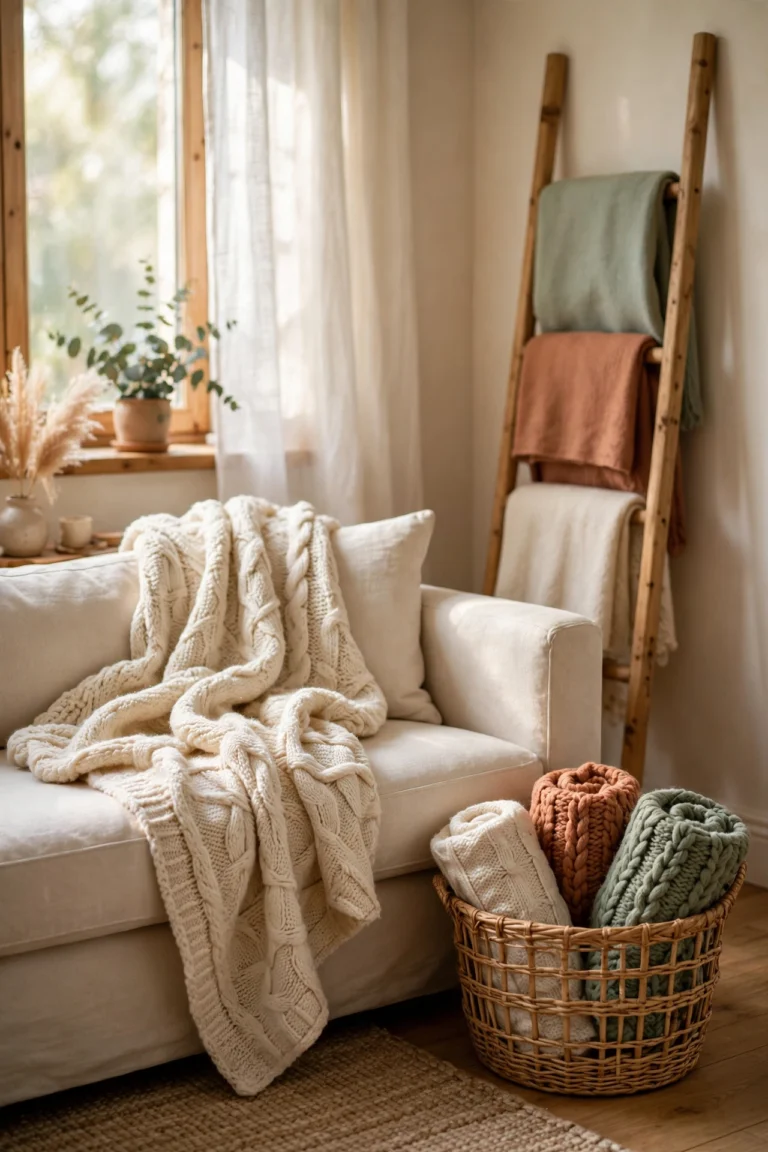
With a restrained palette, texture does the talking. Layer a nubby wool throw over a linen sofa, place a jute rug under a low table, mix matte ceramics with smooth stone. Neutral, never boring.
9. Try a Shoji-Inspired Screen
A divider with translucent panels brings unmistakable Japanese calm while softly filtering light. Use one to zone an open space, hide a workspace, or add architectural interest to a plain wall.
10. Display Less, But Better
Instead of a crowded shelf, style one vignette: three objects of different heights, a book, a plant. Negative space is a design element here — the emptiness around objects lets you actually appreciate them.
11. Choose Curved, Organic Shapes
Soften clean lines with curves: a round mirror, an arched lamp, a bowl-shaped chair. Organic shapes echo nature and keep minimalism from feeling rigid. 🪨
12. Invest in Quality Bedding
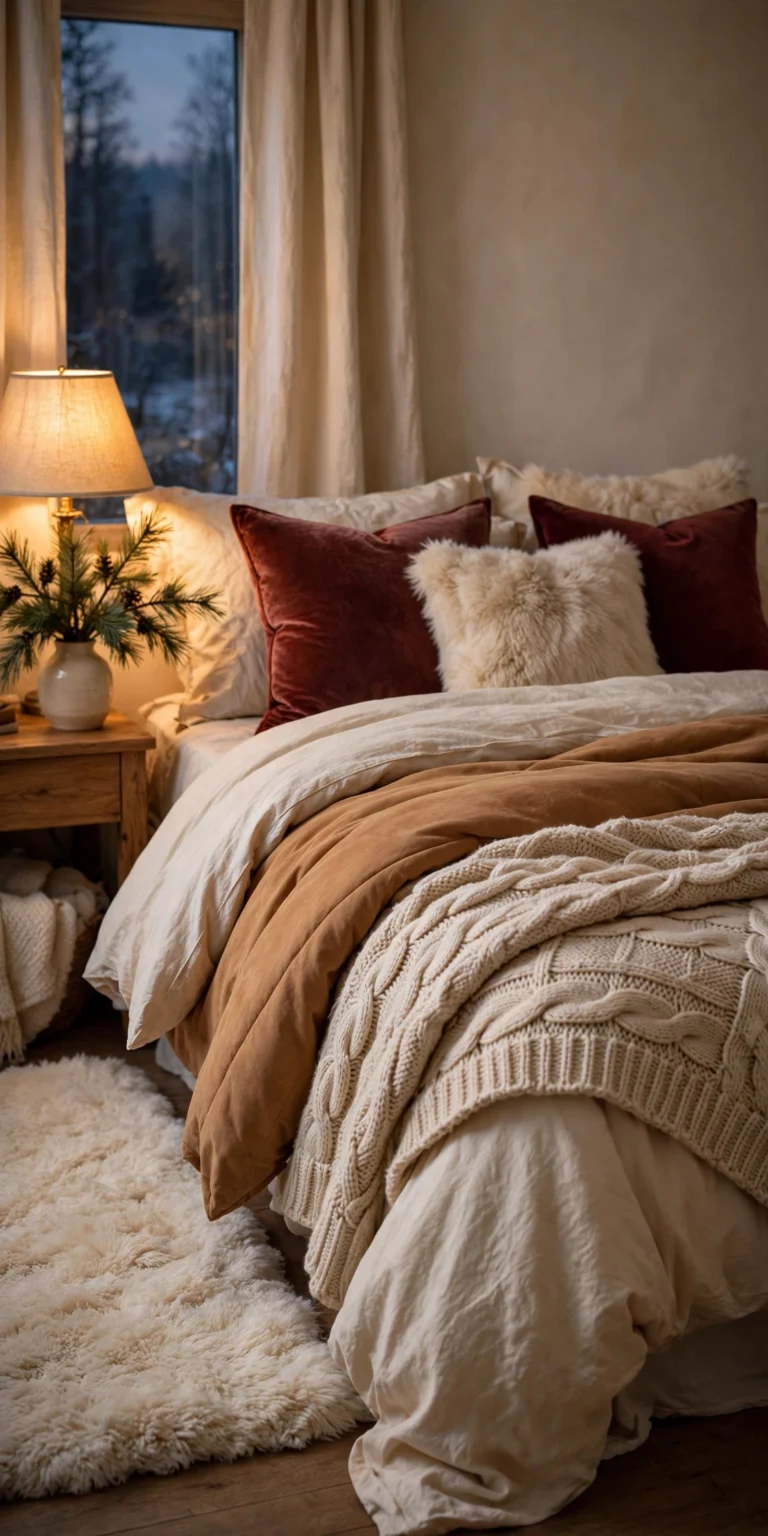
Japandi bedrooms are sanctuaries. Crisp linen bedding in warm white or soft stone, a low platform bed, minimal pillows — the kind of calm that helps you sleep. These cozy bedroom ideas pair beautifully with Japandi principles.
13. Use Open, Airy Storage
Closed storage keeps the calm; a few open shelves display your most beautiful pieces. The rule: open shelves show the edited highlights, closed cabinets hide everyday reality. Both are essential.
14. Add Warmth with Wood Tones
Light woods like oak, ash, and bamboo are staples, but a touch of darker walnut adds depth. Mix two or three complementary tones for richness without chaos.
15. Create a Tea or Quiet Corner
Designate one small spot for slowness: a floor cushion, a low table, a teapot. A physical place dedicated to pausing makes the ritual real — honoring rest as part of a well-designed life. 🍵
Pro Tips for Getting Japandi Right
The most common mistake is going too cold — remember the Scandinavian half brings the coziness. If the room feels stark, add warmth: a textured throw, warmer wood, softer lighting. The second mistake is confusing minimalism with emptiness; every object should earn its place, but surfaces don’t need to be bare. Shop your own home first — you likely own the right pieces and just need to edit. And be patient: Japandi rooms are built slowly, one considered piece at a time.
FAQs About Japandi Decor Ideas
What’s the difference between Japandi and minimalism?
Minimalism often prioritizes starkness; Japandi prioritizes warmth, craftsmanship, and natural materials. A minimalist room can feel gallery-like, while a Japandi room feels like a warm hug — calm and uncluttered, but deeply comfortable.
Can Japandi work with kids or pets?
Yes, with smart choices: washable linen slipcovers, durable low furniture with rounded edges, closed storage for chaos. The emphasis on natural materials and simple forms is actually very family-friendly — just skip precious white bouclé for now.
What colors should I avoid?
Neon brights, high-contrast black-and-white, and cool blue-grays fight the warm, natural feeling. Darker tones like charcoal or deep brown can ground a room beautifully — just keep them warm and use sparingly.
Is Japandi expensive?
Not necessarily. Fewer, better pieces can cost less than filling rooms with lots of decor. Thrift light-wood furniture, choose affordable linen-look textiles, and declutter first — editing what you own costs nothing and is the biggest step toward the look.