

18 Shoulder Length Hairstyles With Bangs for Thin Fine Hair
I have fine hair. I have had fine hair my entire life, and I spent years fighting it — piling on products, backcombing at the roots every morning, and still walking out the door looking like my hair had given up. The turning point was the first time a stylist suggested pairing a shoulder-length cut with bangs. That one change restructured everything about how my hair sat and moved.

Shoulder-length hairstyles with bangs for thin, fine hair solve a very specific problem: they redistribute weight so the hair that exists fills the frame more efficiently. Instead of hanging like a curtain from roots to ends, the length stops at a point where it still has some density, and the bangs give the eye somewhere else to look — usually right at your cheekbones or brows, which draws attention away from any sparseness.
This list covers 18 genuinely different interpretations of that idea. Some are soft and wispy, some are blunt, some are barely-there fringe and some are full curtain situations. The goal is to show you the range and help you figure out which one belongs on your next salon appointment card.
1. Soft Wispy Fringe With a Blunt Collarbone Cut

This is the style I come back to personally when I want something low-maintenance but polished. The length sits right at the collarbone, cut with a very slight point so it does not look too heavy at the ends. The bangs are wispy — not thinned to nothing, but feathered so they move with any head tilt. This works on oval, square, and heart-shaped faces without any adjustment. Use a round brush at the fringe with a low heat setting and let the rest air-dry for best results.
2. Curtain Bangs With a One-Length Shoulder Cut
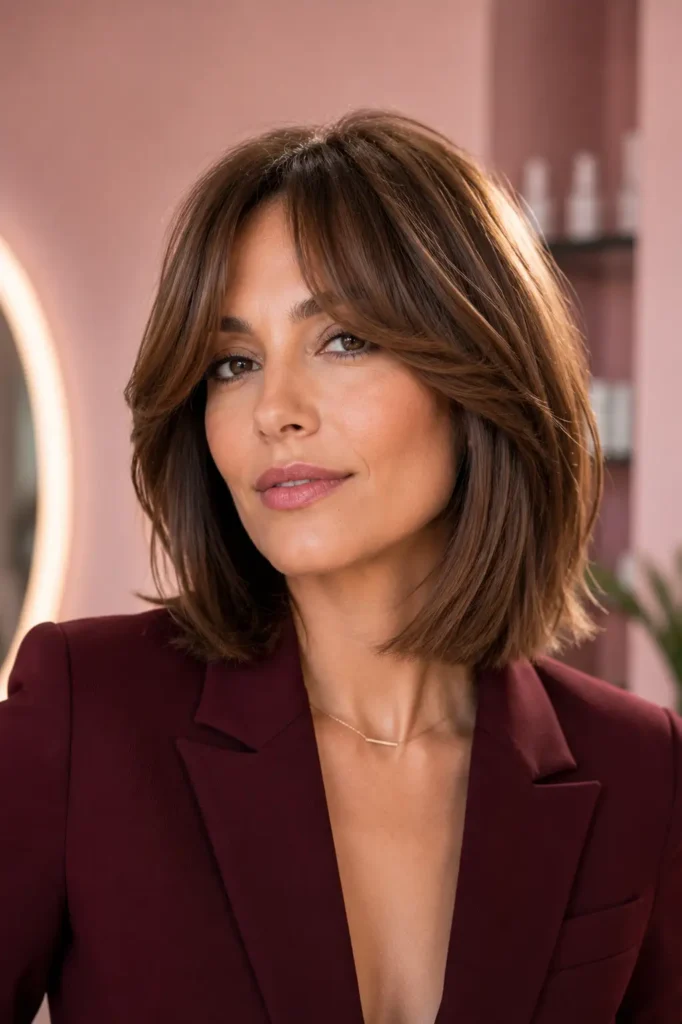
Curtain bangs have been everywhere and for good reason — they part in the centre and sweep out toward the temples, which gives the appearance of more hair framing the face. On a one-length shoulder cut, they add dimension at the front without adding any weight to the midlengths. Fine hair holds this shape well if you use a small round brush to direct each half of the curtain outward while blow-drying. A pea-sized amount of Kenra Platinum Silkening Mist keeps flyaways down.
3. Textured Lob With Piece-y Bottleneck Bangs
A textured lob is a long bob that sits just at the shoulder with some internal movement cut in. The bangs here are what I call bottleneck bangs — not quite full, not quite curtain, parted slightly off-center with the ends pointed and separated into two or three pieces. This gives a deliberately undone effect that actually looks very intentional. Fine hair responds well to this because the texture hides any sparseness naturally.
4. Side-Swept Bangs With a Graduated Bob
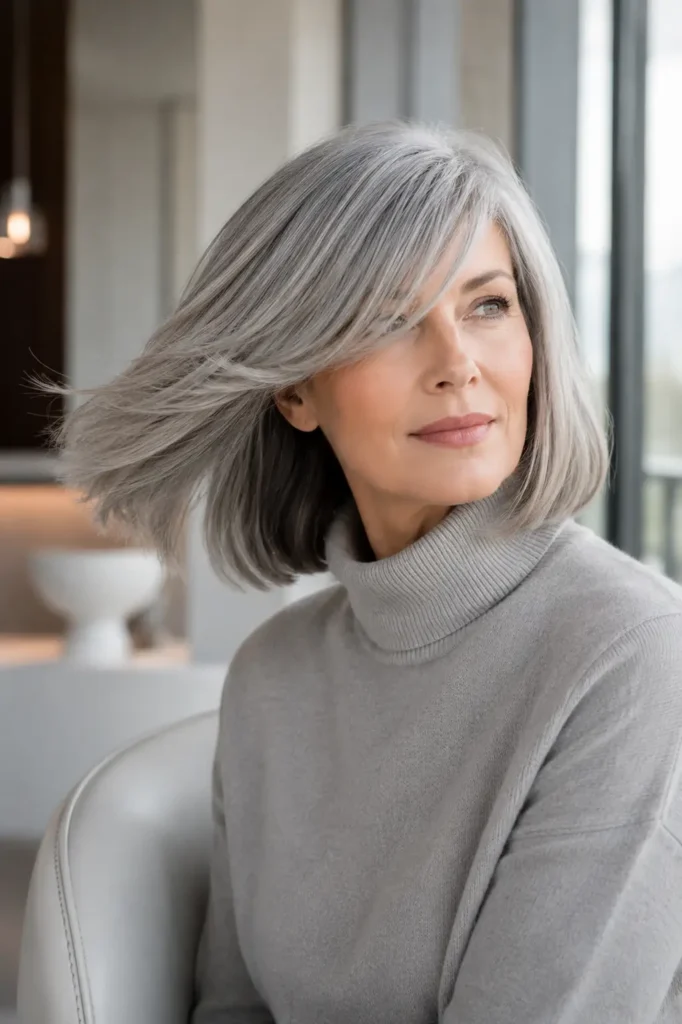
A graduated bob has more length at the front than the back, which gives fine hair a natural forward swing and a sense of volume at the sides. Add a side sweep fringe — one that starts close to the centre part and crosses to one side — and the whole look becomes very face-framing. The angular line of the grad bob and the diagonal line of the sweep fringe work together to give the illusion of thickness. Redken One United All-In-One multi-benefit treatment is excellent as a prep product for this cut.
5. Blunt Fringe With a Shaggy Shoulder Cut
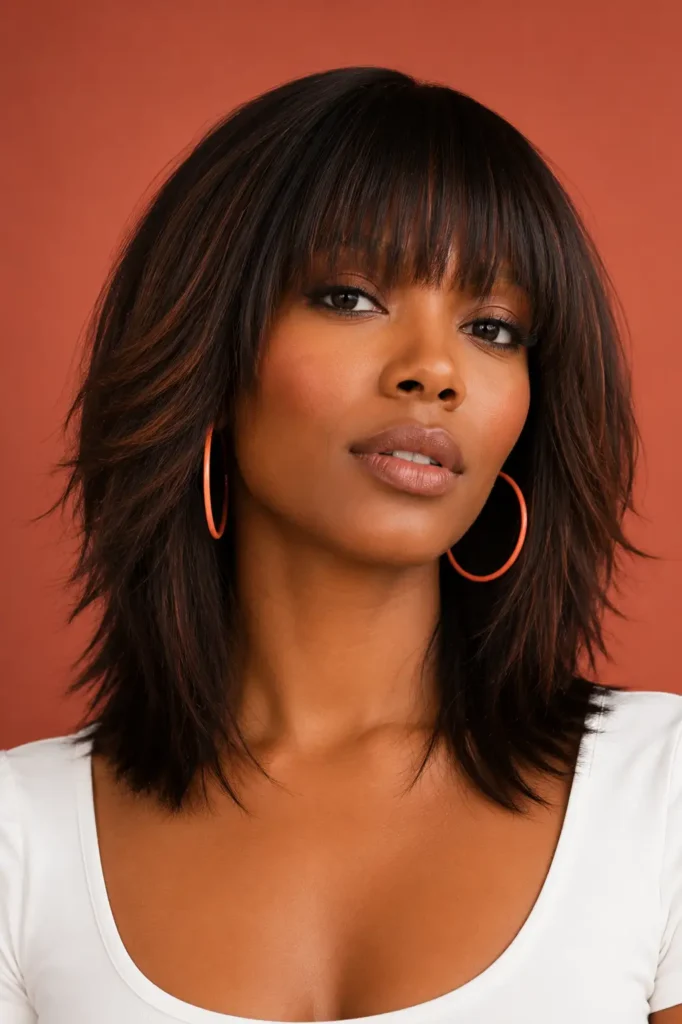
A shag has choppy layers throughout and often some version of a fringe. A blunt bang paired with a shoulder-length shag sounds counterintuitive for fine hair but actually works well — the blunt line creates the only solid edge in the whole cut, and everything else moves freely. The layers in the body of the shag separate easily, making the hair appear much thicker in motion. Dry shampoo at the roots before styling sets the base volume.
6. Barely-There See-Through Bangs With a Collarbone Lob
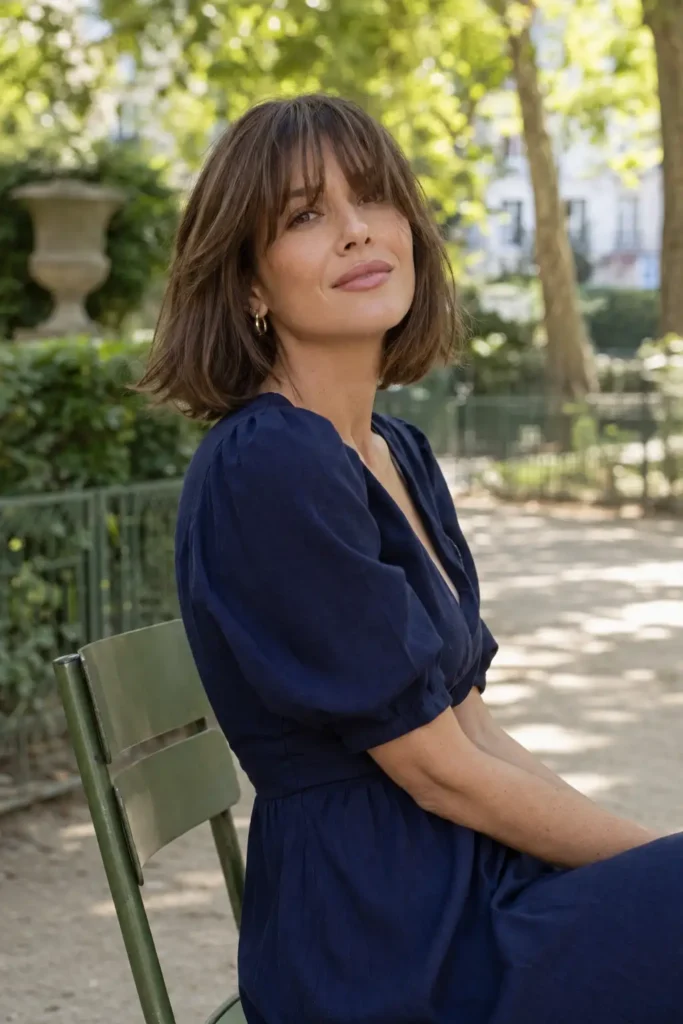
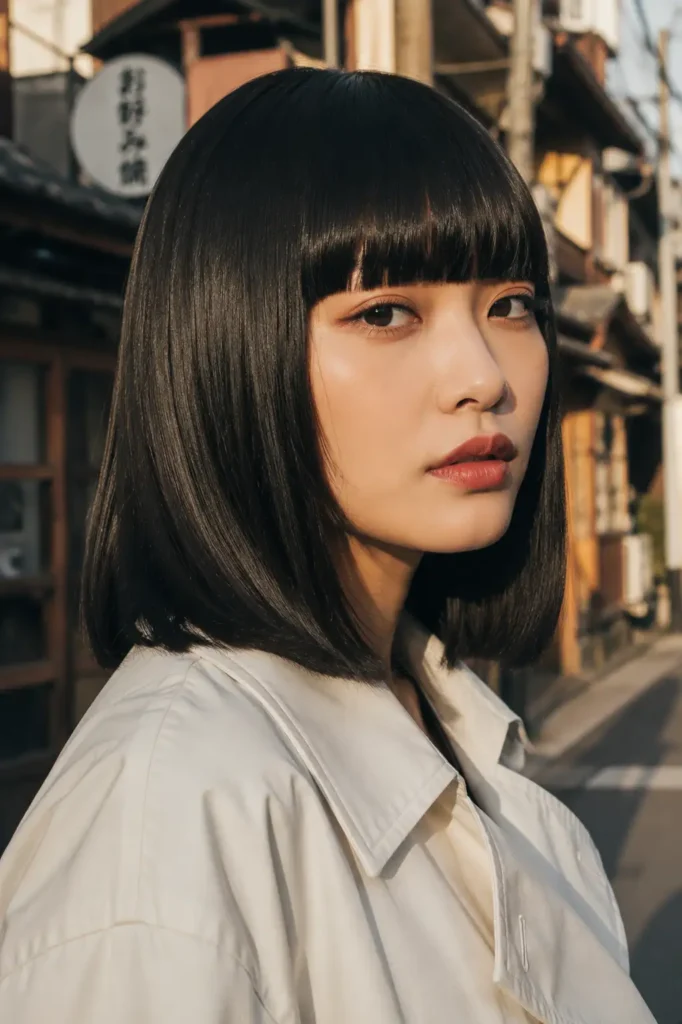
See-through bangs are cut so lightly at the ends that the forehead is partially visible underneath. On fine hair this is actually ideal because you are not committing to a full fringe that might look sparse. The collarbone lob underneath keeps the look modern without going so short that you lose length flexibility. This combination photographs beautifully in natural light and requires almost no styling — just a light mist of heat protectant before a quick blow-dry.
7. Butterfly Bangs With a Shoulder-Length Layered Cut
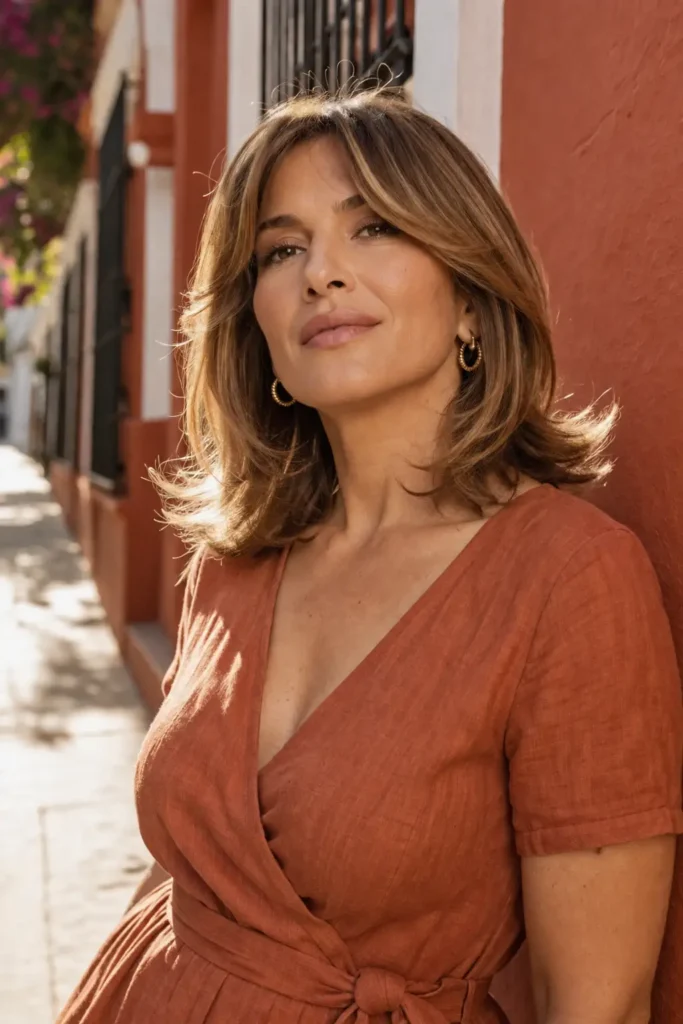
Butterfly bangs are longer in the centre and shorter at the sides, creating a wing-like shape when they hit the forehead. They are softer than a traditional blunt bang and much more forgiving for fine hair because the thinness at the edges is actually part of the design. Pair this with a shoulder-length cut that has light internal layers, and the combination creates a continuous line from fringe to length that makes fine hair look deliberately styled rather than sparse
8. Full Fringe With a Straight One-Length Cut
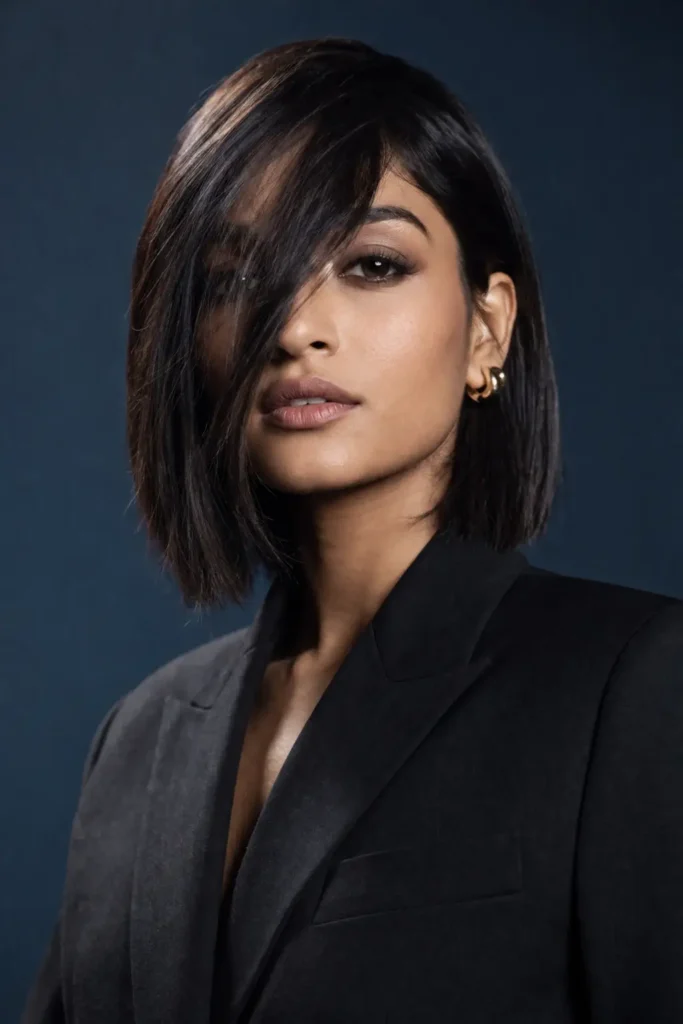
This is for the woman who wants maximum commitment and maximum impact. A full, straight-across fringe with a one-length shoulder cut is graphic and striking. The key for fine hair is to have the stylist cut the fringe with a razor or point-cut the ends so the bang does not lie flat and stiff. The more movement in the fringe, the better it looks on finer hair. Use a fine-tooth tail comb to smooth the bang after blow-drying rather than a paddle brush.
9. Micro Bangs With a Tousled Shoulder Length Style

Micro bangs sit above the brow, which means they use very little hair. That is excellent news for anyone with fine hair — you are not depleting a large section of the front. The rest of the hair at shoulder length can be tousled with some Moroccanoil Treatment Light for texture and shine. This contrast — precise short fringe, relaxed longer length — is a very editorial look that translates well to everyday wear once you get comfortable with the forehead exposure.
10. Wispy Bangs With a Collarbone-Length French Bob

The French bob traditionally sits around the jaw, but a longer version that reaches the collarbone bridges the gap between classic bob and lob territory. Wispy bangs add a romantic, undone quality. On fine hair, the lighter the bangs, the more effortless this looks. Skip heavy products on the fringe entirely and let it move freely. The French bob line at the collarbone gives structure; the wispy bang gives softness. It is a genuinely flattering combination for most face shapes.
11. Textured Curtain Bangs With a Face-Framing Layered Cut
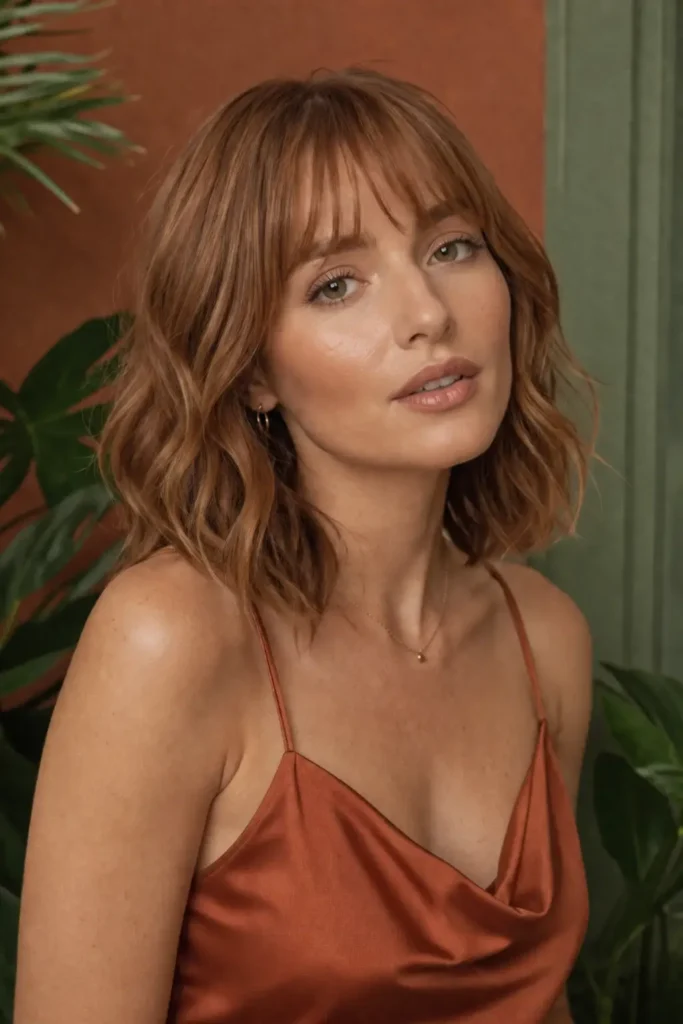
Textured curtain bangs have more visible separation and choppiness than smooth curtain bangs. On fine hair, this texture is easier to achieve and maintain because the hair tends to separate anyway. Pair them with a shoulder-length cut that has face-framing layers — pieces that start around the chin and angle forward. This doubles down on the framing effect and makes the area around the cheekbones and jaw look fuller. Amika Brooklyn Bombshell Blowout spray is great for volume at the roots before drying.
12. Off-Center Part With Asymmetric Bangs and a Sleek
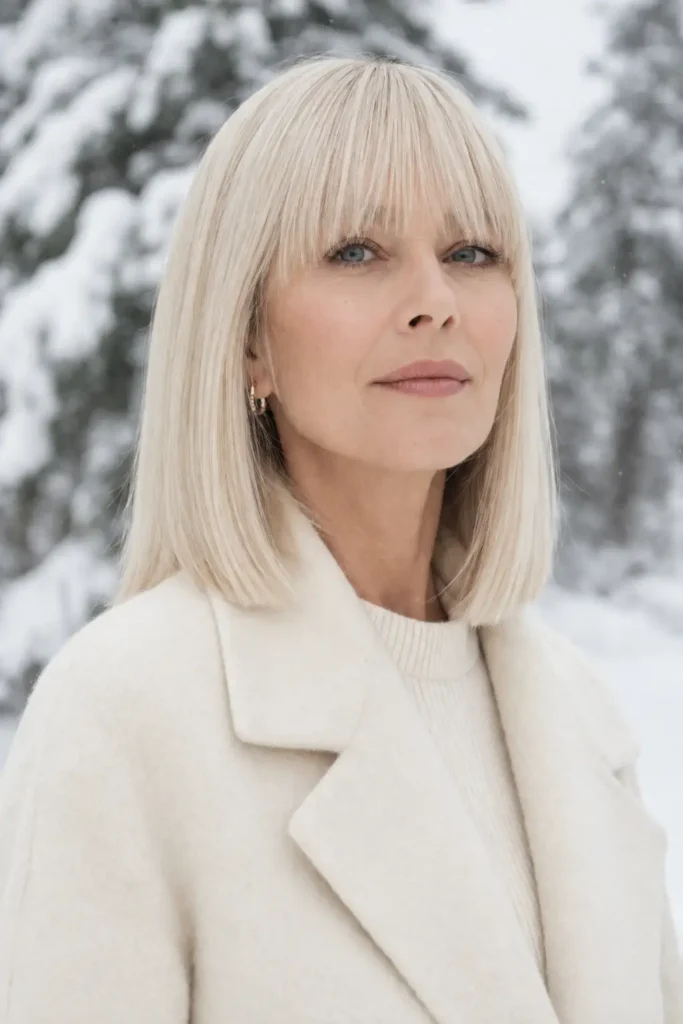
An asymmetric bang is heavier on one side and tapering to almost nothing on the other. Combined with an off-centre part and a smooth shoulder-length cut, this gives fine hair a very modern editorial feel. The weight imbalance is deliberate — it draws the eye to one side, which creates depth. On very fine hair, you might need a small amount of volumizing mousse worked through damp strands before blow-drying to ensure the heavier side of the bang holds its shape.
13. Baby Bangs With a Wavy Shoulder-Length Lob
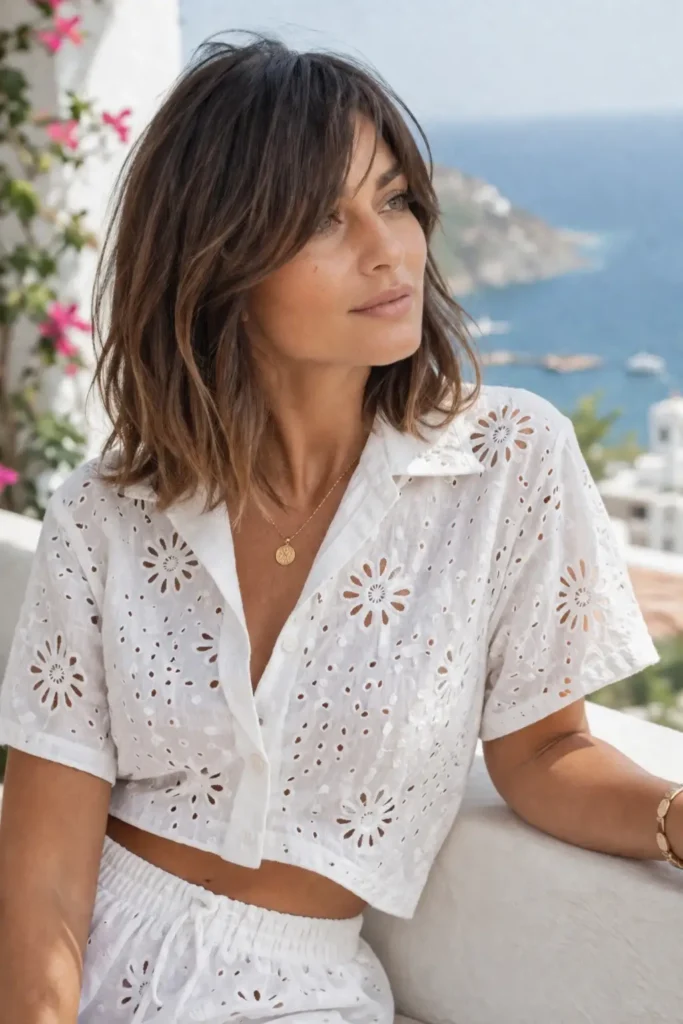
Baby bangs sit between the hairline and the mid-forehead, longer than micro but shorter than a typical bang. They work for fine hair because the section needed is small. The rest of the hair in a wavy lob — loose waves created with a one-and-a-quarter-inch curling wand — gives the fine hair body and the impression of much more density. The waves also contrast nicely with the flat, deliberate fringe. Use Kenra Platinum Silkening Mist over the waves to keep them from frizzing.
14. Blended Side Fringe With a Layered Mid-Length Cut

A blended side fringe has no obvious start or end line — it transitions gradually from the bang section into the side layers. This is probably the most natural-looking fringe option for fine hair because there is no hard edge to maintain and the fringe grows out gracefully. A layered mid-length cut at the shoulder gives the sides enough movement to blend seamlessly with the fringe. This is a great low-maintenance choice for anyone who does not want to constantly trim their fringe.
15. Long Bangs With a Collarbone Cut and Subtle Balayage
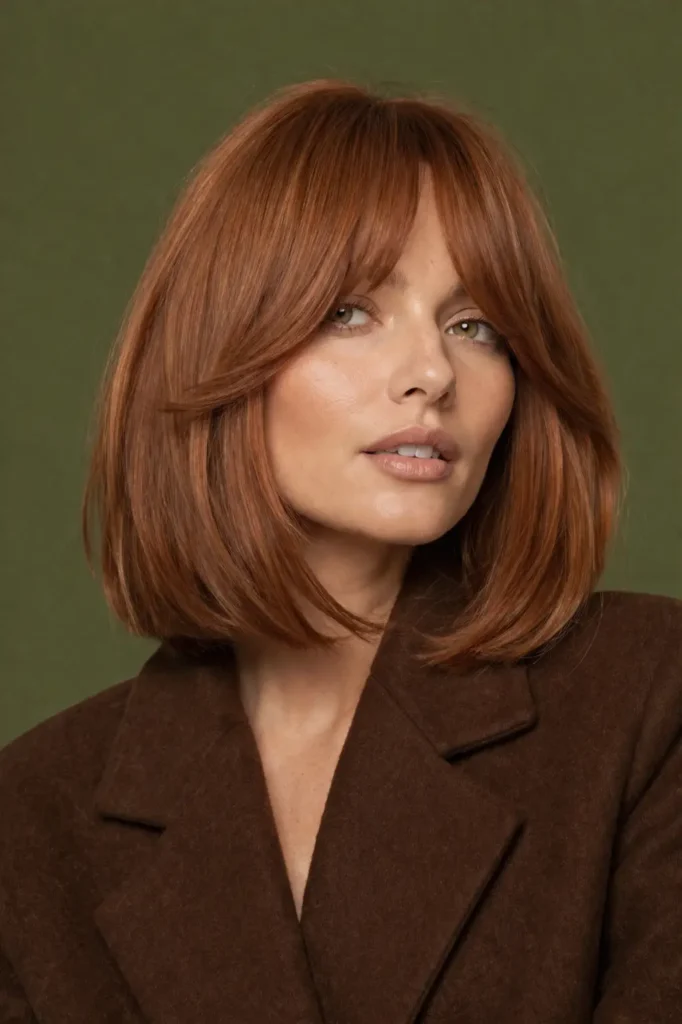
Long bangs graze the brows or sit just past them. They can be styled straight across or swept to one side depending on mood. Adding a subtle balayage — even just a half shade lighter at the ends of the fringe — makes fine hair look more dimensional. On shoulder-length collarbone hair, the same balayage through the midlengths and ends adds depth that photographs as fullness. A colour-protecting shampoo like Pureology Hydrate Sheer protects both the tonal work and the integrity of fine strands.
16. Feathered Fringe With a Flippy-End Shoulder Cut
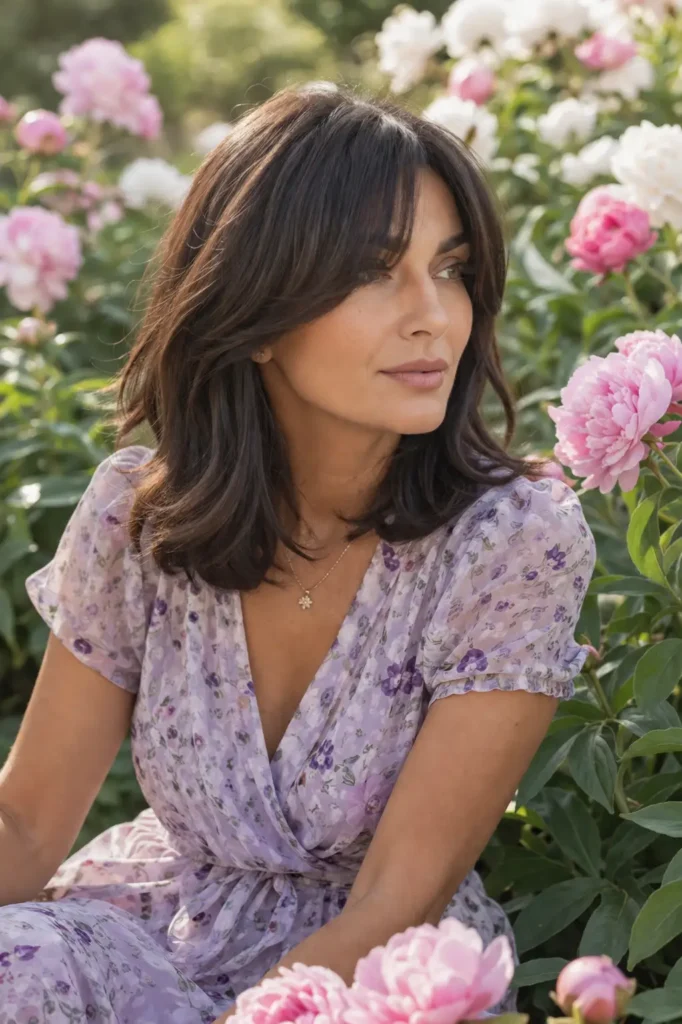
Feathered bangs are an older technique, but they are coming back in a very fresh way. The bang is blow-dried outward and upward on each side, creating a slight lift at the roots and a feathery, open texture. On a shoulder-length cut where the ends are flipped slightly outward with a round brush, this creates a look that has upward energy throughout — which visually counteracts the flatness fine hair tends toward. The whole look has a 70s-adjacent quality that reads as intentional and modern.
17. Fringe With a Rounded Shoulder Bob and Money Pieces

Money pieces are the two front sections of hair highlighted several shades lighter than the base. On a rounded shoulder bob with a fringe, money pieces add contrast and dimension right at the face, making thin fine hair look far more textured than it is. The rounded bob line — slightly curved at the bottom rather than straight across — gives fine hair a fuller silhouette when viewed from behind. This combination is one of the most requested styles at salons right now for a reason.
18. Invisible Fringe Blended Into Curtain Bangs
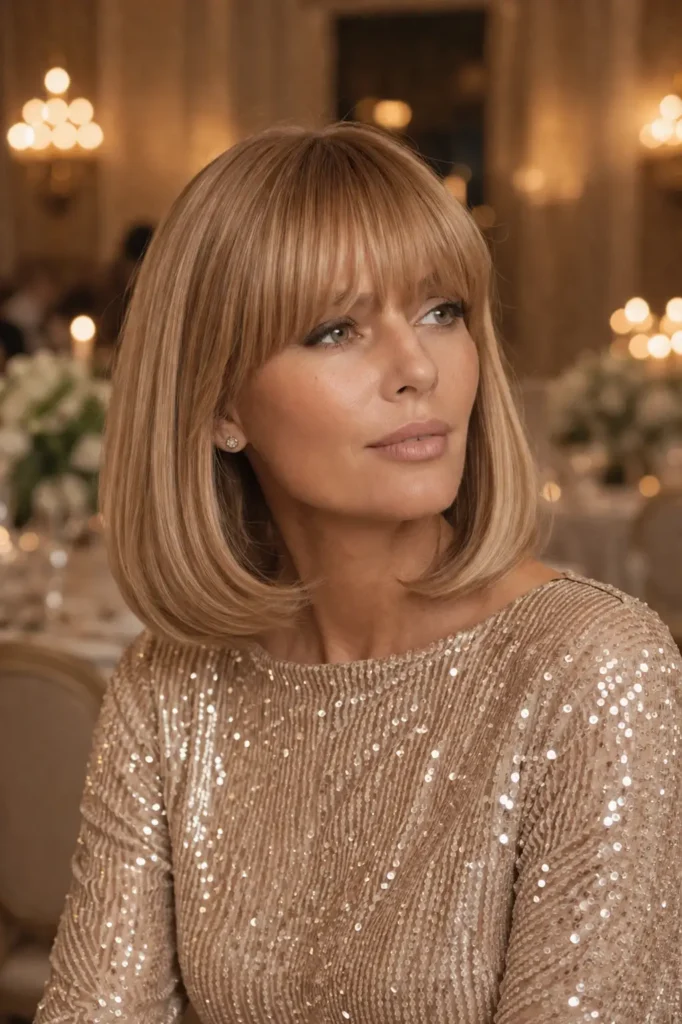
An invisible fringe starts shorter at the scalp near the hairline and gradually extends to a curtain bang length at the front. The effect is that the hair grows naturally out of the scalp with volume before sweeping into bangs — there is no obvious division between bang and crown. Fine hair benefits enormously from this because the technique adds the appearance of density at the crown without requiring extra hair volume that may not be there. It is a specialist cut; book with a stylist who has done it before.
Styling Tips That Apply to Every Cut on This List
Blow-Dry From Roots First
The biggest volume mistake in fine hair styling is starting a blow-dry at the ends. Root lift comes from directing the airflow at the scalp while lifting sections up and away from the head. If you spend the first two minutes of every blow-dry doing nothing but root work with a medium-bristle round brush, your final result will be noticeably more full regardless of which shoulder length hairstyle with bangs you are wearing.
Use Dry Shampoo Before Bed, Not the Morning After
Applying dry shampoo the night before — when your hair is clean — allows the product to work into the root area overnight. By morning, roots are lifted and the scalp is less likely to produce excess oil. Fine hair loses volume fastest at the scalp, so this pre-emptive step can extend the life of a good blow-dry by an extra day. Batiste Original or Klorane Dry Shampoo with Oat Milk both perform well in this context.
Never Over-Condition the Roots
Fine hair is weighed down fastest by silicone-heavy conditioners applied through the roots. Apply conditioner from the mid-lengths to the ends only, and rinse it out completely. If your scalp feels dry, a few drops of lightweight hair oil — not a serum — massaged in before washing is a better approach than conditioner at the roots. This single change makes a measurable difference in how much lift you achieve during styling.
Face Shapes and Which Bangs Work Best
Oval faces can wear almost any fringe on this list with no modification. Round faces benefit most from curtain bangs, asymmetric bangs, or side-swept fringe — anything that creates a diagonal or vertical line to lengthen the face. Heart-shaped faces with a wider forehead do well with fuller, straight-across bangs that soften the forehead width. Long or narrow faces benefit from fuller, wider bangs that add visual width across the top of the face.
Square jaw lines work well with wispy, soft fringes because the contrast between angular jaw and soft fringe creates balance. Faces with a very high hairline often find that any kind of fringe is transformative — it recalibrates the proportions of the entire face. If you are unsure, show your stylist at least three reference photos and discuss which face-shape features you want to play up or soften.
Products Worth Having Before Your New Cut
A good volumizing mousse applied to damp hair before blow-drying is the most underrated product in fine hair care. Kenra Platinum Platinum Silkening Mousse, L’Oreal EverPure Volume Mousse, or Living Proof Full Thickening Cream are all reliable options that add body without stiffness. The key is using no more than a golf ball-sized amount — fine hair does not need much and excess product weighs it flat.
For the bangs specifically, a small flexible-hold pomade or wax lets you separate and define the fringe without making it stiff or shiny. Sachajuan Hair Wax is a good salon-quality option. A boar-bristle paddle brush for the body of the hair and a small natural-bristle round brush for the fringe cover most styling needs without requiring a kit of a dozen tools.
Seasonal Considerations
In summer, fine hair tends to get oilier faster due to heat and humidity, which collapses volume quickly. A dry shampoo with a matte finish — rather than a glossy aerosol — is more effective at absorbing oil and maintaining lift in hot weather. Shoulder length hair in summer is also practical: long enough to pull up when it is very hot, short enough that it does not get heavy or tangled quickly.
In winter, static is the main issue for fine hair. A small amount of a smoothing serum on the palms pressed lightly over the finished style reduces static without adding weight. A silk pillowcase reduces friction at night and helps fringes stay smooth rather than frizzing up from sleeping on cotton. Oribe Smooth Style Serum is worth the investment for anyone dealing with serious winter static on fine hair.
Frequently Asked Questions
Do bangs make thin hair look thicker?
Yes, strategically. Bangs draw the eye to the front of the face and create a vertical or diagonal line that breaks up the scalp-to-end visual. That changes the way the eye perceives density. A wispy or curtain bang on fine hair is generally more flattering than a very heavy blunt bang, which can look pasted down if the hair is very thin.
What is the best bang type for very fine hair?
Curtain bangs and wispy bangs are the two most forgiving types for very fine hair. Both have textured edges that hide sparseness naturally. A blunt bang can work but requires the stylist to use a razor or point-cut technique at the ends so the fringe has movement rather than sitting flat against the forehead.
How often do I need to trim bangs?
Most fringes need a trim every four to six weeks to stay in the intended shape. This is shorter than a full haircut cycle, so plan for it. Many salons offer a free or low-cost bang trim between appointments. If you are handy with scissors, straight-across bangs are fairly easy to maintain at home with sharp haircutting scissors and a fine-tooth comb.
Will shoulder length hair make fine hair look thinner?
Not if the cut is done correctly. A shoulder-length cut with some internal layering actually looks fuller than very long fine hair because the weight is distributed better. The key is to avoid going too far past the shoulder — once fine hair reaches mid-back length, the weight almost always collapses the volume completely.
Can I get a shoulder length hairstyle with bangs and still wear it up?
Yes. Shoulder length hair at the collarbone is long enough to go into a low ponytail, a messy bun, or a half-up half-down style. The bangs can be pinned back for these looks or left down to frame the face. This is one of the practical advantages of shoulder length over shorter cuts.
Does fine hair grow out of a bang cut awkwardly?
Some bang shapes grow out more gracefully than others. Wispy bangs and curtain bangs grow out well because the edges are already soft and they blend naturally into the sides. Blunt bangs have a more defined grow-out phase where they sit at an in-between length. A side sweep or loose tuck-behind-the-ear style bridges that phase comfortably.
What products should I avoid on fine hair with bangs?
Heavy oils, thick balms, and high-silicone serums applied to the roots or the bang section will flatten fine hair quickly. Also avoid applying dry shampoo or texturizing spray directly onto clean hair — these work best on day two or three hair. Overly rich conditioners at the roots are another common issue; keep all conditioning products from the mid-lengths down only.
Is a shoulder length cut with bangs high maintenance?
It depends on the bang type. Blunt fringes need more frequent trims. Curtain bangs and wispy bangs are lower maintenance because they grow out more naturally and can go longer between trims. The shoulder-length cut itself typically needs refreshing every eight to ten weeks, which is fairly standard.

Sarah Williams
Hi, I’m Sarah Williams — the founder of HerStyleNest, where beauty meets modern style. I share trendy hairstyles, chic nail designs, and fashion inspiration for women who love staying stylish every season. From everyday elegance to viral beauty trends, HerStyleNest is your go-to destination for effortless fashion and beauty ideas.