
21 Braided Ponytail Hairstyles That Actually Work for Every Hair Type
There’s something about a braided ponytail that just works — it’s polished enough for a wedding, practical enough for the gym, and interesting enough to turn heads at a dinner party. I’ve worn some version of a braided ponytail hairstyle at almost every major event in my life, and after years of experimenting (and yes, a few disasters), I’ve figured out which styles actually hold up, which ones photograph well, and which ones you can realistically do yourself at 7 a.m.
This guide covers 21 braided ponytail hairstyles across every hair type, length, texture, and occasion — from quick everyday looks to elaborate cornrow ponytails you’ll want to save for your next stylist appointment. Whether you have naturally coily hair, fine straight strands, or a head of thick waves, there’s something here that works for you.
What Are Braided Ponytail Hairstyles?
Braided ponytail hairstyles combine braiding techniques — such as cornrows, Dutch braids, French braids, or fishtail braids — with a gathered ponytail silhouette. The braid can appear anywhere from the crown to the nape, and the ponytail can sit high, mid, or low. These styles work on natural hair, relaxed hair, weave, and extensions, making them one of the most versatile hairstyle categories available.
1. Sleek High Braided Ponytail
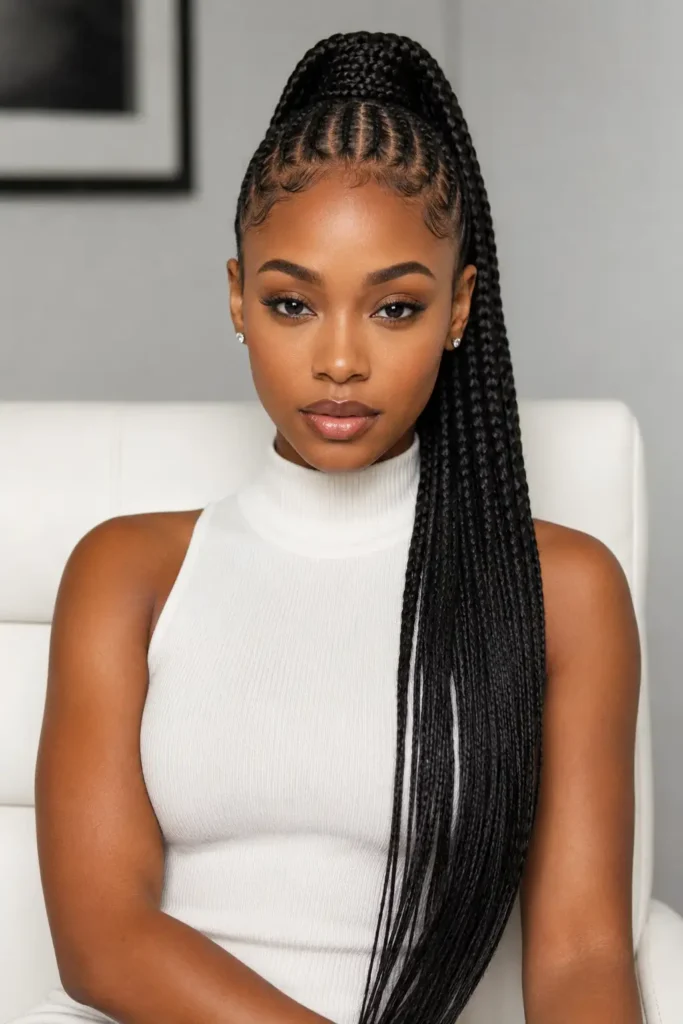
If I had to pick one braided ponytail style that photographs better than any other, it would be this one. A sleek high braided ponytail pulls all the hair up toward the crown, lays the edges smooth, and creates a single, defined braid that trails down the back. On longer hair it’s genuinely dramatic — on medium-length hair it’s effortlessly chic.
What you need to know:
• Best face shapes: oval, heart, long
• Best hair texture: straight, relaxed, or fine natural hair with product
• Styling difficulty: moderate — edges and slick-back require gel and a good bristle brush
• Maintenance level: high (lasts 1–2 days looking fresh)
• Styling time: 20–35 minutes
Use a strong-hold edge control gel and a medium-hold hairspray over the ponytail to keep flyaways down. If your hair is fine, a light-hold mousse at the roots before blow-drying will give the pony more density.
Save this look for your next salon visit if you want it done properly — a stylist can use feed-in braiding hair to give the tail extra length and fullness.
2. Dutch Braid Ponytail
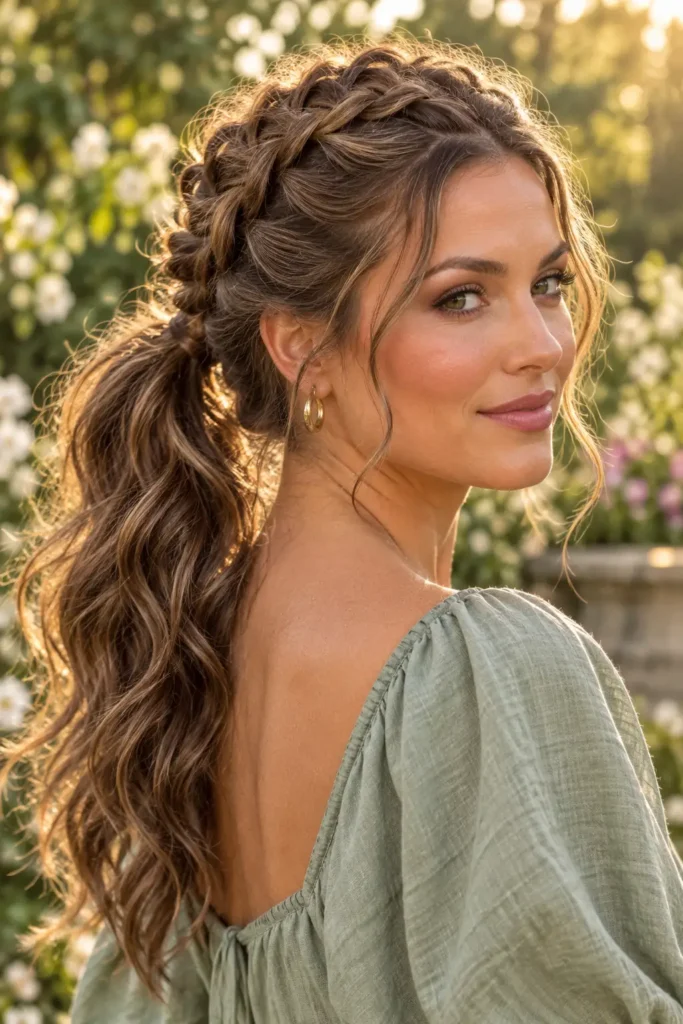
The Dutch braid ponytail is probably the most Googled braided ponytail style for good reason — the braid sits on top of the hair instead of inside it, so the texture reads bold and three-dimensional. It works beautifully on straight or wavy hair, and if you know a basic braid, the Dutch technique takes about a day to learn.
Styling steps:
• Start at the crown with a small section, cross strands under (not over) to create the Dutch effect
• Add small sections from each side as you work toward the nape
• Secure remaining hair into a low or mid ponytail
• Pancake the braid by gently pulling the outer loops apart for fullness
This style suits round and square face shapes particularly well because the raised braid adds height. On fine hair, use a texturising spray before braiding to give your hands something to grip.
3. Cornrow
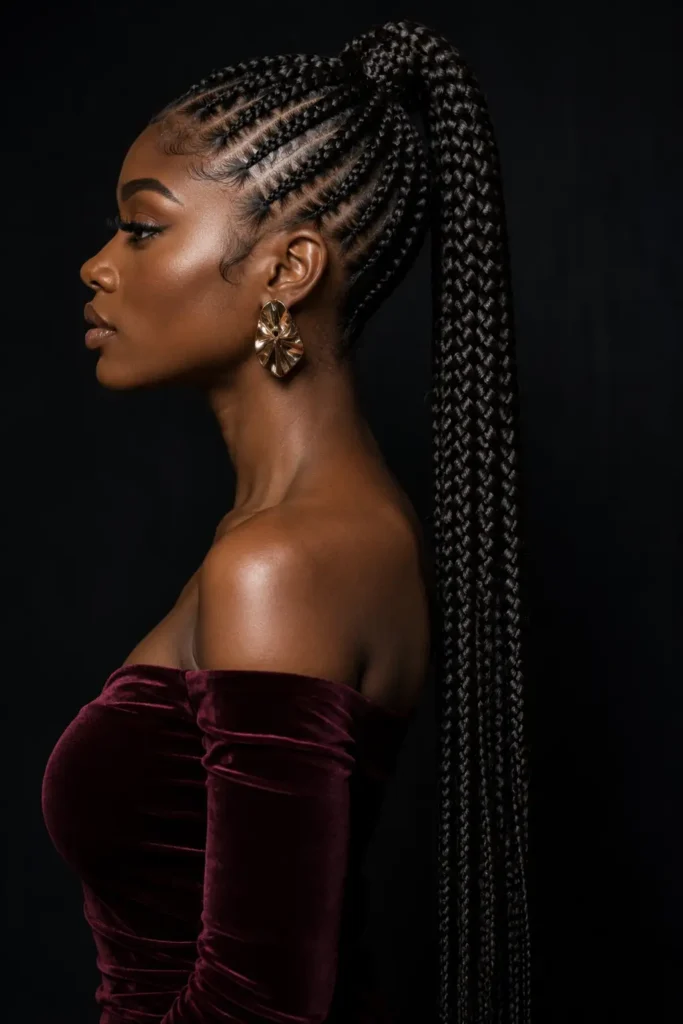
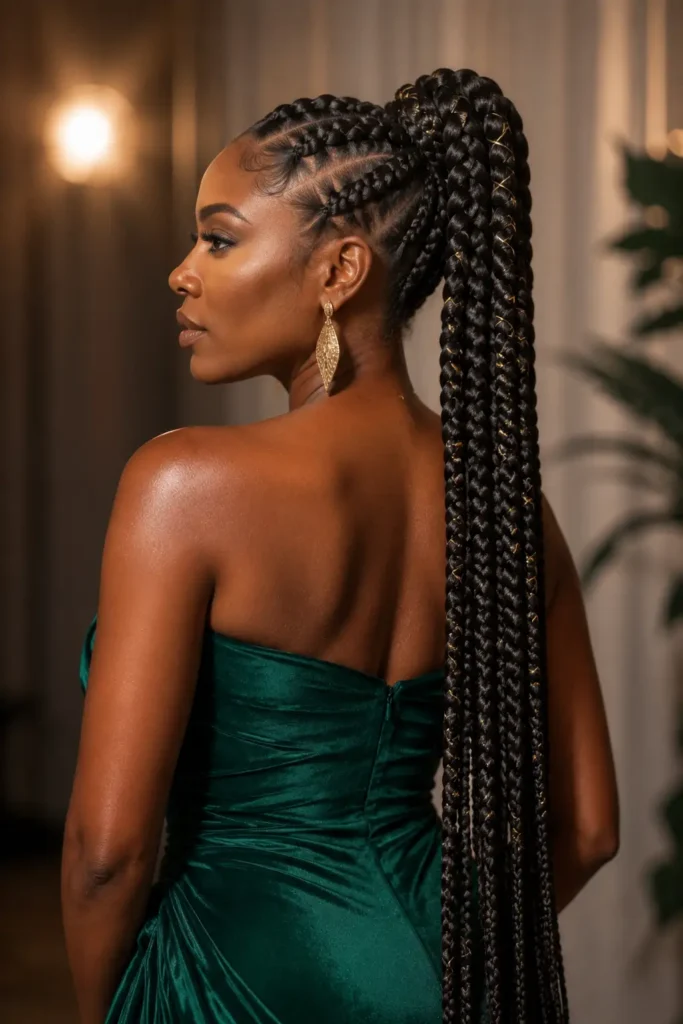
Cornrow-braided ponytails are a staple for Black women and anyone with natural hair textures because cornrows keep hair protected for days — sometimes weeks — while looking intentional and polished. The rows run flat against the scalp and lead into a gathered ponytail at the crown or nape, which can be left as natural coils, wrapped in a braid, or extended with braiding hair.
This is one of the best braided ponytail hairstyles for thick or textured hair because the cornrow pattern keeps the bulk close to the head and distributes tension evenly. I’d recommend going to a professional for your first cornrow ponytail if you haven’t done them before — bad tension at the roots causes breakage over time.
• Best for: type 3 and type 4 natural hair, protective styling, longevity
• Styling time: 1–3 hours depending on pattern complexity
• Lasts: 2–4 weeks with proper nightly maintenance
4. Feed-In
Feed-in braids — where braiding hair is gradually added to the cornrow as you work — give a more natural, graduated look than traditional braids with a bulky extension added at the beginning. The result is a ponytail that looks like it grew from your scalp, whether it’s 6 inches or 26 inches long.
Feed-in braided ponytail hairstyles are one of the fastest-growing styles in the braided ponytail category because they look so seamless. The technique requires practice (or a skilled stylist), but the result photographs beautifully and holds up for weeks.
5. French Braid Ponytail for Long Hair
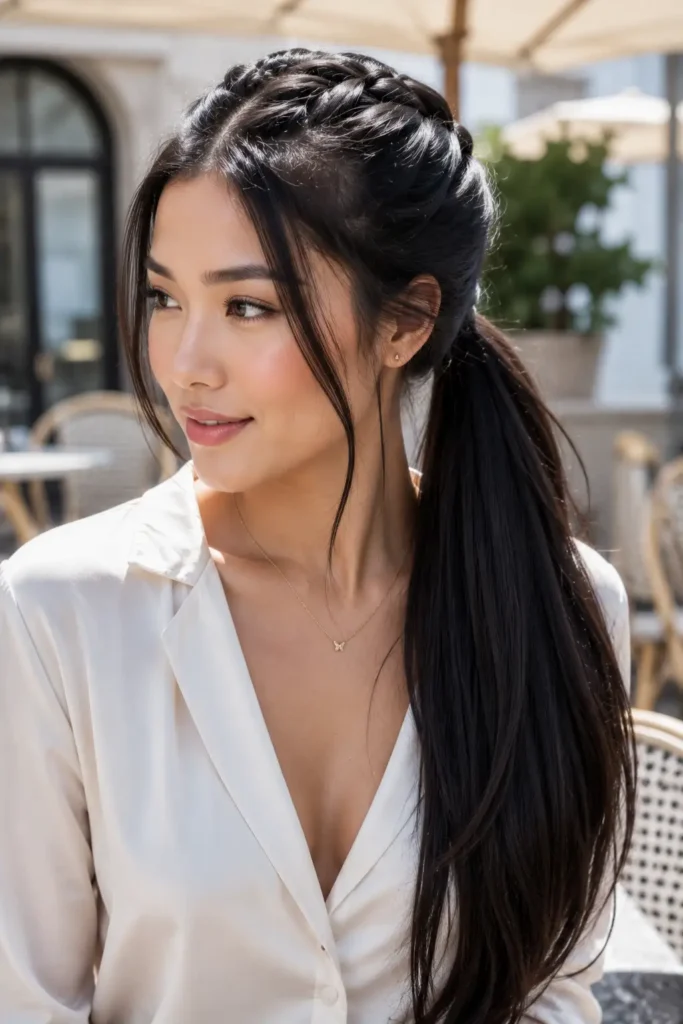
The French braid ponytail is the entry-level braided ponytail that most people learn first, and on long hair it becomes something genuinely beautiful. Because you’re adding hair to the braid as you go (from the top down), the style gets progressively fuller toward the nape — which transitions naturally into a thick, flowing ponytail.
On naturally wavy hair, a French braid ponytail has a softer, more romantic feel. Let a few face-framing pieces loose at the front and let natural texture show at the tail rather than forcing it straight. This is a braided ponytail hairstyle that looks like you tried without looking like you spent two hours trying.
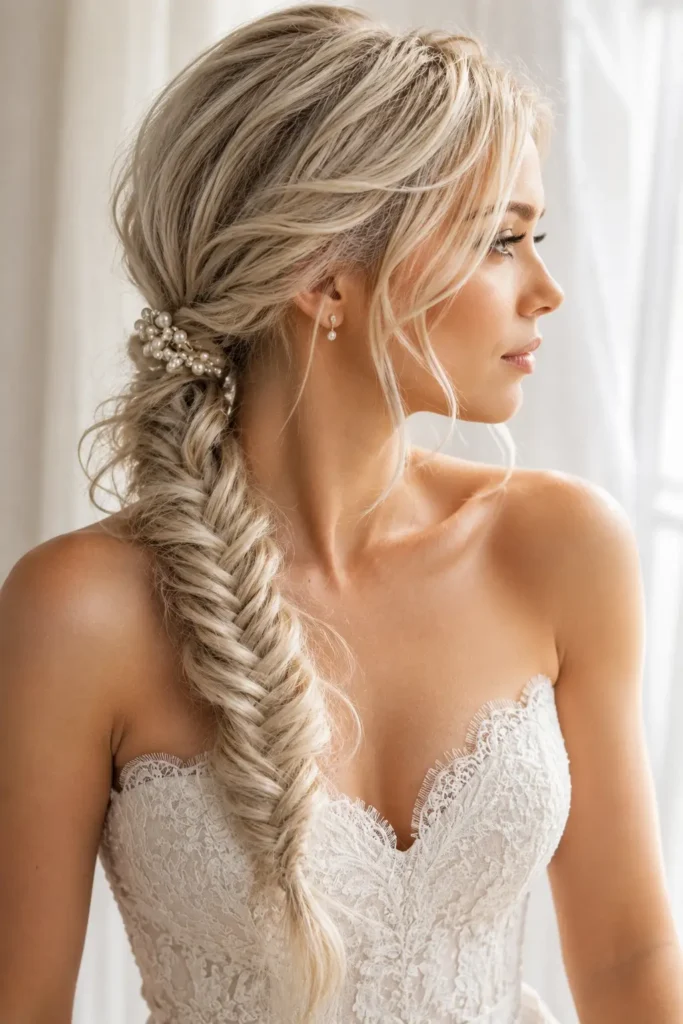
6. Fishtail
The fishtail braid has an intricate, almost woven look that most people assume is difficult. It’s actually two-strand braiding with tiny sections — time-consuming, yes, but not technically hard. On a ponytail, the fishtail starts at the base of the gathered hair and works downward, so the time commitment is lower than doing a full fishtail from root to tip.
This works best on medium to thick hair. On very fine hair, the individual strands in a fishtail braid are too thin to read clearly. A light-hold texturizing spray before you start helps define each crossover. After braiding, gently loosen the outer loops for a fuller, boho-braid feel.
7. Bubble
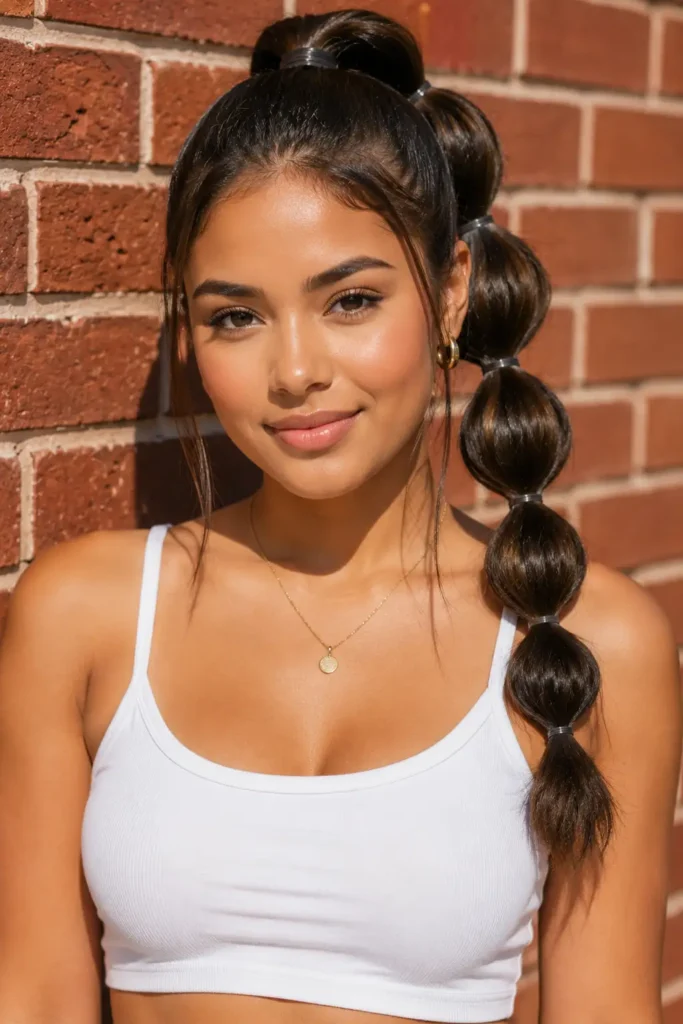
Bubble braids are the playful, no-braid option in the braided ponytail family — you’re not technically braiding at all. You gather hair into a high ponytail, tie elastics every 2–3 inches down the tail, and gently pull each section outward to create rounded “bubbles.” It takes about five minutes and photographs incredibly well.
This is one of the easiest braided ponytail hairstyles for fine hair because the puffed-out sections create the illusion of volume. It also works on curly hair for a fun, bouncy take — let the natural curl pattern show in each bubble instead of smoothing it down.
8. Braided Ponytail with Curls
Low braided ponytails sit at the nape of the neck rather than the crown, which immediately gives them a more sophisticated, editorial feel. A single Dutch or French braid running from the crown down to the nape, gathering into a low pony, is one of the most universally flattering braided ponytail hairstyles I know — it works on almost every face shape and suits formal occasions as well as everyday wear.
For a more relaxed version, loosen the braid slightly and let a few face-framing pieces hang loose. For a sleek formal take, keep everything smooth and secured with a clean elastic wrapped in a section of hair.
9. Low Braided Ponytail
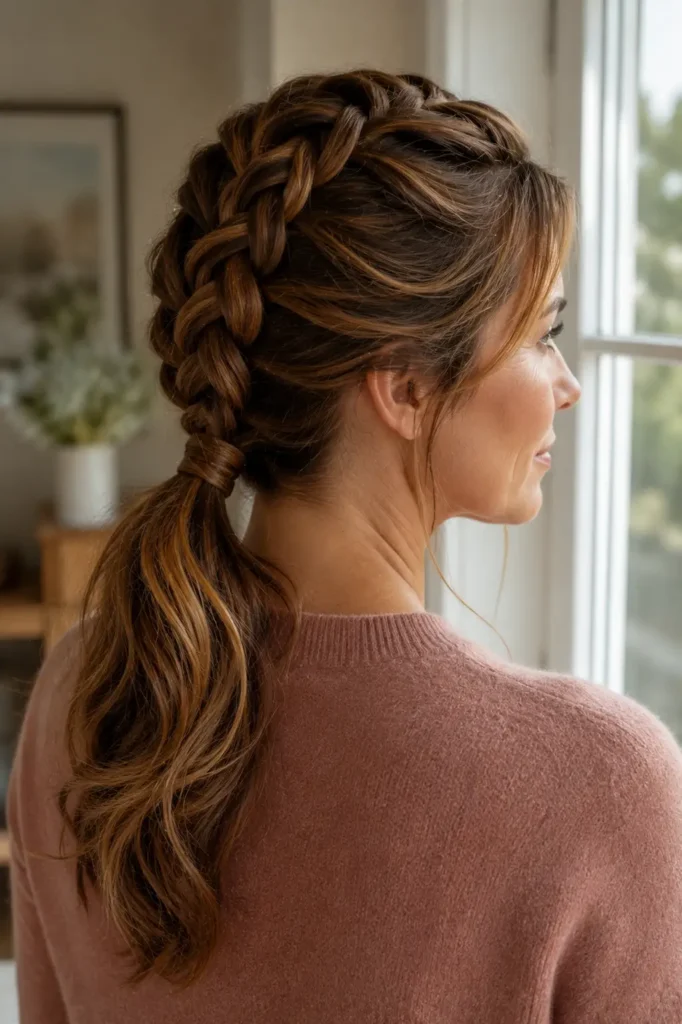
Low braided ponytails sit at the nape of the neck rather than the crown, which immediately gives them a more sophisticated, editorial feel. A single Dutch or French braid running from the crown down to the nape, gathering into a low pony, is one of the most universally flattering braided ponytail hairstyles I know — it works on almost every face shape and suits formal occasions as well as everyday wear.
For a more relaxed version, loosen the braid slightly and let a few face-framing pieces hang loose. For a sleek formal take, keep everything smooth and secured with a clean elastic wrapped in a section of hair.
10. with Bangs
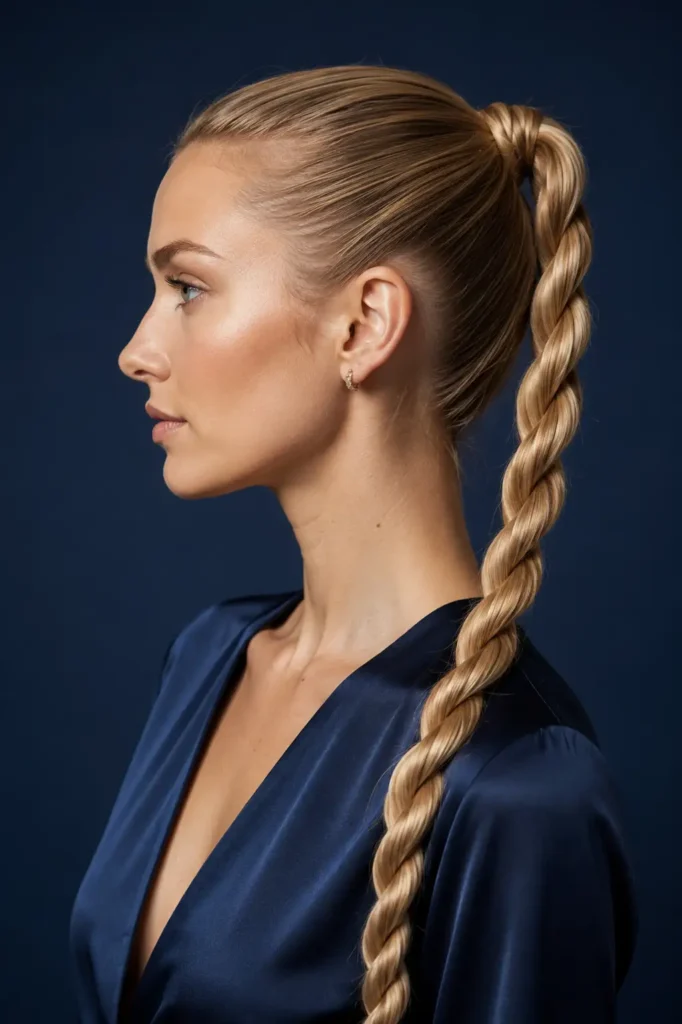
Braided ponytail hairstyles with bangs are underrated — the fringe softens the pulled-back look and keeps the style from reading as too severe. Whether you have blunt bangs, curtain bangs, or wispy side-swept fringe, leaving them out of the ponytail creates a natural contrast that’s very flattering on round and heart-shaped faces.
The key is keeping the ponytail tight and polished so the bangs become the statement, not an afterthought. Use a light-hold hairspray over the fringe to keep it from frizzing into the braid.
11. Two Braided Ponytails
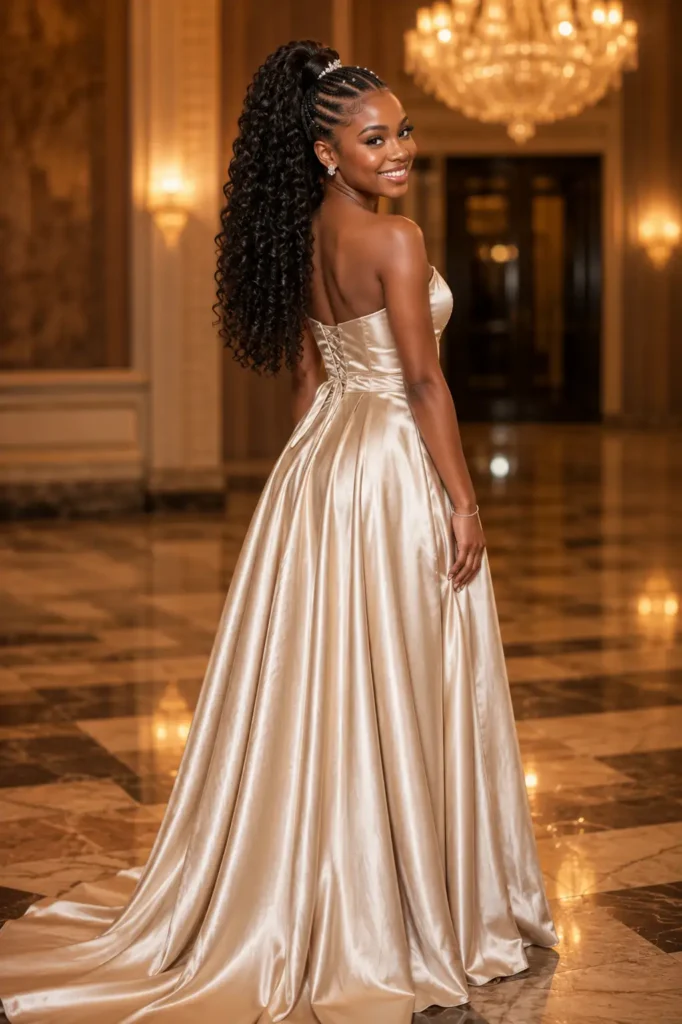
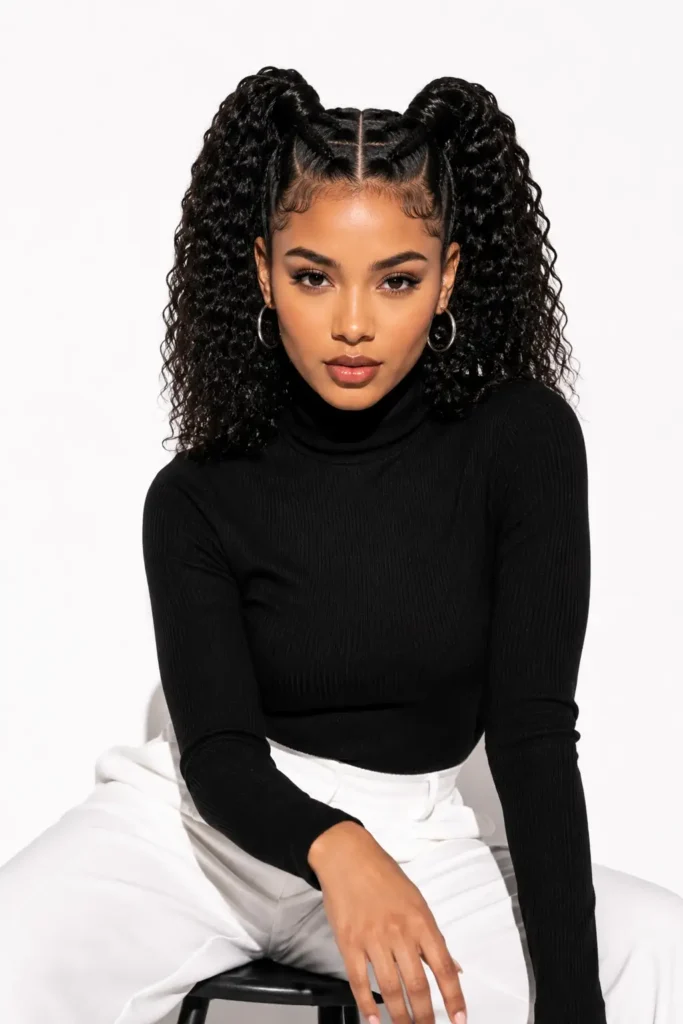
Two braided ponytails — one on each side — moved out of the playground and onto runway looks faster than almost any other style in the past few years. Done on an adult with a sleek base and neat cornrows leading to each pony, they read as genuinely cool rather than juvenile. Done with a messy, undone texture, they’re playful and editorial.
These are particularly flattering on oval and long face shapes because the two ponytails create width at the sides. On natural hair, two braided ponytails are also a solid protective option — part down the center, cornrow each half to a ponytail, and you have a style that lasts days.
12. Braided Ponytail for Short Hair
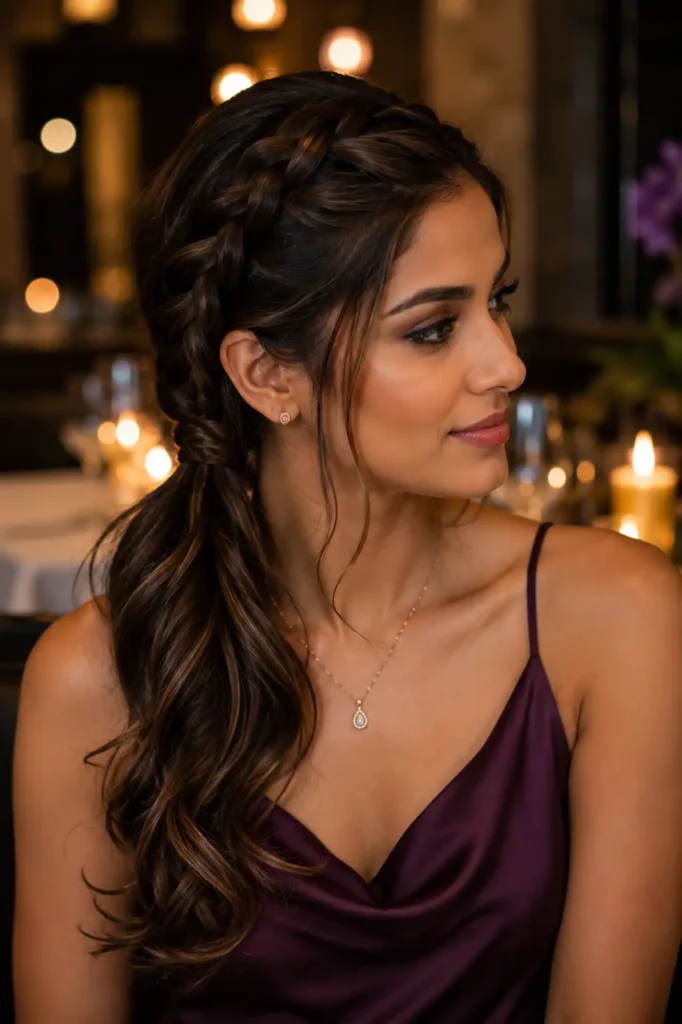
Short braided ponytail styles are more limited by length, but that doesn’t mean the options are boring. A short crown braid leading into a tiny gathered pony at the nape is clean and classic. Or go the other direction: a pull-through braid technique using bobby pins and small elastics can mimic the look of a braided ponytail without needing the length for a traditional braid.
Extensions or clip-in ponytail pieces are also a genuinely good option here — attach them at the base of a gathered pony to add instant length, then wrap the braid over the connection point to hide it. The result looks seamless and gives you access to styles that would otherwise require 6+ more months of growth.
13. for Natural Hair
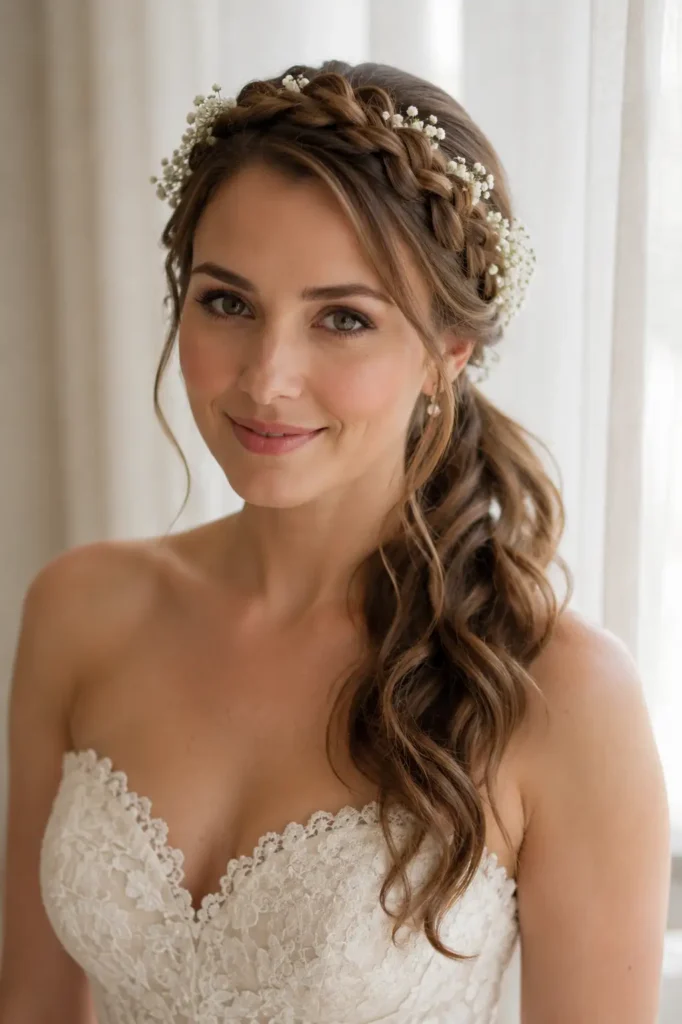
Natural braided ponytail hairstyles are some of the most diverse and beautiful in this entire category because natural hair textures — from loose 3A curls to tight 4C coils — hold a braid structure differently than straight hair, often with more grip and definition.
For type 3 hair, a loose French braid ponytail with defined curls in the tail is stunning. For type 4 natural hair, feed-in cornrows leading to a gathered afro puff pony is both protective and gorgeous. The key for any natural braided ponytail is moisture — braid on hydrated, stretched hair rather than dry or freshly washed hair for the smoothest result.
14. Goddess
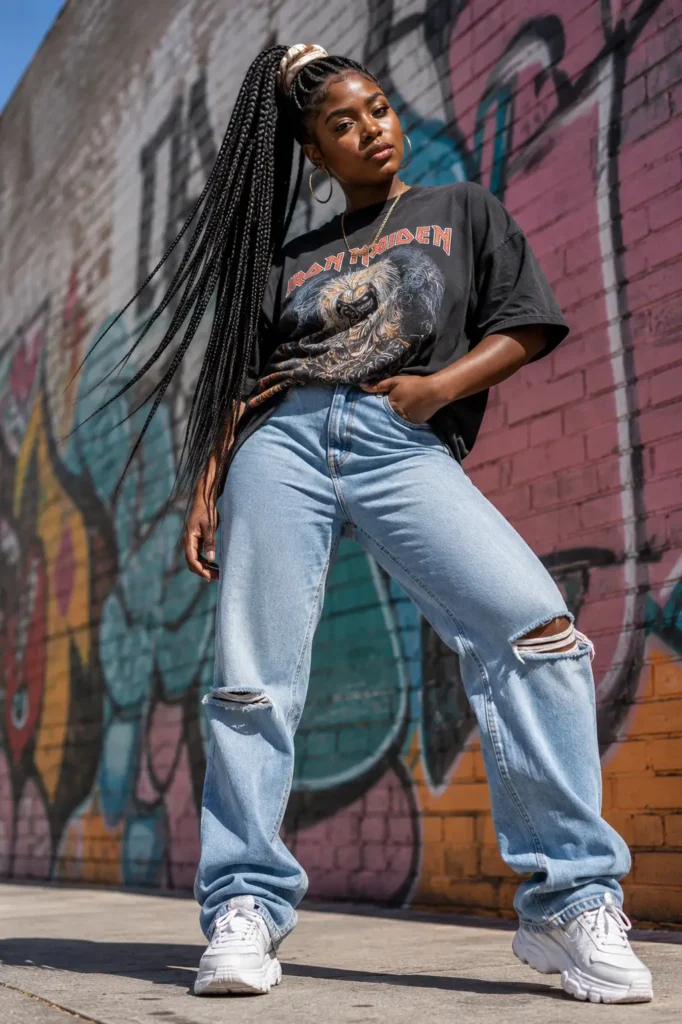
Goddess braids are thick, chunky braids — oversized cornrows, essentially — that give a bold, sculptural look. In a ponytail configuration, two or three thick goddess braid rows meet at the crown or nape and gather into a long, extension-enhanced tail. The result is dramatic, protective, and genuinely head-turning.
This is one of the braided ponytail styles that really benefits from a professional touch because the sizing and tension of goddess braids need to be consistent to look intentional. Expect 2–4 hours at the salon and a style that lasts 2–3 weeks with proper care.
15. Boho
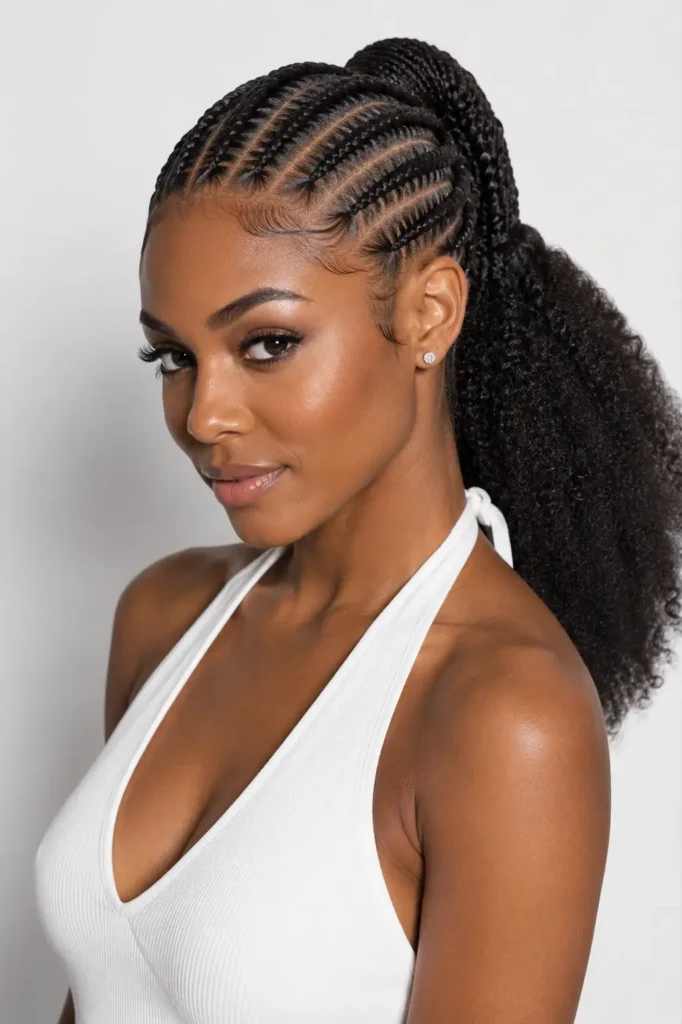
A boho braided ponytail is intentionally imperfect — loose sections, a slightly undone braid, face-framing wisps, and a textured tail that mixes braid with wave. This is the style I reach for when I want to look like I put in no effort but still photograph well at an outdoor event.
The trick is starting with naturally textured hair (second-day hair with a bit of dry shampoo is ideal), doing a loose Dutch braid that you then pancake aggressively, and letting the hair at the tail air-dry with a wave spray rather than forcing it smooth. Messy is the point — just make sure the messy parts are symmetrical.
16. Rope
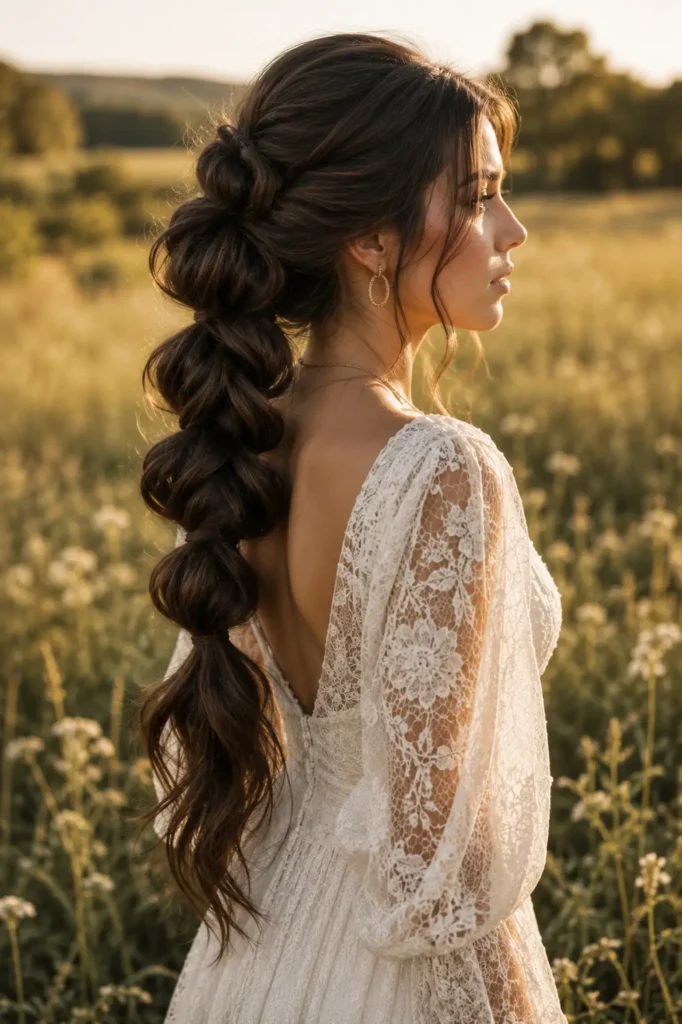
A rope braid involves twisting two strands of hair in the same direction, then twisting them around each other in the opposite direction — the tension creates a coiled, rope-like braid that holds its shape beautifully. It’s one of the fastest braiding techniques to learn and looks much more complex than it is.
Rope braid ponytails work particularly well on fine hair because the twisted structure adds visual density without requiring volume from the hair itself. Try a half-up rope braid pony for a more casual take, or a full sleek rope braid from crown to a high ponytail for an event-ready style.
17. Pull-Through
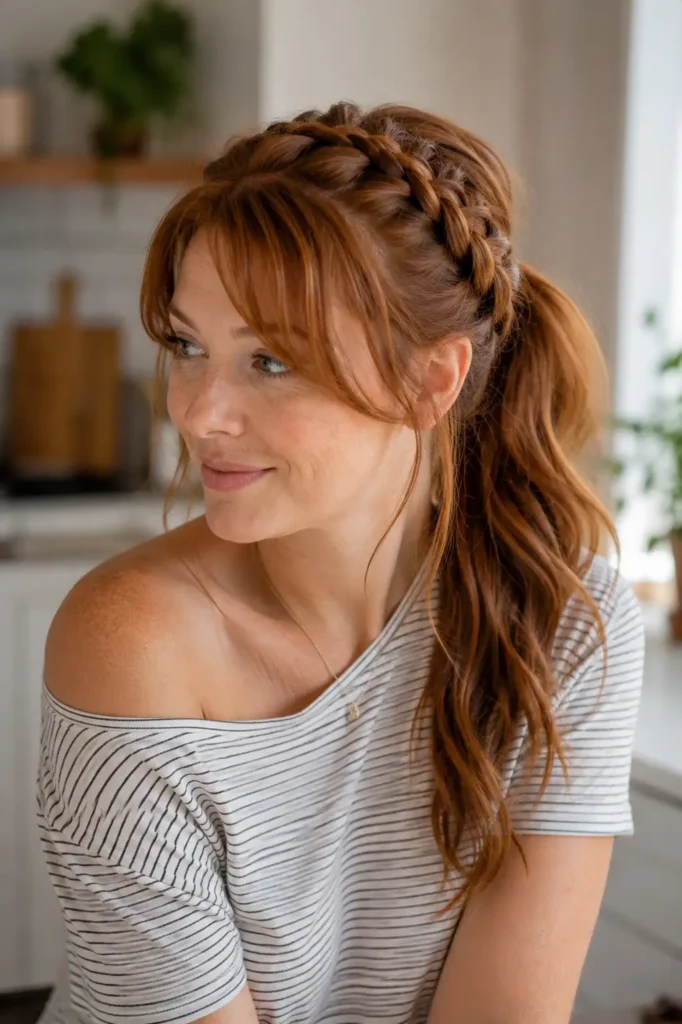
The pull-through braid uses sections and elastics rather than traditional braiding — you divide hair into pairs of sections, pull each forward one through the other, and secure as you go. The result mimics a thick braid but adds much more volume and dimension than a standard plait.
This is one of the most forgiving braided ponytail hairstyles for wavy or fine hair because the pulled-apart sections hide a multitude of texture inconsistencies. It’s also easy to redo if it looks wrong the first time — no braiding skill required.
18. Side Braid Ponytail

A side braid ponytail sweeps all the hair to one side — either with a side part braid leading into a low side pony, or with a single braid hanging over the shoulder from a gathered ponytail at the crown. Both versions are asymmetrical and tend to be very flattering on heart-shaped and oval faces.
This is a good option for braided ponytail hairstyles with weave because the side position makes extension attachment easier to hide. It also photographs beautifully from a three-quarter angle, which is why it shows up so often in editorial shoots.
19. Braided Ponytail with Weave / Extensions
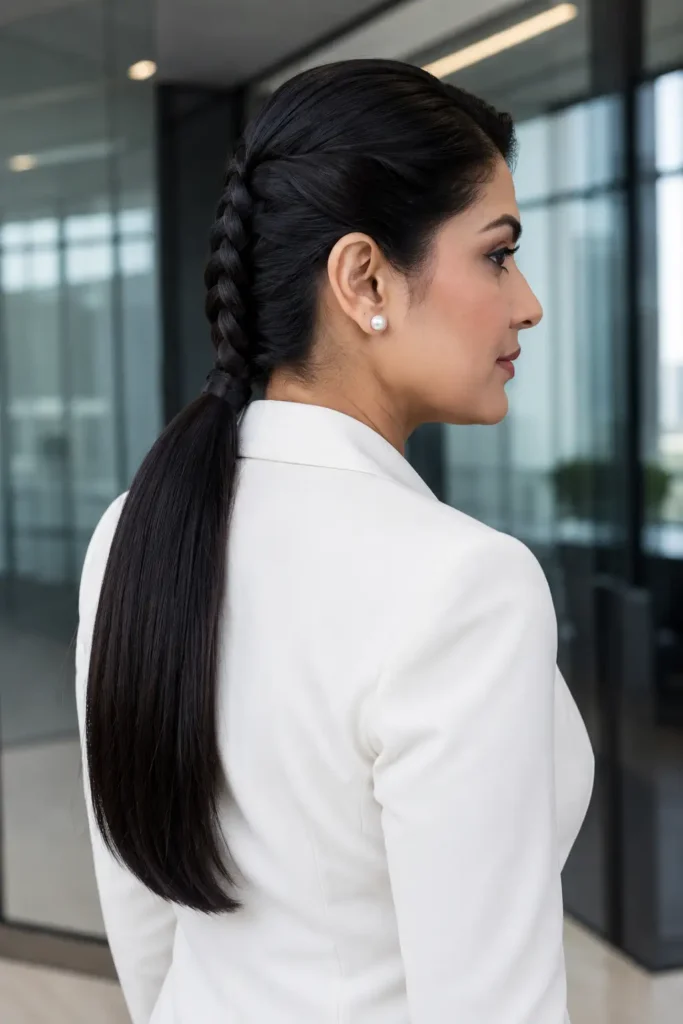
Adding weave or braiding hair to a ponytail is one of the most effective ways to get a style that would be impossible or impractical with your natural hair length. The extension attaches at the base of a gathered ponytail and is either left loose, braided, or wrapped in a single strand to create a rope effect over the connection point.
The result looks completely natural when done well. Match the extension texture to your natural hair if you’re going for realism, or choose a contrasting color for a deliberate contrast effect. Braided ponytail hairstyles with weave are a popular choice before major events — they give the drama of a very long, thick ponytail without requiring years of hair growth.
20. Box
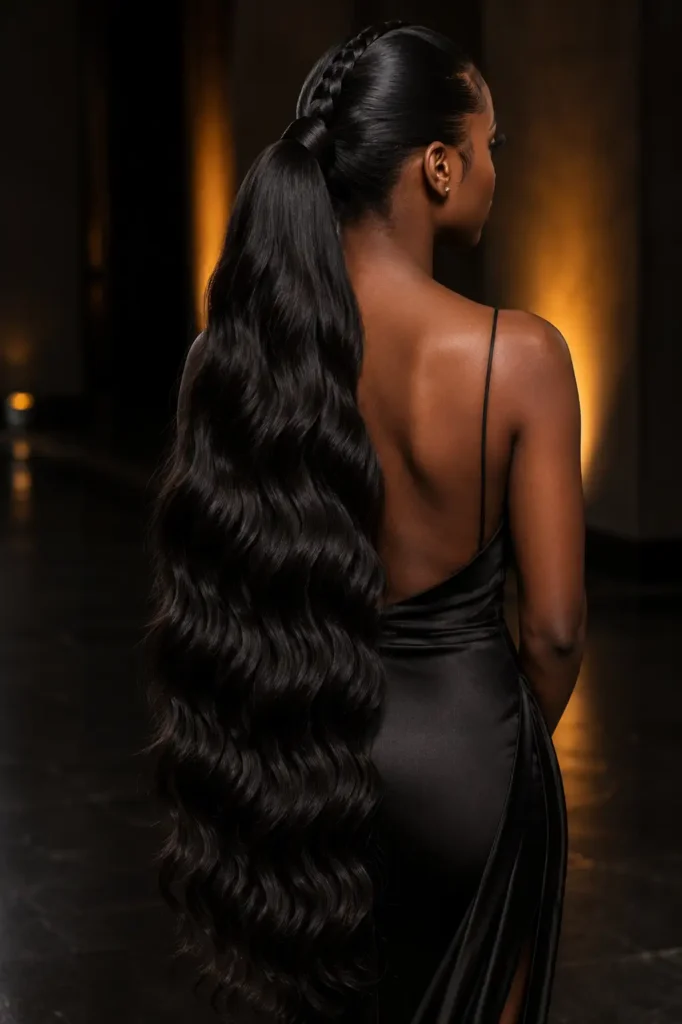
Box braids gathered into a high or mid ponytail give a playful, voluminous look that’s also completely protective. If you already have box braids installed, a ponytail is just an elastic away — but the gathered weight of multiple braids creates a tail that moves and photographs very differently from a single braid pony.
For longevity, tie the ponytail loosely enough to avoid tension at the hairline — constant pulling at the same point can cause traction alopecia over time. A satin scrunchie instead of a tight elastic is worth the small aesthetic trade-off.
21. Crown Braid
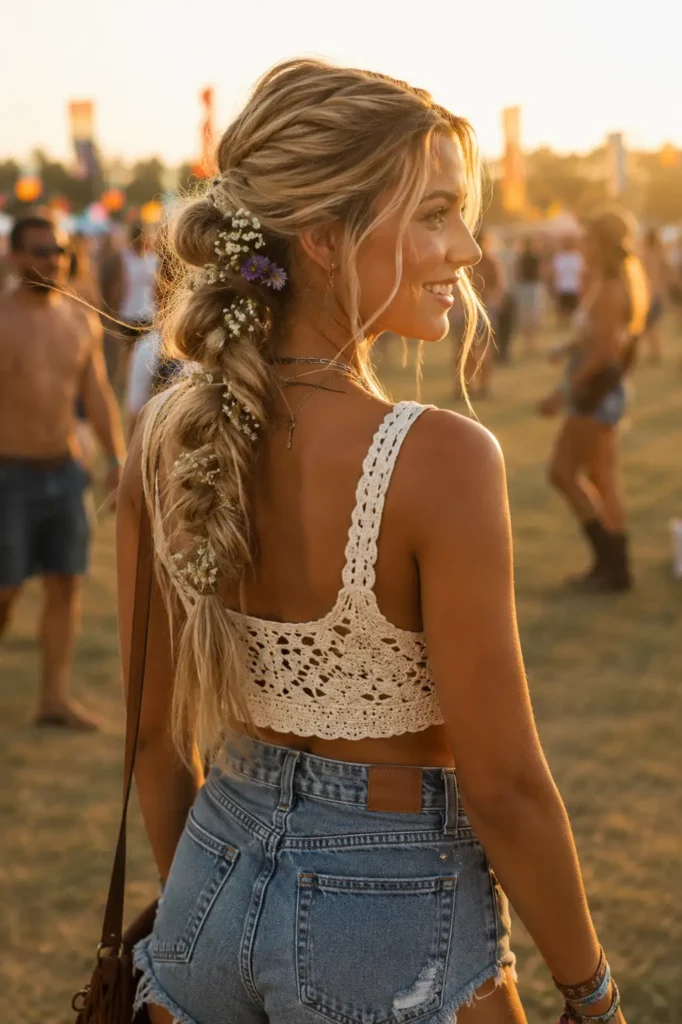
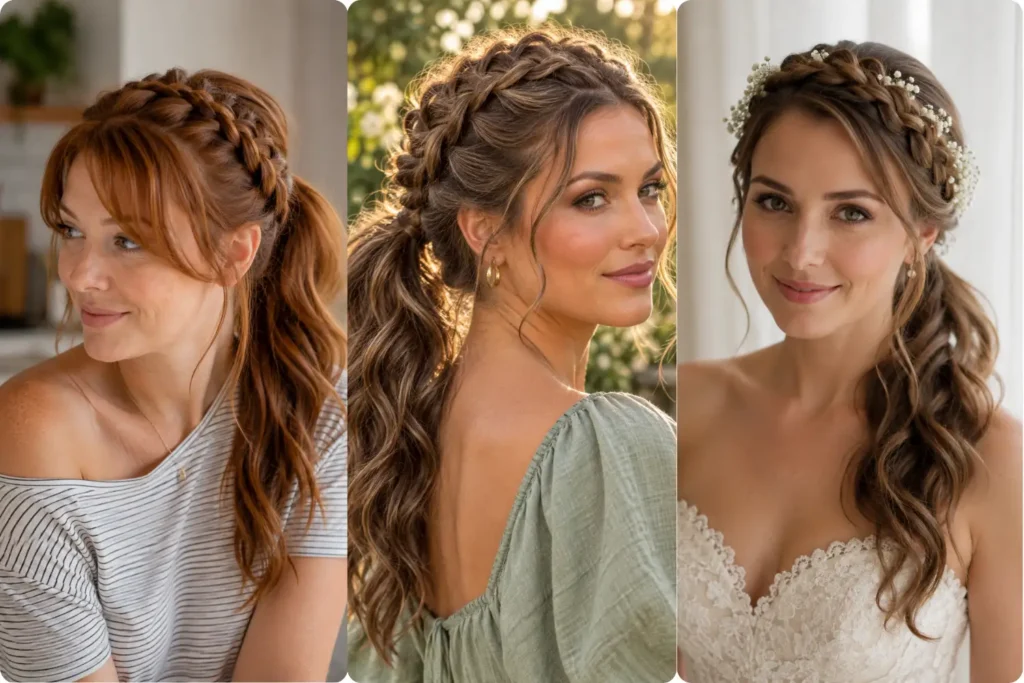
A crown braid runs along the hairline from one ear, over the top of the head, and back to the nape — and in a ponytail configuration, the tail hangs below the crown braid for a tiara-like effect. This is one of the most ethereal, occasion-worthy braided ponytail hairstyles and works particularly well for weddings and formal events.
On longer hair, the crown braid becomes the decoration and the ponytail becomes the statement. On shorter hair, the crown braid can be the entire style — a half-circle of braid framing the face. This is a trending haircut worth saving and showing to your hairstylist.
Common Mistakes with Braided Ponytails (and How to Fix Them)
Pulling the ponytail too tight
Consistent tension at the same point on the hairline causes traction alopecia over time. If you feel pulling at the scalp after 10 minutes, the ponytail is too tight. Use a satin or silk-covered elastic and switch up the ponytail height daily if you wear this style regularly.
Not prepping the hair properly
Braiding dry, freshly washed, or product-free hair is one of the most common mistakes. Straight hair braids best on second-day hair with a light texturizing spray. Natural hair braids best when moisturized and slightly stretched. Skipping prep usually means the braid loosens within hours.
Ignoring the edges
For cornrow ponytails and sleek high ponytails especially, the edges make or break the look. Use an edge control product and a soft-bristle brush, then lay a silk scarf over the edges for 10–15 minutes while you finish getting ready. The difference is substantial.
Adding too much product to fine hair
On fine hair, heavy gels and waxes will weigh the braid down and make it look flat. Stick to lightweight texturizing sprays and hold sprays over gels — you want grip without buildup.
Which Braided Ponytail Suits Your Face Shape?
Round face
High ponytails create vertical length, which helps balance a rounder face. Avoid low, wide styles that add horizontal width. A sleek high Dutch braid ponytail is ideal.
Oval face
Almost any braided ponytail hairstyle flatters an oval face. Two braided ponytails and side braid ponytails are particularly good choices since you have flexibility to experiment.
Square face
Softer styles work better — boho braids with face-framing pieces, or a loosely gathered low ponytail with a Dutch braid. Avoid very tight, slicked-back styles that emphasize the jaw’s width.
Heart face
Side braid ponytails and braids with bangs left out both flatter heart-shaped faces. The added fringe or asymmetry balances a wider forehead with a narrower chin.
Long face
Low and mid-height ponytails suit long faces better than very high ponies. Two braided ponytails also work well by adding visual width.
Braided Ponytail Hairstyles — Frequently Asked Questions
What are the most popular braided ponytail hairstyles for black women?
Cornrow ponytails, feed-in braids, goddess braids, and box braid ponytails are consistently the most popular braided ponytail hairstyles for black women. These styles work with natural hair textures, offer protective benefits, and can last 2–4 weeks with proper care. A salon appointment gives the best results for more complex cornrow patterns.
Can I do a braided ponytail on short hair?
Yes, but your options depend on length. A pull-through braid ponytail works from around 6 inches. For true braid length, a clip-in ponytail extension attached at the nape and wrapped in a braid gives a convincing result. Feed-in braids can also extend short hair significantly within the style itself.
How do I make a braided ponytail last longer?
Prep matters most — braid on clean but not freshly washed hair (second-day hair has more texture and grip). Use a braid gel or texturizing spray, keep the braid slightly looser rather than very tight, and wrap the style in a silk scarf overnight. Most braided ponytails hold 1–3 days with good prep.
What is the easiest braided ponytail hairstyle for beginners?
The bubble braid ponytail requires no braiding skill at all — just elastics spaced along the tail. The rope braid and the pull-through braid are also beginner-friendly. All three produce looks that photograph well and hold up for at least a day without needing braiding technique.
Are braided ponytails good for natural hair?
Yes — braided ponytail hairstyles for natural hair are excellent protective styles. They keep hair gathered, reduce manipulation and breakage, and can last weeks when done correctly. Cornrow ponytails and feed-in braid ponytails are especially well-suited because they work with natural texture rather than against it.
How do I do a braided ponytail with extensions?
Gather your natural hair into a ponytail and secure it with an elastic. Attach the extension at the base — either clip-in or glue-in depending on type — then wrap a small section of hair around the base to hide the connection. Braid, curl, or leave the extension tail loose depending on the look you want.
What braided ponytail works best for weddings?
Crown braid ponytails and sleek feed-in braid ponytails are the most popular for weddings. Both read as formal and polished, photograph beautifully, and hold up through a full event day. Braided ponytail hairstyles with curls at the tail are also a stunning bridal option that works for bridesmaids too.
Do braided ponytails damage hair?
Braided ponytails are generally low-damage styles, but tight ponytails at the same point daily can cause traction alopecia over time. Use a soft elastic rather than rubber bands, avoid pulling the ponytail too tight, and give your hair a break between styles. Rotating ponytail height helps distribute tension.
Final Thoughts
Braided ponytail hairstyles are one of the few style categories where the options genuinely range from five-minute beginner-friendly to multi-hour protective masterwork — and almost all of them look intentional and polished when done right. The key is matching the style to your hair type, your available time, and your styling skill level rather than chasing looks that require tools or techniques you haven’t developed yet.
Start with a bubble braid or rope braid if you’re new to the category. Move to Dutch and French braid ponytails once you have the technique down. And when you’re ready for something truly special — a cornrow ponytail, a feed-in braid, a goddess braid ponytail — find a stylist who specializes in braided styles and let them show you what’s possible with your specific hair texture.
The best braided ponytail is the one that works for your actual hair, not just the one that photographs well on someone else’s. Screenshot what appeals to you, save the looks that fit your lifestyle, and give yourself permission to experiment.

Sarah Williams
Hi, I’m Sarah Williams — the founder of HerStyleNest, where beauty meets modern style. I share trendy hairstyles, chic nail designs, and fashion inspiration for women who love staying stylish every season. From everyday elegance to viral beauty trends, HerStyleNest is your go-to destination for effortless fashion and beauty ideas.