Blunt Bob Haircuts for Women That Look Expensive in 2026
There is a particular kind of confidence that comes with a blunt bob. It is not the effortless, slightly undone energy of a shaggy cut or the soft romance of a layered style. The blunt bob is deliberate. It makes a statement the moment you walk into a room.
The cut has been a staple since the 1920s, and in 2026 it is having a genuine moment — showing up in editorial campaigns, on celebrity red carpets, and all over Pinterest boards dedicated to that “quiet luxury” aesthetic that is influencing everything from fashion to hair right now. Clean lines, precise weight, and a polished finish are exactly what women are searching for.

What makes the blunt bob so appealing is how well it photographs. The solid weight line catches light in a way that layered cuts simply do not, which is a big part of why it drives so much Pinterest engagement. It also does something practical: on fine and thin hair, it creates the illusion of more density than actually exists. On thick hair, it delivers a sleek, high-fashion result that layers would work against.
This article covers 17 blunt bob haircuts across lengths, hair types, face shapes, and styling preferences — including options with bangs, side parts, and variations designed specifically for thin and fine hair. Everything you need to find the right version for your own hair.
1. The Classic Blunt Chin-Length Bob
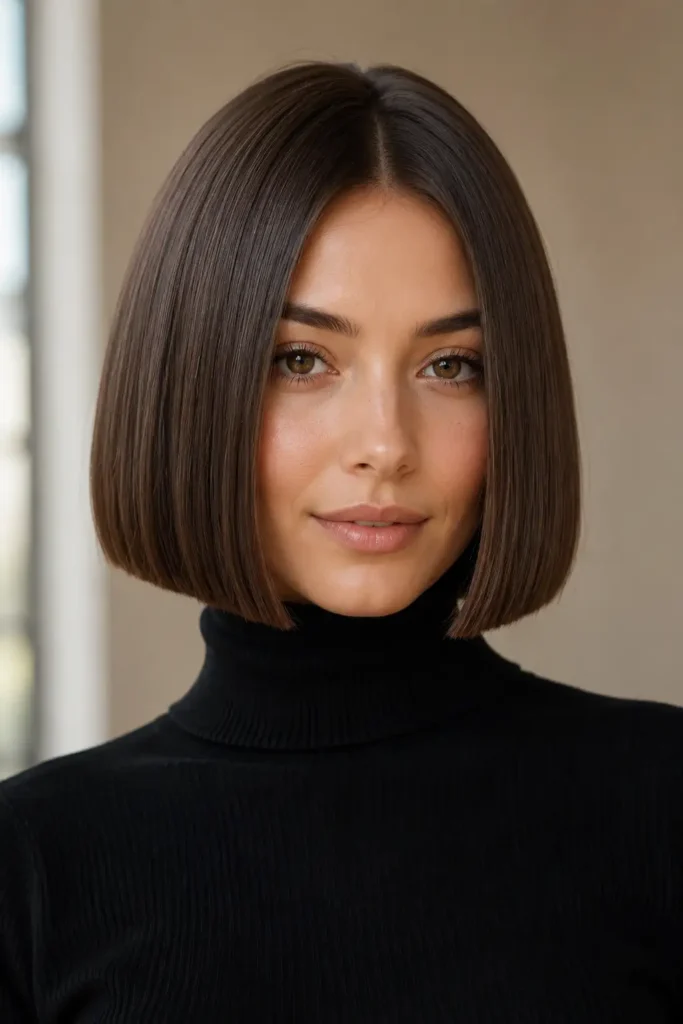
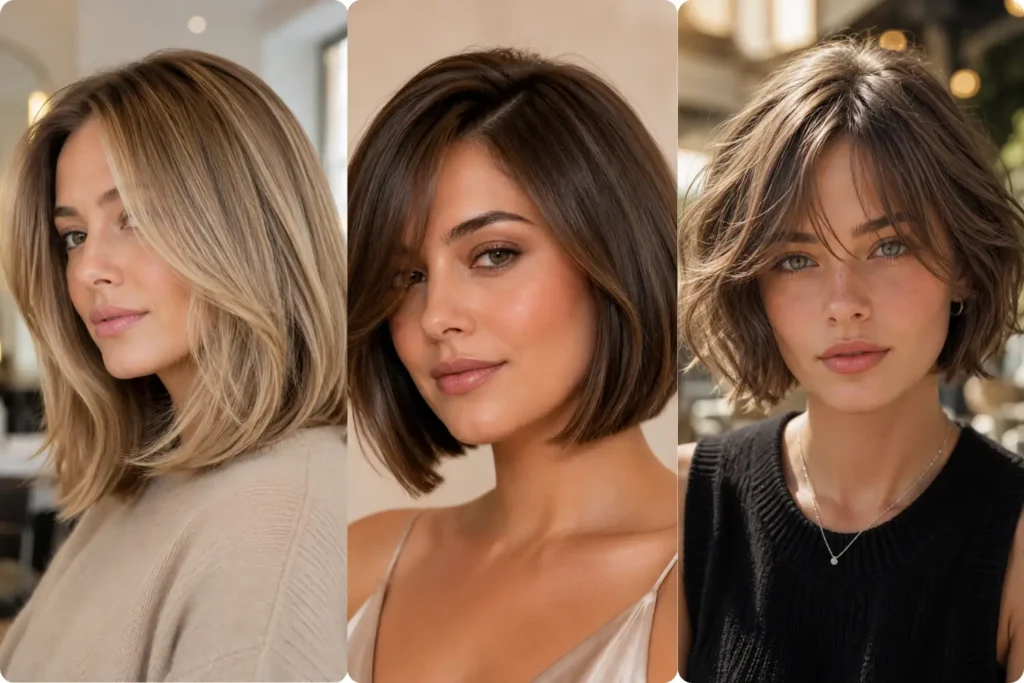
If there is one blunt bob that has outlasted every trend cycle, it is this one. The cut sits right at the jaw, the ends are perfectly even, and the shape reads as confident from every angle. On straight hair, it is nothing short of striking. On slightly wavy hair it is equally good — the wave gives the ends a little personality without disturbing the clean structure. It works on oval, heart, and long faces especially well. Maintenance is honest: this cut needs a trim every six weeks to keep the jawline weight clean. For fine hair, this length is also one of the best at creating the illusion of real thickness.
2. Blunt Shoulder-Length Bob with Side Part
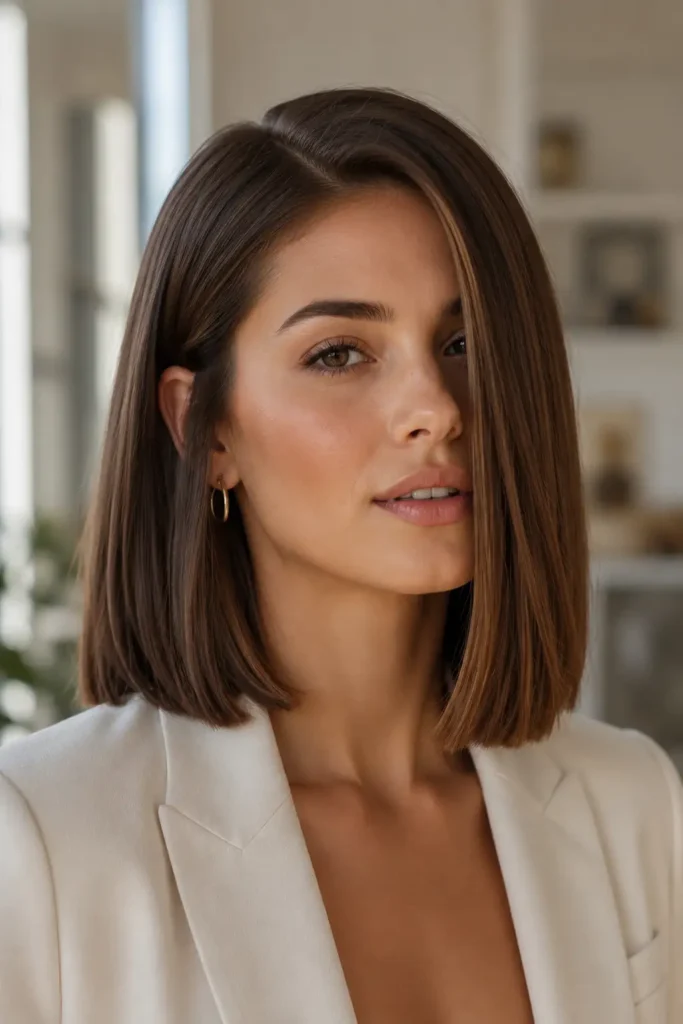
The shoulder-length blunt bob with a side part is one of the most wearable versions of this cut. The length sits at or just past the collarbone, which suits a wide range of face shapes. The deep side part adds asymmetry that flatters round and square faces by creating a longer visual line on one side. On fine hair, this length keeps the weight concentrated enough to look full. On thick hair, a stylist needs to remove a little internal weight to prevent the hair from sitting too dense and heavy. It suits professional settings, dinner occasions, and everyday wear equally well — a genuinely versatile cut.
3. Blunt Bob with Blunt Bangs for Fine Hair
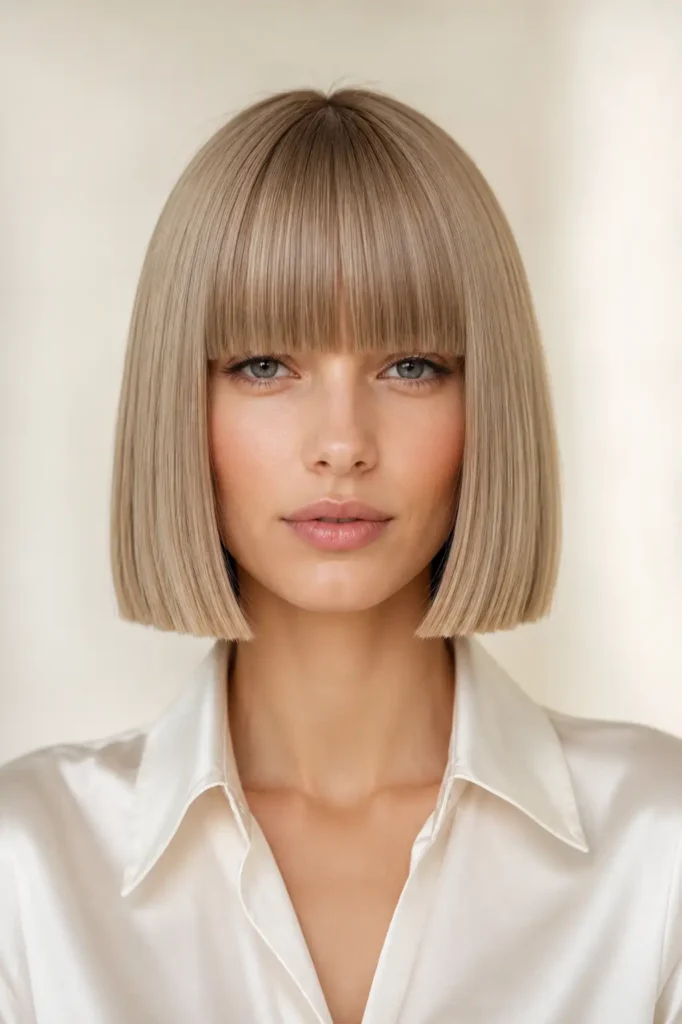
For fine hair, this combination is one of the most effective cuts on the menu. The blunt fringe at brow level creates an additional weight line across the forehead, and combined with the blunt ends at the chin, the hair reads as notably denser than it actually is. Two weight lines, twice the illusion of thickness. It suits oval and heart-shaped faces best. The fringe requires trimming every three to four weeks to stay at the right length, which is the main commitment. A common mistake is cutting the fringe too short initially — always start longer and adjust. For fine hair that has struggled to look full, this cut genuinely changes things.
4. Short Blunt Bob (Above the Jaw)
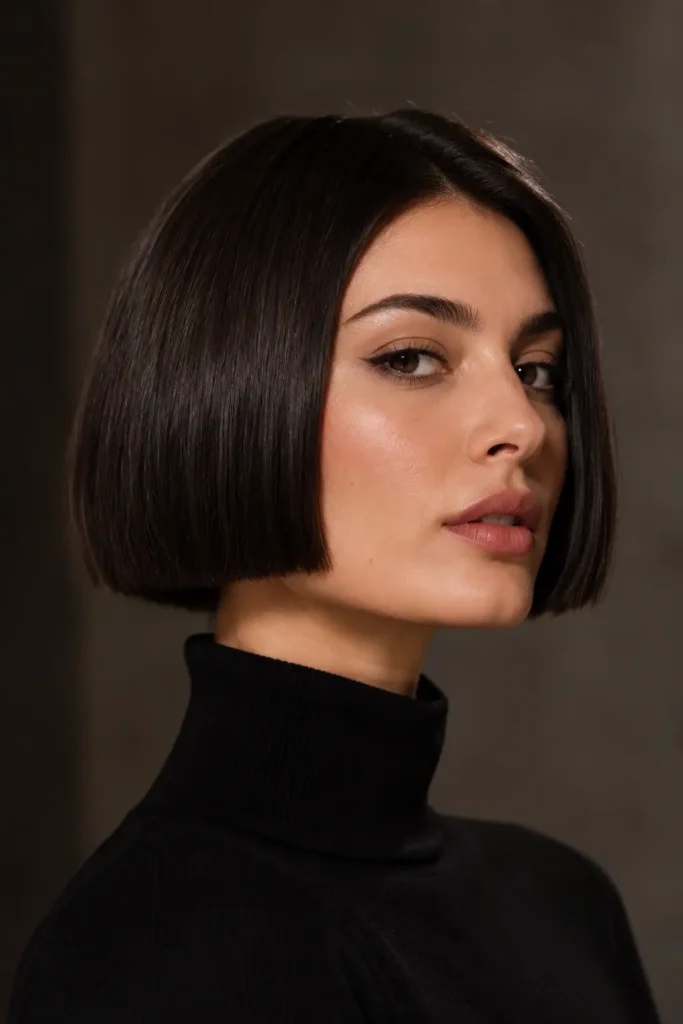
The short blunt bob is the most committed version of this cut — it sits at or above the jaw, which makes the weight line the dominant feature of the entire look. On straight hair, it is architectural. On slightly wavy hair, the softness of the wave prevents it from feeling too severe. This cut suits long, oval, and square faces well. For round faces, it can amplify the roundness, so a slight angle toward the front and a side part help. It is the boldest option in the blunt bob family, and women who go for it tend to find it gives them more confidence than they expected. Trim every five weeks keep it precise.
5. Blunt Bob for Thin Hair at Chin Length
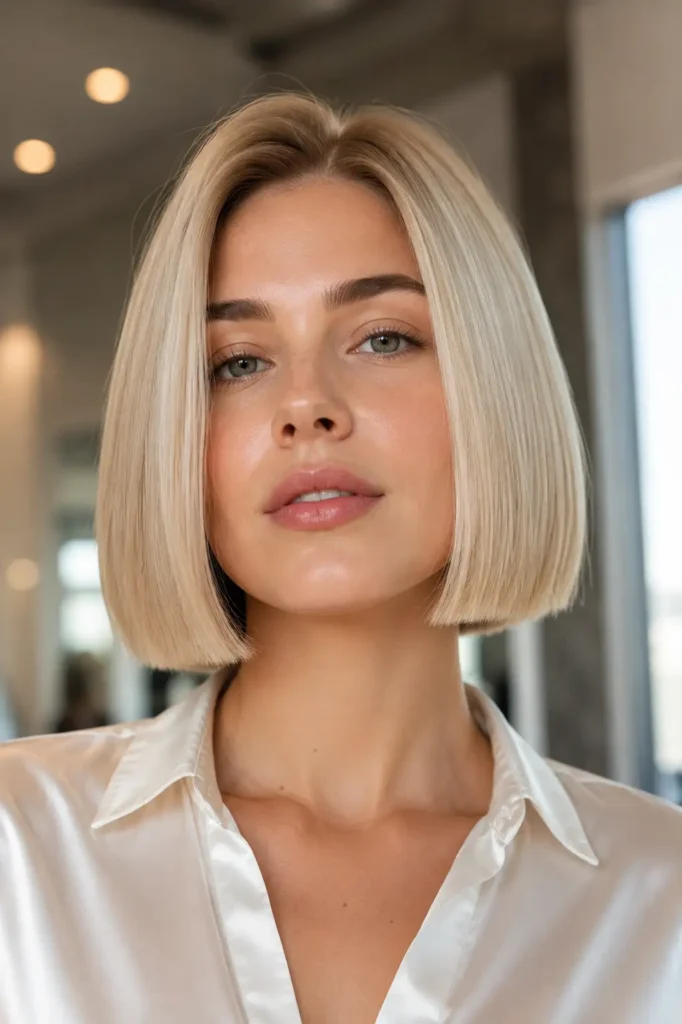
Thin hair and a blunt chin-length bob is a combination worth taking seriously. Many women with thin hair avoid shorter cuts because they worry about looking sparse, but the opposite is often true. Cutting to the chin concentrates all the hair mass at one line and removes the length that pulls thin hair flat under its own weight. The result is a bob that looks noticeably fuller than the same hair at a longer length. A volumizing shampoo and mousse blown in at the roots before drying gives added lift. Avoid heavy oils or serums on very thin hair. The shorter the cut, the fuller it reads — that is the key insight.
6. Blunt Bob with Side Part for Round Faces
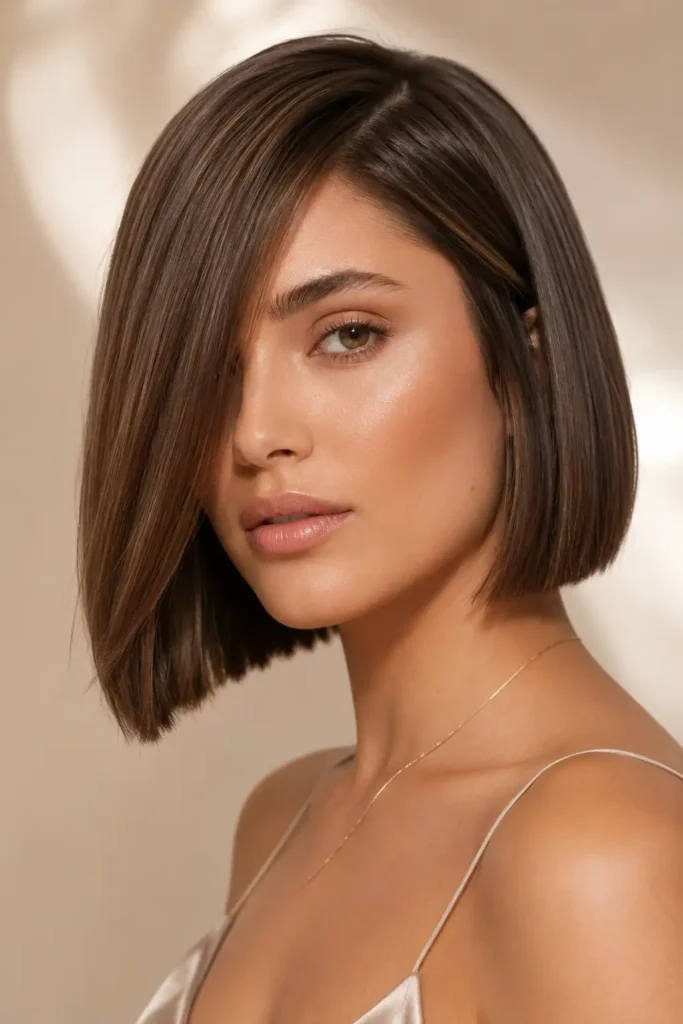
Round faces and blunt bobs work together more than the old styling guides suggested, provided a few structural choices go into the cut. A deep side part is the single most effective adjustment. It breaks the symmetry that amplifies a round face and creates a diagonal line that elongates the face shape. Keeping the length at the chin or just below adds further length visually. Very short, symmetrical blunt bobs are a tougher call on rounder faces, but chin-length and longer work well. Avoid bangs that cut straight across the forehead for this face shape — a side-swept fringe is a much better fit.
7. Medium-Length Blunt Bob for Thin Hair
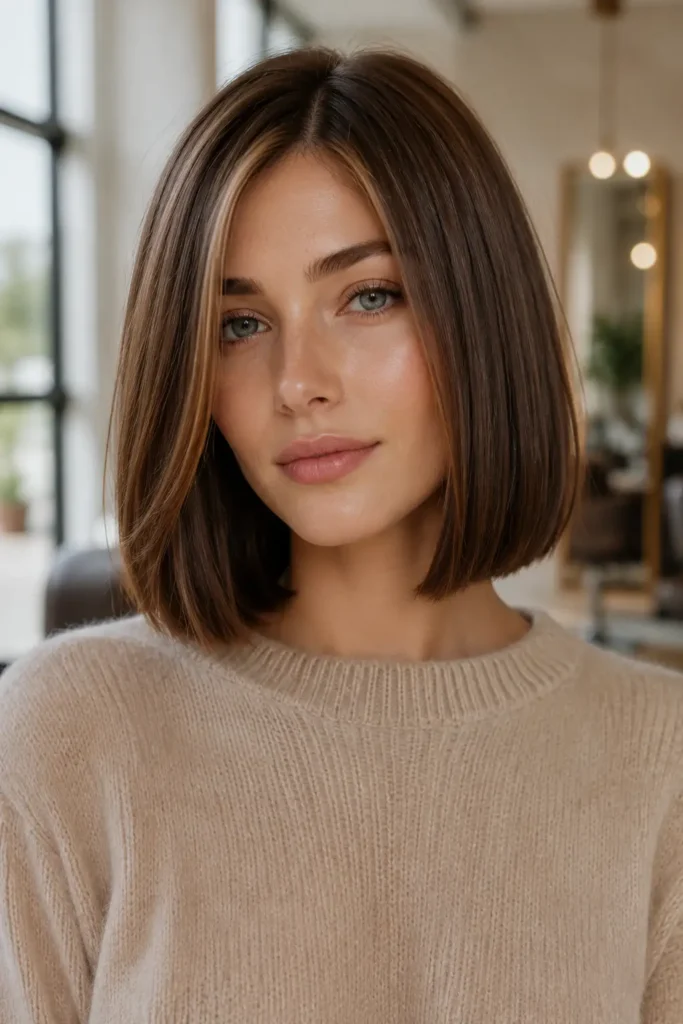
This is the sweet spot for women with thin hair who want a little more length than a chin bob but still want the fullness that a blunt weight line provides. The medium-length blunt bob hits between the chin and the collarbone, which is enough length to pull back or style while still keeping the ends concentrated and full-looking. The key is not going so long that the thin hair separates and reveals scalp at the ends. A good stylist will cut this slightly shorter than it looks wet to account for that behaviour. Styling with a round brush blowout is ideal — the volume it creates at the roots complements the blunt ends perfectly.
8. Sleek Blunt Bob for Thick Hair
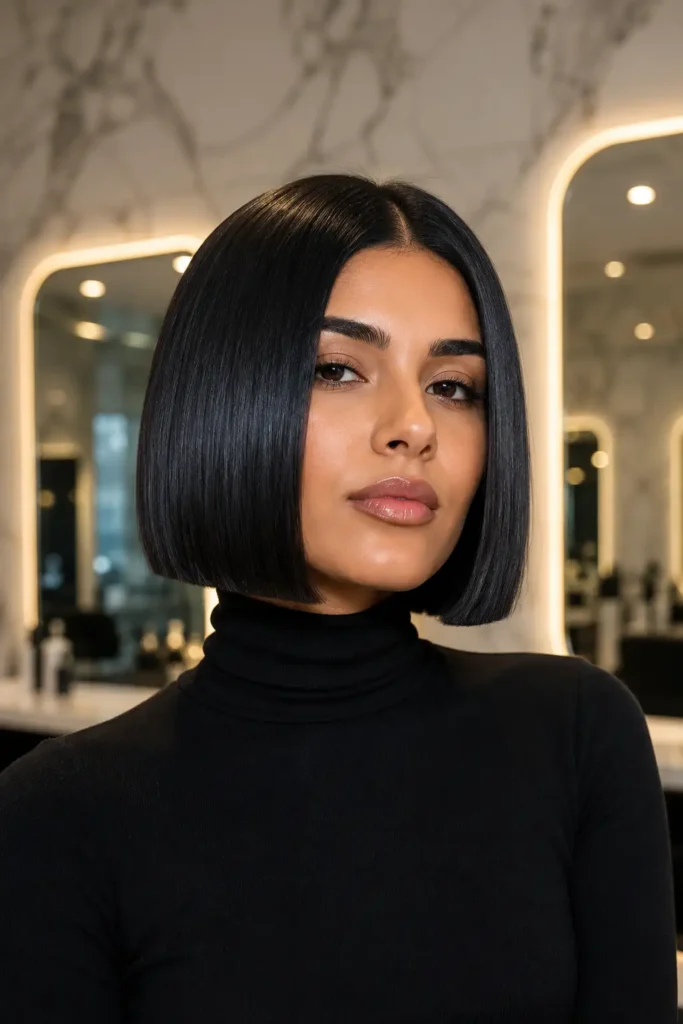
Thick hair makes the blunt bob more dramatic and more demanding in equal measure. The payoff is significant — a sleek blunt bob on thick, healthy hair looks high-end and deliberate in a way that is hard to achieve with any other cut. The challenge is preventing it from looking boxy. A stylist who knows thick hair will remove weight underneath by point-cutting the interior without disturbing the blunt weight line at the surface. Finished with a flat iron for mirror shine, this cut is genuinely striking. It suits oval, square, and long face shapes. Budget for a blowout or flat iron session to get the full effect at home.
9. Blunt Shoulder-Length Bob with Bangs
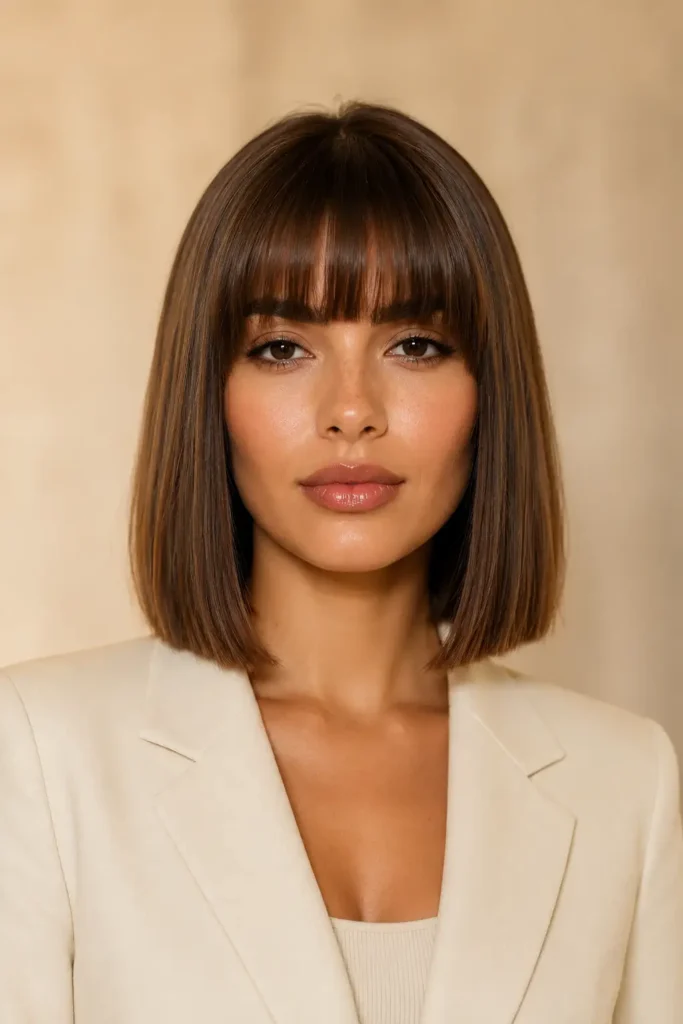
Pairing a shoulder-length blunt bob with a full blunt fringe creates one of the most editorial looks in the entire bob family. The two horizontal weight lines — one across the forehead and one at the shoulder — give the cut a very deliberate, graphic quality. It works best on straight hair where both lines stay clean and visible. On wavy hair, the fringe in particular needs a blow-dry to hold its shape. It suits oval and long face shapes best. The length at the shoulder makes this more wearable day-to-day than a shorter version with bangs, and it photographs beautifully. The fringe commitment is real — plan for trimming every three weeks.
10. Chin-Length Blunt Bob with Curtain Bangs
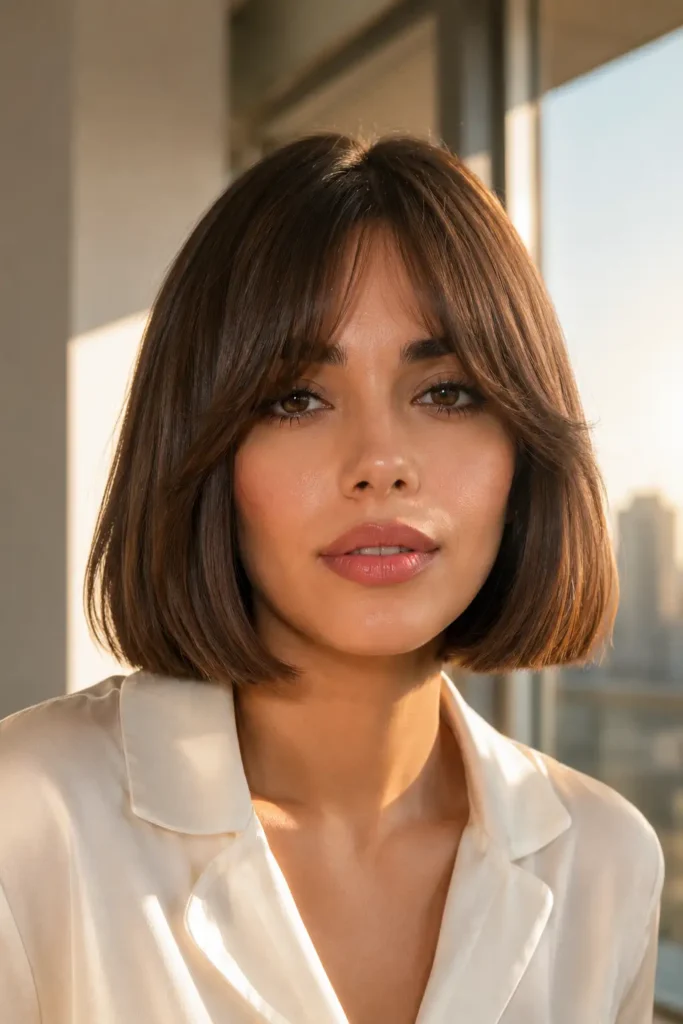
Curtain bangs give the blunt bob a softer entry point for women who want the clean weight line without committing to a full blunt fringe. The bangs part in the middle and sweep outward, creating a face-framing effect rather than cutting straight across. Combined with a blunt chin-length bob, the result is structured but not severe. It suits round, oval, and square faces well because the curtain effect adds vertical movement rather than horizontal weight across the forehead. Maintenance is significantly easier than full blunt bangs — the curtain style has more flexibility in how it grows out and does not need trimming nearly as frequently.
11. Blunt Bob for Wavy Hair
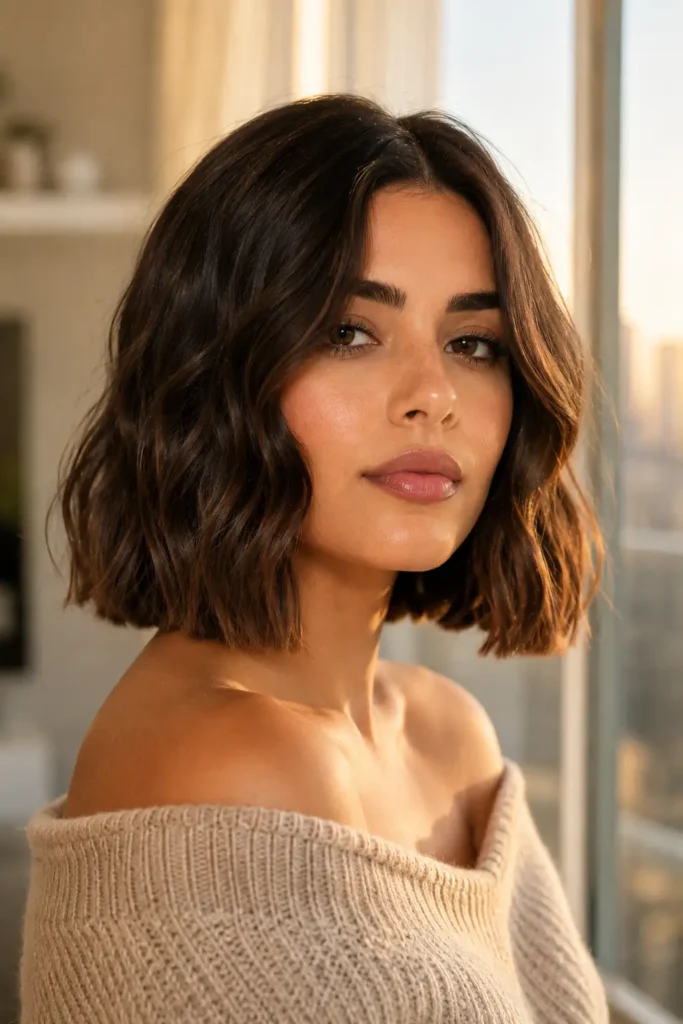
A blunt bob on wavy hair hits a particular sweet spot between structure and ease. The weight line gives the cut its shape and stops it from looking undefined, while the natural wave adds texture that softens the precision. The wave also adds volume at the ends that straight-haired blunt bobs do not have, which is one reason wavy-haired women often find this cut looks particularly full. A point-cut or a small amount of texturising through the ends helps the wave move naturally rather than sitting in a solid block. Air drying with a curl cream gives a relaxed, modern result. A round brush blowout gives a sleeker version of the same cut.
12. Short Blunt Bob for Fine Hair
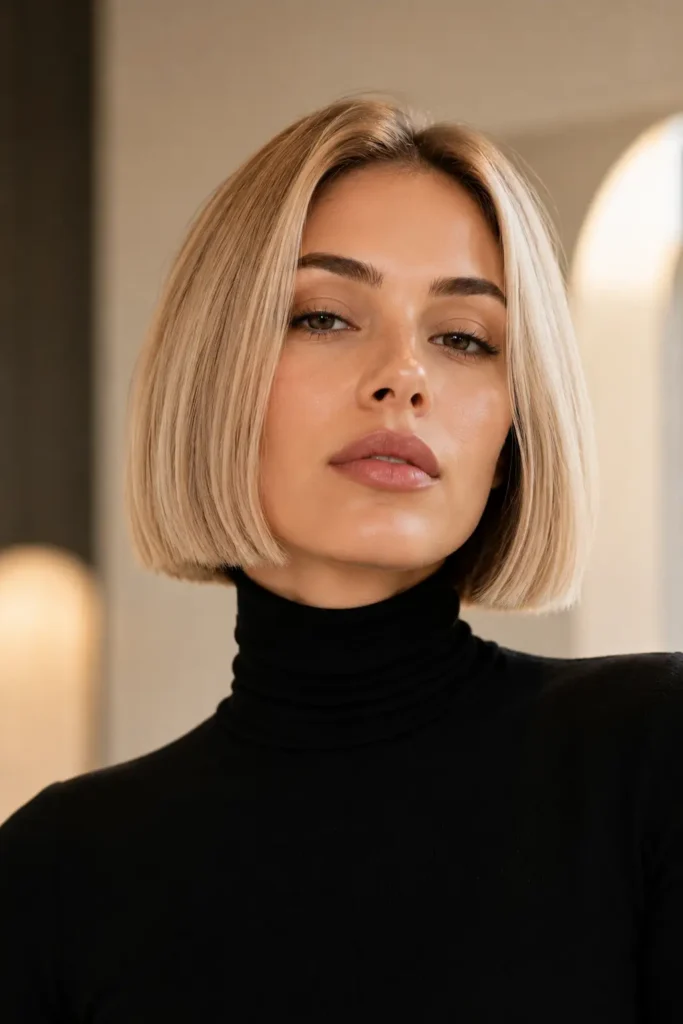
For women with very fine hair, cutting short is one of the best things they can do. A short blunt bob sitting at or just above the jaw removes the length that weighs fine hair down and concentrates all the density at a single point. The result looks significantly thicker than longer fine hair ever manages to. The key styling step is root volume — a volumizing mousse blown in before drying lifts the roots and keeps the crown from going flat, which is the main challenge with fine hair at this length. This is also one of the easiest cuts to maintain style-wise. Five minutes and a round brush is genuinely enough.
13. Blunt Bob with Blunt Bangs for Square Face
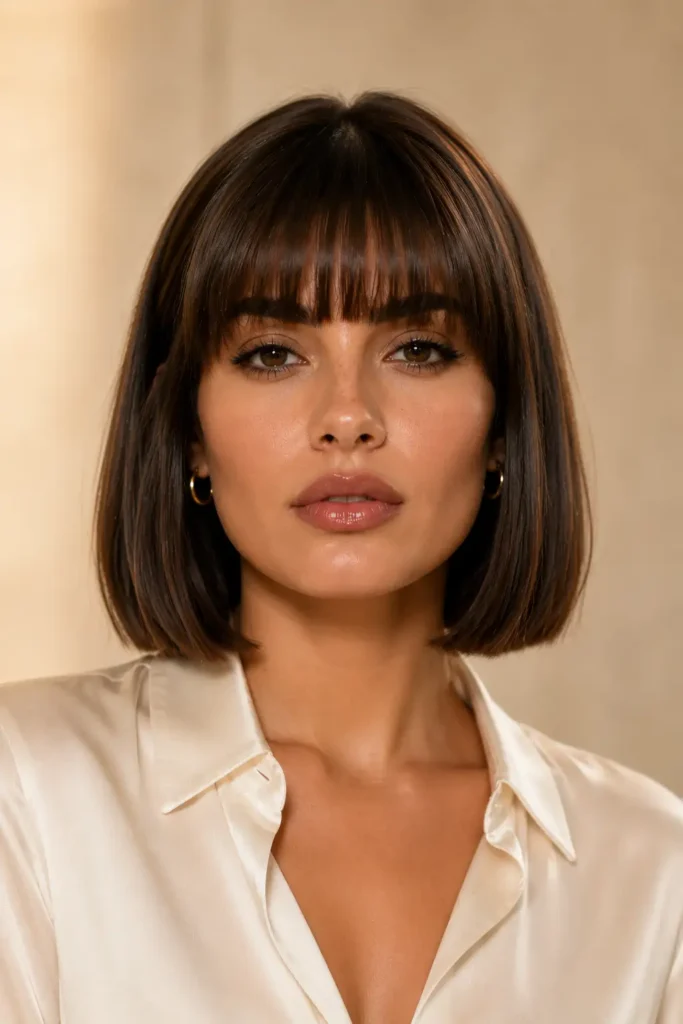
Square faces have strong, defined jawlines, and a blunt bob that ends at the jaw can sometimes emphasize rather than soften that structure. The solution is using a blunt fringe to shift attention upward toward the eyes, which rebalances the proportions. A fringe that sits at the brow or slightly longer draws the eye away from the jaw and lets the angular features read as chiseled rather than heavy. The cut itself should land at or just below the jaw for this face shape. A slight angle inward at the front sections helps soften the corners. This combination is more flattering than the same cut without bangs for many square-faced women.
14. Blunt Collarbone Bob for Thin Hair
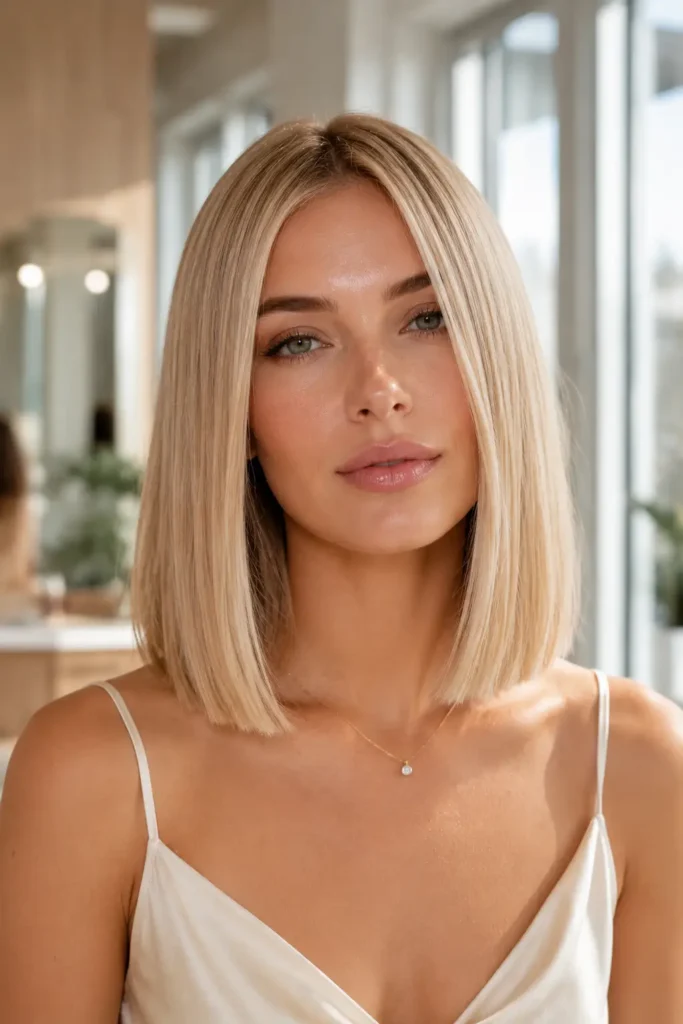
The collarbone is often the longest a blunt bob can sit on thin hair before the ends start to look too sparse. At this length, the hair still has enough weight to sit together and read as full, provided no layers are added. The blunt collarbone bob is a good option for women transitioning from long hair who want something shorter but are not ready for a chin-length cut. It is a flattering, wearable length that suits most face shapes. A lightweight mousse at the roots before blowdrying keeps the volume going through the day. Avoid heavy finishing products — on thin hair at this length, they drag the ends down and undo the fullness effect.
15. Blunt Bob with Side-Swept Fringe
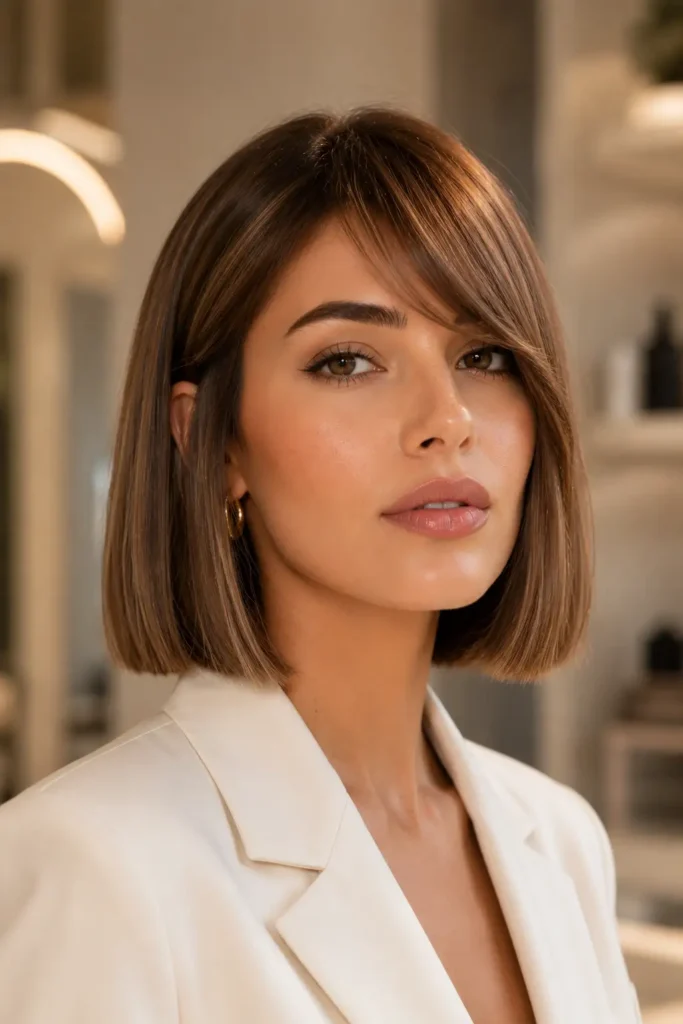
The side-swept fringe is a gentler alternative to both the blunt fringe and the curtain bang. Rather than a definitive bang line, it sweeps diagonally across the forehead in one direction, which adds a soft retro quality to a blunt bob without the maintenance commitment of a full fringe. It flatters most face shapes, including round faces, because the diagonal of the fringe creates movement rather than a static horizontal line. On fine hair it is particularly effective — the additional hair across the forehead adds to the overall impression of density. Styling takes about two minutes with a round brush, which makes this one of the more practical bang options to maintain.
16. Blunt A-Line Bob
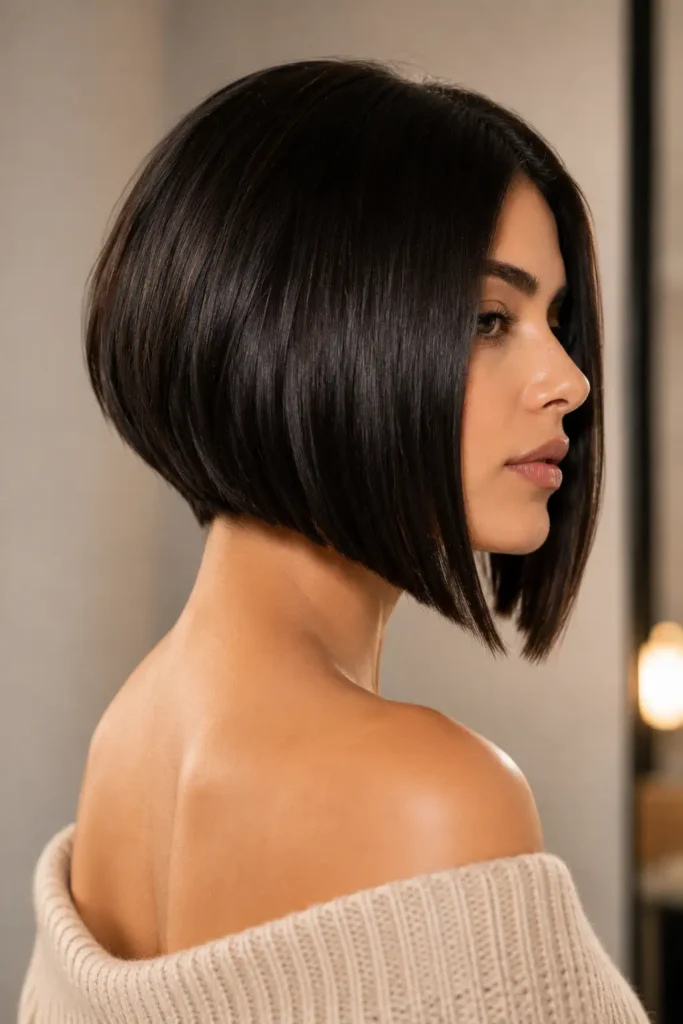
The A-line bob takes the blunt cut and gives it a directional angle — shorter at the nape and back, longer at the front, with a clean diagonal line connecting the two. The blunt version of this cut makes the angle sharper and more visible than a layered or textured A-line. It is a more structured, editorial look that suits straight to slightly wavy hair best. On curly hair the angle can be unpredictable due to curl shrinkage. It works especially well for long and oval face shapes. The shorter back keeps the nape clean and adds a touch of modern edge. A back three-quarter photo of this cut always performs well on Pinterest because the angle reads beautifully.
17. Blunt Bob with Wispy Fringe for Thin Hair
Thin hair and a full, blunt fringe is a combination that works, but a wispy fringe offers a softer take on the same idea, making it easier to maintain and more forgiving as it grows out. The wispy fringe has lightly point-cut ends that sit across the forehead without the graphic heaviness of a full blunt bang. For thin hair, this approach adds density across the forehead without committing to a fringe that needs trimming every three weeks to stay sharp. Combined with a blunt bob at the chin or shoulder, the wispy fringe creates a face-framing effect that adds warmth and softness. It is a good first-fringe option for women who have never had bangs before.
Frequently Asked Questions
Is a blunt bob good for fine hair?
A blunt bob is one of the best possible cuts for fine hair. Because all the hair is cut to the same length, all the density concentrates at the weight line rather than tapering gradually toward the ends. This creates the appearance of more hair than is actually there. A chin-length or medium-length blunt bob works particularly well for fine hair. Avoid adding too many layers, which thins fine hair further and removes the density that makes the blunt cut so effective.
What is the difference between a blunt bob and a regular bob?
A blunt bob is cut so that all the hair sits at exactly the same length, creating a clean, solid weight line with no graduation or tapering. A regular bob can include internal layers, graduation, or texturizing that gives the ends movement and softness. The blunt version looks more precise and structured, while a layered bob looks more relaxed and textured. The blunt cut is better for adding visual weight to fine hair. Layered bobs work well for thick hair that needs bulk removal.
How often does a blunt bob need to be trimmed?
More often than most cuts, because the precision of the blunt line is visible and grows out quickly. Short blunt bobs, like a jaw-length or above-jaw cut, need trimming every five to six weeks. Medium and shoulder-length blunt bobs can stretch to seven or eight weeks. The moment the ends lose their clean line and start to look uneven, the whole effect of the cut diminishes. If you can only get to a salon every ten to twelve weeks, a softer or more textured bob is a more practical choice.
Can you get a blunt bob on curly hair?
Yes, but it requires a stylist who cuts curly hair dry and understands curl shrinkage. Curly hair cut wet ends up significantly shorter than intended once it dries and springs up. A blunt bob on curly hair should be shaped dry so the stylist works with the actual curl pattern. The weight line will not be as visibly defined as on straight hair because curls create their own texture, but the cut still creates a rounded, full shape that suits curly hair well.
What face shape suits a blunt bob best?
Oval and long face shapes suit almost any length of blunt bob. Long faces benefit from shorter blunt bobs that add horizontal width at the jawline. Square faces look well in blunt bobs that land just below the jaw, letting the cut soften the angular features slightly. Round faces work best with chin-length or longer blunt bobs, a side part, and a fringe that sweeps to one side rather than cutting straight across. Very short, symmetrical blunt bobs can be challenging on round faces.
Does a blunt bob work for thick hair?
Yes, but it needs skilled cutting to prevent the hair from sitting in a boxy, helmet-like shape. A good stylist will remove weight from underneath the hair through point-cutting or slicing, which reduces the bulk without disturbing the clean blunt line at the surface. Done correctly, thick hair with a blunt bob looks sleek and high-fashion. Skipping the internal weight removal is the most common mistake with thick hair and blunt cuts.
What is the best blunt bob length for thin hair?
Chin length is often the most effective for very thin hair because it keeps the ends from separating and looking sparse. At the chin, all the hair gathers into a concentrated line that looks noticeably fuller than longer lengths. If you prefer something a bit longer, the collarbone is about the maximum length that thin hair handles well in a blunt bob. Beyond that, the weight distribution spreads too much and the fullness benefit starts to disappear.
Can I style a blunt bob without heat tools?
On wavy hair, yes — a blunt bob can air-dry into a full, soft shape with a curl cream or sea salt spray. On straight hair, air-drying a blunt bob tends to look flat without at least a round brush blowout to add volume at the roots. The blunt weight line helps because the ends have structure built in, but the roots need lift. A diffuser on low heat works for wavy hair without straightening it. For a polished, sleek finish on straight hair, a round brush is the minimum.
What is a blunt bob with bangs called?
There is no single official name for the combination, but a blunt bob with a matching full blunt fringe is sometimes called a “French bob” when it is short with above-brow fringe, or just a “blunt bob with bangs” for longer versions. A blunt bob with curtain bangs is a distinct variation that has become popular in its own right. The combination of a blunt weight line at the ends and a fringe adds two horizontal weight lines to the hair, which makes fine hair in particular look significantly fuller.
How do I add volume to a blunt bob on thin hair?
Start with a volumizing shampoo and conditioner. Apply a lightweight mousse from roots to mid-length on damp hair before blow-drying. Use a round brush to lift the roots as you dry, directing the hair upward and outward. A flat nozzle on the dryer concentrates the airflow and gives more lift than a diffuser on straight thin hair. Avoid heavy finishing products like oils or waxes, which flatten thin hair. A very light-hold hairspray at the roots after drying locks in the volume without weighing it down.
Choosing the Blunt Bob That Works for Your Hair, Not Just for Photos
The blunt bob is one of the most photographed haircuts on the internet right now, and with good reason. It is clean, it reads as confident, and it delivers a polished result that is genuinely hard to achieve with other cuts. But the best blunt bob for you is not the most popular one on Pinterest this week. It is the one that suits your hair texture, your face shape, and the amount of time you actually spend on your hair.
Fine and thin hair should take the chin-length and short options seriously. The fullness effect is real, and many women with fine hair find that this cut changes how their hair looks and feels more than any product ever did. Thick hair can handle longer lengths with more impact. Wavy hair has options across almost the entire range.
Bring photos to your stylist. Bring multiple if possible — front, side, and back views if the cut has a shape that changes from different angles. Have a direct conversation about what your specific hair will and will not do. A stylist who knows blunt cuts will give you an honest answer about which variation fits your texture and how much maintenance to expect.
The right blunt bob, on the right hair, at the right length, is one of those cuts that earns you compliments for months after you get it. Find yours, book the appointment, and trim it consistently. That is the whole formula.

Sarah Williams
Hi, I’m Sarah Williams — the founder of HerStyleNest, where beauty meets modern style. I share trendy hairstyles, chic nail designs, and fashion inspiration for women who love staying stylish every season. From everyday elegance to viral beauty trends, HerStyleNest is your go-to destination for effortless fashion and beauty ideas.