
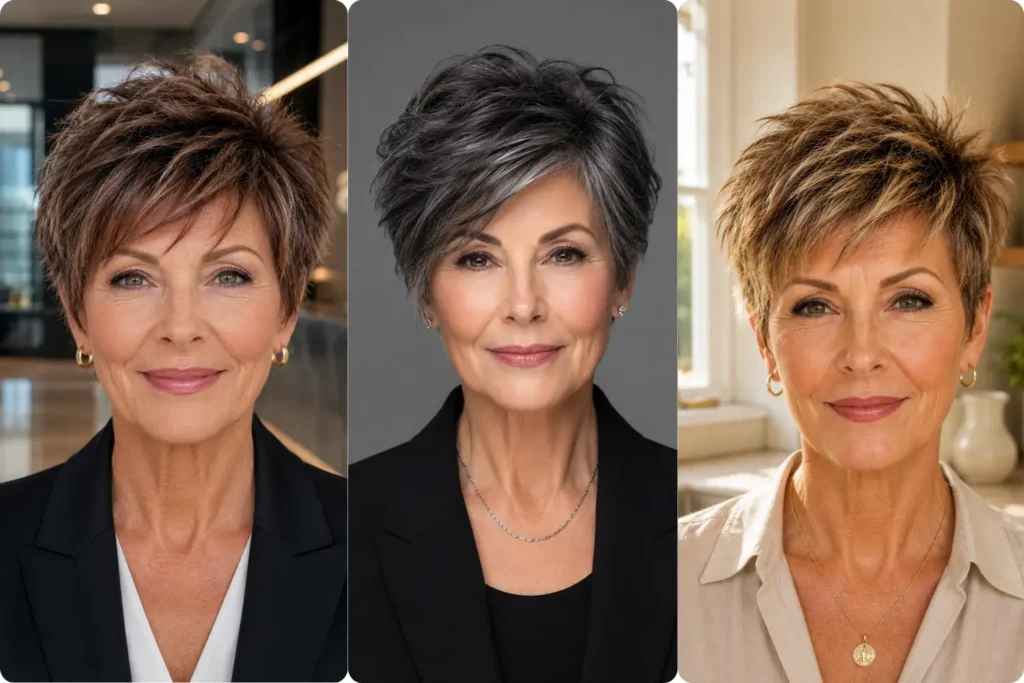

24 Edgy Choppy Pixie Haircuts for Women Over 50
I cut my own hair into a choppy pixie the week I turned fifty-two, mostly out of frustration with a blow-dryer that wasn’t doing my thinning crown any favours. Five years and roughly forty trims later, I still haven’t looked back, and neither have most of the women who sit in my chair asking for “something shorter, but not old-lady short.” I hear that exact phrase almost every week.
A bad pixie can age you. A good one, cut with the right amount of choppy texture, can take years off both your face and your morning routine — and honestly, it’s click-worthy too, the kind of cut that gets stopped-in-the-grocery-line compliments.
1. Silver Fox Razored Crop
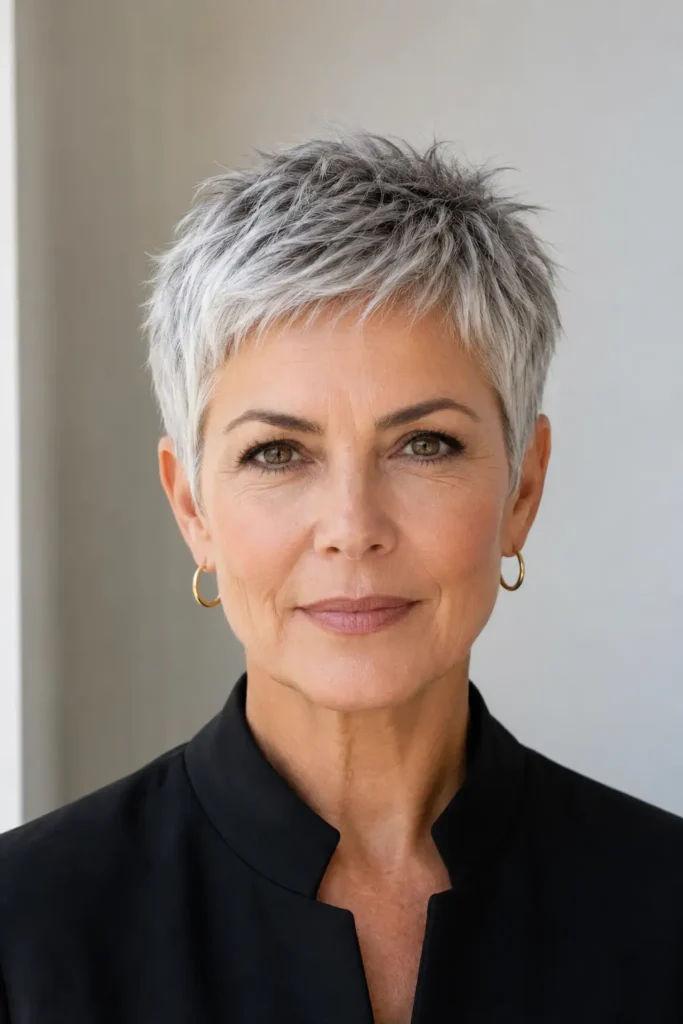
This is the cut that convinced me grey isn’t something to hide. A razor, not scissors, does most of the work here, slicing the ends so the natural silver catches light instead of sitting flat. I tell clients to grow out about three inches of regrowth before chopping, since a patchy transition shows up more under short hair than under long hair. Maintenance: a trim every five weeks, non-negotiable.
2. Espresso Brown Choppy Pixie With Long Fringe
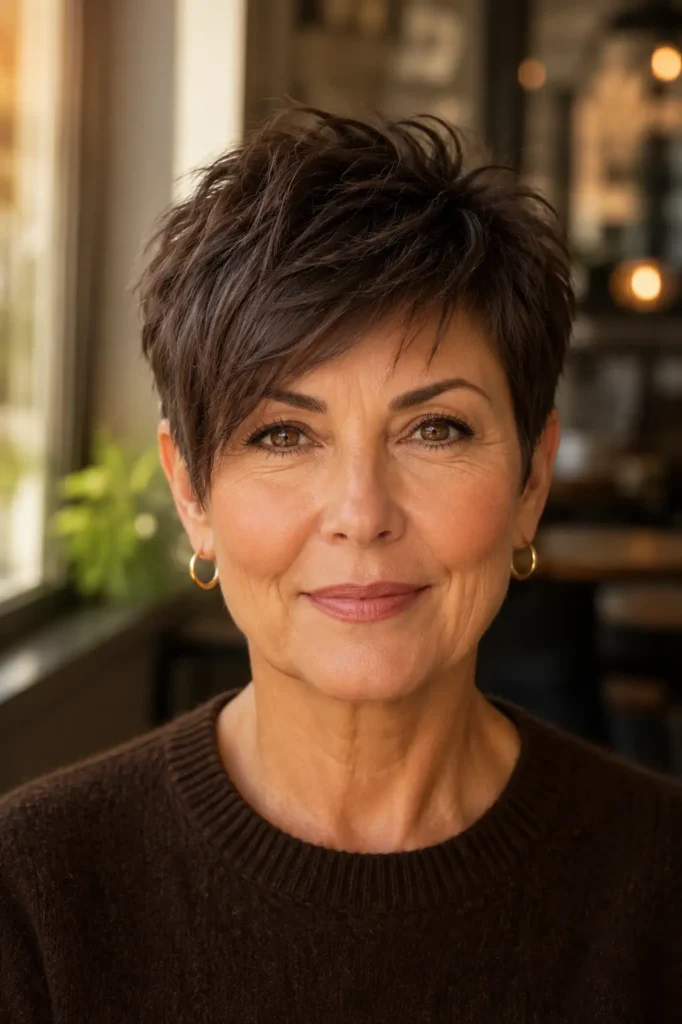
My client Renee wanted to keep some length up top because she wasn’t ready to lose her fringe entirely, so we kept three inches on the crown and razored everything else short and choppy. The espresso-brown depth makes thin hair photograph as fuller than it actually is. It suits oval and heart-shaped faces best; round faces usually need the fringe swept to one side instead of straight across.
3. Platinum Blonde Spiky Crop
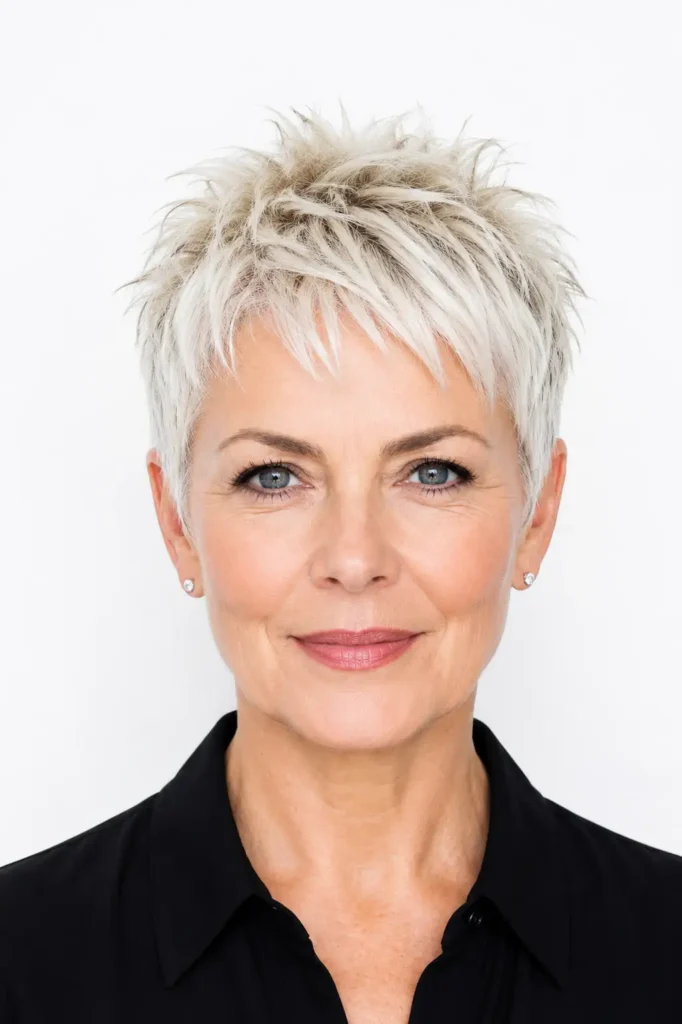
Platinum on mature hair is unforgiving if your stylist skips the bond-building step, and I learned that the hard way on my own head back in 2019, when three rounds of bleach left my ends like straw. Done properly, with a gloss every four weeks and a purple shampoo at home, this spiky, choppy platinum crop reads modern and confident rather than try-hard, especially against fair or cool-toned skin.
4. Asymmetrical Undercut Pixie
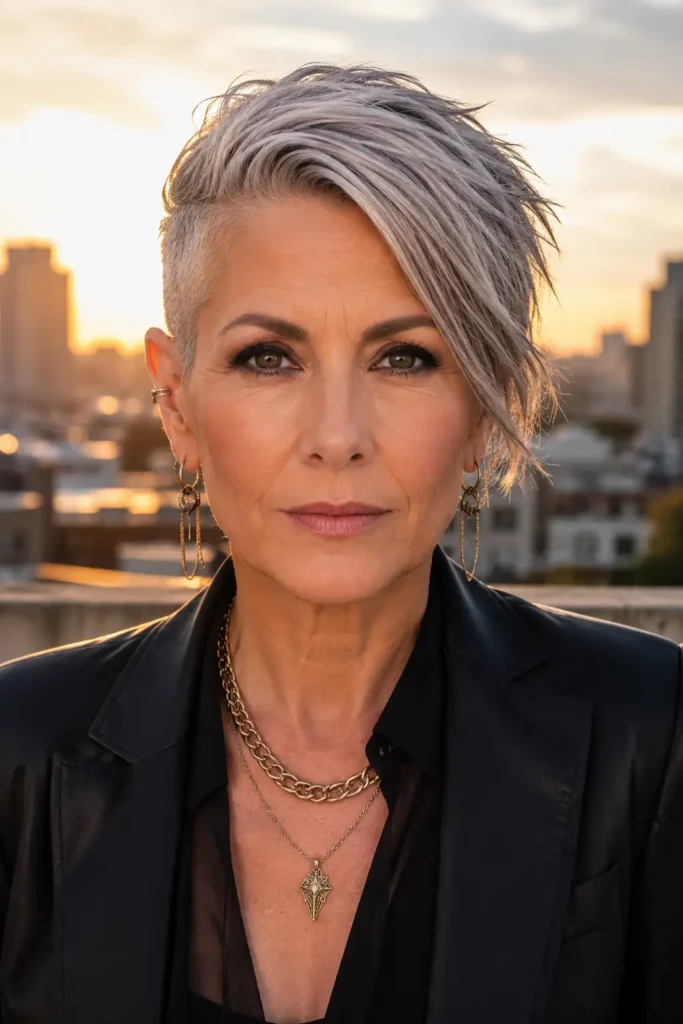
This is the boldest cut on the list, and the one I steer first-timers away from until they’ve lived with a regular pixie for at least a year. One side stays longer and sweeps over the undercut side, creating sharp asymmetry. It needs a skilled hand with clippers, not just scissors, and grows out unevenly fast, so plan on a trim every three to four weeks to keep the shape sharp.
5. Rose Gold Choppy Pixie
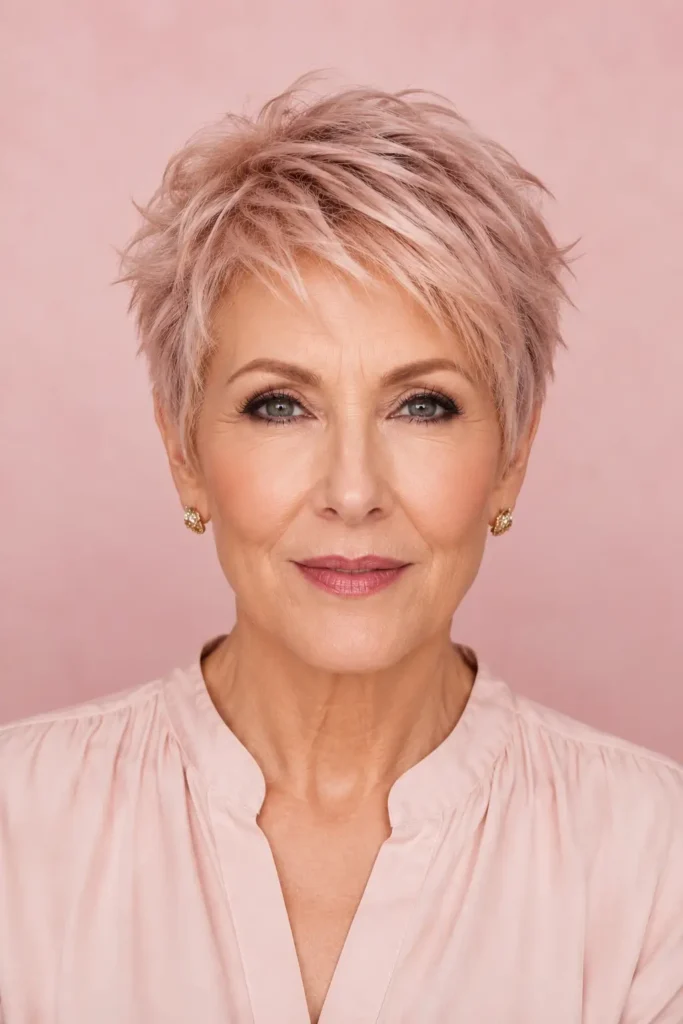
Rose gold sounds like a color for twenty-somethings until you see it on silver-blonde natural hair instead of bleached virgin hair — the undertone softens against mature skin in a way I genuinely didn’t expect the first time I tried it on a client. It fades within three to four weeks, so this look suits someone who enjoys refreshing their color regularly, not someone chasing a low-maintenance routine.
6. Salt-and-Pepper Faux Hawk
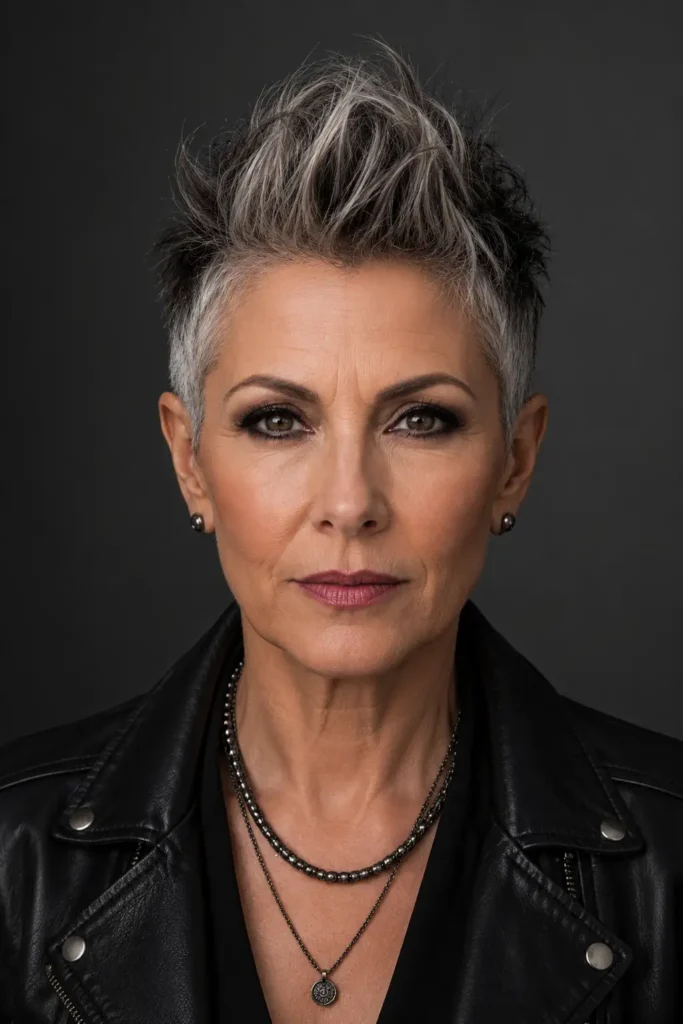
Think of this as the undercut’s gentler cousin — sides are cropped close but not shaved bare, and the center strip is left longer and pushed up with a strong-hold paste for a soft, lived-in faux hawk rather than a punk one. Salt-and-pepper grey looks especially striking here, because the natural contrast between dark roots and silver strands does half the styling work for you already.
7. Caramel Balayage Choppy Crop
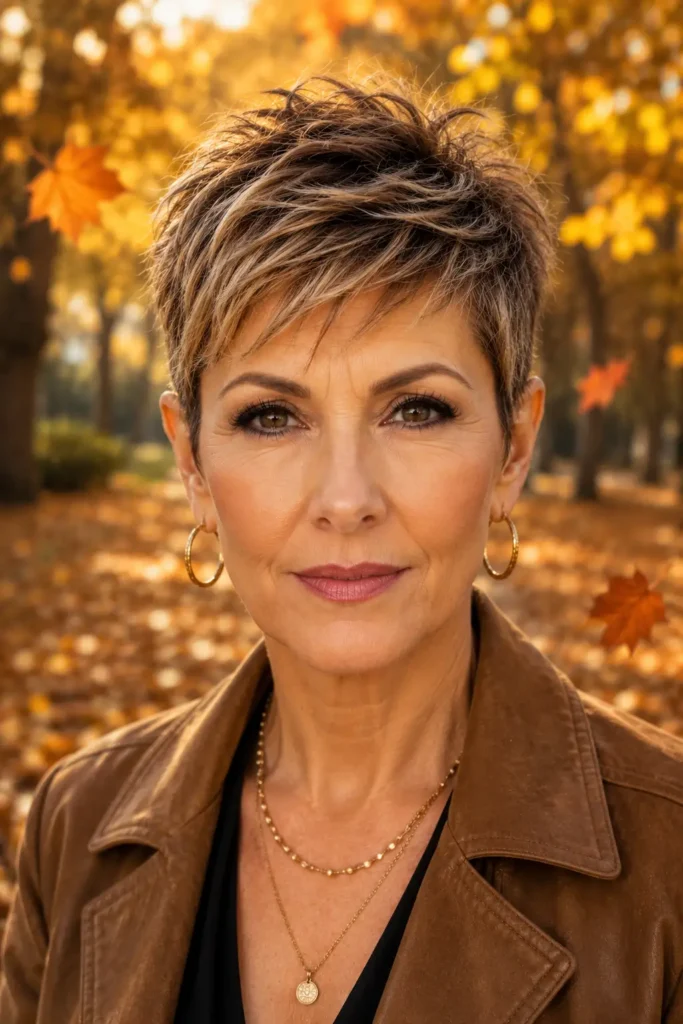
Balayage on short hair has to be placed differently than on long hair, closer to the part and around the face rather than just at the ends, or the color disappears within two cuts. My favorite version sweeps caramel tones through a choppy crop so the lighter pieces catch every layer instead of pooling at the bottom the way they would on a longer style. Low upkeep, surprisingly big payoff.
8. Icy Blonde Textured Pixie With Curtain Bangs
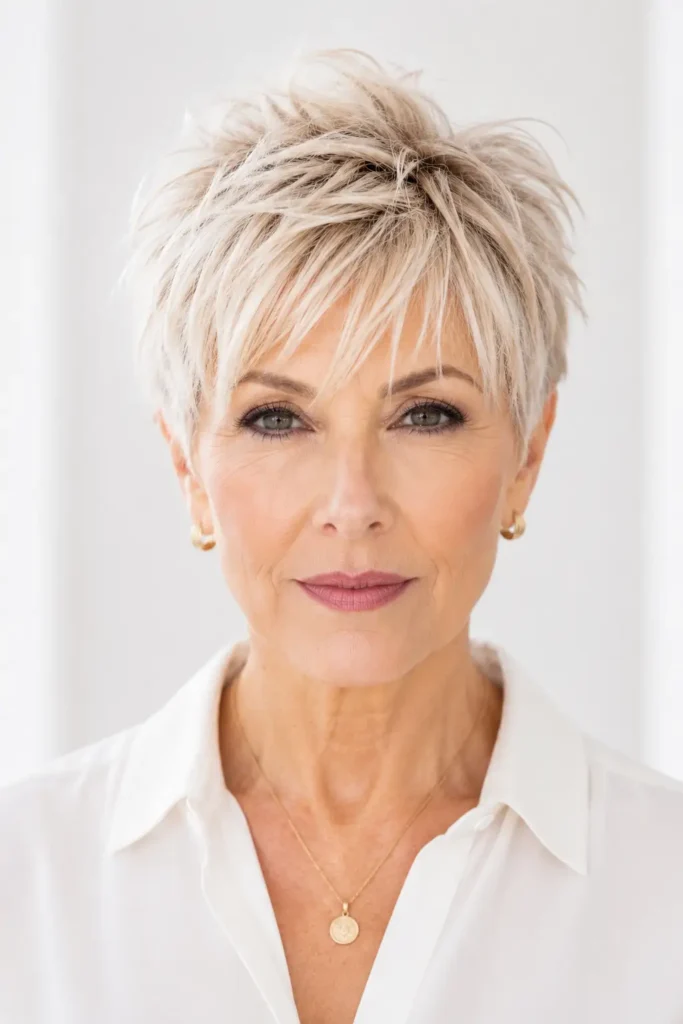
Curtain bangs on a pixie split down the middle and frame both sides of the face, softening any harsh angles a fully cropped style can sometimes create. Pair them with an icy, almost white-blonde tone and the whole look feels cool and editorial rather than severe. It does need a flat-iron touch-up most mornings if your hair has any natural wave, so be honest with yourself about your patience level.
9. Burgundy Wine Choppy Pixie
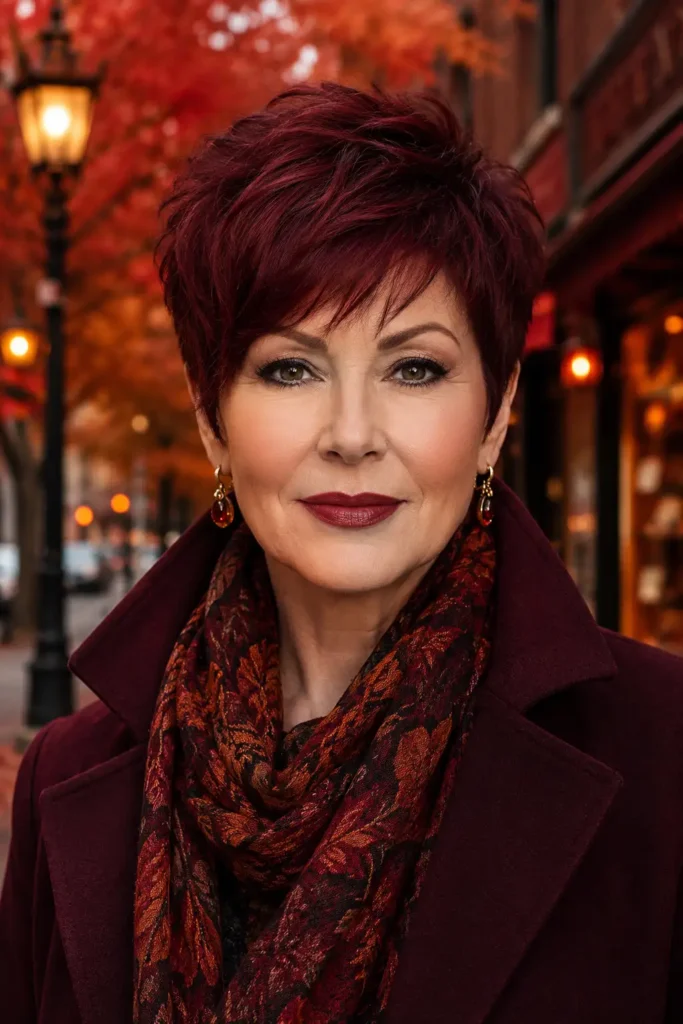
Deep burgundy genuinely flatters more skin tones than people expect, especially fair and olive complexions with cool undertones. On a choppy pixie, the richness of the color makes the texture look more deliberate, almost sculpted rather than simply short. The catch is upkeep — wine tones fade to brassy orange faster than nearly any other color, so a colour-depositing conditioner between salon visits becomes essential, not optional.
10. Soft Charcoal Grey Pixie With Side Part
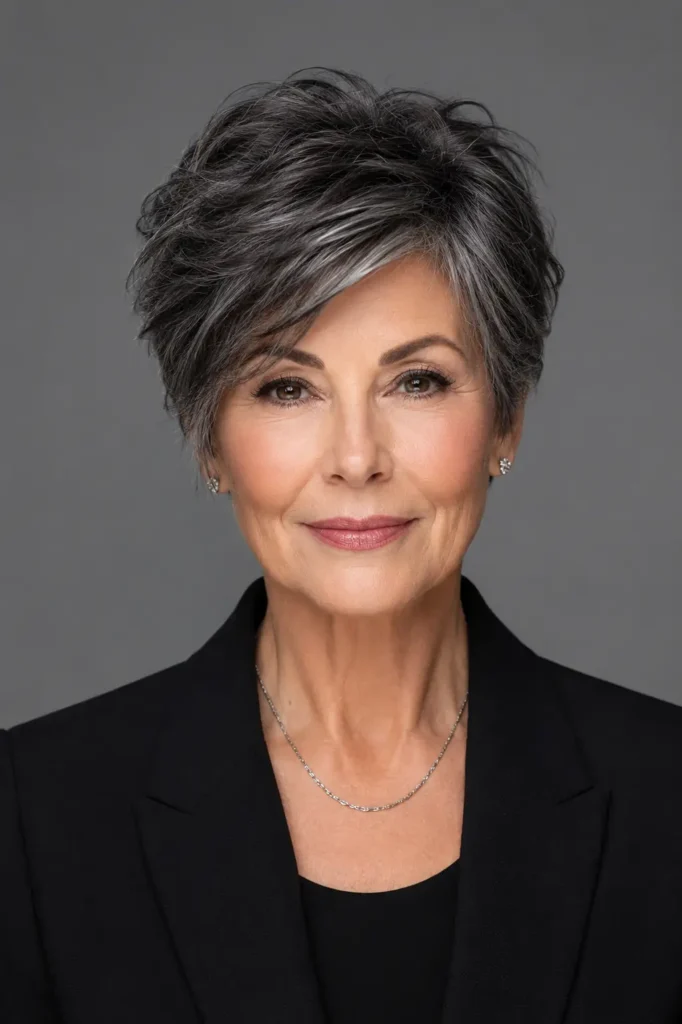
Not every grey has to be silver-bright. Charcoal grey, achieved naturally or through a smoky toner over lighter strands, gives a softer, smokier finish some of my clients prefer because it reads less stark under fluorescent office lighting. A deep side part adds height at the crown too, which matters more than people think. Once hair starts thinning, there in your fifties and sixties.
11. Honey Blonde Choppy Bob-Pixie Fusion
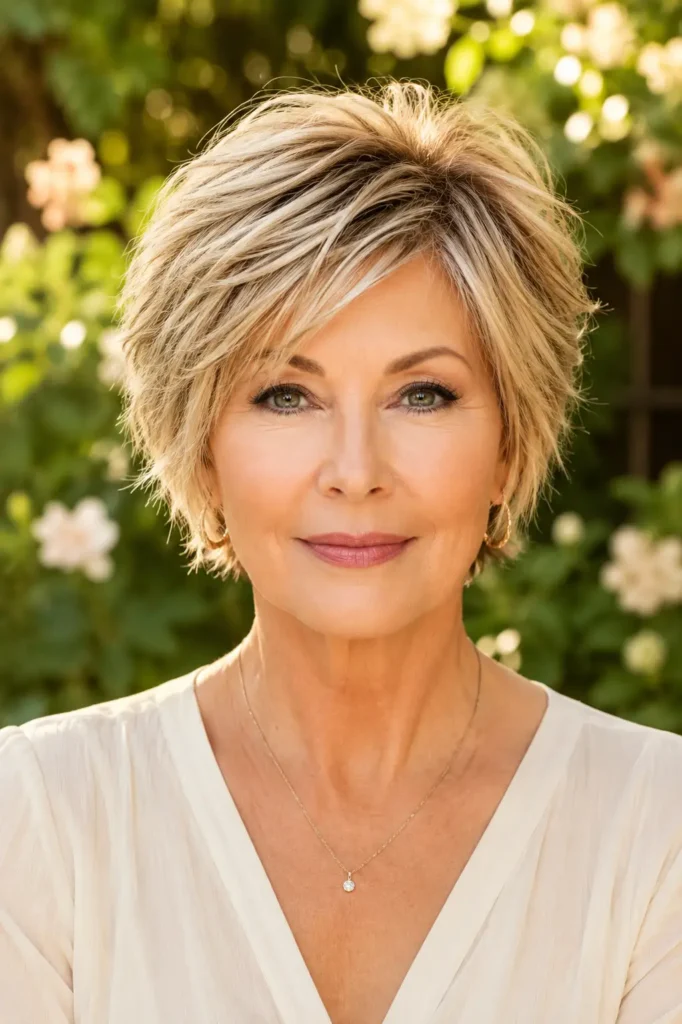
This sits between a pixie and a bob, with extra length left at the nape and longer pieces framing the jaw, making it a good bridge cut for anyone nervous about going fully short on the first visit. Honey blonde warms up the whole face and pairs beautifully with naturally greying roots left visible at the part — a low-maintenance combination I recommend often for first-time short-hair clients.
12. Jet Black Choppy Crop With Undercut Sides
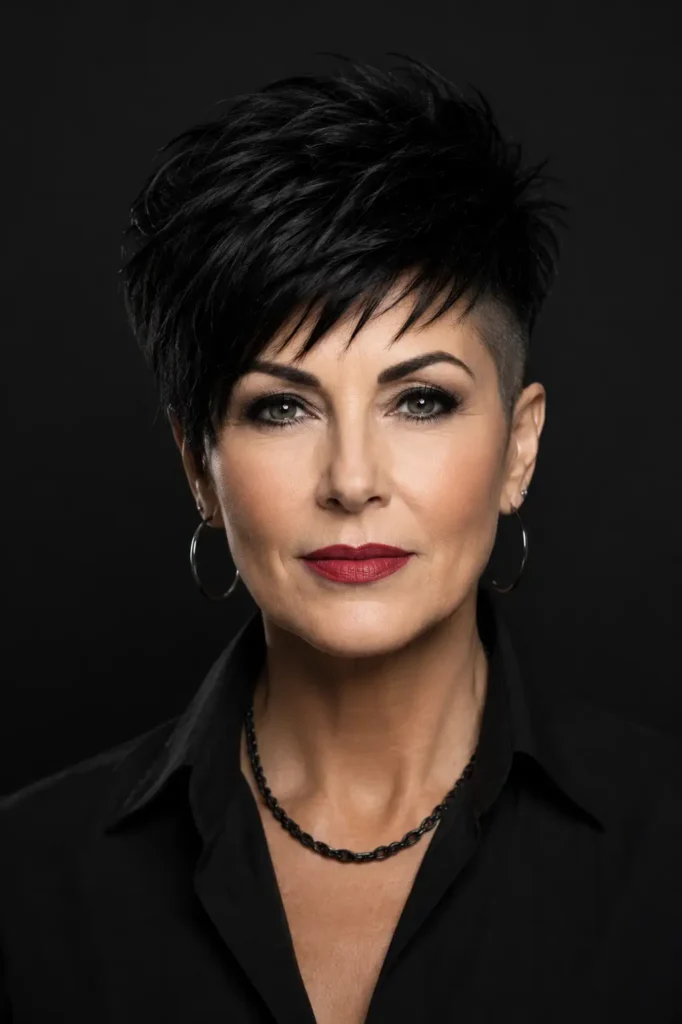
High contrast, high impact — jet black only works on this list if your natural color, or your colourist, keeps it glossy rather than flat and matte, since dull black on mature skin can read heavier than intended. The undercut sides keep the overall silhouette light despite the dark color, and a shine serum on damp hair before drying makes a noticeable difference in how polished it looks.
13. Champagne Blonde Wash-and-Go
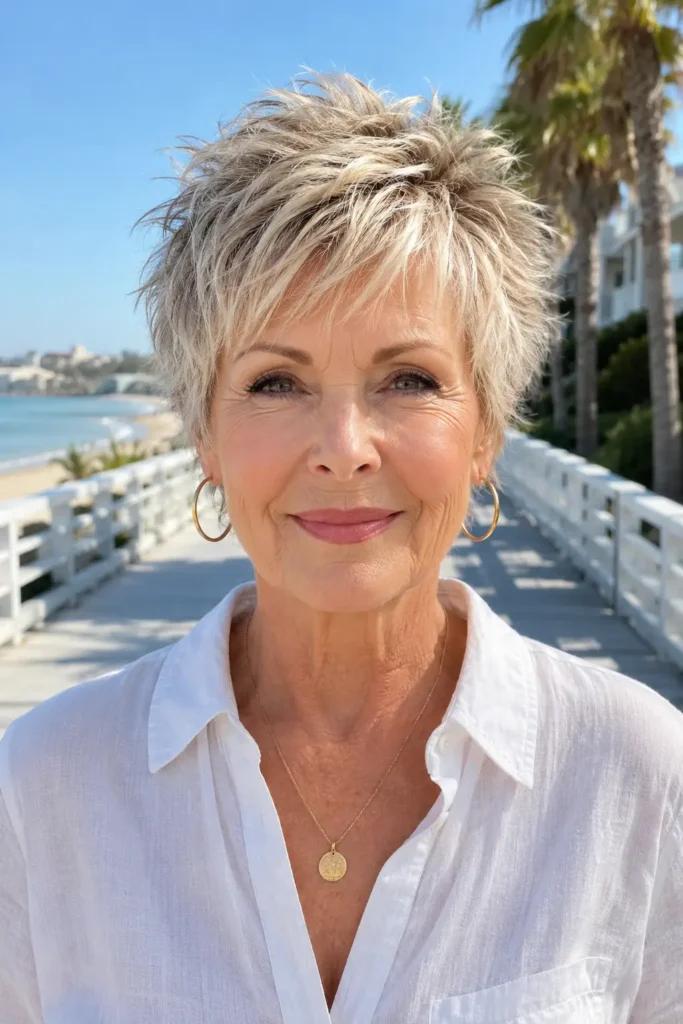
If you travel often or simply hate styling tools, this is the cut to request. Champagne blonde is forgiving of natural texture and root regrowth, and the choppy cut is engineered to look intentionally undone — scrunch a texture cream through damp hair, let it air dry, and you’re done. I wore a version of this through an entire two-week trip to Portugal without packing a single hot tool.
14. Copper Red Spiky Choppy
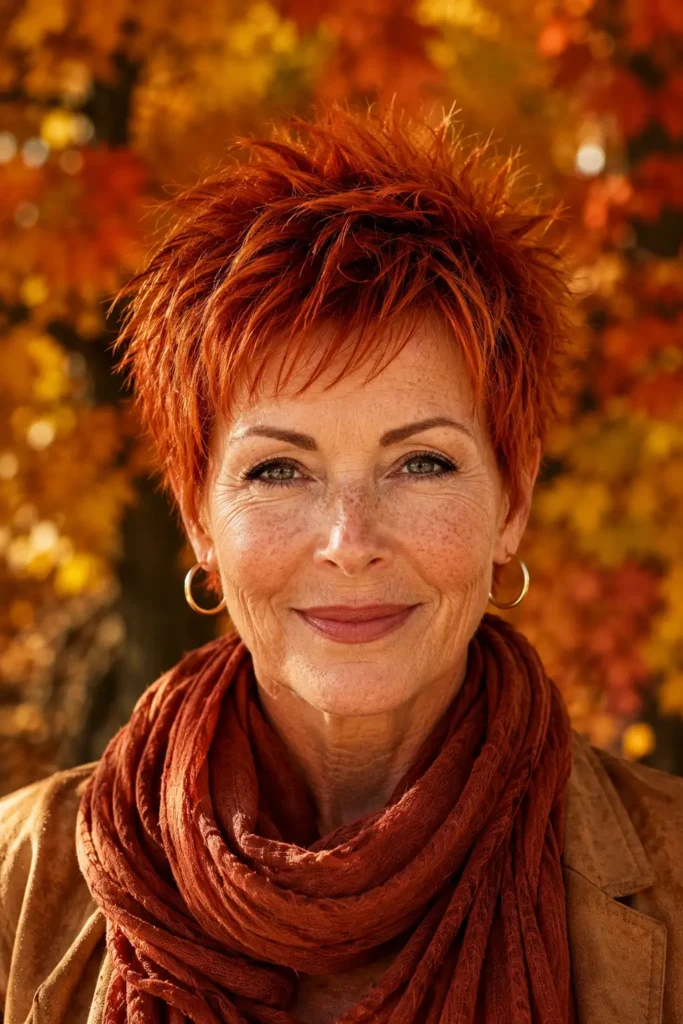
Copper is high commitment but high reward — it’s one of the few colors that genuinely seems to glow against fair and medium skin tones in person, not just in photographs. The spiky, choppy finish needs a strong matte paste worked through dry hair with fingertips, not a brush, or you lose the separation between pieces that makes the whole style read as deliberate rather than just messy.
15. Mocha Brown Pixie With Long Top
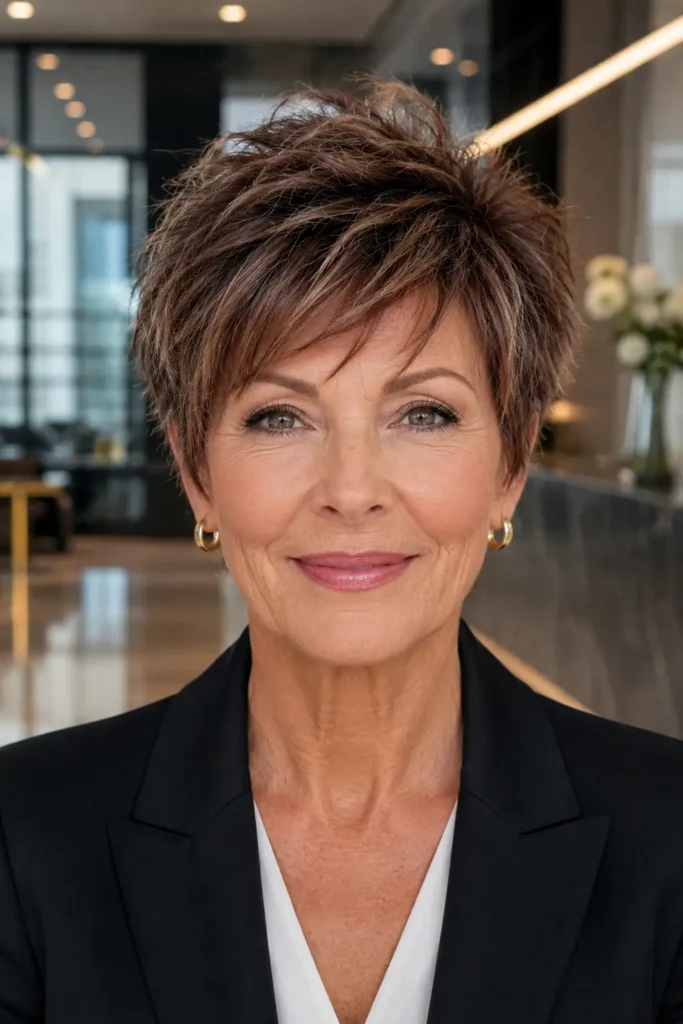
Leaving extra length on top and razoring the sides and back short gives you a style that can be brushed back for a sleek, almost businesslike look on a Monday and tousled with texture paste into something edgier by Friday night. Mocha brown is one of the most universally flattering base colors I work with, since it carries enough warmth to soften mature skin without looking artificial.
16. Choppy Pixie With Dramatic Side Shave
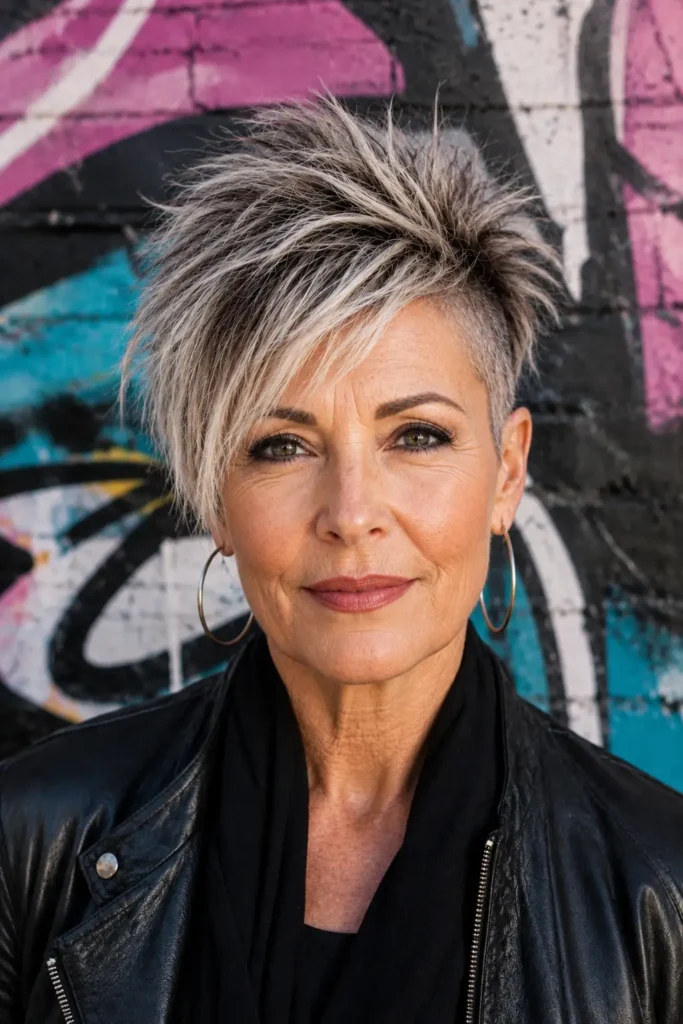
More dramatic than a standard undercut, a true side shave removes hair down to a quarter-inch or less on one section, leaving the rest long and choppy on top. I’ve only recommended this to a handful of clients, all of whom already had strong, confident personal style and wanted their hair to match it. It’s a statement, not a default, and needs touch-ups every two weeks to stay sharp.
17. Soft White Silver Pixie For Fine Hair
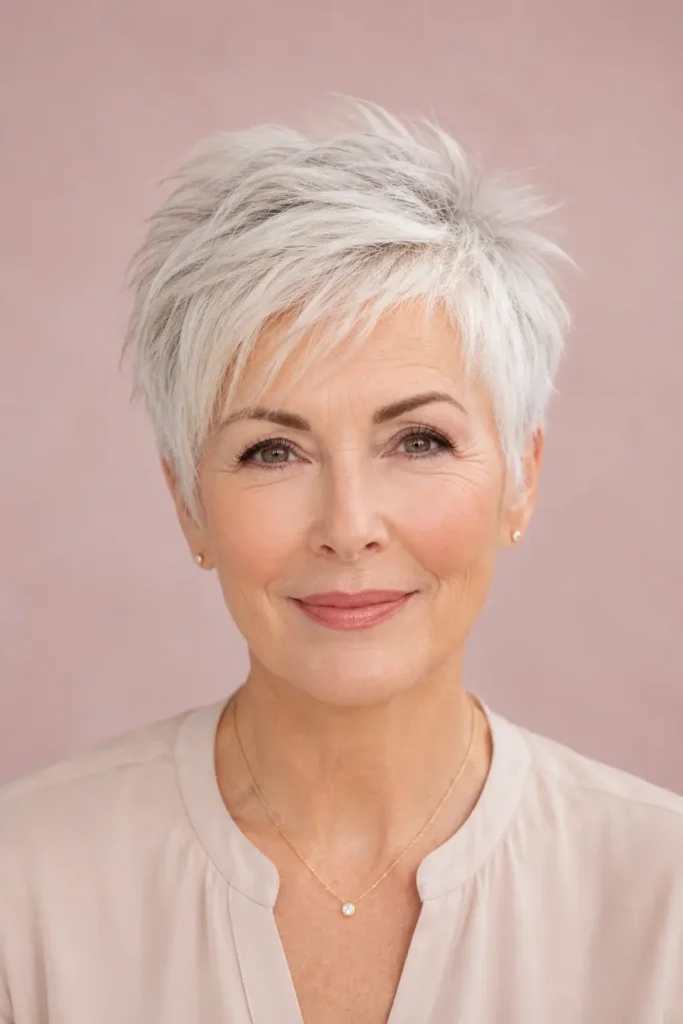
Fine hair needs a different cutting approach than thick hair — fewer, more strategic choppy layers rather than heavy texturising all over, which can actually make fine strands look thinner and wispier instead of fuller. A soft white-silver tone, lifted gradually over two or three salon visits rather than in one harsh session, protects what little natural texture and shine fine hair already has.
18. Bronde Choppy Crop
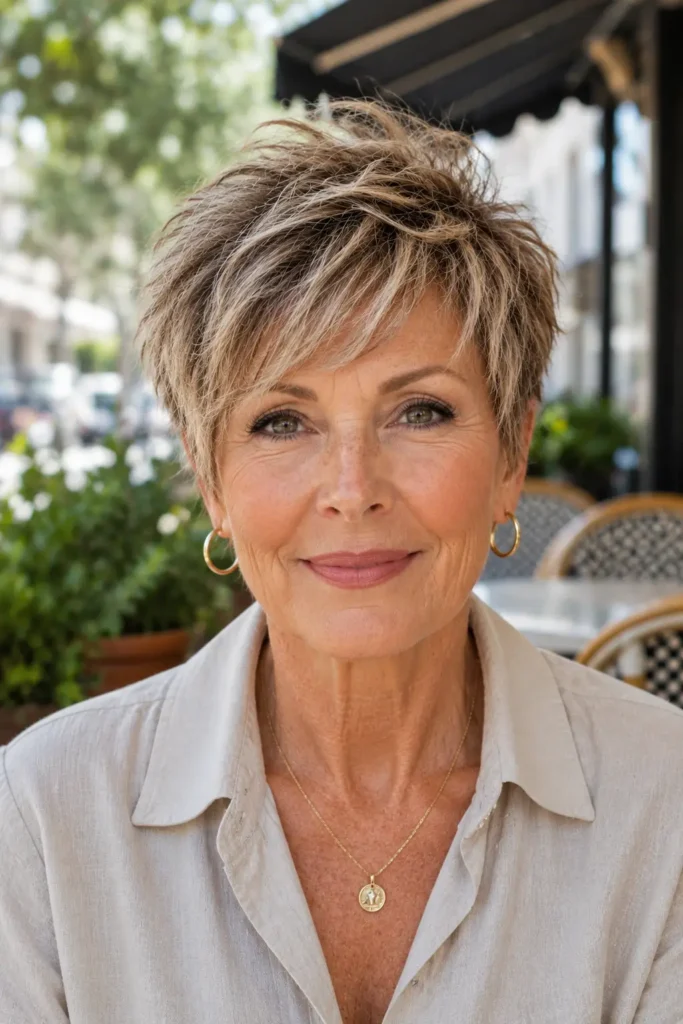
Bronde — that in-between brown-blonde shade — solves the problem of looking either too dark and severe or too blonde and washed out, which matters more in your fifties as skin tone shifts. On a choppy crop, the dimension between the brown and blonde pieces does most of the texturising work on its own, so you can get away with simpler, faster cuts happening underneath the color itself.
19. Choppy Pixie With Finger-Waved Sides
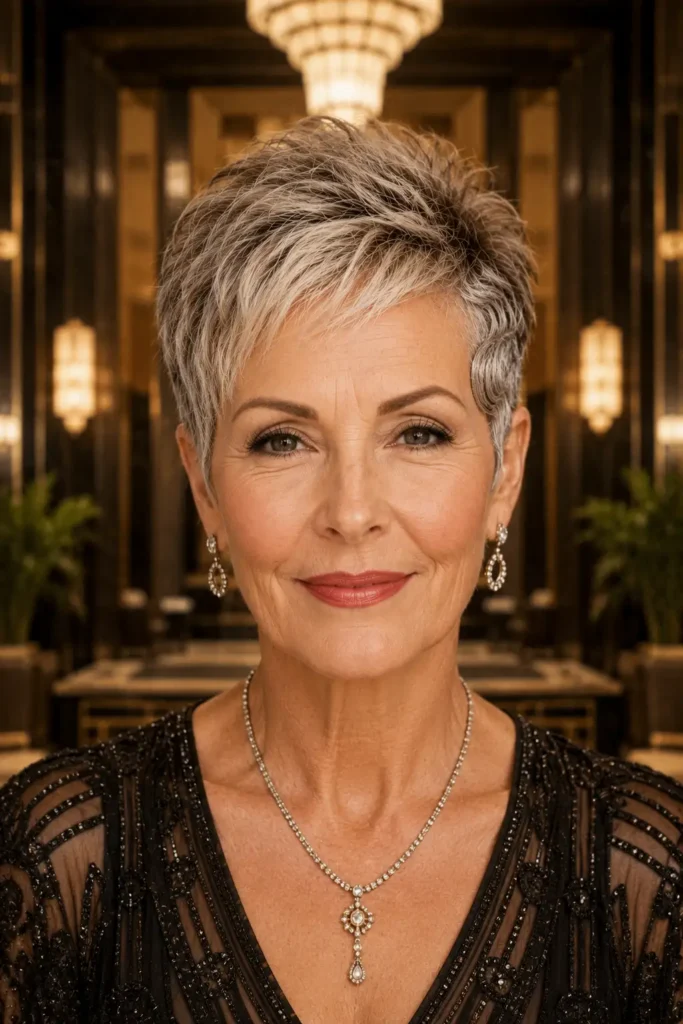
This one borrows from 1920s glamour and updates it for an everyday choppy pixie — set the sides into soft finger waves with a flat-edge clip and light-hold gel while the choppy top stays loose and textured for contrast. It photographs beautifully for events, though I’ll be honest, it’s the most time-consuming style on this list and not a realistic weekday option for most working women.
20. Toffee Highlights Textured Pixie
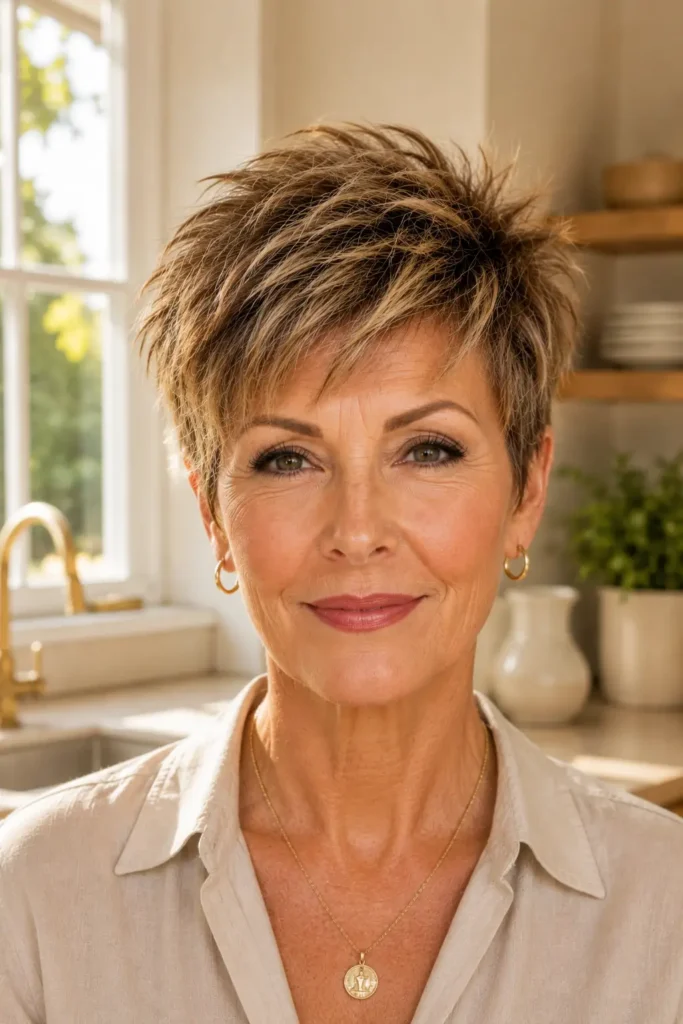
Subtle toffee highlights, painted only through the top and crown where light naturally hits, give a choppy pixie dimension without the commitment of a full balayage. I recommend this to clients who color their hair maybe twice a year and want something between visits that still looks deliberate rather than grown-out. It blends grey roots gracefully too, which genuinely extends the time between salon appointments.
21. Ash Blonde Choppy Pixie With Wispy Bangs
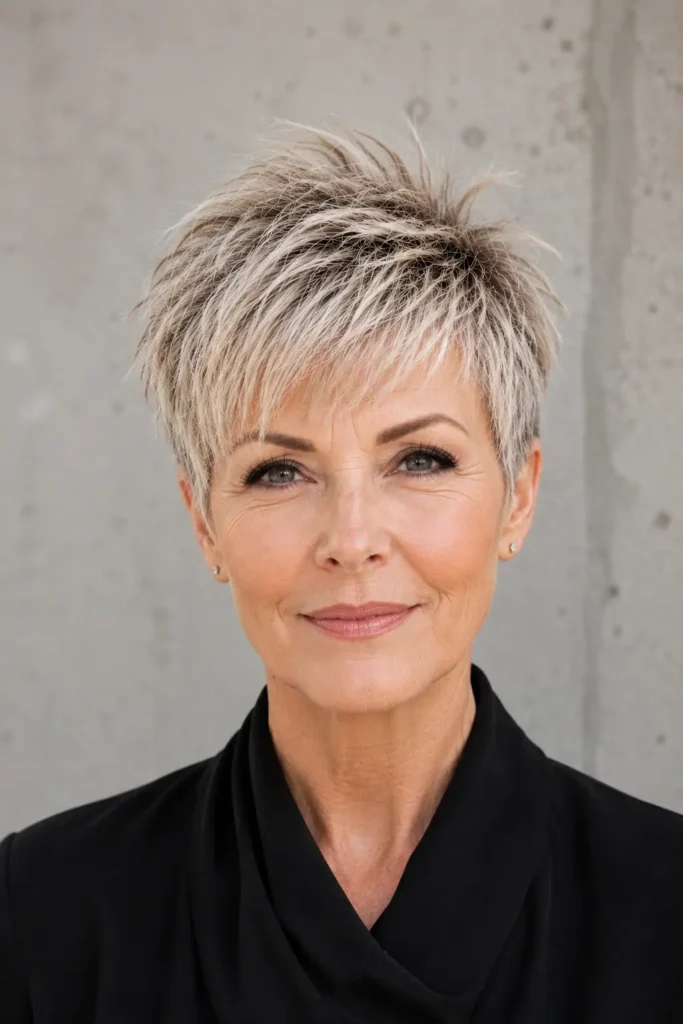
Ash tones neutralise the warmth that naturally creeps into greying or lightened hair, which is exactly why so many women over fifty gravitate toward this shade. Paired with wispy, choppy bangs sitting just above the brow, the cut softens the forehead without hiding it completely. It needs a blue or violet toning shampoo weekly, though, or the ash drifts into brassy yellow within about a month.
22. Deep Plum Choppy Crop
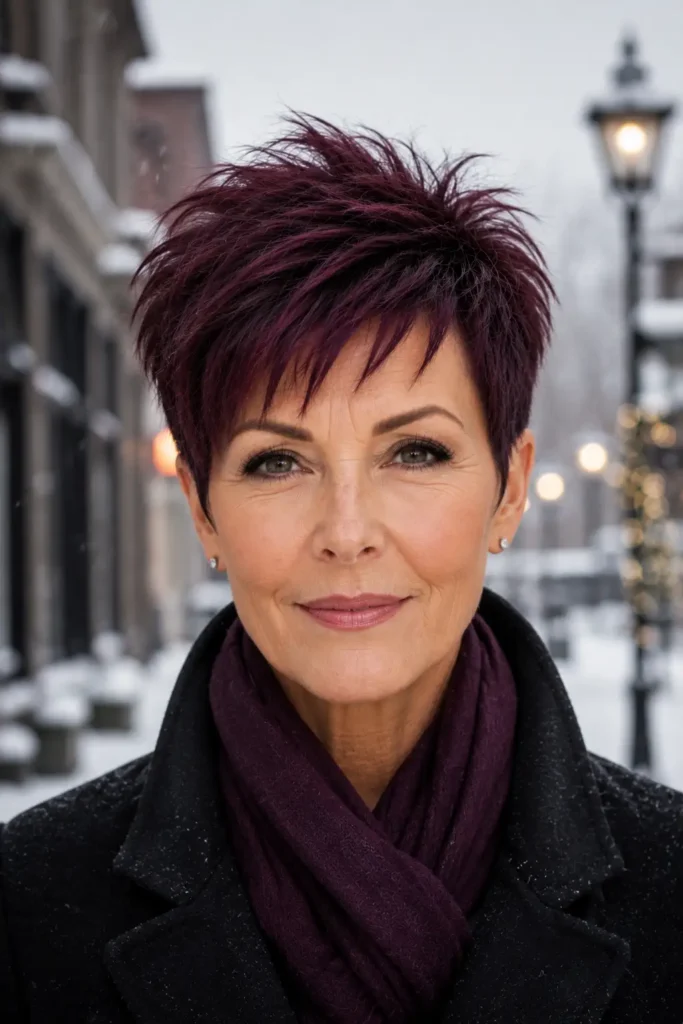
This is the cut I book the most appointments for once the weather turns in October. Deep plum reads richer under low autumn and winter light than it does in summer, and the choppy crop keeps the color from feeling heavy the way a longer plum style sometimes can. It’s become a seasonal favourite. I always tell clients to revisit each fall rather than wear all year-round.
23. Sun-Kissed Beach Texture Pixie — A Summer Staple
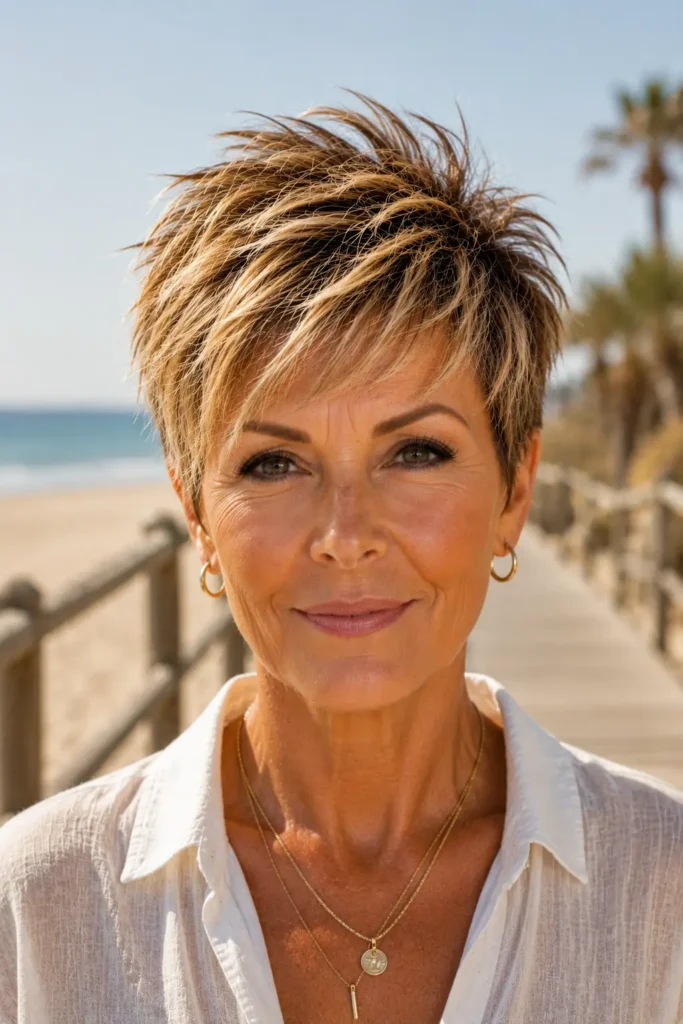
Salt spray and a diffuser are basically the only tools this cut needs, which is exactly why it’s my most-requested summer style by far. Natural waves or even straight hair get scrunched into loose, choppy texture with a sea-salt spray, and a few sun-kissed highlights around the face finish the look without a single flat-iron pass. It holds up through humidity better than almost any other style here.
24. Holiday Glam Choppy Pixie With Slicked Sides
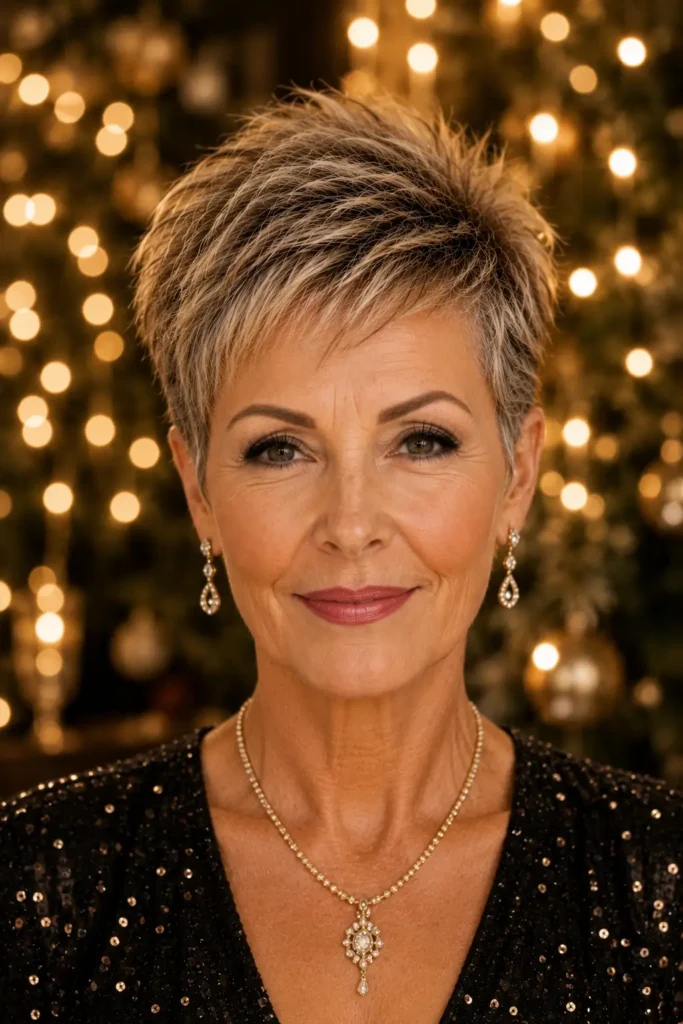
For a New Year’s Eve party or any holiday event, I slick the sides down with a strong-hold pomade and leave the choppy top pushed up and forward for instant polish, without needing a single extra inch of hair. A swipe of shine spray over the top right before walking out the door gives it that slightly wet, luxurious finish that photographs beautifully under party lighting.
Mistakes I See Women Make With Choppy Pixies
- Waiting too long between trims. Pixies grow out fast, and by week six the shape softens and the choppy edges blur into a generic short cut.
- Choosing a color that’s too flat or too dark all at once. Mature skin tends to need warmth or dimension, not a single solid block of tone.
- Skipping the conversation about cowlicks. A stubborn cowlick at the crown will fight a choppy layer pattern if your stylist isn’t cutting around it on purpose.
- Washing hair every single day. It strips texture products fast and leaves choppy layers limp by the afternoon instead of holding their shape.
- Going too short on top for a round face. Leaving a little extra height and length through the crown elongates the face instead of widening it further.
- Never asking for a grow-out plan. A good stylist can cut a pixie so weeks four through eight still look intentional instead of awkward and shapeless.
How to Talk to Your Stylist Before the Chop
- Bring two or three reference photos, but say your real hair type and density out loud — what works on fine straight hair won’t translate the same way onto thick, wavy hair.
- Mention any cowlicks, scars, or thinning patches before the first cut, not after, so they can be planned into the design from the start.
- Ask specifically for “point-cut” or “razored” ends rather than just saying “pixie,” since that’s the actual technique behind the choppy texture.
- Decide your fringe length before you sit down — brow-skimming, eyebrow-grazing, and eye-length all style completely differently day to day.
- Ask for a quick grow-out plan covering weeks four and eight, so you know what to expect between appointments instead of guessing.
- If you’re changing color dramatically at the same time, talk to your colorist about splitting it into a separate visit; cutting and major lightening on one day stresses already-short hair more than people expect.
Five years in, my own pixie still gets touched by strangers in grocery store lines who want my colorist’s number. I won’t pretend a choppy pixie is the right choice for every face or every personality — if you love hiding behind your hair on bad-skin days, it takes some adjusting, since there’s nowhere left to hide. But if you’ve been circling this cut on Pinterest for months, printing photos and then chickening out at the salon door, my honest advice is to just book the consultation. Ask your stylist to walk you through which of these twenty-four versions would actually suit your face shape and hair density before any scissors come out. Worst case, hair grows back. Best case, you get five years, and counting, of mornings that take ten minutes instead of forty, plus a few strangers complimenting you in the cereal aisle.

Sarah Williams
Hi, I’m Sarah Williams — the founder of HerStyleNest, where beauty meets modern style. I share trendy hairstyles, chic nail designs, and fashion inspiration for women who love staying stylish every season. From everyday elegance to viral beauty trends, HerStyleNest is your go-to destination for effortless fashion and beauty ideas.



Pingback: Layered Bob Hairstyles For Thin, Fine Hair