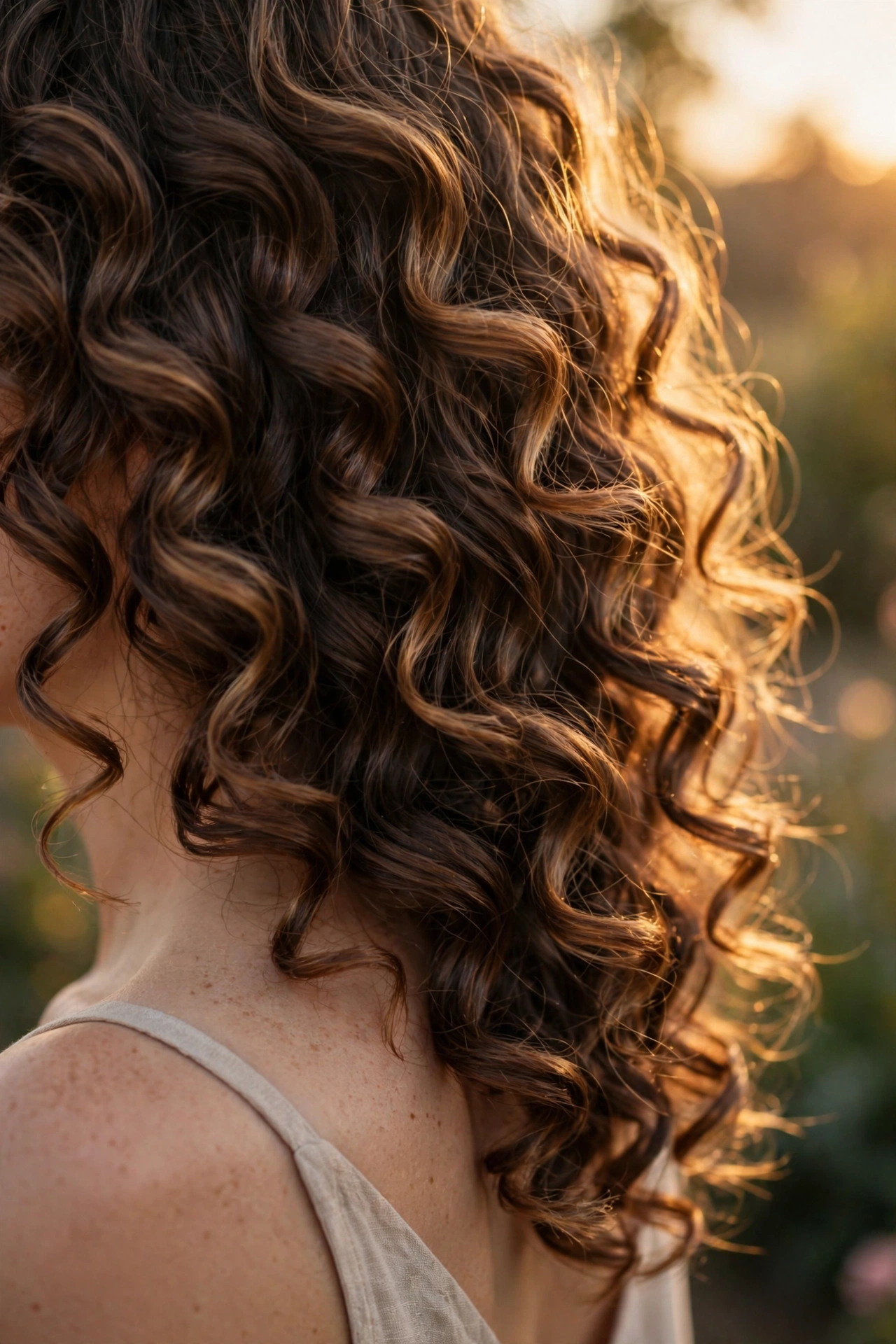
Curly Hair Care Routine: 12 Tips for Frizz-Free Curls
Curls are gorgeous — and gloriously high-maintenance. If your ringlets swing between defined-and-bouncy and frizzy-and-frustrating, the problem is rarely your hair; it is usually the routine. Curly hair is naturally drier because scalp oils cannot travel down all those twists and turns, so everything comes back to one principle: moisture in, frizz out. Here are the 12 habits that matter most.
12 Tips for Defined, Frizz-Free Curls
1. Switch to a Sulfate-Free Shampoo
Sulfates are heavy-duty detergents that strip curly hair of its already-scarce moisture. A sulfate-free shampoo cleans your scalp without leaving lengths parched. Very dry or coarse hair can also benefit from co-washing (conditioner-only washing) between shampoos.
2. Condition Like You Mean It
Curly hair drinks conditioner. Apply generously from mid-length to ends — where dryness hits hardest — and leave on for three to five minutes. The shower is also the perfect time to detangle, which brings us to…
3. Detangle Wet, Never Dry
Brushing dry curls breaks up your curl pattern and creates a halo of frizz. Always detangle when hair is wet and saturated with conditioner, working from the ends upward with a wide-tooth comb or your fingers. This one change alone transforms many people’s curls.
4. Try the Squish-to-Condish Method
Instead of rinsing conditioner straight out, cup your ends and scrunch upward toward your scalp, squishing water and conditioner into the hair — you will hear a satisfying squelch. This pushes hydration into the hair shaft and encourages the clumps that become defined curls.
5. Apply Styling Products to Soaking-Wet Hair
The golden rule: products go on wet hair, not damp hair. The wetter your hair when you apply leave-in, cream, and gel, the better curls clump and the less frizz you get. Many curlies style right in the shower.
6. Layer Products in the Right Order
Think lightest to heaviest: leave-in conditioner for moisture, then curl cream for definition, then gel or mousse to lock the cast in place. Skipping the gel is the most common reason curls look great wet and fall apart dry — the cast holds everything together until hair fully dries.
7. Scrunch — Do Not Rub
Touch curly hair only with an upward scrunching motion — rubbing and ruffling create friction, and friction creates frizz. Once products are in, hands off until hair is 100 percent dry. Seriously. Walk away.
8. Ditch the Regular Towel
Terry cloth towels are frizz factories — their rough loops catch and rough up the cuticle. Swap to a microfiber towel or old cotton T-shirt and scrunch out excess water instead of rubbing. “Plopping” (wrapping wet curls in a T-shirt for 15 to 20 minutes) removes water without disturbing curl formation.
9. Diffuse on Low — or Just Air-Dry
If you use heat, diffuse on low heat and low speed, hovering around curls rather than blasting them. Air-drying works beautifully too — just avoid touching hair while it dries. For extra shine, a lightweight oil smoothed over dry ends works wonders; the shiny hair guide has more gloss techniques that pair perfectly with a curl routine.
10. Scrunch Out the Crunch
When your gel cast is fully dry, hair may feel stiff or crunchy — that is normal; it means the cast did its job. Flip your head over and scrunch upward to break it, revealing soft, defined curls. A drop of oil on your hands before scrunching adds shine and prevents new frizz.
11. Pineapple Your Hair at Night
Gather dry curls into a loose, high ponytail on top of your head — the “pineapple” — with a silk scrunchie. It keeps curls from getting crushed overnight; in the morning, take it down, shake gently, and go.
12. Sleep on Silk or Satin
Cotton pillowcases absorb moisture and create friction all night. A silk or satin pillowcase (or satin bonnet) lets curls glide instead of snag — one of the cheapest upgrades with the biggest payoff.
Pro Tips for Your Best Curl Days
- Deep condition weekly. A 15-minute mask keeps curls elastic and prevents breakage — apply to damp hair, cover with a shower cap, and let body heat do the work.
- Learn your porosity. Low-porosity hair resists water and needs lightweight products; high-porosity hair soaks everything up and needs heavier creams. The float test — a clean strand in water — is a decent starting point.
- Trim regularly. Split ends travel upward and make curls frizzy no matter your products. A trim every 8 to 12 weeks keeps ends healthy — ask for a stylist experienced with dry-cutting curls.
- Refresh instead of re-washing. On day two or three, mist curls with water mixed with a little leave-in conditioner, scrunch, and let dry. Most curl types only need a full wash one to three times a week.
Frequently Asked Questions
Why is my hair frizzy even when I use gel?
Usually one of three culprits: products applied to damp instead of soaking-wet hair, touching hair while drying, or too little moisture under the gel. Try layering leave-in and cream under your gel, styling wetter, and keeping hands off until fully dry.
How often should I wash curly hair?
Most curl types thrive on one to three washes per week — wavy hair (type 2) at the frequent end, tight coils (type 4) at the less frequent end with co-washing between. If your scalp gets oily or itchy, wash; scalp health comes first.
Can I ever brush curly hair?
Only when wet and loaded with conditioner — with a wide-tooth comb, a curl detangling brush, or your fingers. Dry brushing is the fastest route to a frizz ball. Brushing right before washing is the one exception, since you are about to reset everything.
What is the curly girl method?
A popular framework: no sulfates, no silicones, no heat styling, conditioner-focused washing, and styling wet hair with gel. You do not have to follow it strictly, but its core principles — moisture first, gentle handling, minimal heat — are what make curls happy. 🌀