
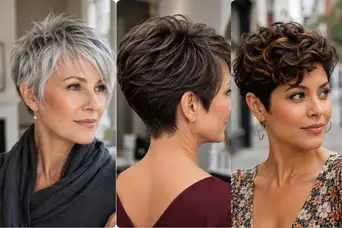

20 Short Pixie Haircuts for Thin Fine Hair That Add Instant Volume
I spent most of my twenties convinced that fine hair ruled out anything adventurous. My strands would go limp by noon, never held a wave past an hour, and somehow looked thinner with every attempt to grow them longer. The pixie cut changed that completely, and I wish someone had told me sooner.
Short pixie haircuts for thin fine hair are one of the smartest choices a woman with low-density strands can make. Removing length removes weight, and removing weight lets fine hair behave differently — it sits fuller, looks denser, and holds styling products far more effectively than when it is dragging under its own mass.
This is not a listicle of vague style names. Every cut below comes with specific detail on why it works for fine hair, what face shapes it suits best, how a stylist should execute it, and how you can maintain it between appointments. I have tried or researched all of these carefully, pulling from real salon conversations and my own chair experience.
1. The Classic French
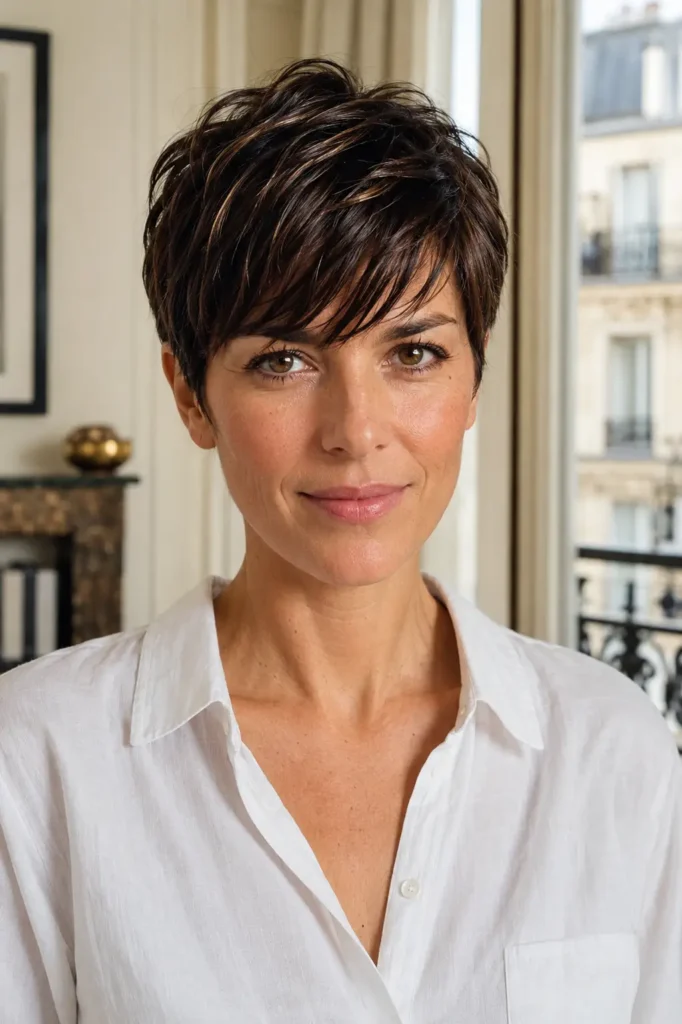
This is the original Audrey Hepburn-era crop: very close at the nape and sides, with slightly longer, forward-swept fringe and a soft top. For fine hair, ask your stylist for point-cut layers through the top section to give movement. Finish with Kenra Platinum Silkening Mist for shine without weight.
2. The Textured Choppy
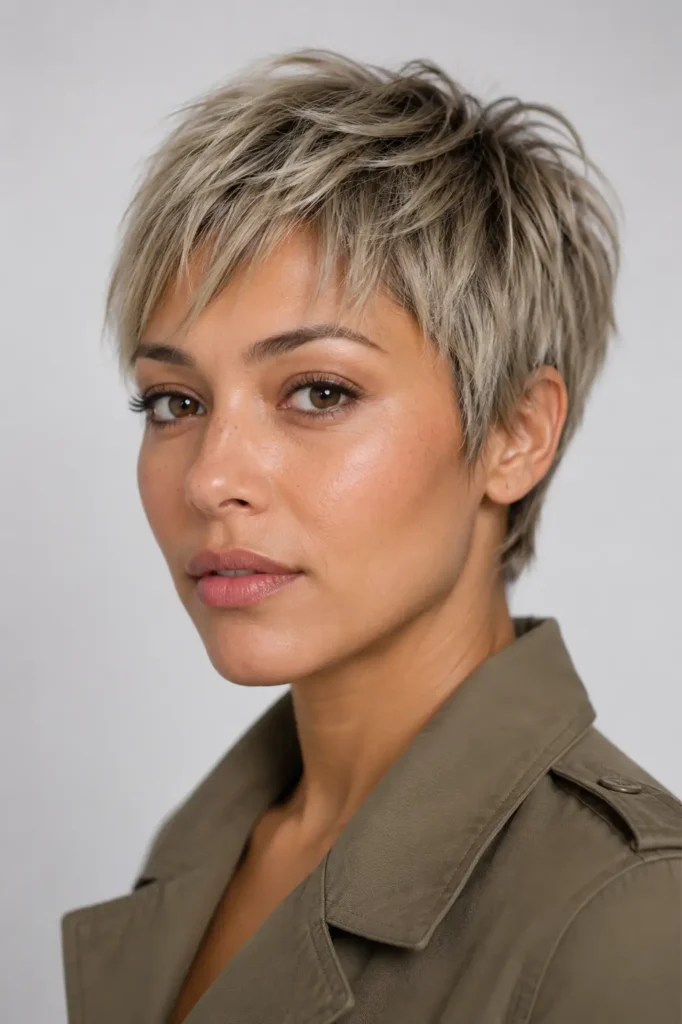
This cut uses deliberate disconnection and point-cutting to create a jagged, airy texture through the top. The pieces sit separately rather than as a flat mass, which tricks the eye into reading more density. Style it with a tiny amount of American Crew Fiber worked through dry hair, then scrunch upward.
3. The Side-Swept Fringe
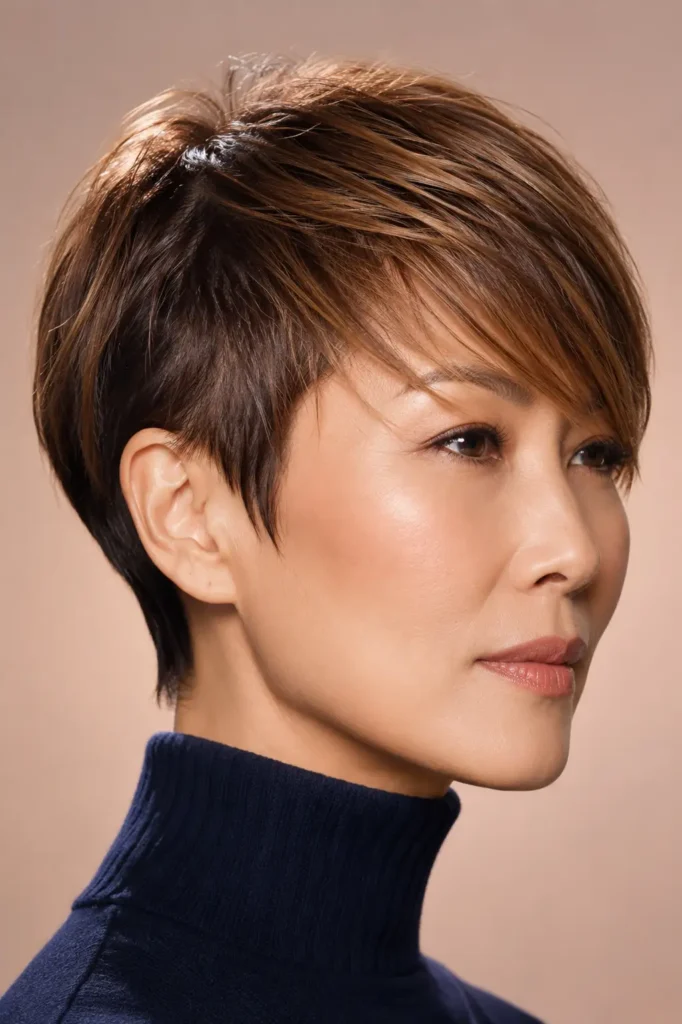
A slightly longer fringe — maybe two to three inches — is swept to one side and point-cut to avoid bluntness. The rest of the cut is kept close. This works exceptionally well for fine hair because the swept fringe covers any thinning at the temples and creates a strong focal point that draws attention upward.
4. The Undercut Pixie with Volume Crown
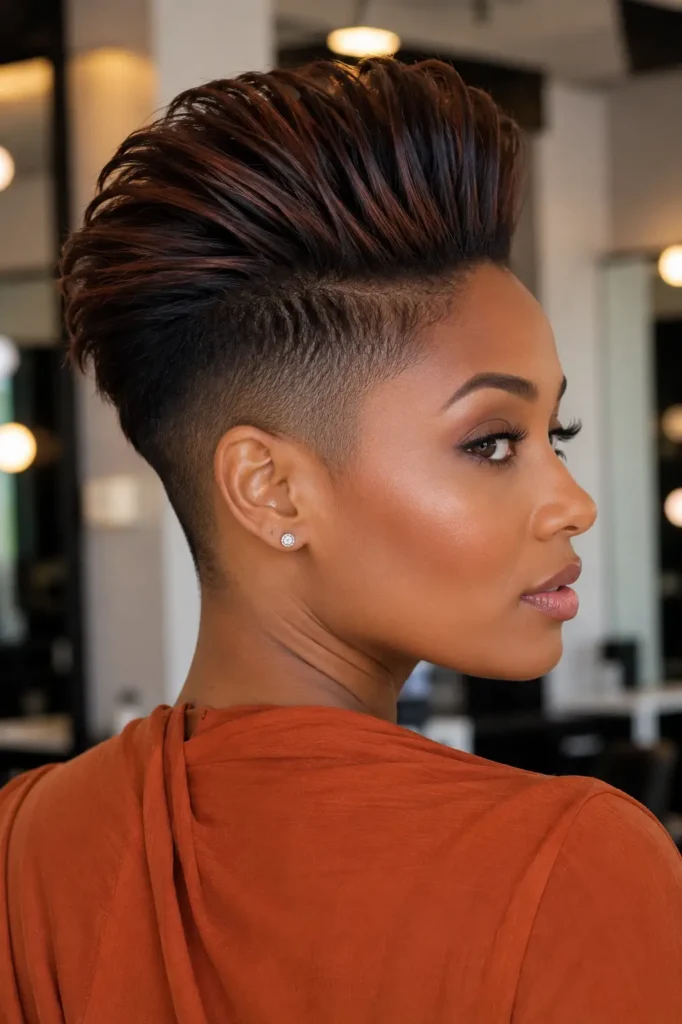
The sides are cut very close with an undercut — almost skin-fade territory — while the top is left longer and styled upward with a Bumble and Bumble Thickening Spray. The contrast between the close sides and the volumised top makes fine hair look far denser than it is. This is one of my personal favourites.
5. The Wispy Micro
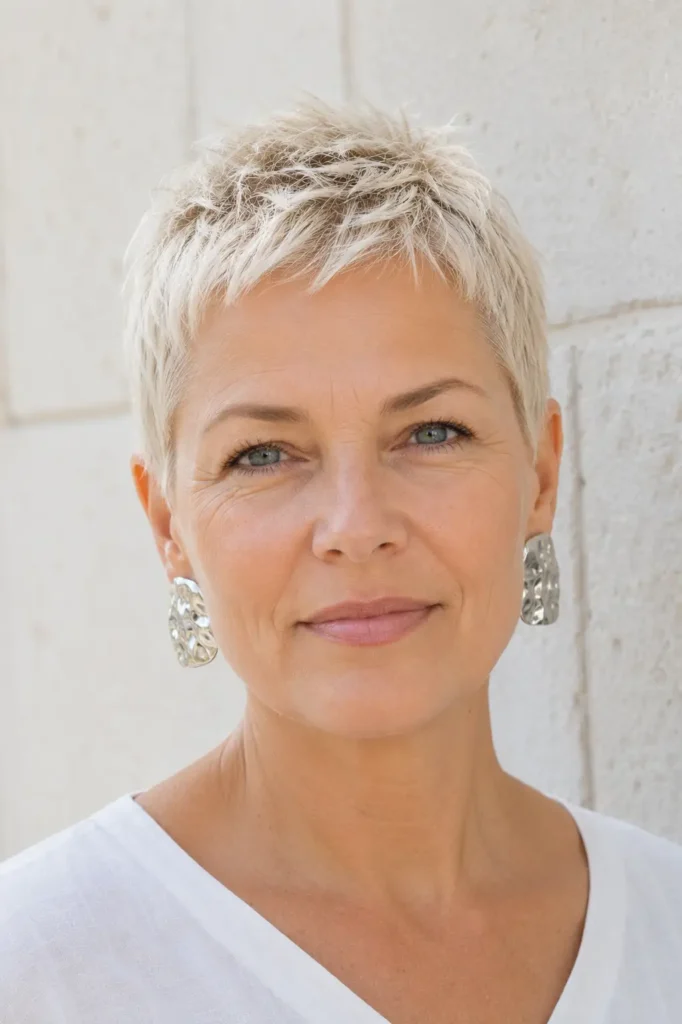
This is the shortest style on the list: barely an inch of length anywhere, with wispy, individually textured ends throughout. It needs near-zero styling, which makes it ideal for women who want genuine wash-and-go simplicity. Use a light hold spray like R+Co Rockaway Salt Spray to separate ends and add texture.
6. The Pixie Bob Transition
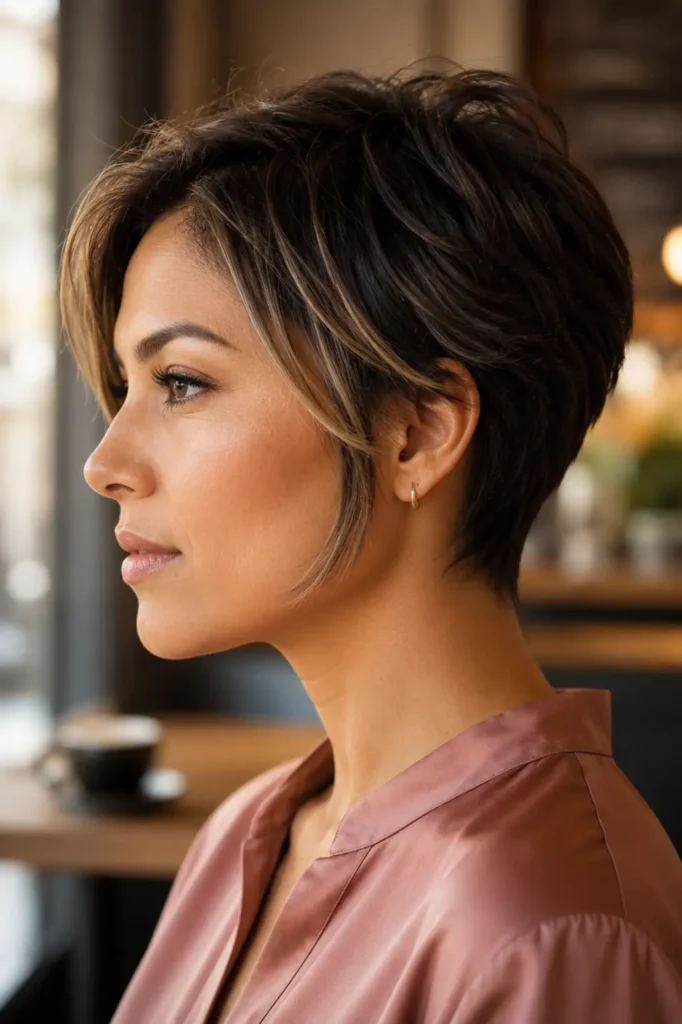
If you are not ready for a full-close pixie, this is the middle ground. The back and sides are cut pixie-short while the front is left slightly longer, grazing the cheekbones. For fine hair, ask for razor-cut ends at the front to prevent bluntness and allow the longer pieces to move and catch light.
7. The Feathered 70s Pixie
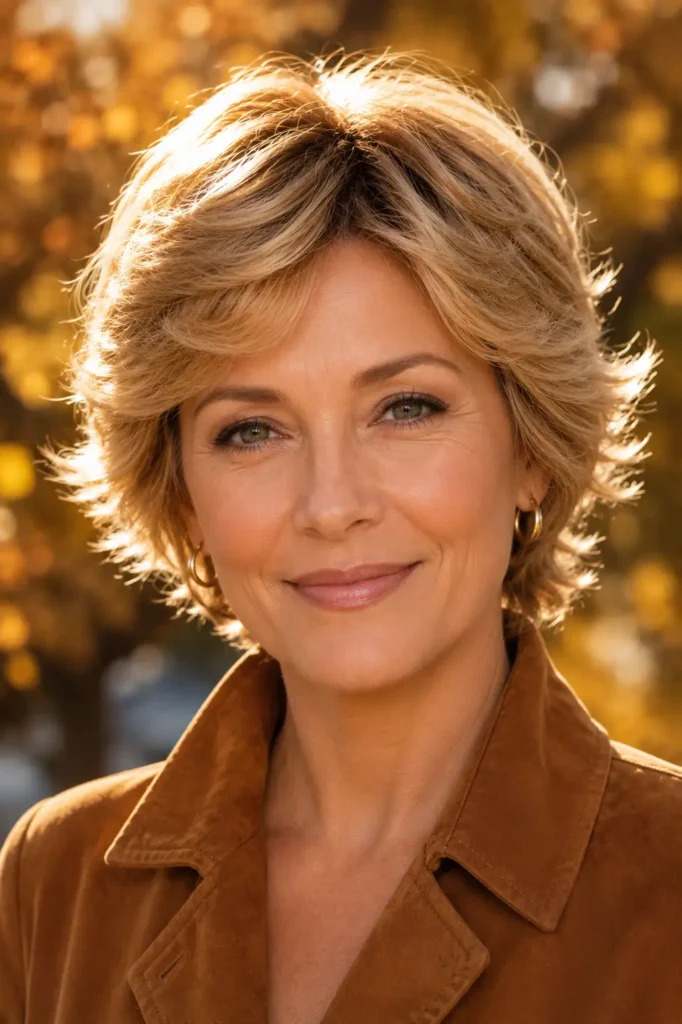
Feathered layers swept backwards from the face, finishing in soft, outward-curled tips. This style references 70s Farrah Fawcett energy but is scaled to pixie length. Fine hair holds the feathered shape beautifully when you use a small round brush and light-hold mousse during the blow-dry. It looks fuller than it is.
8. The Asymmetric
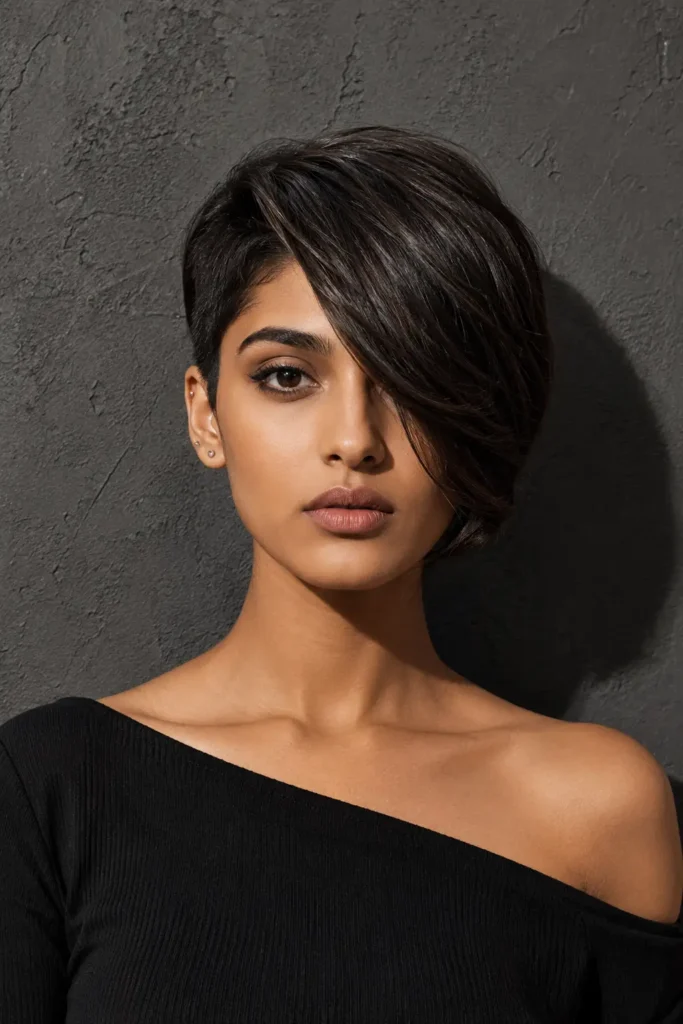
One side is cut shorter than the other — sometimes dramatically so. The longer side typically falls over one eye or ear, adding a strong visual line and covering any visible scalp at the parting. For fine hair, the asymmetry creates interest and depth that a symmetrical cut would not, making the overall look feel much denser.
9. The Silver Fox
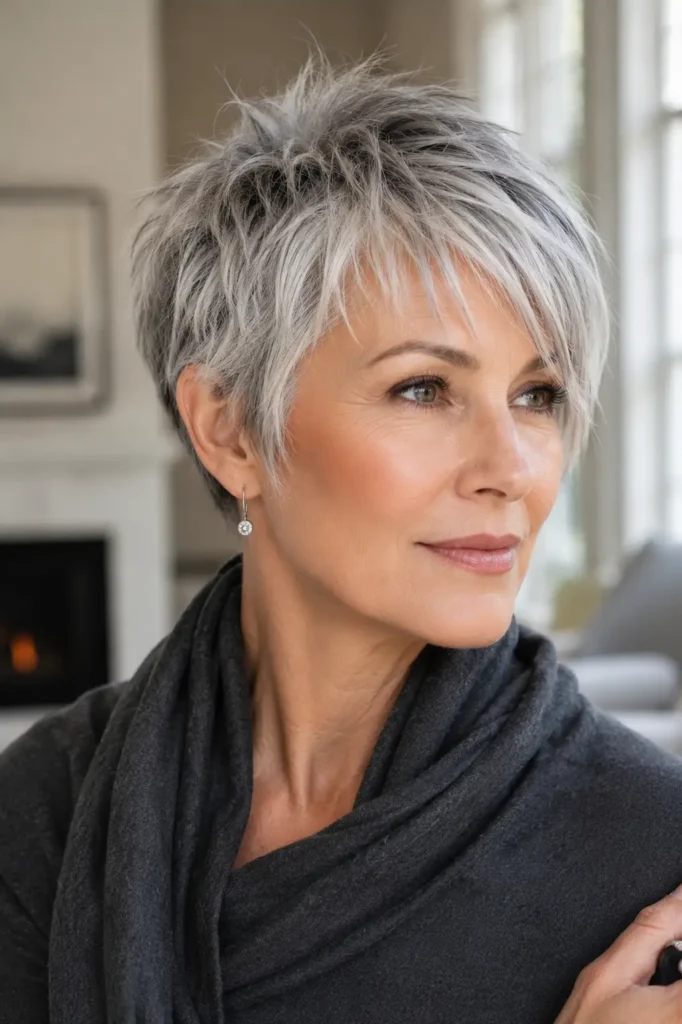
This style is built specifically for women embracing natural grey. A choppy, textured pixie in silver or salt-and-pepper tones photographs stunningly on fine hair because the tonal variation within the strands creates the illusion of depth. No dye required — just a great cut and a Moroccanoil Frizz Control Cream to polish the ends.
10. The Curled-Tip
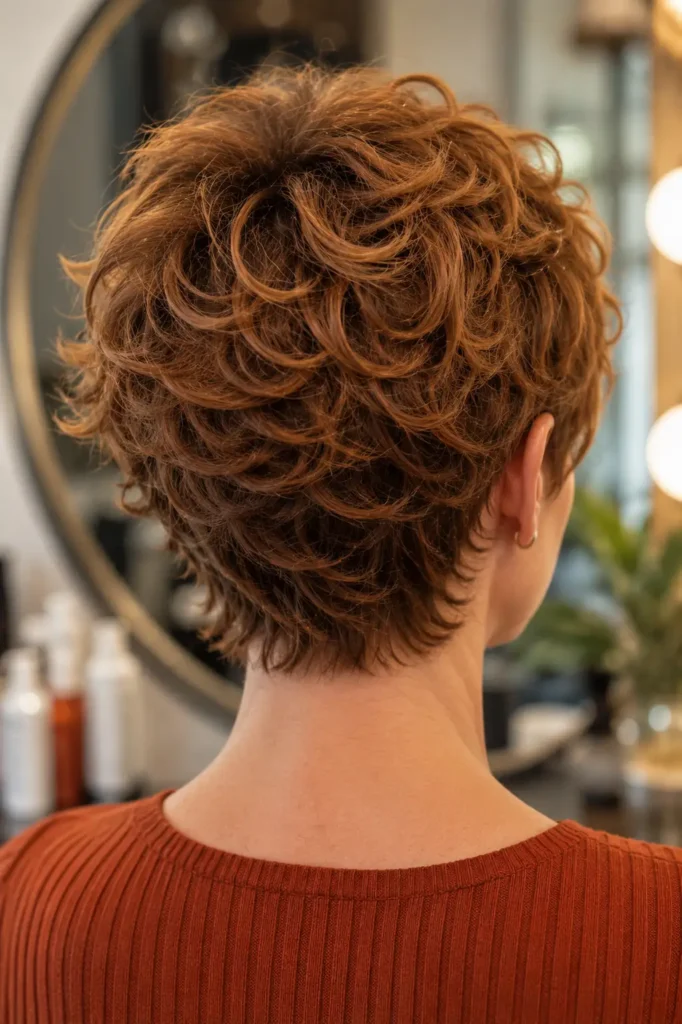
The overall shape is kept short and close, but the ends are curled outward with a small-barrel curling iron — think 3/4 inch. Those little curled tips break up the flatness that fine hair tends to show and add a playful, finished quality. Set with a light-hold hair spray like Schwarzkopf OSiS+ Elastic.
11. The Crown-Volume Layered
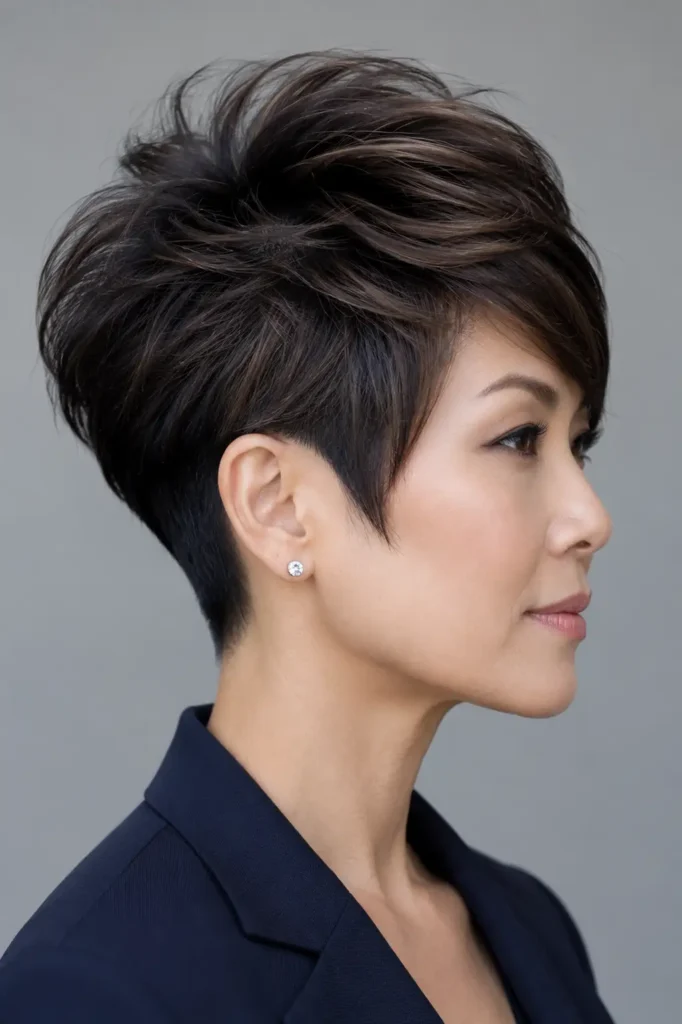
This is specifically engineered for maximum height at the crown. The stylist cuts shorter at the nape, graduating layers up toward the top, then leaves the crown section longest. Blow-dried upward with a paddle brush and a volumizing root spray like Living Proof Full Dry Volume Blast, this adds visible height even on very fine hair.
12. The Razored Nape
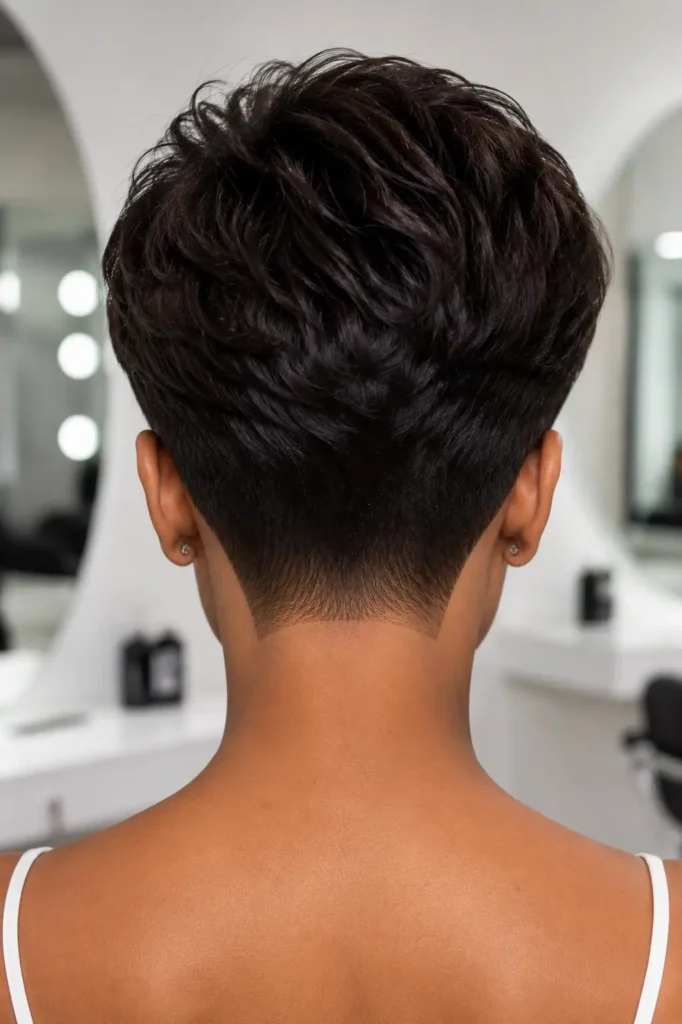
The nape is razor-shaved to a clean, precise edge — this is a defining detail that makes the entire cut look expensive and deliberate. The top is kept longer and soft. For fine hair, the razored nape reduces bulk where fine hair tends to go flat and wispy, giving the silhouette a much sharper, cleaner line.
13. The Colour-Blocked
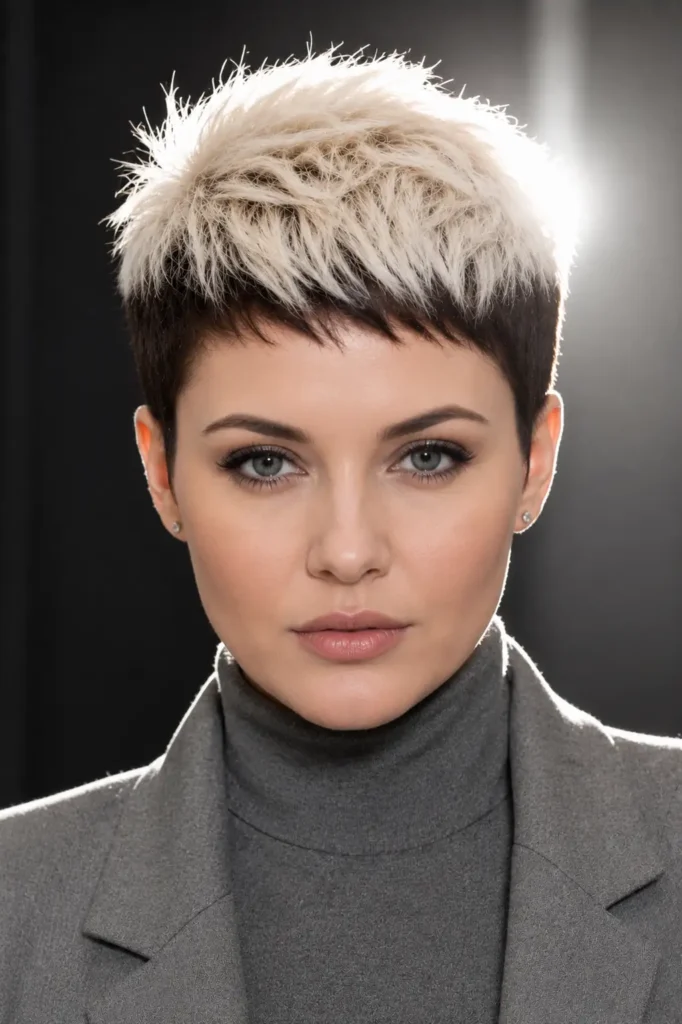
A solid, contrasting colour block — root shadow in a dark brunette paired with a platinum or ash blonde top, for instance — creates visual density that fine hair alone cannot achieve. The colour contrast fakes the look of more strands by creating tonal depth. Short pixie cuts for thin, fine hair benefit enormously from this technique.
14. The Natural Texture
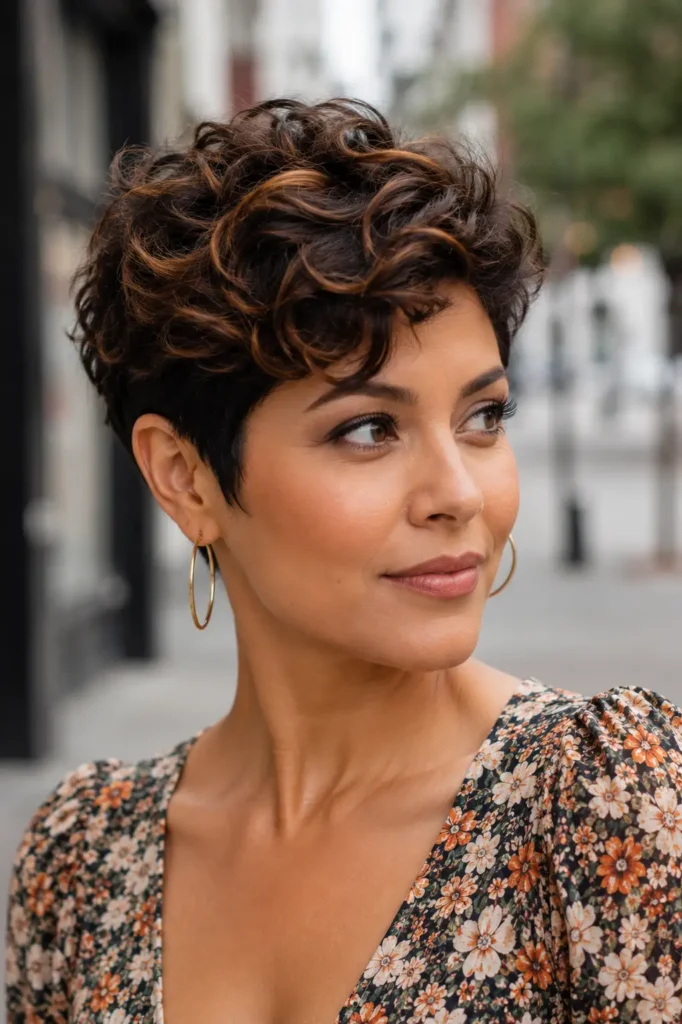
If your fine hair has any natural wave or curl, this cut celebrates it rather than trying to smooth it out. The stylist cuts the pixie with the natural growth pattern rather than against it, and the result is springy, full-looking texture that you simply diffuse and go. A must-try if you have been fighting your natural texture for years.
15. The Back-Stacked
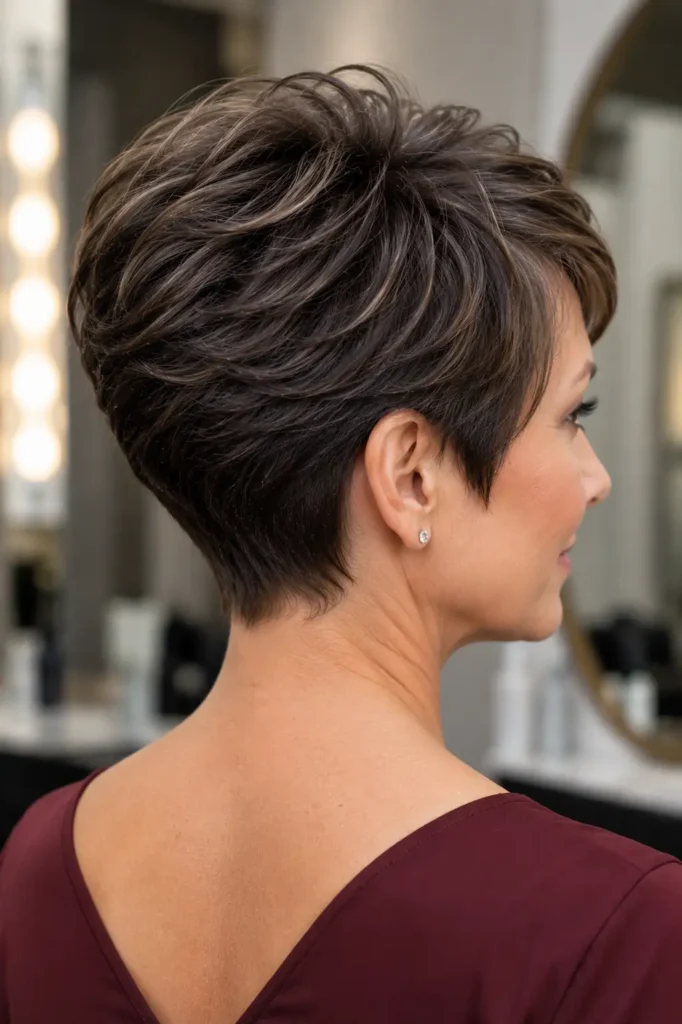
The back section is cut in stacked, graduated layers that build height and roundness at the crown. The nape is close, the sides are tapered, and the front is swept forward. The stacked back is particularly clever for fine hair because it creates a three-dimensional shape even when the overall density is low.
16. The Fringe-Free Crop
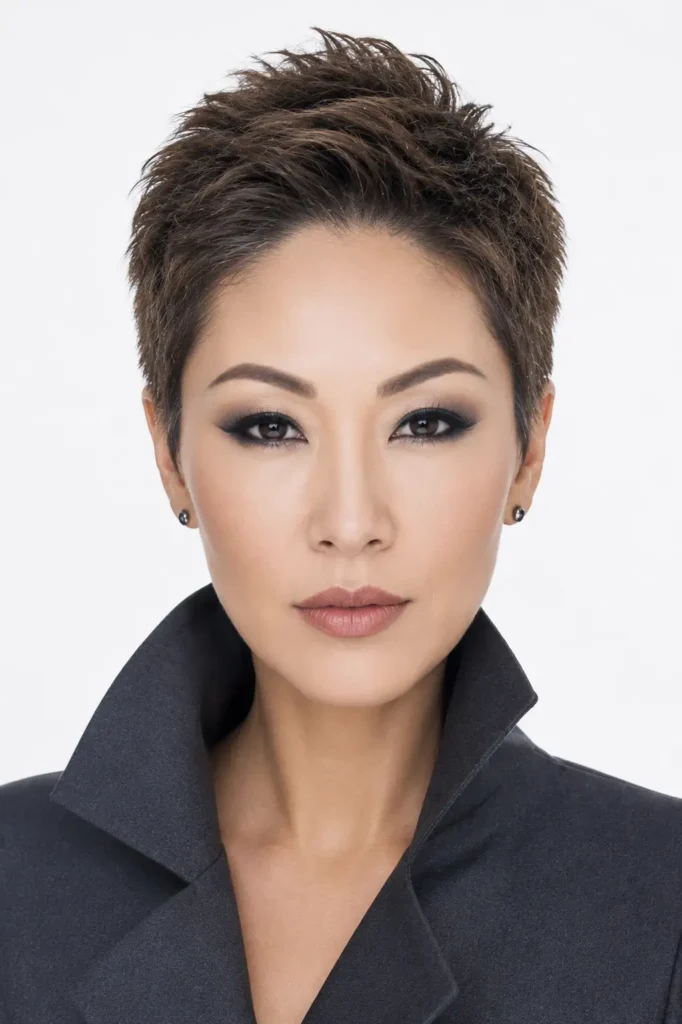
No fringe at all — the forehead is left completely clear. This is a bolder, more modern take on the short pixie cuts for thin fine hair category. Without fringe coverage, the face is fully exposed, so the cut relies entirely on its shape. It works best for oval and heart faces with strong features and a confident attitude toward the look.
17. The Soft Grown-Out
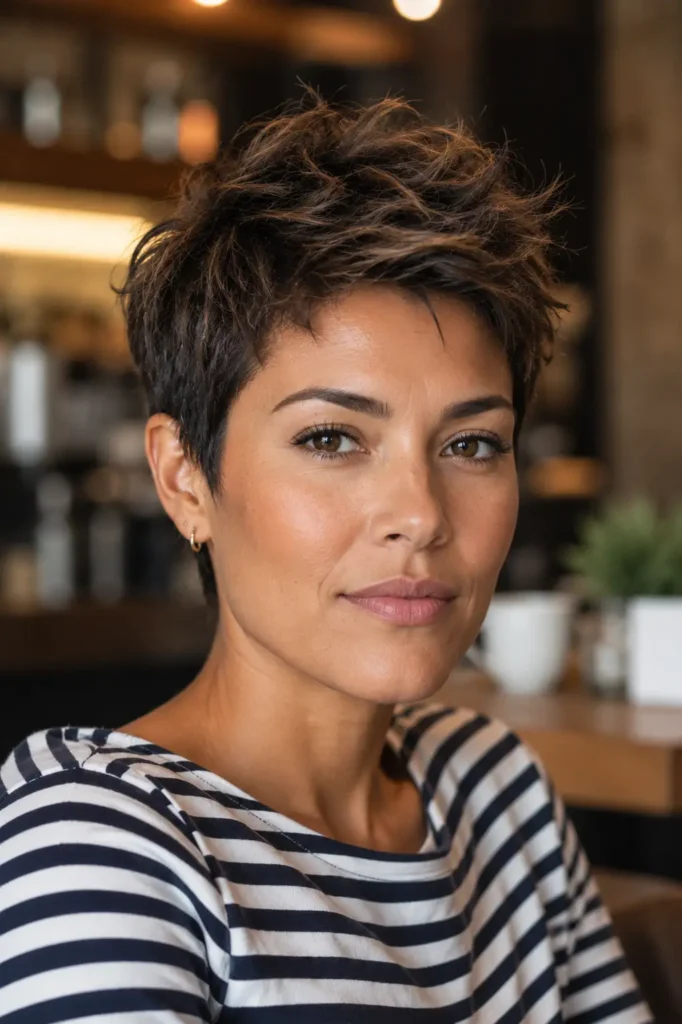
This is a pixie at the four-to-six-week grow-out stage, deliberately shaped to look intentional at that length. The sides are kept tidy while the top grows into a slightly longer, messier, more bedhead-style section. It is one of the easiest short pixie haircuts for thin fine hair to maintain because the slightly longer top actually gives you more styling options.
18. The Bold Undercut with Design
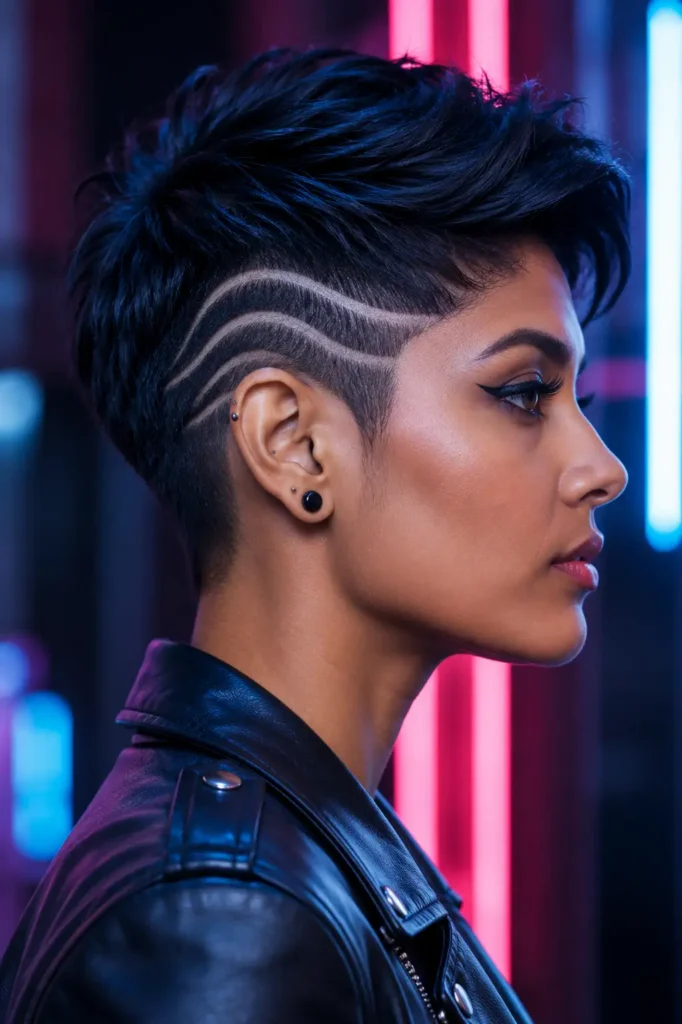
For women who want something genuinely different, the bold undercut pixie adds a geometric line, wave, or abstract design shaved into the close-cut sides. The design catches light differently from the surrounding hair, adding a graphic element that doubles as a texture illusion. A strong choice for younger clients or anyone wanting a fashion-forward statement.
19. The Soft Romantic Pixie
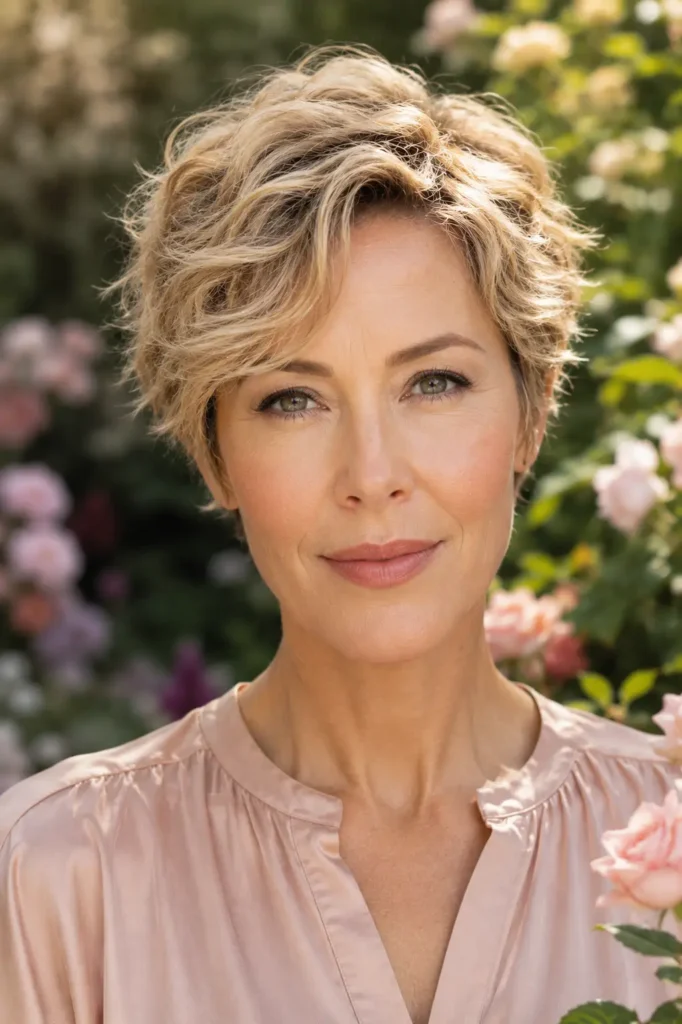
Fine waves through a slightly longer pixie top, no blunt edges anywhere, and a gentle side part that sweeps across the forehead. This is the softest, most feminine version of the style. It works beautifully for women who want the maintenance benefits of a pixie but prefer a less androgynous finish. Use a flex-hold mousse and diffuse on low heat.
20. The Disconnected Punk-Inspired Pixie
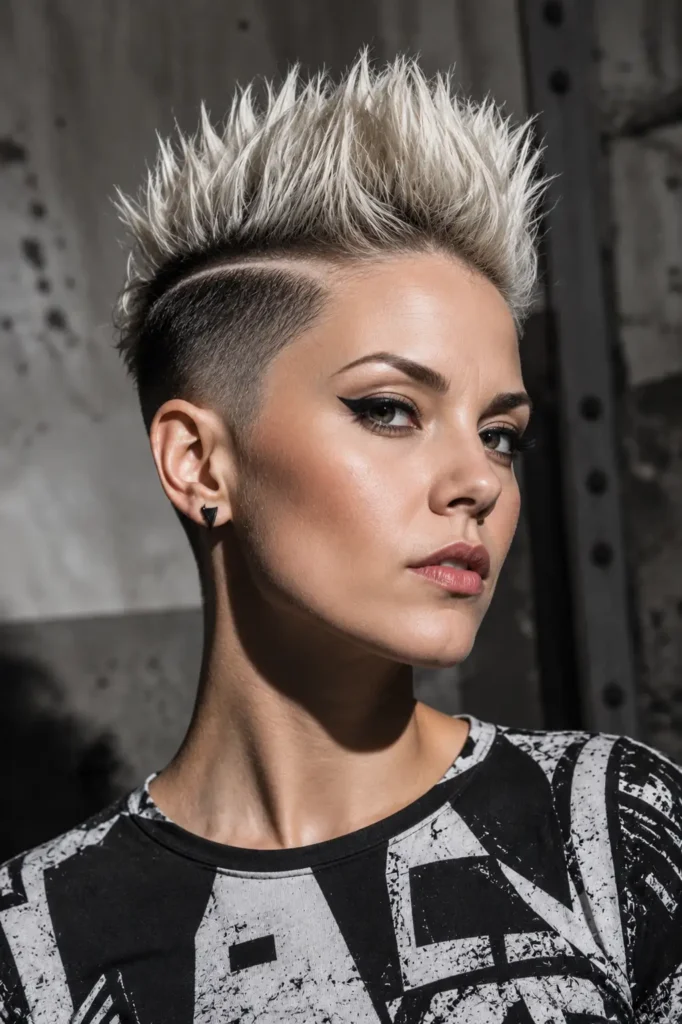
Sharp, intentional disconnection between the close sides and the longer top section, styled upward with a strong-hold product like Bumble and Bumble Sumo Wax. The disconnect creates a visible contrast line that reads as interesting structure, and structure is exactly what fine hair lacks on its own. It is edgier than the other styles here but incredibly effective.
Common Mistakes Women Make with Fine Hair Pixie Cuts
Asking for too much length “just in case”
Every stylist hears this. “Can you leave it just a little longer?” The problem with leaving extra length in a fine-hair pixie is that it removes the very thing making the cut work — the removal of weight. Trust the process and commit to the length. You can always refine, but clinging to length undermines the result.
Using heavy products
Heavy oils, thick creams, and glycerin-based serums flatten fine hair almost instantly. Anything that coats the strand without evaporating adds weight that fine hair cannot carry. Stick to alcohol-based sprays, lightweight foams, and dry texturisers. Check ingredient lists and avoid anything that feels greasy between your fingers before it goes on your hair.
Skipping the volumising step
Most fine-hair pixie cuts need a root lift during the blow-dry to perform as intended. Skipping the blow-dry entirely and air-drying will often result in flat sections, particularly at the crown. Even two minutes with a diffuser and root spray makes a visible difference. This is not optional for most fine-hair types — it is part of the maintenance routine.
Not returning for trims on time
Pixie cuts lose their shape quickly — most fine-hair pixies need a trim every four to five weeks, not the eight weeks that thicker hair might tolerate. Letting the cut grow past its optimal shape removes the structure that makes it work for fine hair. Set your next appointment before you leave the salon every time.
Products That Work for Fine-Hair Pixie Cuts
I have tested a lot of products over the years and the common thread among the ones that work is that they add texture or volume without physically coating the strand with something heavy. Here are the categories and a specific pick for each one that I trust.
For volume before styling: Living Proof Full Dry Volume & Texture Spray applied to roots on dry hair before any heat tool. It lifts without stickiness and does not make the hair look dusty the way some dry volume products do.
For blow-dry hold: Bumble and Bumble Thickening Spray applied to damp hair before any heat. It adds body through the drying process rather than just coating the surface. The result holds through humidity much better than standard mousse.
For finish and texture on dry hair: R+Co Badlands Dry Shampoo Paste worked between fingertips and pressed into the roots. It gives gritty texture and absorbs oil simultaneously, and on a pixie it means you can reset your volume on day two without rewashing.
For shine without weight: Kenra Platinum Silkening Mist sprayed from 12 inches away. It gives a visual gloss to the finished cut without any perceptible weight. One light pass is enough — two passes starts to flatten fine hair.
Styling Tips to Get the Most from Your Pixie
The most useful thing I learned was to blow-dry with my head flipped forward. On a pixie, flipping forward and aiming the dryer at the roots from below adds lift that you simply cannot get from blow-drying upright. It takes one extra minute and the volume difference is significant.
Dry shampoo is not just for between washes — it is a styling product on fine-hair pixie cuts. Applied to dry hair at the crown and worked in with fingertips before styling, it provides grip that holds product better and gives the hair a texture that makes it behave more like thicker hair throughout the day.
When using any heat tool on a fine-hair pixie, use the lowest effective heat setting. Fine strands damage more easily than thick ones, and damaged fine hair loses even more apparent density. A temperature of 300 to 340 degrees Fahrenheit is enough for most fine-hair work — you do not need the maximum heat that many tools offer.
Seasonal Styling for Fine-Hair Pixie Cuts
In summer, humidity is the main enemy of a fine-hair pixie. Anti-humidity sprays like Redken Frizz Dismiss applied before any outdoor time help maintain the shape. In winter, static and dryness cause fine strands to separate and look even thinner — a tiny amount of a fragrance-free hand cream worked through ends counteracts this without adding visible weight.
Spring and autumn are genuinely the easiest seasons for a fine-hair pixie because the air tends to sit at moderate humidity and temperature. If you are debating when to make the chop, booking your appointment in April or September gives you the best conditions to fall in love with the result before dealing with weather extremes.
Frequently Asked Questions
Will a pixie cut make my thin hair look thinner?
No, it usually does the opposite. Removing length removes weight, which allows fine strands to sit fuller and more separately. The right pixie for your face shape and hair texture will read as denser than the same hair at longer length. Most women are surprised by how much more volume they see immediately after the cut.
How often do I need to get a pixie trimmed if my hair is fine?
Every four to five weeks is the honest answer for most fine-hair pixie cuts. Fine hair may seem like it grows more slowly, but the shape of a pixie becomes visibly overgrown faster than most other cuts. Frequent, inexpensive trims keep it looking intentional rather than neglected. Some styles, like the grown-out pixie, allow six to seven weeks.
What is the best product for volume in a fine-hair pixie?
A lightweight root-lifting spray applied before blow-drying is the most reliable starting point. Living Proof Full Dry Volume Blast on dry hair or Bumble and Bumble Thickening Spray on damp hair are both strong choices. Avoid oils and serums. Dry shampoo used as a pre-styling texture agent at the roots also adds grip and lift.
Can older women with fine grey hair pull off a pixie cut?
Absolutely, and in many cases the pixie is actually the most flattering option as hair thins with age. Grey and silver tones have natural tonal variation that photographs as depth, making fine grey hair look fuller in a pixie than in longer styles. Many of the most striking short pixie cuts for thin fine hair in this article are specifically suited to mature clients.
Is a pixie cut hard to grow out if I change my mind?
There is an awkward phase around the four-to-six-month mark, when the sides are growing out but have not yet reached a length that looks tidy. A good stylist can shape the grow-out with a pixie bob transition that makes that phase look deliberate. Trims every four to five weeks during grow-out make the process manageable rather than painful.
Should I ask for layers in my fine-hair pixie?
Yes, almost always. Layers — particularly point-cut or razor-cut layers — separate fine strands and prevent them from sitting as a flat, single mass. A pixie without layering on fine hair can look heavy and limp, even at short length. Discuss the specific layering technique with your stylist: point-cutting preserves more length than razor-cutting and gives softer results.
What face shapes should avoid a very short pixie?
Very short, geometric, close-cropped pixies can be challenging for round faces because they remove the fringe that helps elongate. Heavy jowl areas or a very wide jaw can also be visually emphasised by very close side cuts. This does not mean round or square faces cannot wear pixie cuts — it means choosing the right pixie shape matters more than for oval faces.
Can I add colour to my fine-hair pixie without damaging it further?
You can, but technique matters. Balayage and highlights applied only to the top section, rather than all-over colour, preserve the integrity of the already-fragile strands closest to the scalp. Semi-permanent colour is gentler than permanent. Toning treatments that add pigment without bleaching are the safest option for fine hair that is already at the edge of its strength.
Closing Thoughts
The right short pixie cut changed how I think about my hair entirely. What I used to see as a limitation — thin, fine strands with no grip and no volume — turned out to be the ideal canvas for a pixie. The cut does the work that my hair cannot do on its own.
If even one of the twenty short pixie haircuts for thin fine hair on this list connects with you, take it to your next appointment. Print it, screenshot it, or email it to yourself. Stylist communication is better with a real reference, and these are real, detailed descriptions rather than vague style names.
Fine hair has never had to mean limited options. It just needed the right cut — and most of the time, that cut is shorter than you expected to go.

Sarah Williams
Hi, I’m Sarah Williams — the founder of HerStyleNest, where beauty meets modern style. I share trendy hairstyles, chic nail designs, and fashion inspiration for women who love staying stylish every season. From everyday elegance to viral beauty trends, HerStyleNest is your go-to destination for effortless fashion and beauty ideas.