
20 Beanie Hairstyles for Women That Look Cute Without the Hat Hair
Here is a problem every woman hits come November: You finally get your hair looking good, put on a beanie, and peel it off an hour later to find a sad, flat, dented mess on top of your head. I have spent years avoiding beanies for exactly this reason.
Then I started experimenting, asking stylists, and genuinely paying attention to what worked. It turns out there are specific beanie hairstyles for women that survive the hat and still look deliberate when you take it off.
This guide covers 20 of them. Some are low-effort morning styles, some are more polished, and a few work surprisingly well for face shapes that supposedly “can’t pull off” a beanie. That last part is mostly a myth, by the way.
1. The low bun with face-framing tendrils
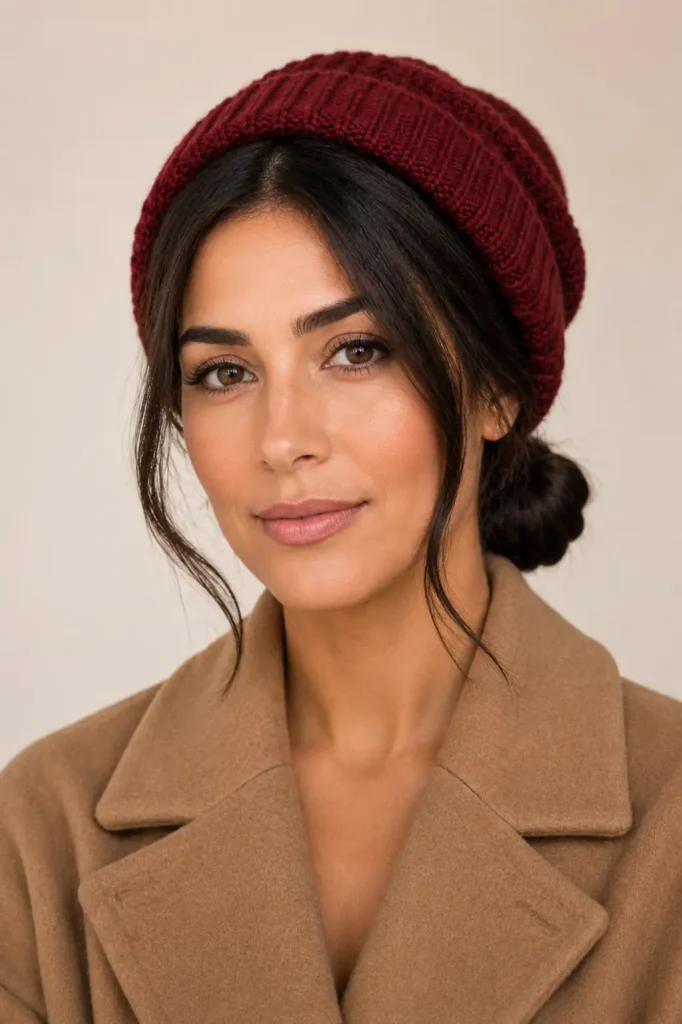
Pull your hair into a low bun at the nape of your neck, leaving two or three sections out at the front to frame your face. The bun sits below the hat, so it is not compressed. The tendrils stay visible, which keeps the style from looking too plain.
This is the one I wear most in winter. It takes about four minutes and looks decent even when I forget to brush first.
2. Space buns
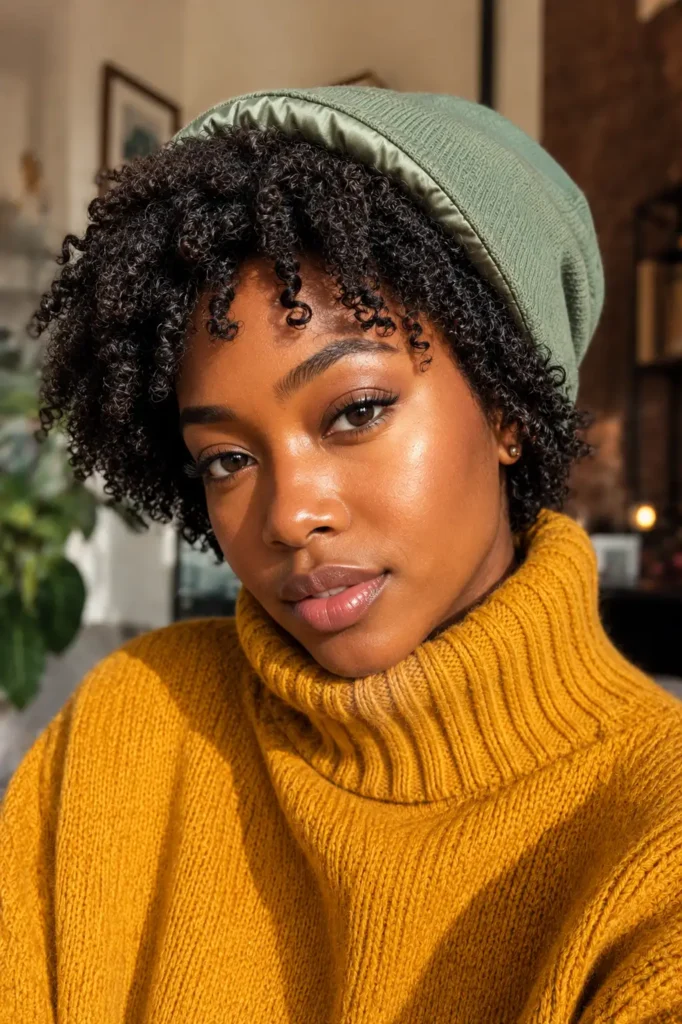
Split your hair down the middle and pin two small buns high on each side of your head, just above where the beanie sits. The hat frames the top section, and the buns stick out below the edge on both sides. It reads fun and intentional.
Works best on medium to long hair. If you have layers, a few pieces will fall out naturally, which actually looks better than everything tucked in.
3. Thick side braid
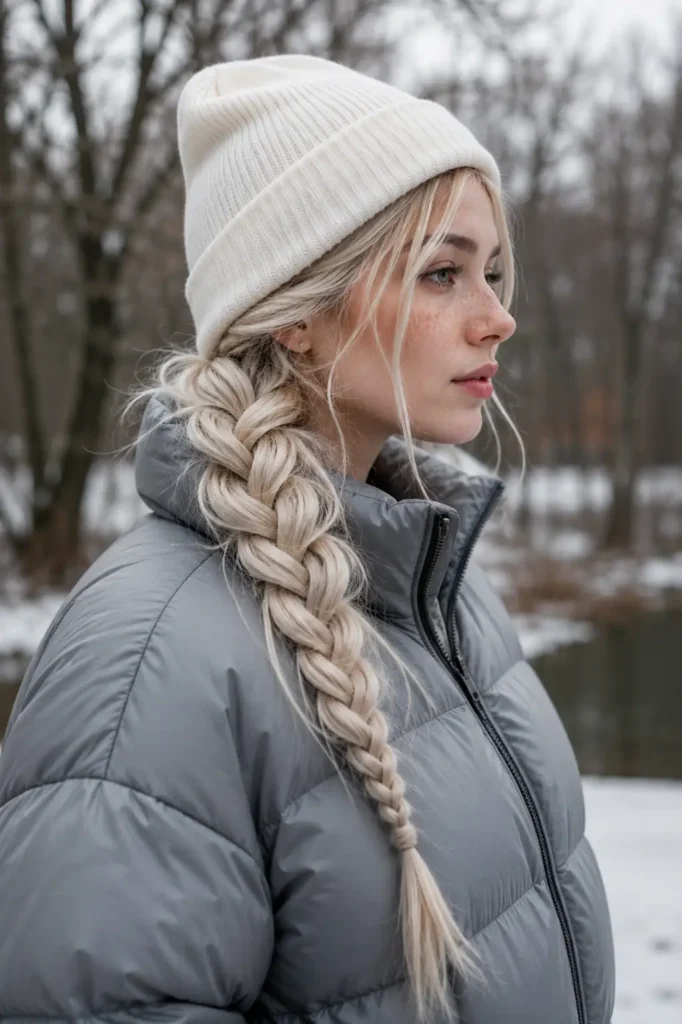
Braid one section of hair loosely over your shoulder before putting the beanie on. A thick, relaxed braid does not go flat under a hat the way loose hair does, and it creates an asymmetric shape that looks styled. French and Dutch braids hold even better if you have fine hair that tends to slip. Pull a few pieces out of the braid after braiding for texture.
4. Sleek high ponytail
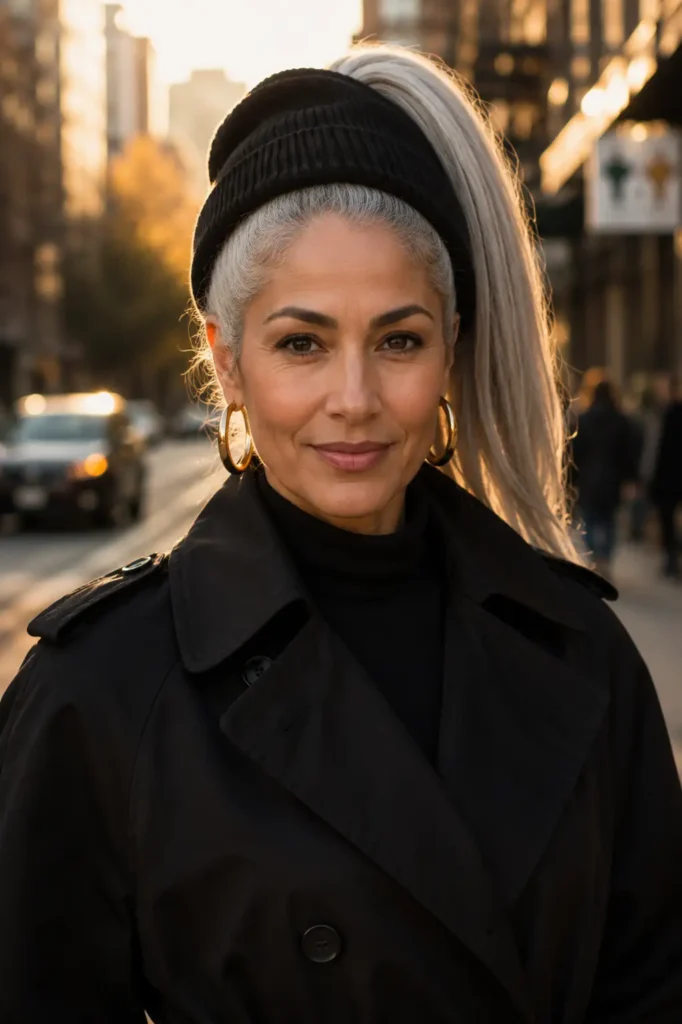
Pull everything up into a high, tight ponytail before the beanie goes on, then wear the beanie back on your head so the ponytail comes out of the top. This works on longer beanies or slouchy styles that sit further back. The ponytail adds height, which balances out round and heart-shaped faces well.
5. Messy low ponytail
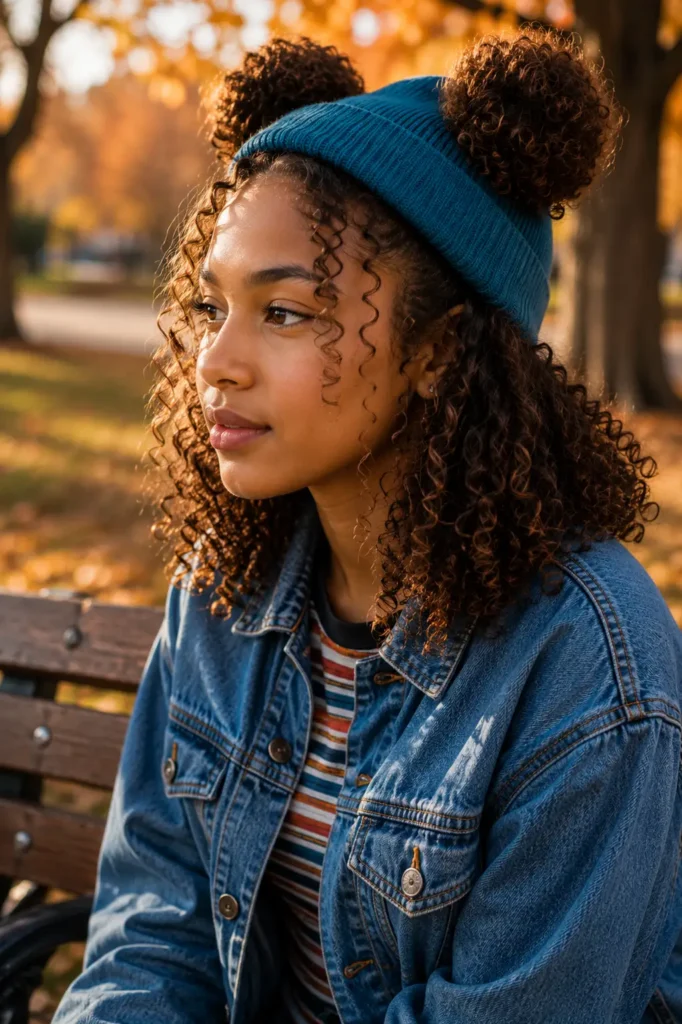
This one is genuinely low effort. Tie your hair loosely at the nape with an elastic, leave a few pieces out at the front, and put your beanie on normally. When you take the hat off, the ponytail looks intentionally casual and the loose pieces cover any hat dents.
Works on all hair types. Curly hair especially looks good with this because the curls spring back when freed.
6. Half-up half-down with a twisted top
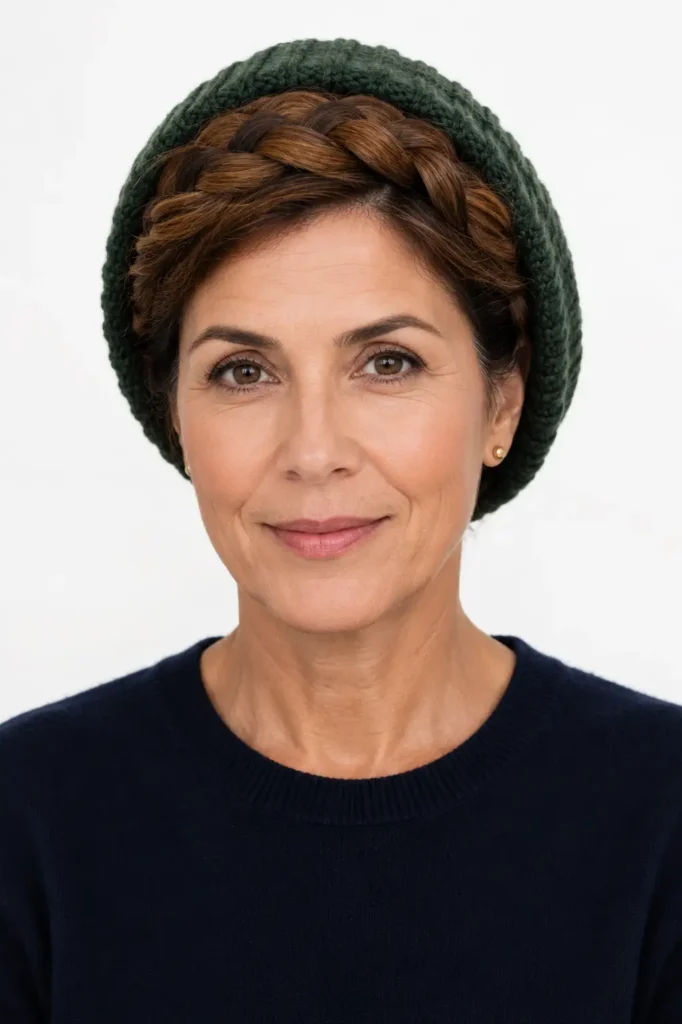
Take the top third of your hair and twist it back, securing it with a clip or small elastic, then leave the rest down. The twist sits at the crown, which gets flattened by the hat anyway, but because it is twisted it holds its shape.
The bottom half hangs free below the beanie. Great for medium-length hair, and the style reads different depending on whether the bottom section is wavy or straight.
7. Curtain bangs forward, everything else back
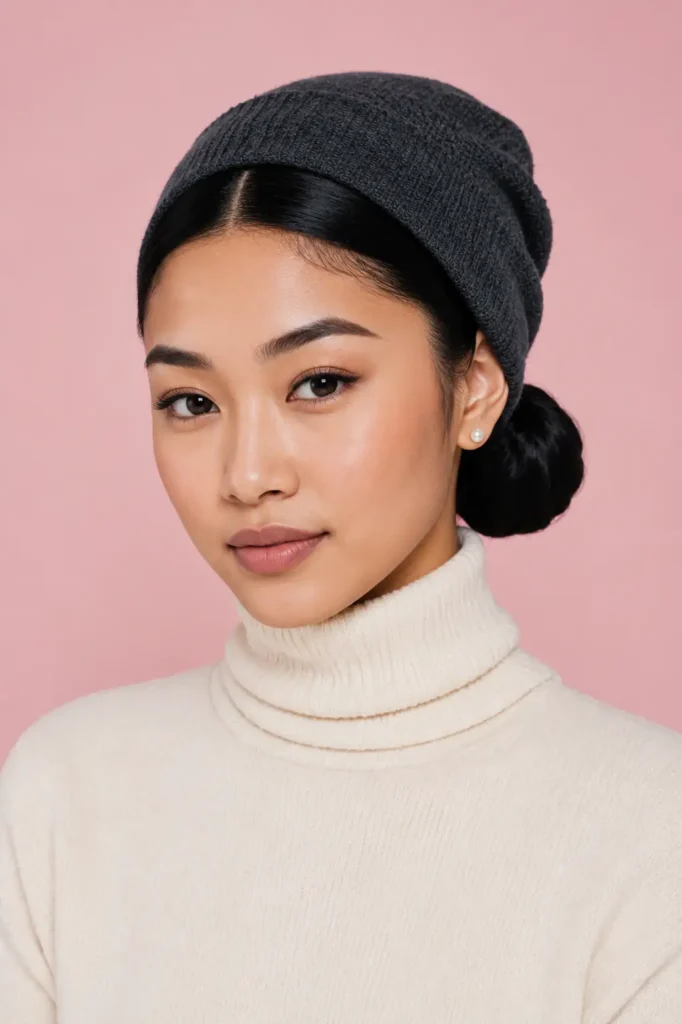
If you have curtain bangs, keep them forward under the beanie’s brim rather than tucking them in. The bangs soften the hat’s line and keep the look from feeling too casual. A low bun or ponytail in the back pairs well. This combination works particularly well on oval and long face shapes.
8. Voluminous side-swept low ponytail
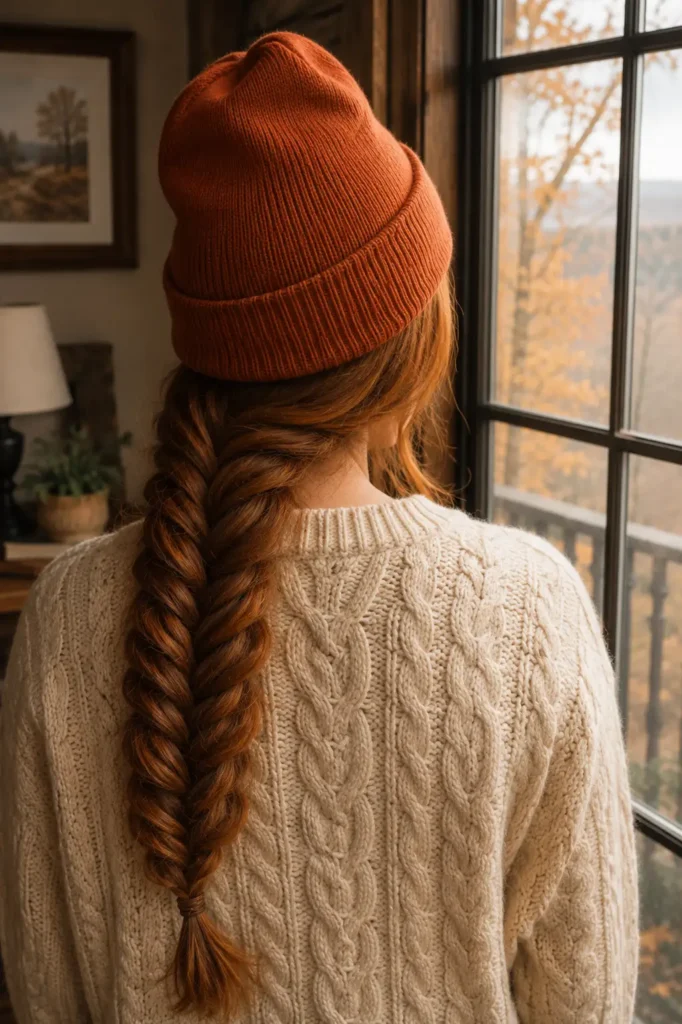
Before tying your ponytail, flip your hair upside down, rough it up with your fingers, then flip back and sweep to one side. Secure loosely. The volume you created does not fully survive the hat, but it comes back quickly when you shake your head after removing the beanie. A touch of dry shampoo before flipping helps hold the texture.
9. Short hair left natural
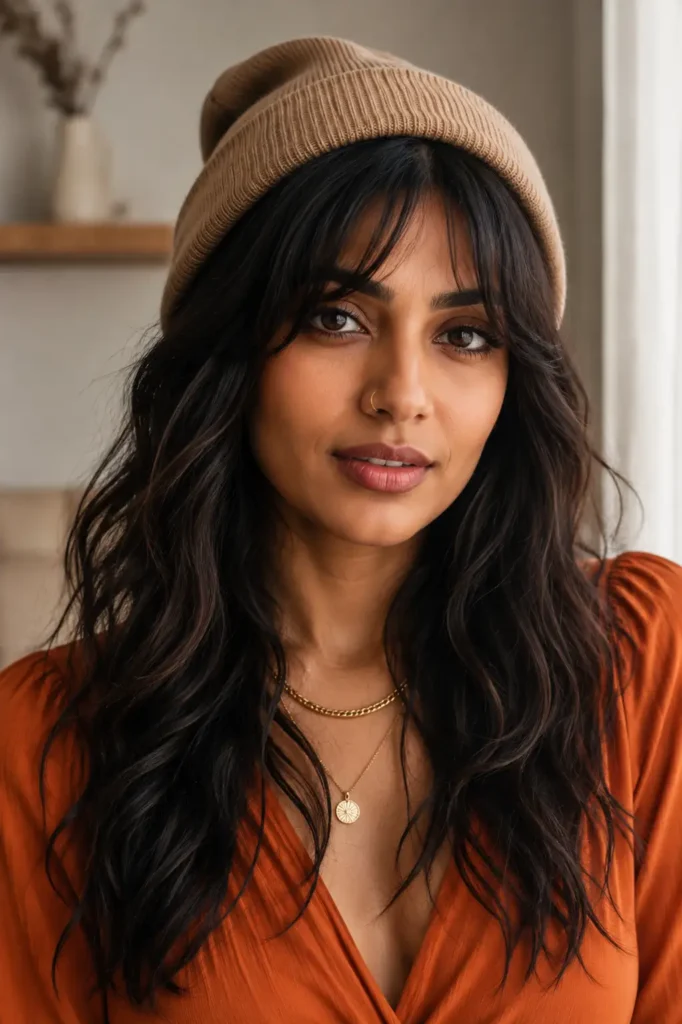
If you have a pixie or a bob, you do not need to do much. A beanie on short hair tends to look great on its own because the proportions are naturally balanced. The main thing to avoid is pulling the hat too far down, which makes a pixie cut disappear. Wear it pushed back slightly so some hair is visible at the front.
10. Bubble ponytail
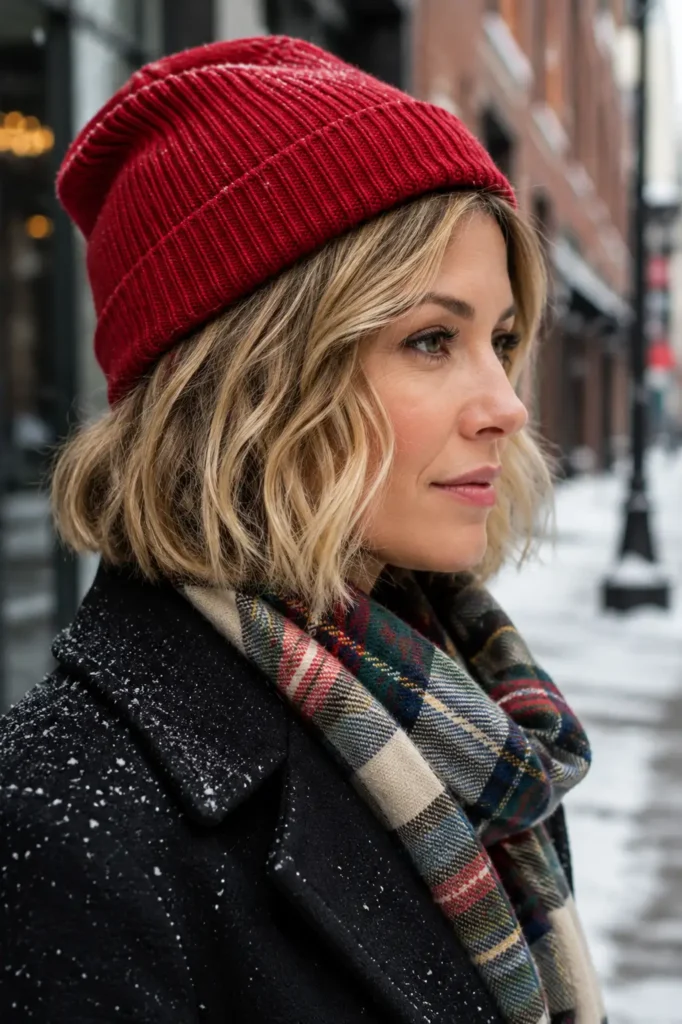
Tie your hair in a regular ponytail, then add additional elastics every few inches down the length, poofing out each section between them. The bubbled sections sit below the hat and stay puffed because they are held by their own elastics rather than relying on volume alone. It is a bit fussy to create but holds up well under a hat.
11. Fishtail braid over the shoulder
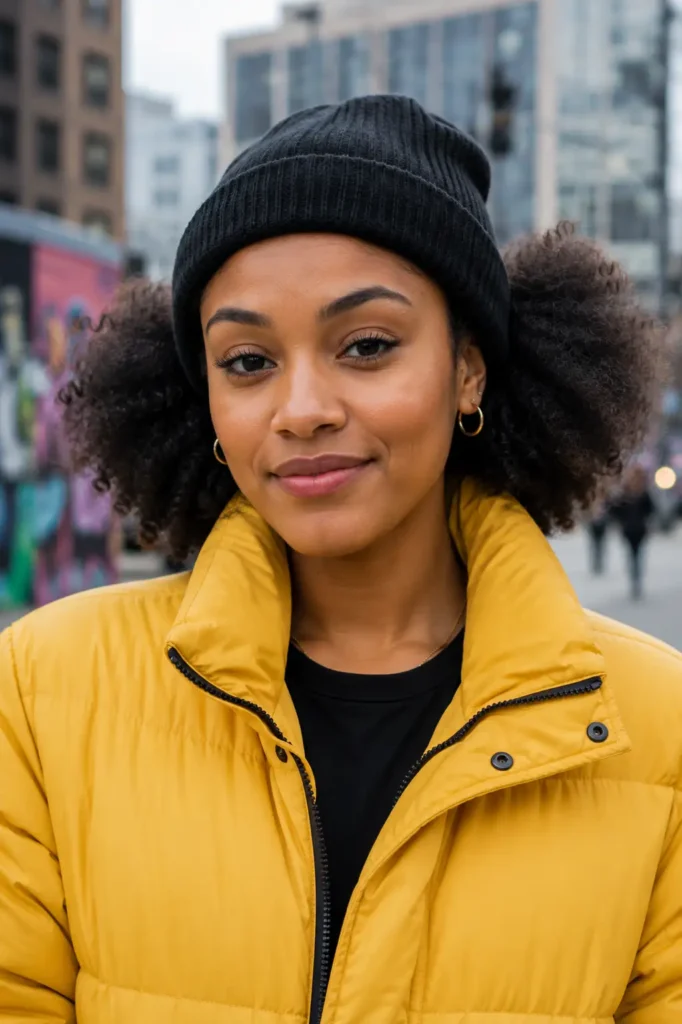
Similar to the side braid option but the fishtail adds more texture and visual interest. A loose fishtail looks boho intentionally when it peeks out from under a chunky knit beanie. Pull the sections apart slightly after braiding for a fuller look. Works best on hair that is at least shoulder length.
12. Two front braids pinned back

Take two small sections from the front of your hair on each side of your face, braid them loosely, and pin them back. The rest of your hair can be down or in a low ponytail. The small braids frame your face and stay put under a beanie because they are anchored at the back.
This one photographs well and hides the hairline, which is a good thing if your beanie sits in an awkward spot.
13. Crown braid under a loose beanie
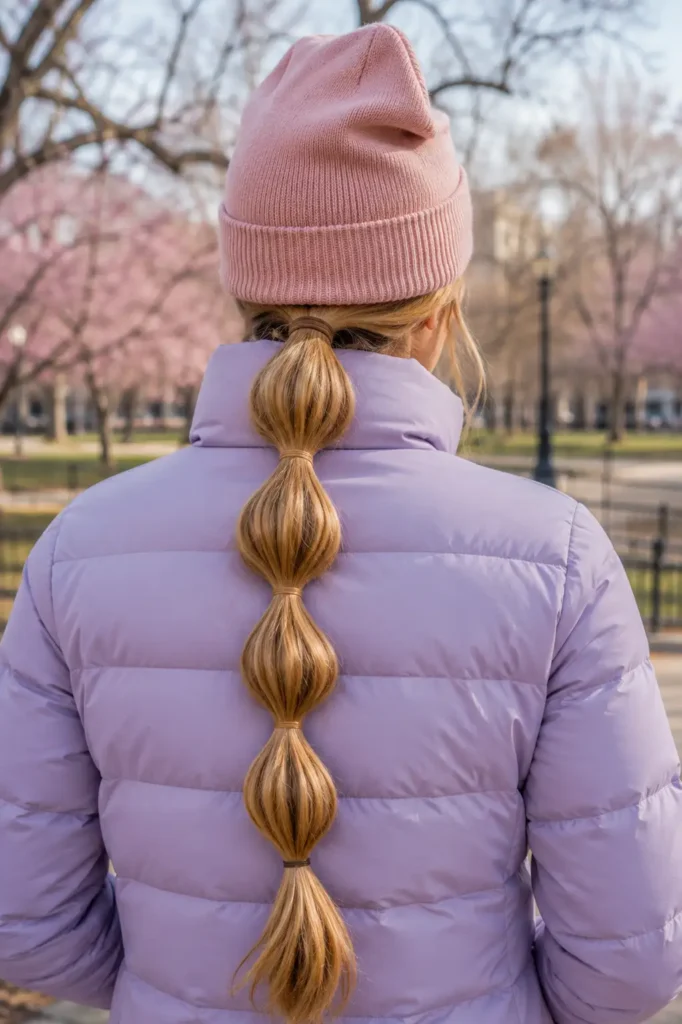
Braid your hair around the crown of your head (a basic crown or halo braid), then wear a slouchy beanie over it. The braid keeps everything secure, and the beanie adds warmth without destroying the style. The braid can actually look even better after a few hours under a hat because the texture becomes more relaxed.
14. Curly hair loose and free
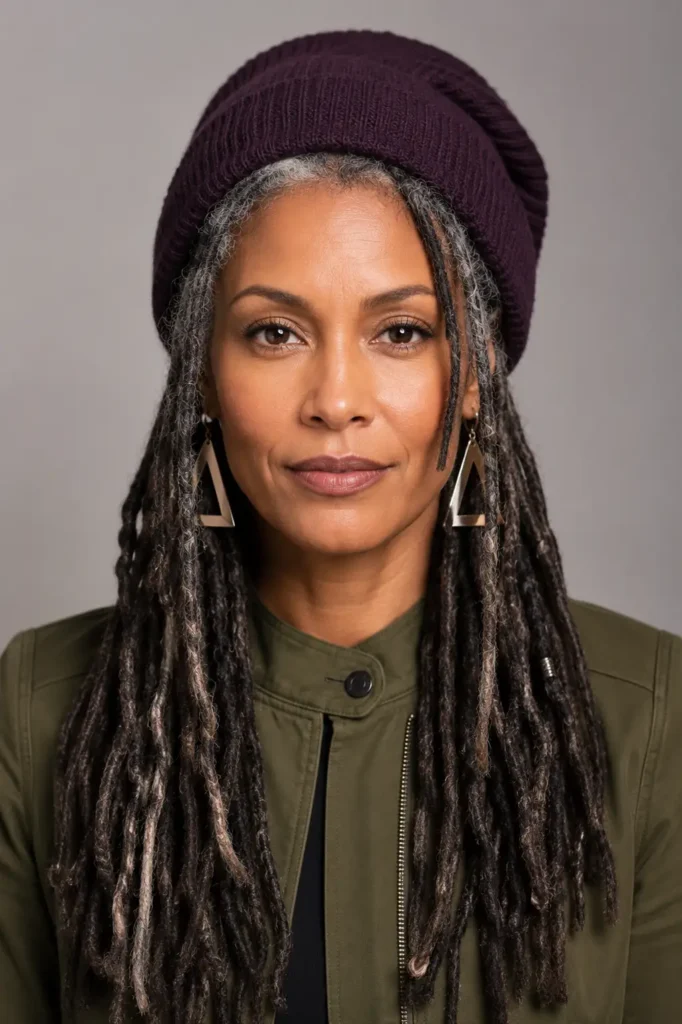
For curly and coily hair textures, loose and out is often the best option, especially with a loose-fitting beanie. The key is putting the hat on hair that is already well-defined. Wearing a satin-lined beanie or adding a thin satin bonnet underneath a regular beanie protects the curl pattern. When you remove the hat, scrunch gently to revive the curls.
15. Slicked-back low bun (ballet style)
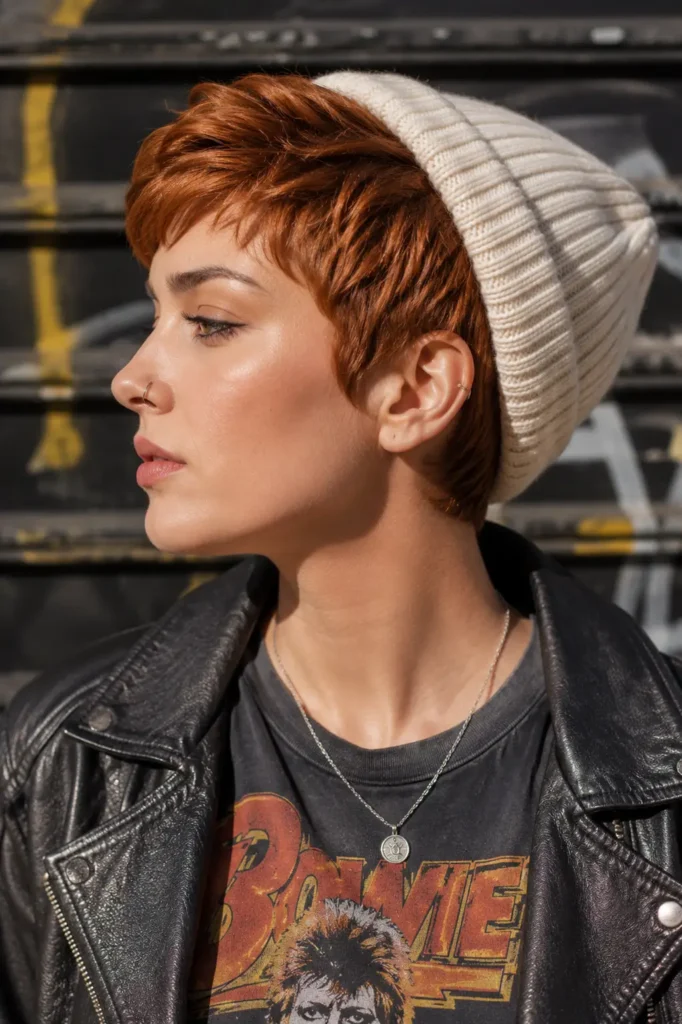
Use a gel or edge control product to smooth your hair completely back and into a tight, neat bun at the nape. No flyaways, no face-framing pieces. The beanie sits cleanly on top, and this style holds through the whole day because of the product. It looks polished and deliberate when the hat comes off. Works well for fine, straight hair that tends to look flat by mid-afternoon.
16. Textured lob with a cuffed beanie
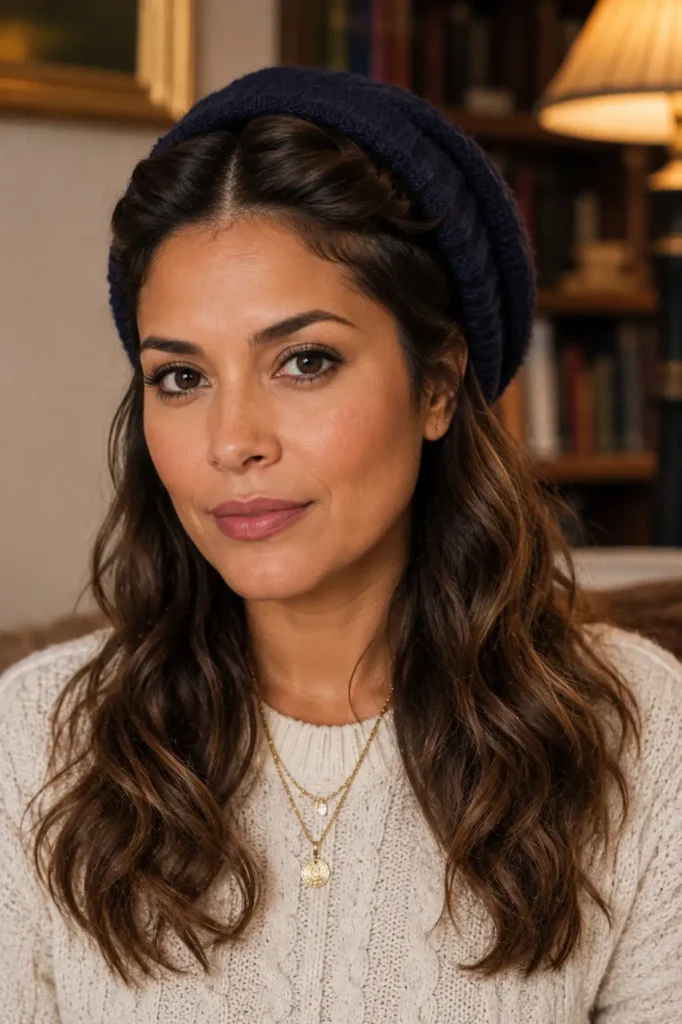
If your hair is chin-to-shoulder length, wear it down with a cuffed beanie pushed back on your head. The cuff creates structure and keeps the beanie from swallowing shorter hair. Wavy or textured lobs look especially good because the movement at the ends adds shape even when the top is compressed.
17. Wrapped topknot
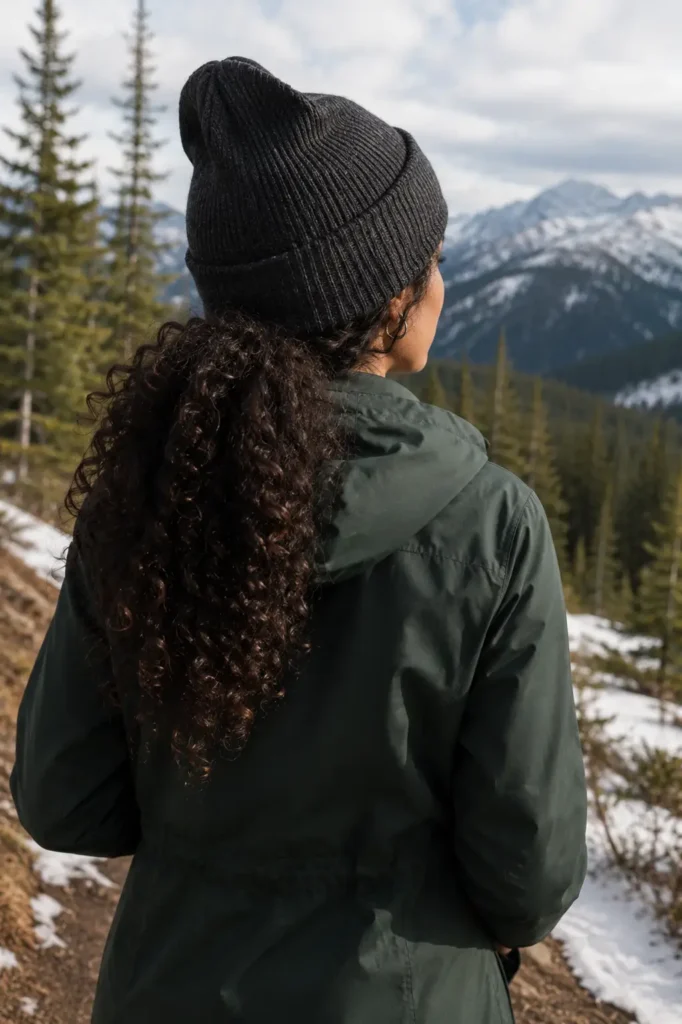
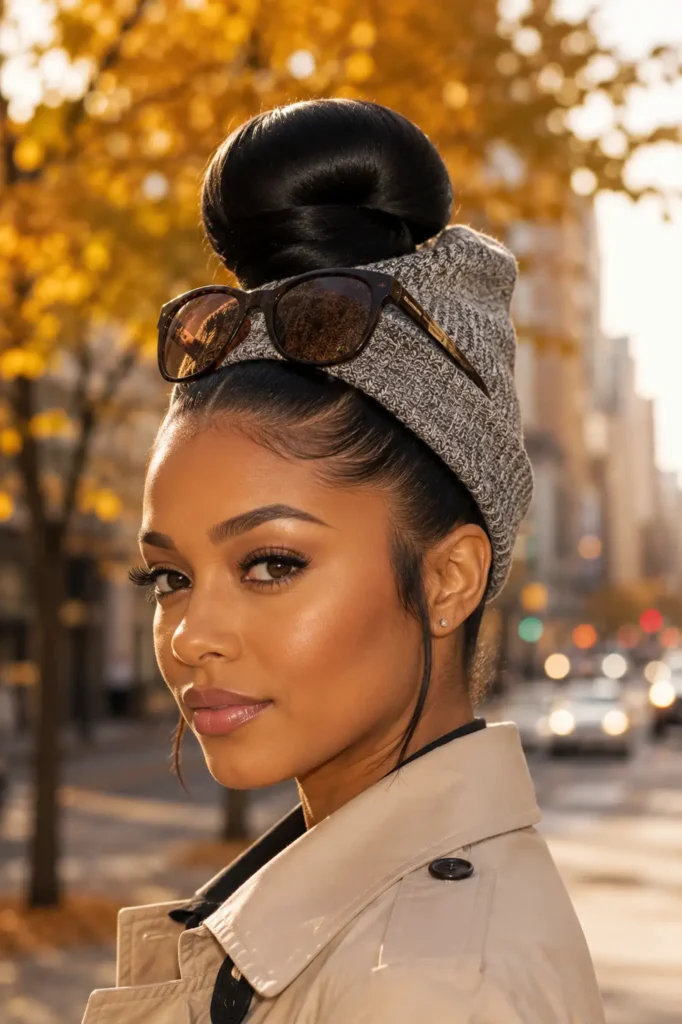
Twist your hair up and wrap it into a topknot, but instead of a regular bun shape, wrap it into a flat disk shape on top of your head. Then wear the beanie over it. The flat shape sits more comfortably under the hat and holds better than a round bun. The bun peeks out above a cuffed beanie and looks intentional.
18. Pigtails below the ears
Split your hair into two low pigtails below the ear, then put the beanie on. The pigtails sit outside and below the hat. This is a casual, youthful style that works better than it probably should on most face shapes. Keep them loose and wavy for a more grown-up result. They do not look as juvenile on wavy or textured hair as they do when the hair is very straight.
19. Dutch braid tucked under
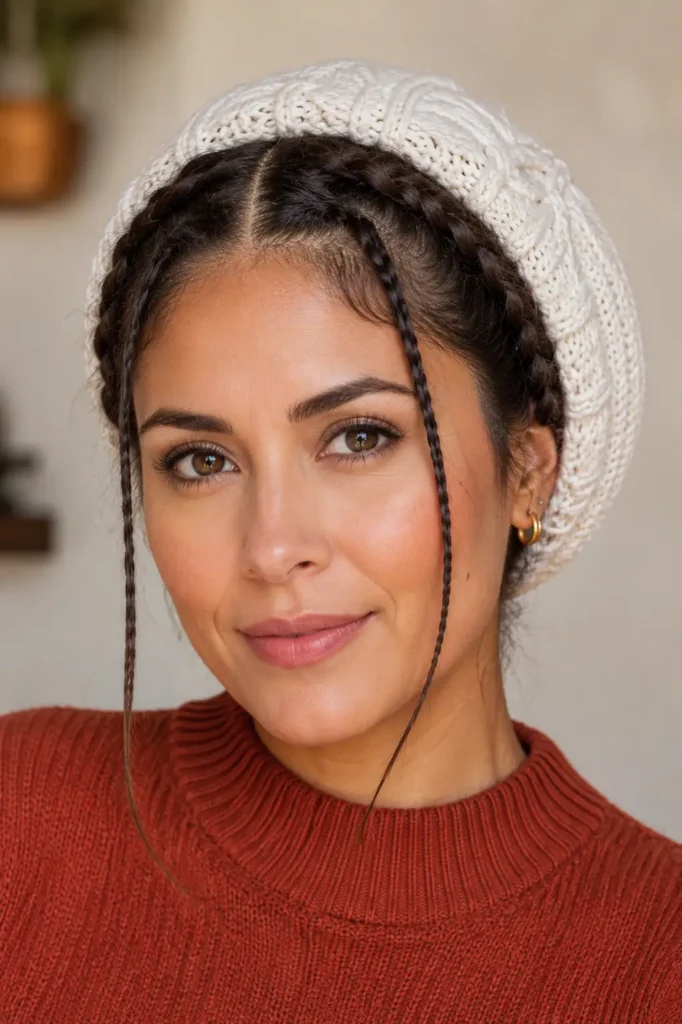
French or Dutch braid your hair in one braid down the back and tuck the end under, securing with an elastic or pin. The whole braid sits at the back of your head. The beanie goes over the braid comfortably.
It is flat enough to wear under the hat for hours and leaves no hair out to get frizzy. A good option for outdoor activities where you need your hair completely secured.
20. Blowout preserved with rollers

This one requires a little forethought. Blow out your hair the night before, roll it in large velcro rollers overnight to preserve the volume, then remove the rollers in the morning. Put the beanie on carefully and wear it as briefly as you can.
The roller-set hair springs back after the hat faster than a fresh blowout would, because the heat styling has already set. Not a permanent solution, but it works better than most people expect.
What to do when the beanie comes off
Hat hair is real, but it is also fixable. Keep a travel-size dry shampoo in your bag. A few sprays at the roots and a finger-scrunch through the length revives most styles in under a minute.
For curly hair, a small spray bottle of water works better than dry shampoo. For frizzy hair, a tiny amount of smoothing serum pressed through the length calms things down without making it greasy.
Common beanie hair mistakes worth avoiding
Wearing your beanie too low is the most common one. When the hat comes down past your eyebrows and ears, it leaves a deep dent around your entire head that is almost impossible to fix without a full wash. Wear it pushed back slightly so it sits at your hairline or above it.
Another mistake: putting a beanie on freshly washed hair. Wet or freshly washed hair has no texture to hold a style. A beanie on clean, product-free hair almost always leaves the worst flat spots. A day-two or day-three blowout holds up much better.
And if you are doing an updo of any kind, use quality elastics. Thin craft-store elastics snap and also leave deeper dents in the hair than proper hair elastics do.
Which styles work for which face shapes
Round faces: high ponytail, space buns, slicked-back low bun. Height at the crown creates length.
Square faces: side braid, curtain bangs forward, wavy lob down. Soft lines and diagonal shapes soften a strong jaw.
Heart-shaped faces: low ponytail, pigtails below the ears, half-up twist. Volume at the bottom balances a wider forehead.
Long faces: side-swept ponytail, two-strand side braid, textured lob down. Width at the sides shortens the appearance of a long face.
Oval faces: most styles work. A simple low bun or loose curls down are both reliable choices.
Beanie hairstyles through the seasons
Winter calls for more functional styles because your hair has to stay under the hat for longer stretches of time. Braids, buns, and twisted styles hold up better during hours of wear. In fall and spring, when you are putting the hat on and taking it off more often, looser styles like a casual low ponytail or half-up look better because they recover more quickly.
Summer beanies (yes, they exist in fashion contexts) tend to be thinner cotton or linen knit, and they sit higher on the head. With those, a loose high bun or textured lob looks balanced without the bulk of heavier winter styling.
Questions people actually ask about beanie hairstyles for women
Does wearing a beanie cause hair breakage? It can over time, especially if the hat is tight and made of rough wool. The friction and constant tension on the same areas can cause some breakage along the hairline. Wearing the hat slightly loosely, using a satin-lined version, and alternating where the hat sits helps reduce this.
What do you do with thick hair under a beanie? Thick hair actually holds up better under beanies than fine hair does. A low bun, twisted updo, or braided style sits flat enough to be comfortable, and the volume comes back on its own when the hat is removed. Avoid putting thick hair in a high bun under a tightly fitted beanie because the height creates an uncomfortable bump.
How do you keep a beanie from messing up a blowout? Honestly, you mostly cannot. The heat and compression that a hat creates will compress a blowout. The best approach is to wear the hat as briefly as possible and keep a small amount of dry shampoo at the roots to add texture back when it comes off.
Can you wear a beanie with short hair? Yes, and often it looks better than with long hair. Short pixies and bobs have natural volume and structure that holds up under a hat. Push the beanie slightly back rather than pulling it all the way down so some hair stays visible.
What products help beanie hairstyles last longer? Dry shampoo at the roots adds texture and grip that helps most styles hold. A lightweight mousse through wavy or curly hair before the hat helps curls bounce back after. Gel works well for slicked-back and braided styles. Avoid heavy oils or butters on the lengths before wearing a hat because they can make the hair go flat faster.
Are there beanie hairstyles for women with fine, limp hair? Fine hair is the most challenging because it compresses and dents easily. The slicked-back low bun works well because it uses product and tension to hold everything flat deliberately. The half-up twist also works because the twist adds structure that does not rely on volume. Avoid wearing fine hair completely loose under a beanie for more than about 30 minutes.
How do you stop beanie-hat hair on naturally curly hair? Silk-lined beanies are the best tool here. They allow the curls to move rather than pressing them flat against a rough surface. Wearing a silk or satin bonnet underneath a regular beanie works just as well. After removing the hat, scrunch gently with damp hands or a light mist of water and curl-defining cream.

Sarah Williams
Hi, I’m Sarah Williams — the founder of HerStyleNest, where beauty meets modern style. I share trendy hairstyles, chic nail designs, and fashion inspiration for women who love staying stylish every season. From everyday elegance to viral beauty trends, HerStyleNest is your go-to destination for effortless fashion and beauty ideas.