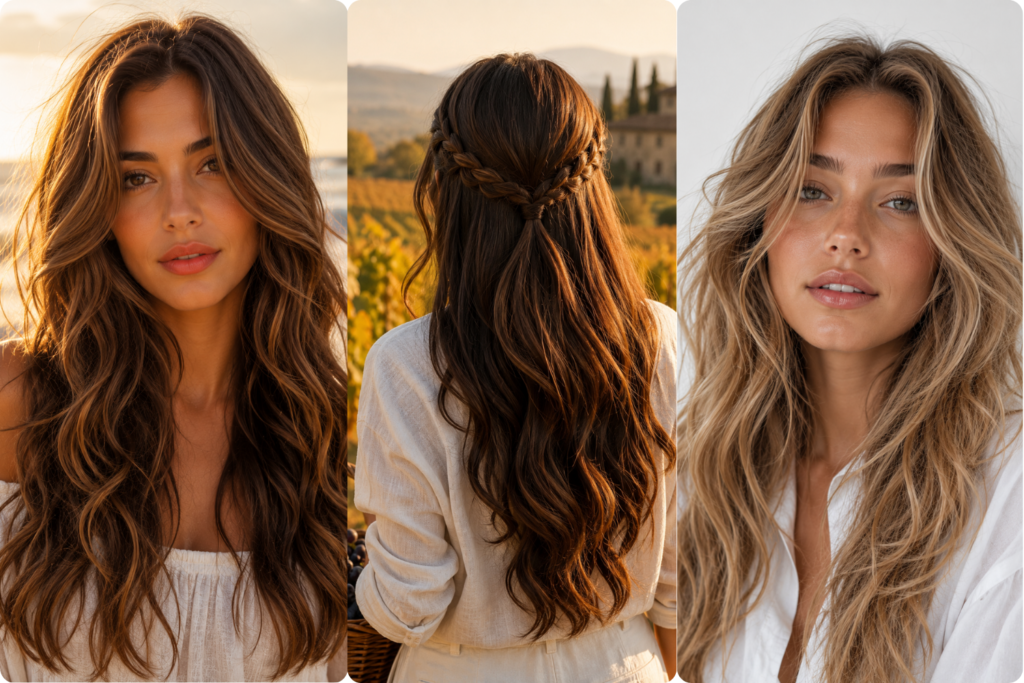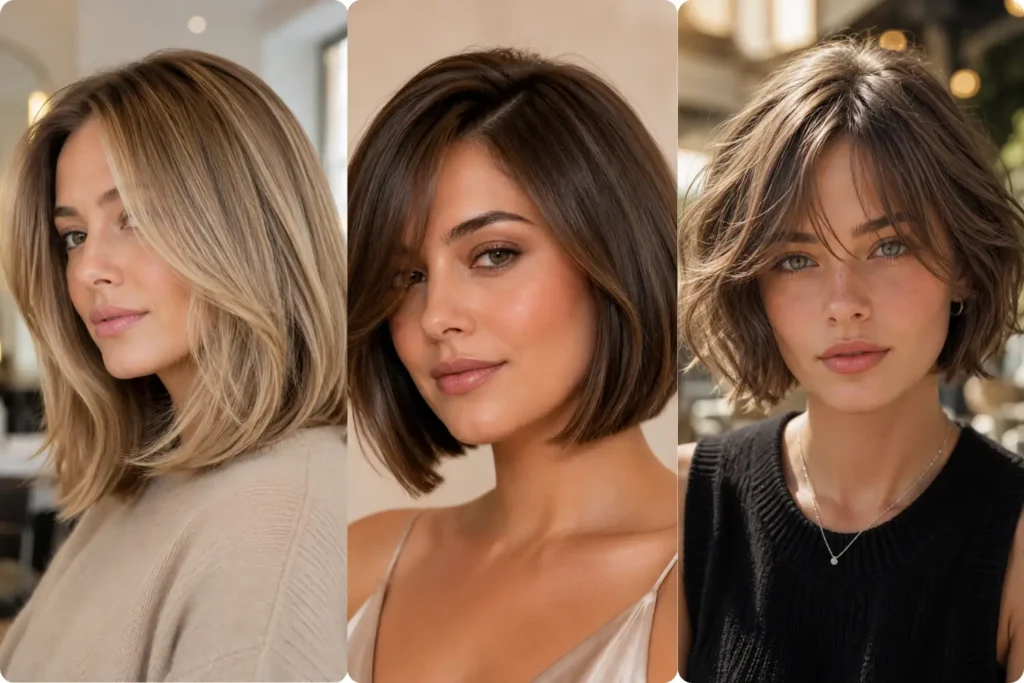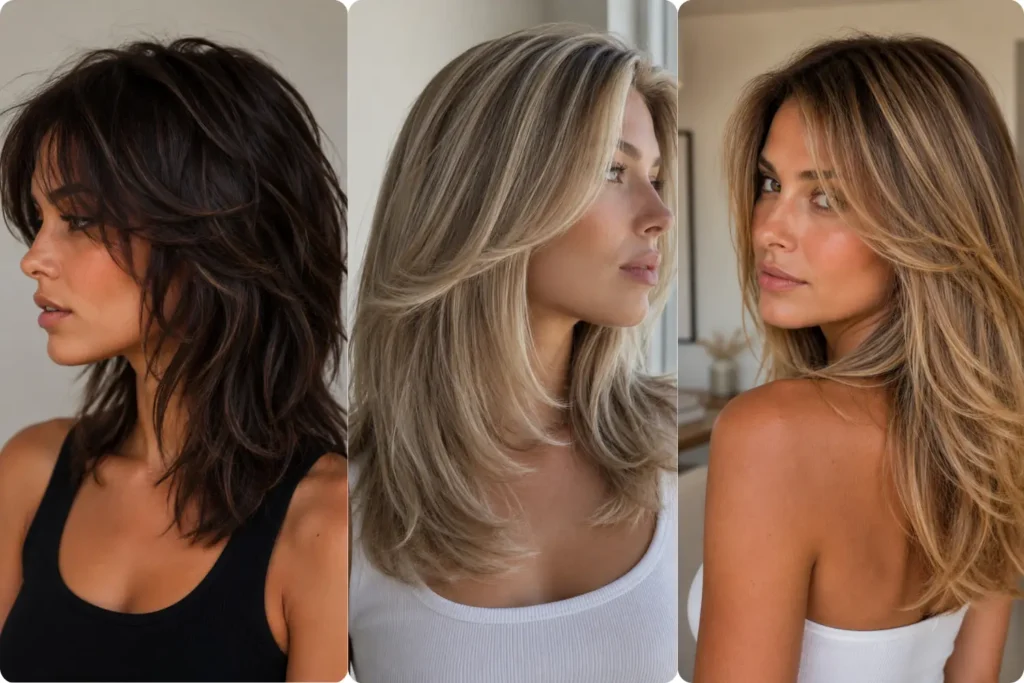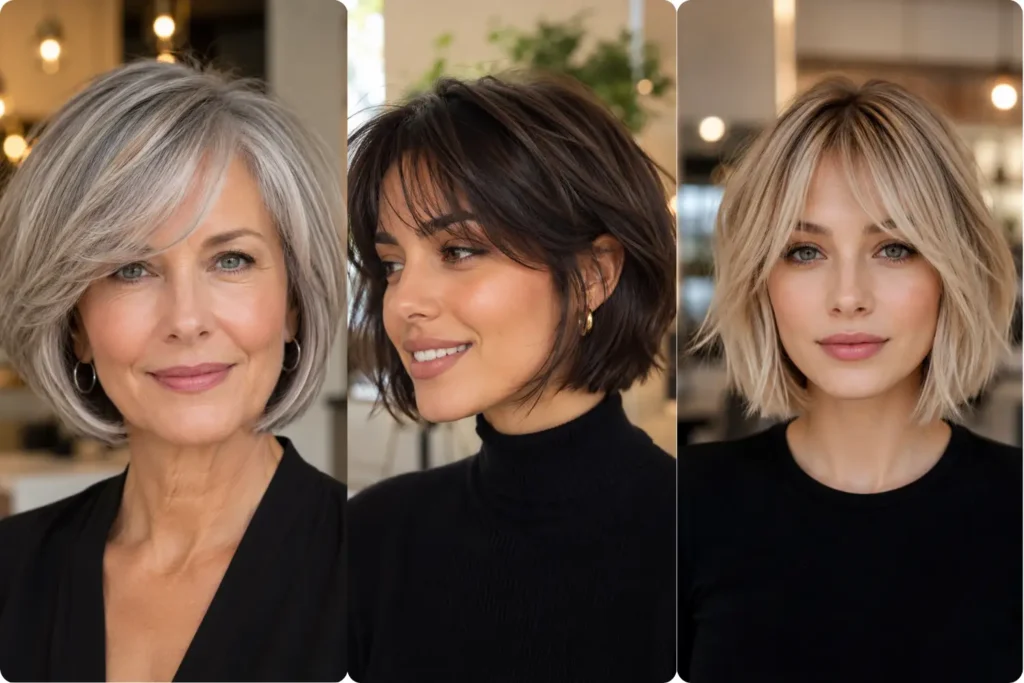
23 Braid Hairstyles for Long, Medium, and Short Hair
I still remember the exact Saturday I fell in love with braids. A close friend invited me to her braider’s home studio, and I watched seven hours of cornrows and box braids come together into something that honestly looked like wearable art. I had no idea hairstyling could feel that personal or that intentional. That afternoon changed how I thought about hair entirely, and I’ve been obsessed with braid styles ever since.

Since then, I’ve sat through more salon chairs than I can count and tried everything from micro braids to butterfly locs, feeding-in ponytails to Dutch braid updos. Some styles changed my morning routine completely. Others lasted six weeks without needing a single touch-up. A few were disasters I learned from quickly. This guide to 23 braid hairstyles covers the styles I know best — with honest tips, real product recommendations, and advice that actually works in practice, not just on paper.
If you’ve been curious about braids but aren’t sure where to start, or if you’re a braid veteran looking for your next style, you’re in the right place.
1. Classic Box Braids
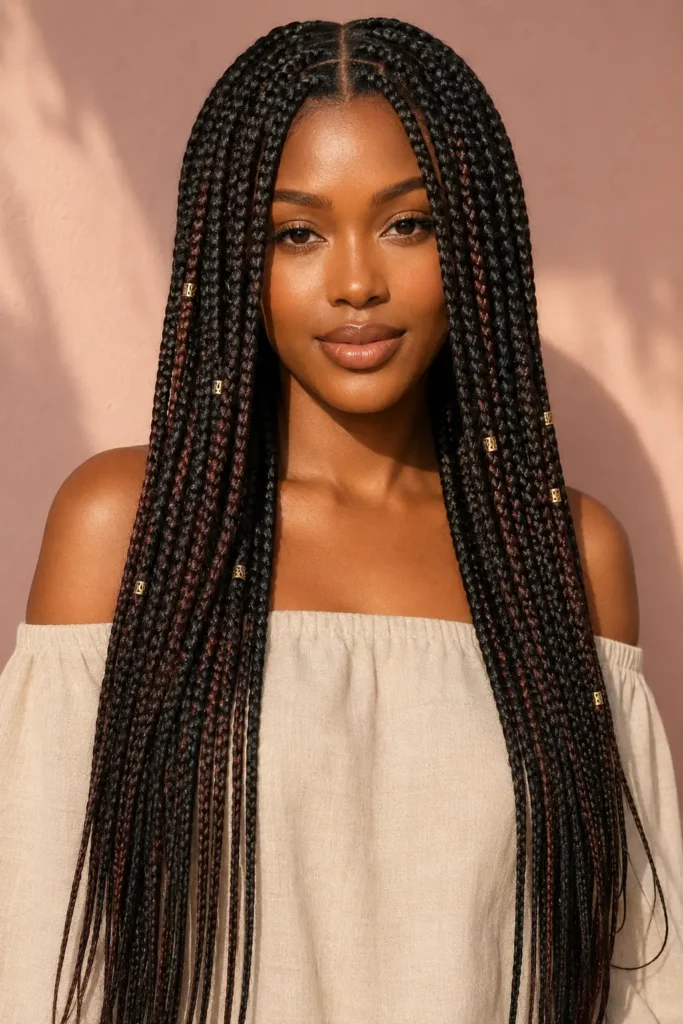
Box braids are the gold standard of protective braiding. Your hair is divided into small square sections, and extensions — usually Kanekalon or Marley braiding hair — are added to create long, even plaits that typically last six to eight weeks with proper care.
They work best on type 3 and type 4 natural hair, though anyone with sufficient length can wear them. The key to a clean, long-lasting set is even tension throughout the scalp — too tight causes damage, too loose means they fall apart within weeks.
Products: Ebin 24-Hour Edge Tamer for neat edges, Jamaican Black Castor Oil for scalp moisture, and a lightweight braiding gel to keep each section smooth during installation.
2. Knotless Box Braids
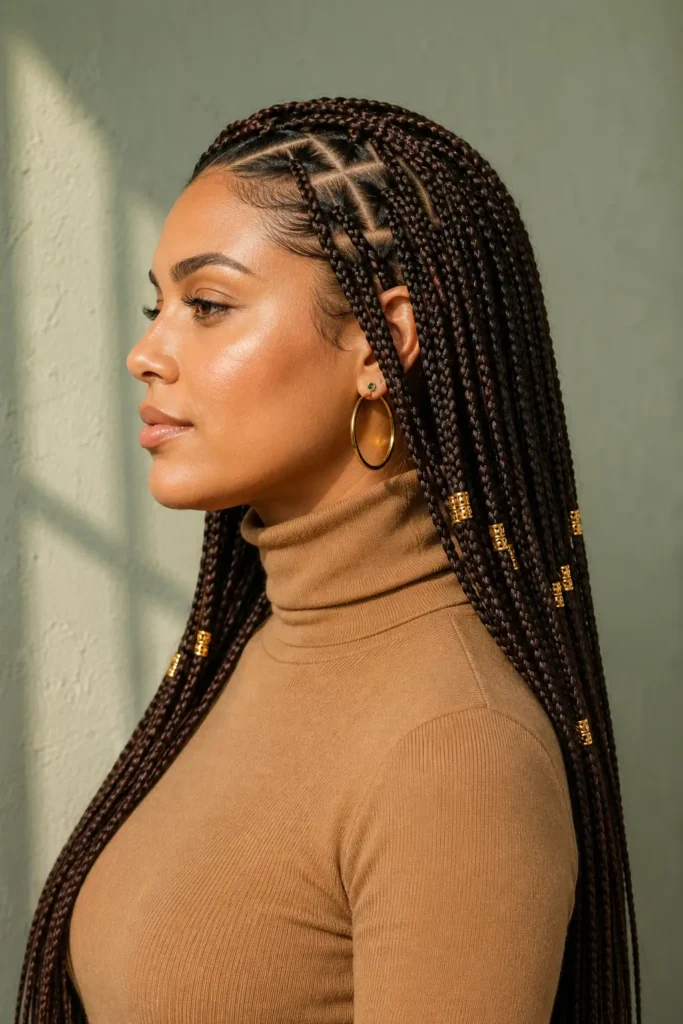
Knotless braids start with your own natural hair at the root and gradually feed in extension hair as the braid progresses downward. The result looks identical to classic box braids from a distance, but the root sits flat without a bulky knot, which makes the style significantly more comfortable on the scalp.
If you’ve ever gotten box braids and spent the first week with a headache or tension soreness, knotless installation is likely to change your experience entirely. They also tend to look more natural at the root because there’s no visible knot joining your hair to the extensions.
3. Cornrows
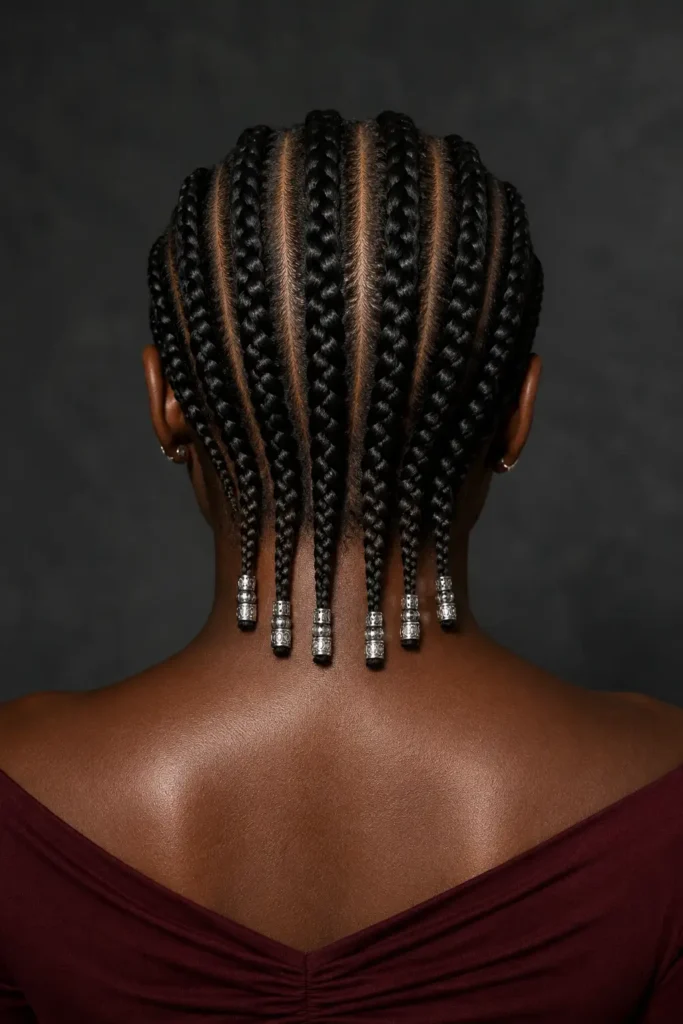
Cornrows are the original foundation of so many modern braid styles. They lie flat against the scalp and can follow straight lines, geometric curves, or highly intricate patterns depending on the braider’s skill level. They’re among the most culturally significant hairstyles in the world, deeply rooted in West African and African-American traditions spanning centuries.
Simple straight-back cornrows are low-maintenance, look clean under hats or headwraps, and are an excellent foundation for other styles. More elaborate designs — curved parts, zig-zag patterns, or stitch-style sections — require a highly skilled braider and a longer appointment. For everyday wear, six to eight straight-back cornrows with beads at the tips is a beautiful and practical choice.
4. Braided Crown High Bun
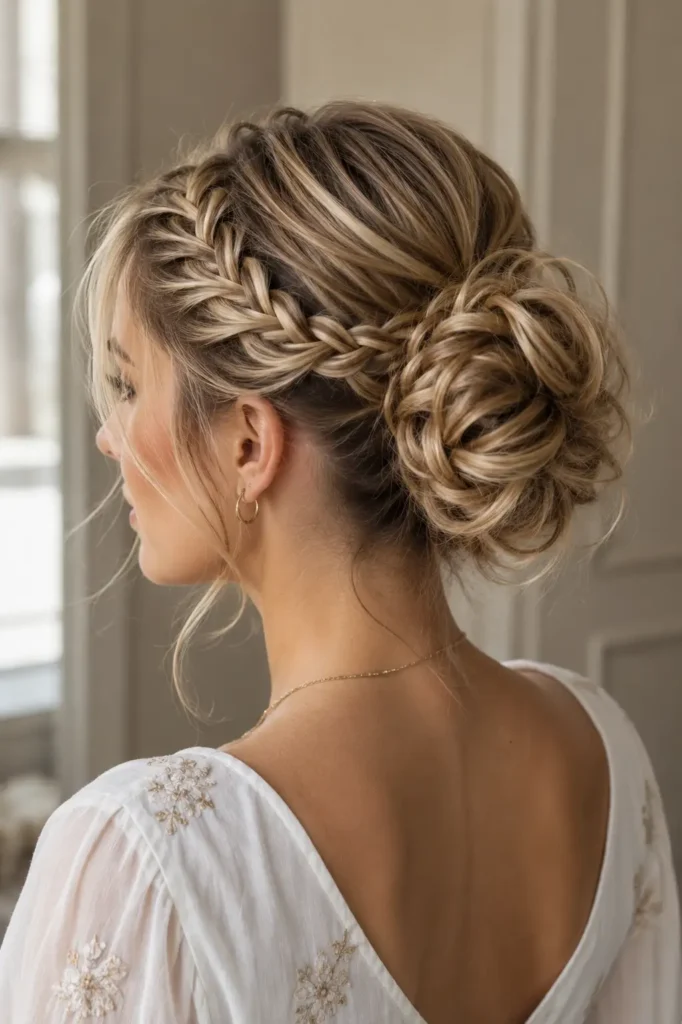
This elegant braided crown bun combines a classic French braid with a full, voluminous high bun for a polished finish. Soft blonde highlights add dimension to the braid, making every detail stand out. It’s a beautiful choice for weddings, proms, formal events, or any occasion where you want a sophisticated hairstyle that stays secure all day.
5. Cornrow Braided High Bun
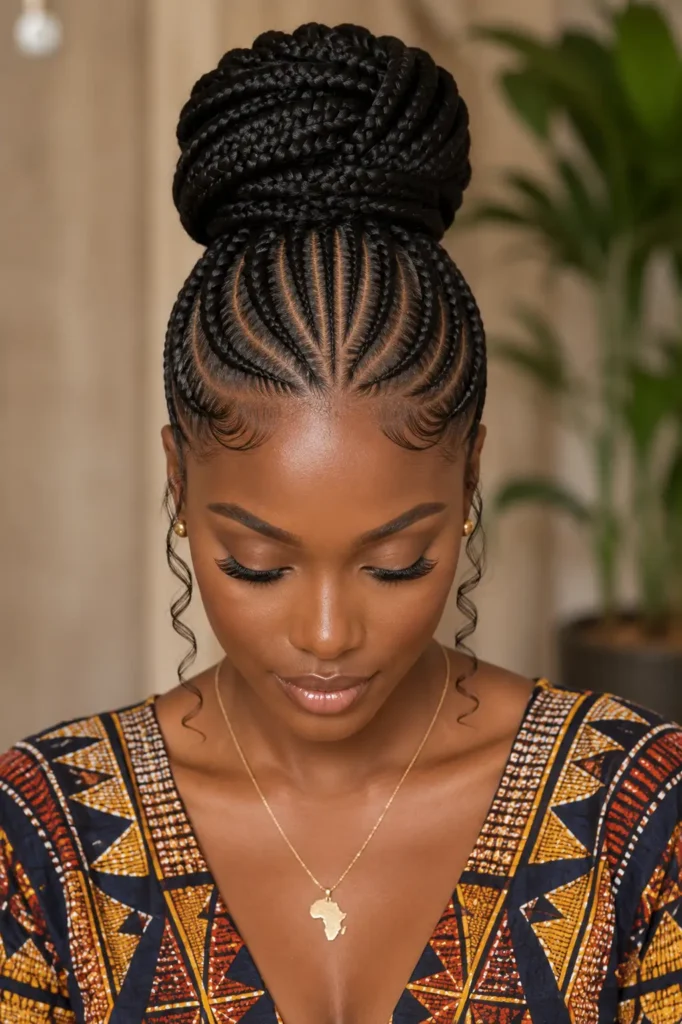
Clean, symmetrical cornrows gathered into a high braided bun create a bold yet elegant protective hairstyle. The sleek finish highlights the intricate braid pattern while keeping hair secure and low maintenance. This style is perfect for everyday wear, celebrations, vacations, or anyone looking for a stylish protective updo.
6. Lemonade Braids
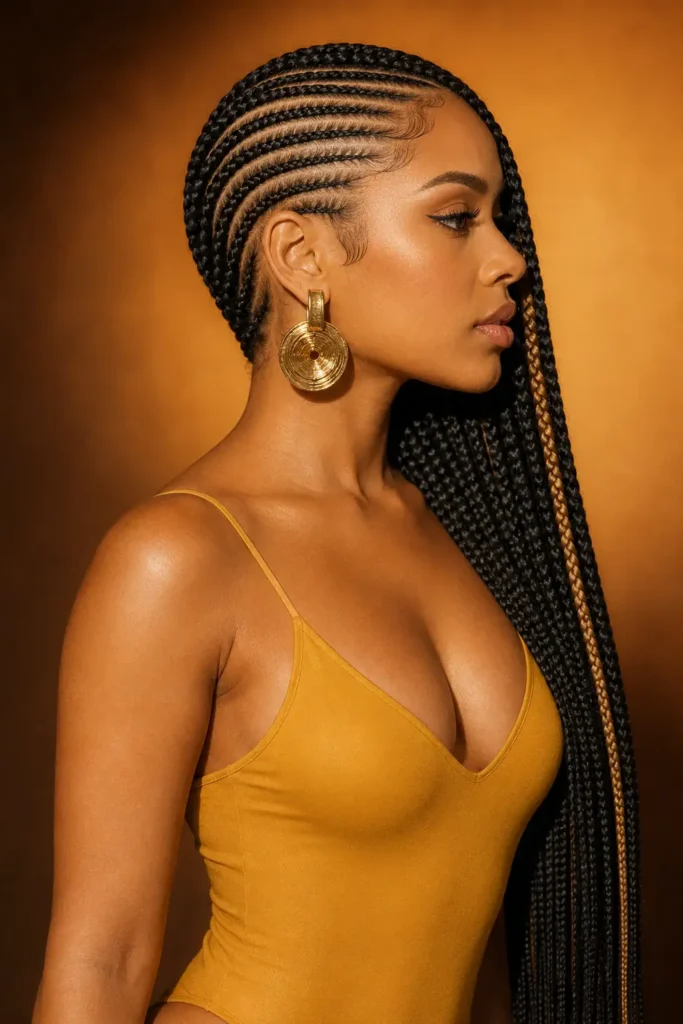
Beyoncé wore lemonade braids in her 2016 Lemonade visual album, and the entire internet took notice. These sleek, horizontal cornrows sweep to one side of the head, typically ending in long, extended box braid lengths. The clean geometric lines and the way they frame the face make them especially flattering on oval, oblong, and heart-shaped faces.
The installation is more complex than straight-back cornrows because horizontal parting requires more precision from your braider. Expect a longer appointment and a higher price point — but the style photographs beautifully and has genuine staying power as a trend.
7. Senegalese Twists
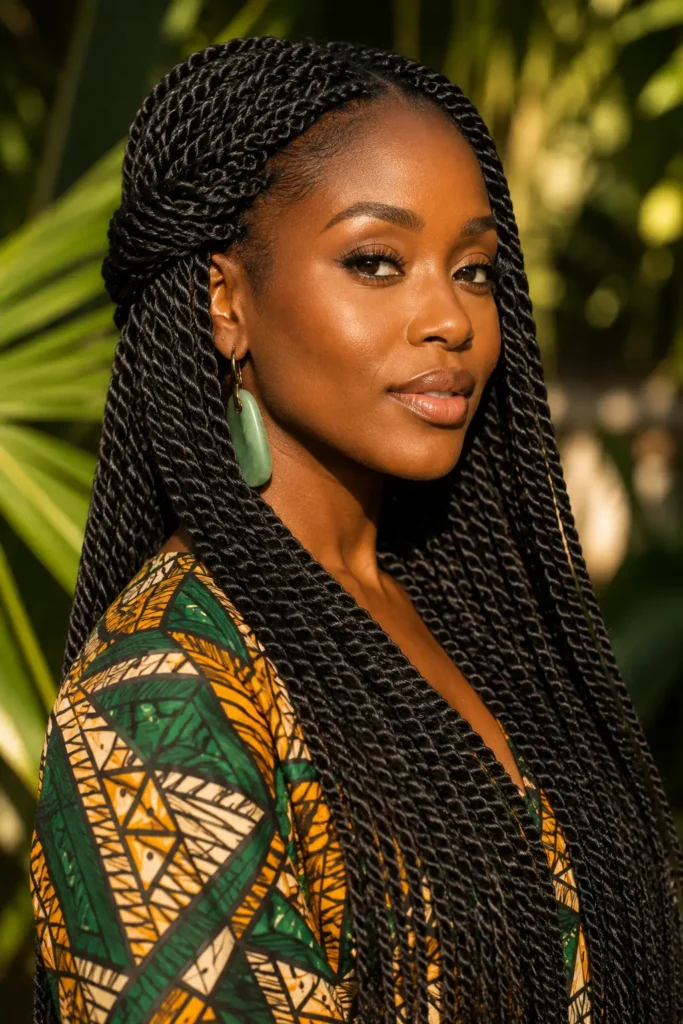
Senegalese twists are technically a twist rather than a three-strand braid, but they belong in any comprehensive braid roundup because of how closely related they are in function, purpose, and look. Made with silky Kanekalon or Toyokalon hair, they have a glossy, rope-like spiral texture that looks refined and moves beautifully.
They’re notably lighter than box braids, easier on your edges, and feel less heavy on the scalp. I’ve worn Senegalese twists pulled into a high bun for professional settings and left them loose for weekends — they transition between contexts better than most styles I’ve tried.
8. French Braid
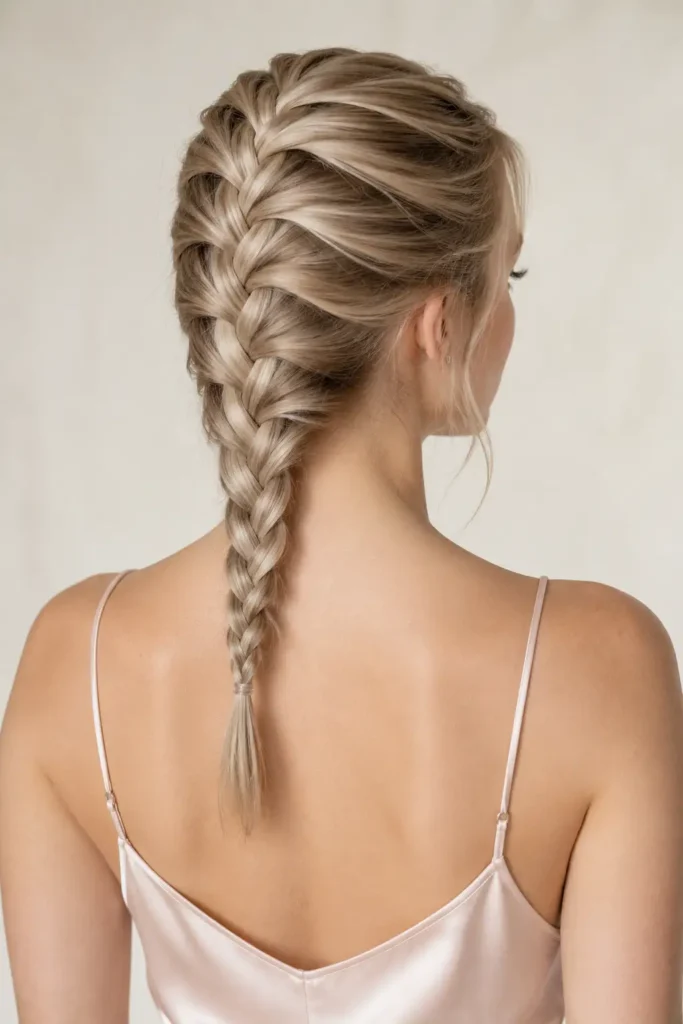
The French braid is one of those braid hairstyles that never really goes away because it genuinely works on almost every hair type, length, and occasion. You start with three strands at the crown, then continuously add sections of hair from both sides as you braid down toward the nape of the neck. The result lies flat against the head in an elegant, incorporated plait.
Even fine, straight hair that can’t hold extension styles maintains a French braid beautifully, especially when braided on slightly damp or texturised hair. Once you’ve practised the technique a handful of times, it takes about five minutes and holds through a full workday without touching it again.
9. Dutch Braid
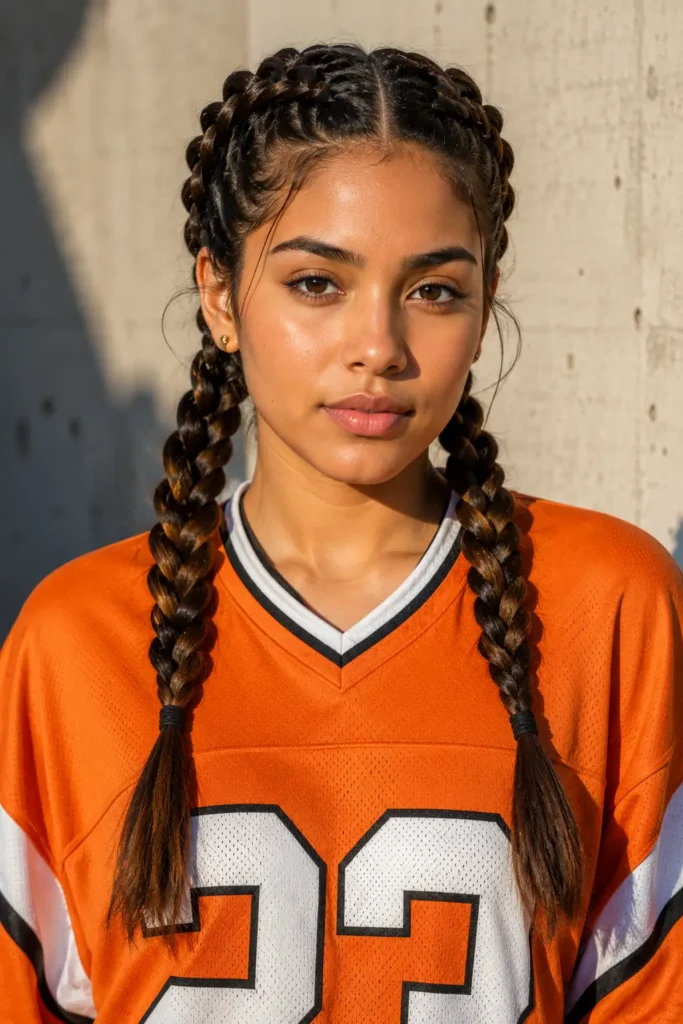
A Dutch braid is essentially a French braid with one key difference: you cross each section under the center instead of over it. That single change creates a braid that pops off the scalp in a raised, three-dimensional way that looks dramatically bolder than a French braid. Double Dutch braids (one on each side) are practically a uniform for workouts, festivals, and casual days out.
They hold through intense physical activity better than most other styles because the structure grips hair firmly against the scalp. Athletes and dancers wear Dutch braids for exactly this reason. Braid them on second-day hair with a light texturizing spray for the strongest hold.
10. Fishtail Braid
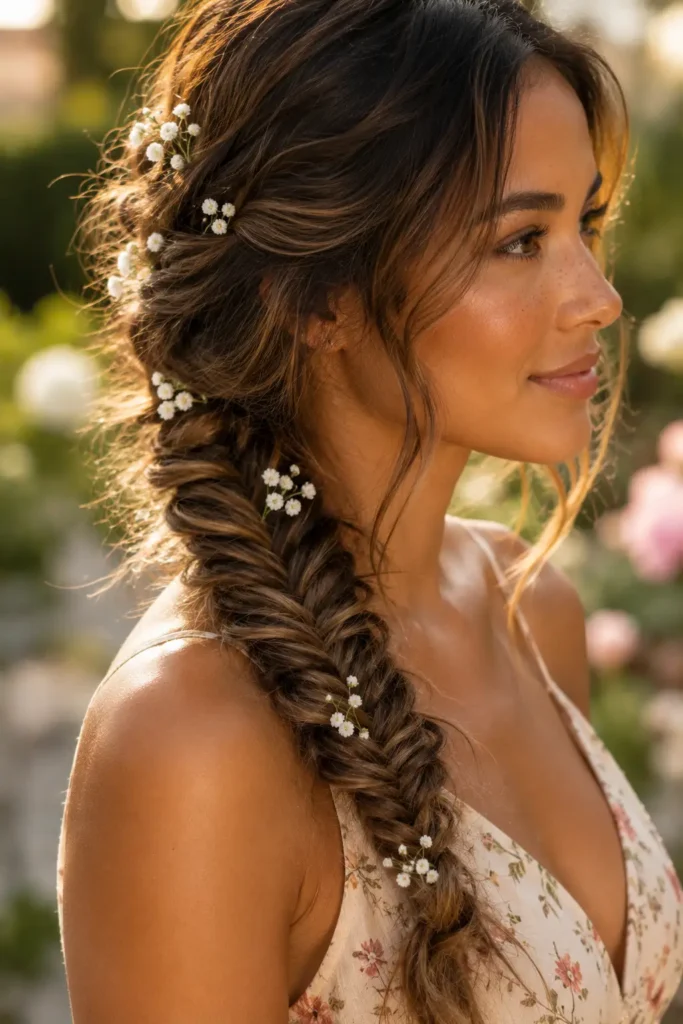
The fishtail braid mimics the repeating V-pattern of a fish tail: you split hair into two sections, then alternately pull thin slices from the outer edge of each section and cross them into the opposite section. The result is a complex-looking woven plait that’s actually simpler than it appears once the motion becomes muscle memory.
Slightly unwashed, texturised hair holds a fishtail much better than freshly washed silky hair. After finishing, gently stretch and tug sections apart for a fuller, more romantic look. A clear elastic at the end and a light hairspray to tame flyaways will keep it looking intentional all day.
11. Waterfall Braid
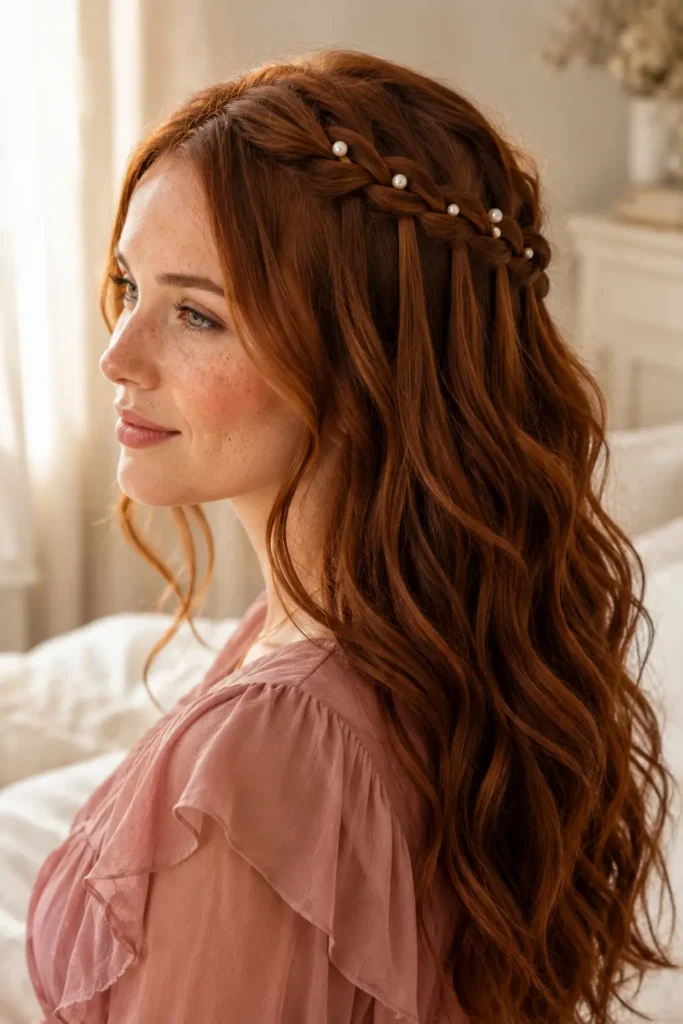
A waterfall braid is a partial French braid where you drop each lower section rather than incorporating it into the ongoing braid. The dropped pieces cascade downward like water falling through the braid structure, creating an ethereal, romantic effect that’s unlike any other style on this list.
It works best on longer hair with some natural wave or body so the dropped sections have movement rather than hanging flat. A curl-enhancing cream or beach spray applied before braiding gives the cascading pieces that flowing texture that makes this style so viral on Pinterest and Instagram.
12. Crown Braid (Halo Braid)
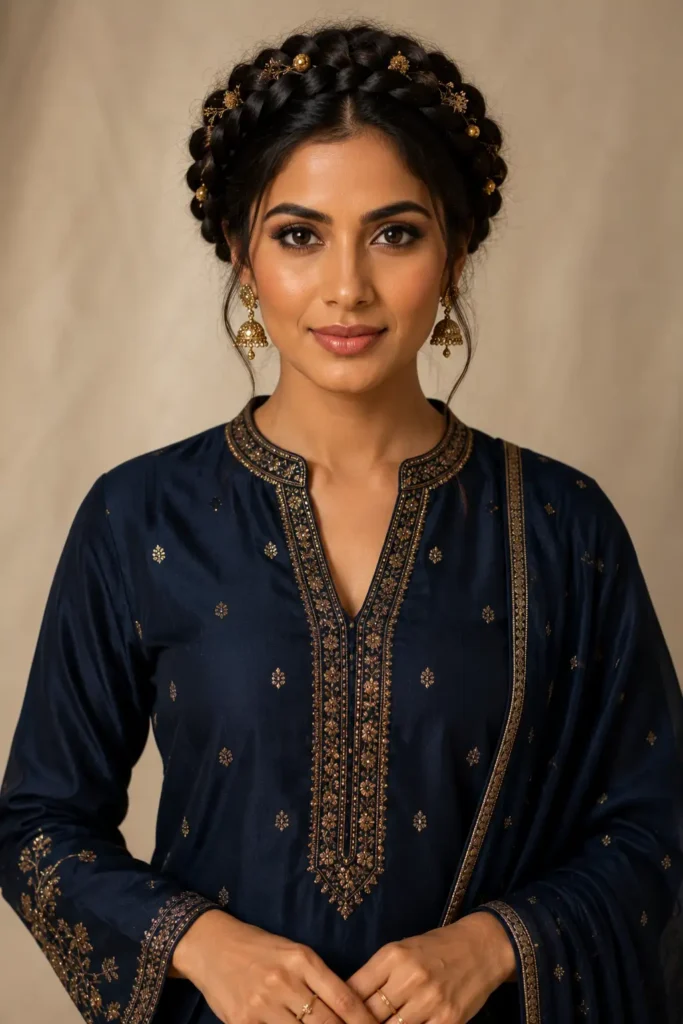
A crown braid wraps a French or Dutch braid entirely around the head like a hair tiara, with the braid sitting at the hairline from ear to ear across the top of the head. It looks intricate and bridal, but the technique is essentially the same French braid motion — you’re just directing the braid horizontally rather than downward.
For longer or thicker hair, you can wrap the braid around twice for extra volume and fullness. Bobby pins secure any tail ends underneath, and a light-hold hairspray controls flyaways without making the braid look stiff. This is the style I recommend most often for outdoor weddings and summer garden parties.
13. Boho Braids (Goddess Braids)
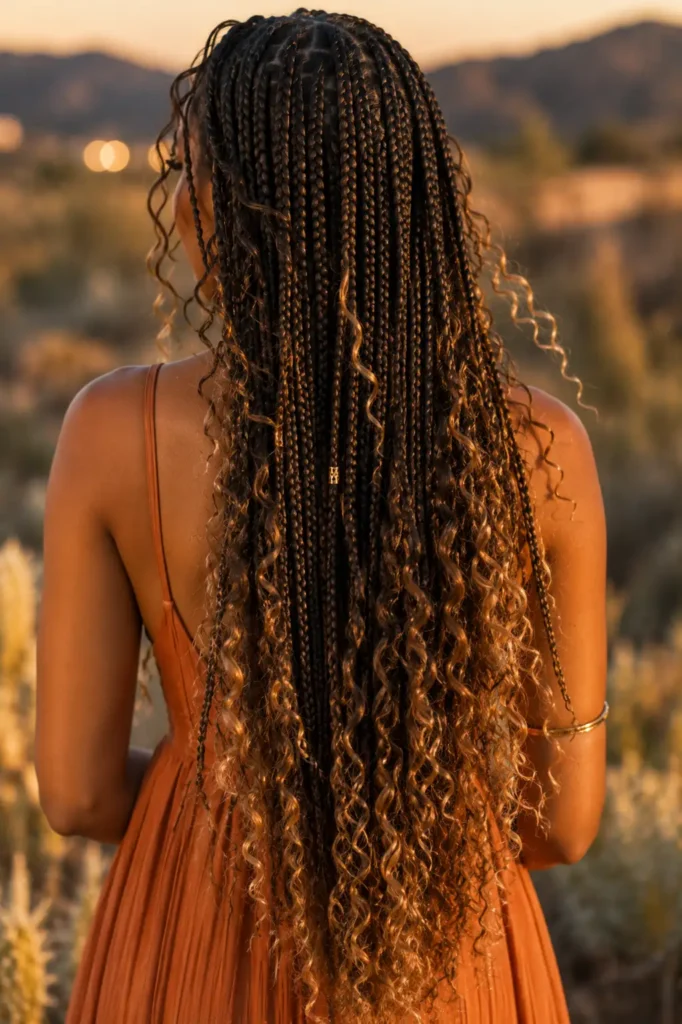
Boho braids — often called goddess braids — intentionally embrace imperfection. After installing box braids or another structured braid style, you gently stretch and loosen the braid sections to create volume and texture. Pieces of curly or wavy hair left out around the face and neck enhance the romantic, effortless vibe. This is a style that actually looks better slightly undone.
Curly crochet hair mixed into the installation gives you the most authentic boho texture without spending extra time styling. This is one of the 23 braid hairstyles that photographs best outdoors in natural light — festivals, beach days, and outdoor events are its natural home.
14. Side Braid Low Bun
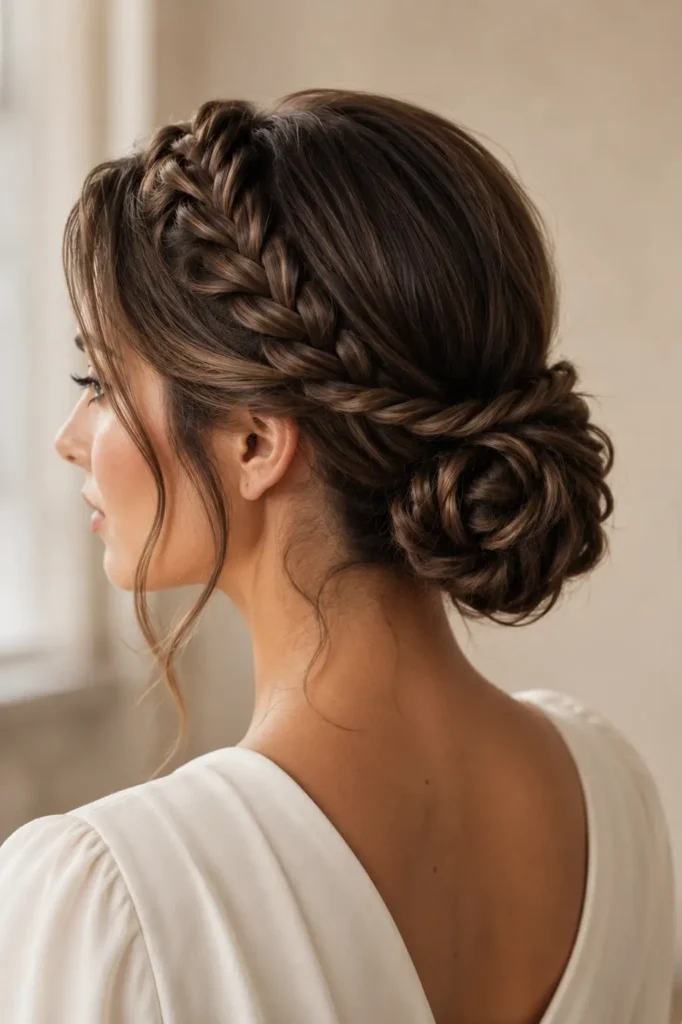
A loose side braid flowing into a soft low bun creates an effortlessly romantic hairstyle. Face-framing strands keep the look relaxed while the textured bun adds volume and charm. This versatile updo is perfect for bridesmaids, date nights, office wear, or elegant everyday styling.
15. Dutch Braid Chignon
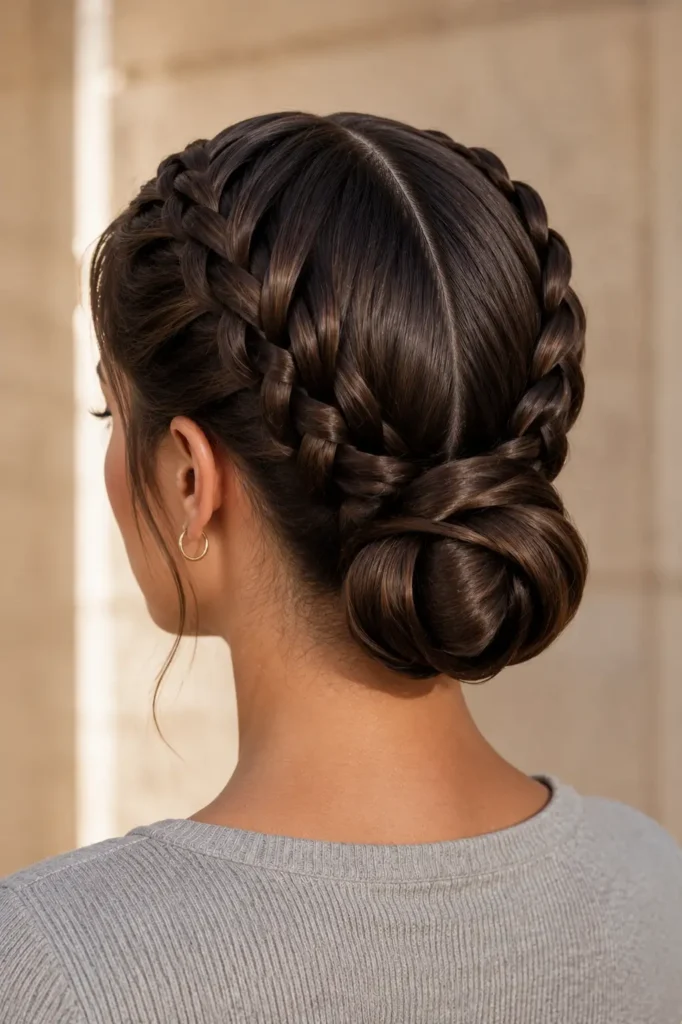
This sleek Dutch braid transitions seamlessly into a neat low chignon for a timeless and refined appearance. The smooth finish and balanced shape make it ideal for professional settings, formal dinners, weddings, and special occasions. It offers a sophisticated style that looks elegant from every angle.
16. Crochet Braids
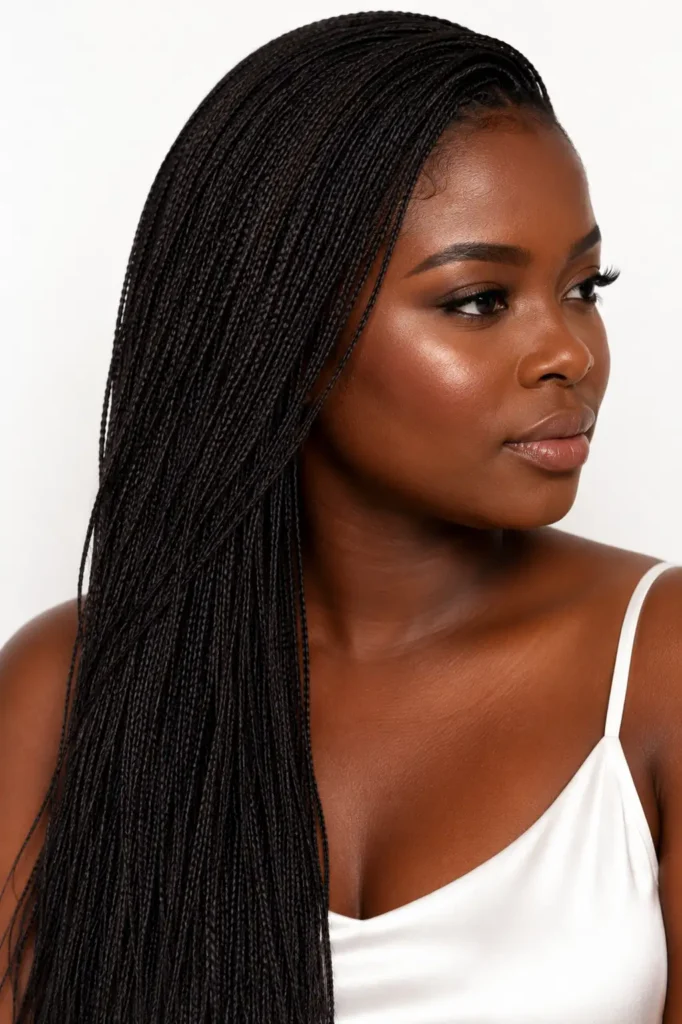
Crochet braids are a method rather than a specific pattern — you use a latch hook tool to pull braiding hair through natural hair that’s been cornrowed flat against the scalp. The surface result looks like box braids, Senegalese twists, faux locs, or any style you choose using pre-made crochet hair, but the installation takes two to four hours instead of eight or more.
This is the most time-efficient way to achieve a full braided or loc’d look. Freetress Equal and Bobbi Boss crochet hair give the most natural-looking finish. Because there’s less tension on natural hair than with traditional braiding methods, crochet styles are often recommended for people with thinning edges.
17. Faux Locs
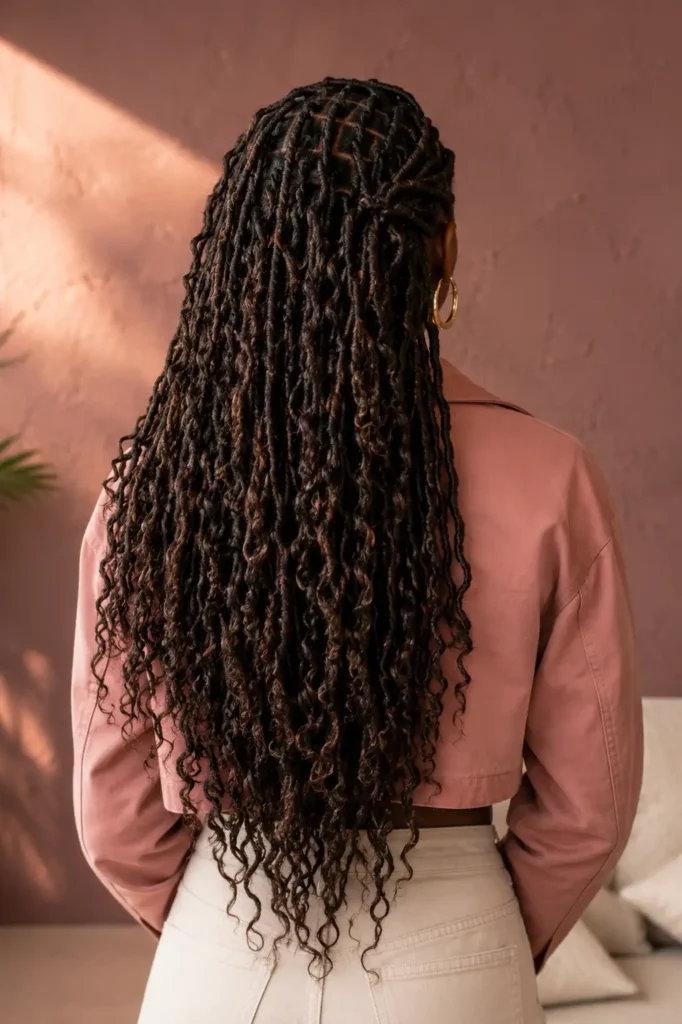
Faux locs recreate the appearance of natural dreadlocks using braided hair wrapped in extension material. They look authentic, last four to eight weeks, and can be removed entirely without any permanent commitment to locs. Butterfly locs — made with a soft, looped, wavy texture — are the most popular variation right now and have a beautiful organic look that photographs exceptionally well.
Adding subtle gold accessories or colouring the tips of faux locs in a contrasting shade gives the style an editorial quality. Among the 23 braid hairstyles covered here, faux locs are one of the most dramatically transformative — they completely change how a person looks and carry serious aesthetic presence.
18. Half-Up Braided Bun
The half-up braided bun is the everyday hero of braid styles. Take the top half of your hair, braid it back using a French, Dutch, or simple three-strand technique, then twist and pin it into a bun at the crown or mid-head. Leave the rest loose beneath it. That’s the whole style — it takes about five minutes and looks like it took twenty.
It flatters virtually every face shape and hair texture. Curly hair underneath makes the style look especially full and textured. For straighter hair, loosely curling the lower section before pinning the bun adds dimension. A few bobby pins and a spritz of light hairspray are all you need to make it last all day.
19. Side Braid
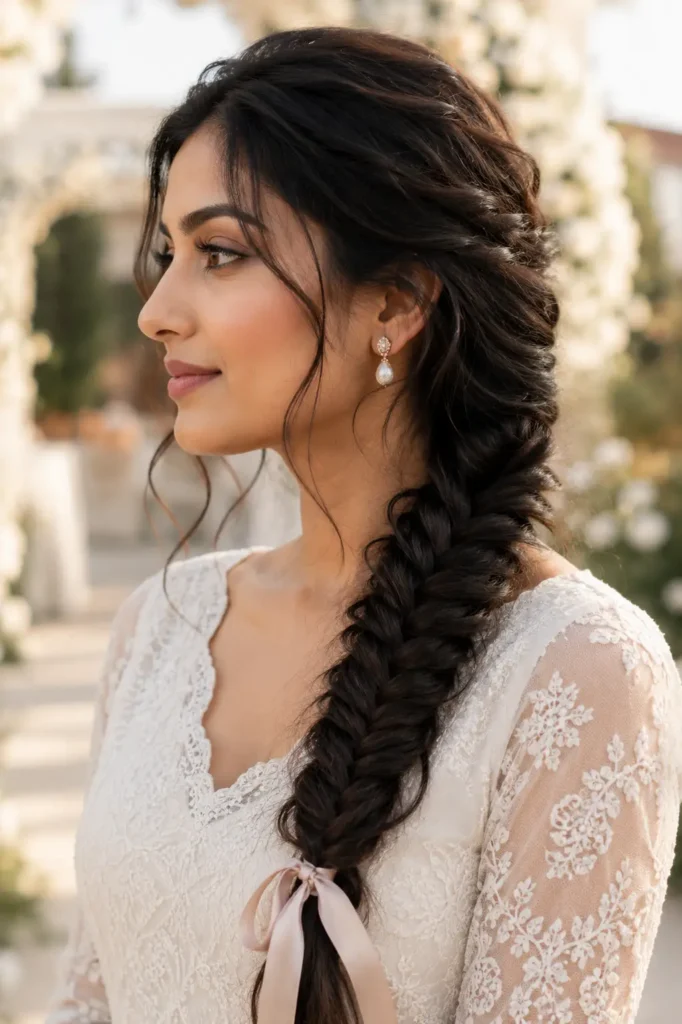
A side braid drapes any braid type — French, Dutch, fishtail, or three-strand — over one shoulder, which creates an elongating effect on the neck and frames the face from an asymmetric angle. It works especially well on round and square face shapes because the diagonal sweep visually lengthens the face.
For formal occasions, a loose side French braid with small flowers or pearl pins woven through looks genuinely bridal. For everyday wear, a messy fishtail braid pulled to one side with face-framing pieces left out gives that effortless, undone quality that’s so popular right now.
20. Braided Ponytail
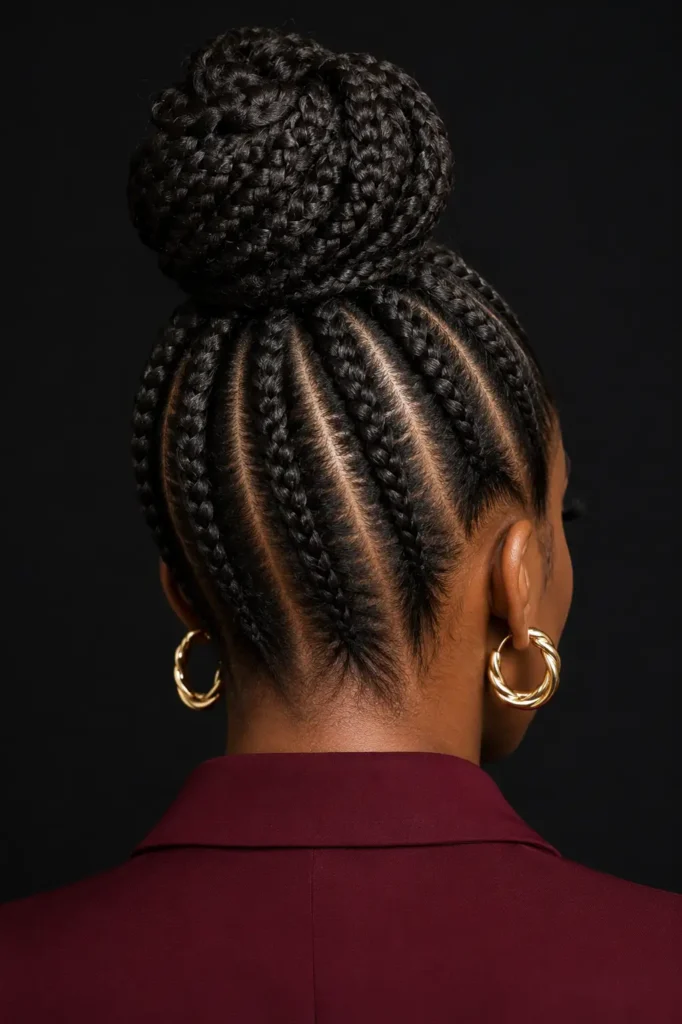
A braided ponytail combines the clean, elevated quality of a sleek ponytail with the texture and interest of braiding. The simplest version is a regular ponytail with the length then braided down. The more elevated version uses feed-in cornrows or box braids along the scalp to create the ponytail base, flowing into a long braided extension that can reach the lower back.
This style sits right at the intersection of polished and practical — appropriate for professional settings, elevated enough for events, and practical enough for active days. It photographs beautifully from behind, which is part of why it’s one of the most searched braid styles consistently.
21. Fulani Braids with Curly High Bun
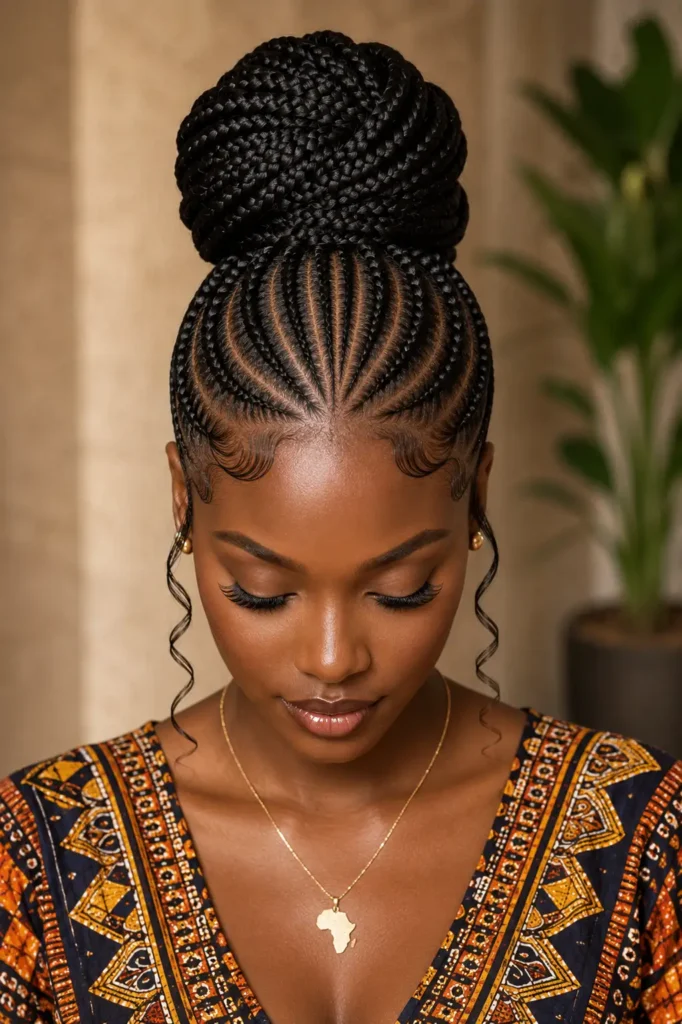
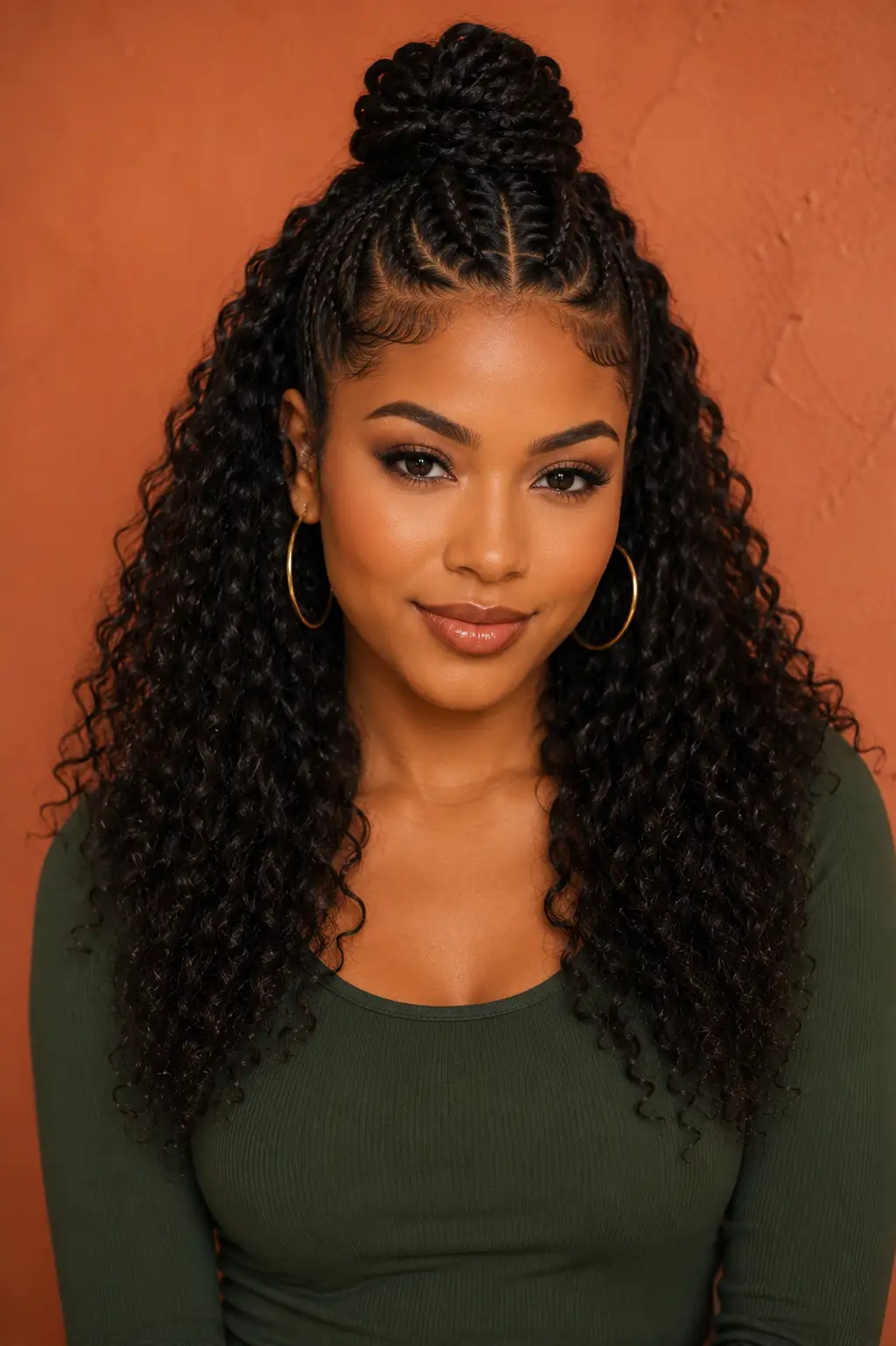
Intricate Fulani-inspired braids paired with a voluminous curly high bun create a striking hairstyle full of texture and personality. Loose spiral curls softly frame the face, adding movement and elegance. This protective style is perfect for weddings, parties, festivals, or making a fashionable statement while keeping hair beautifully styled.
22. Braided Updo
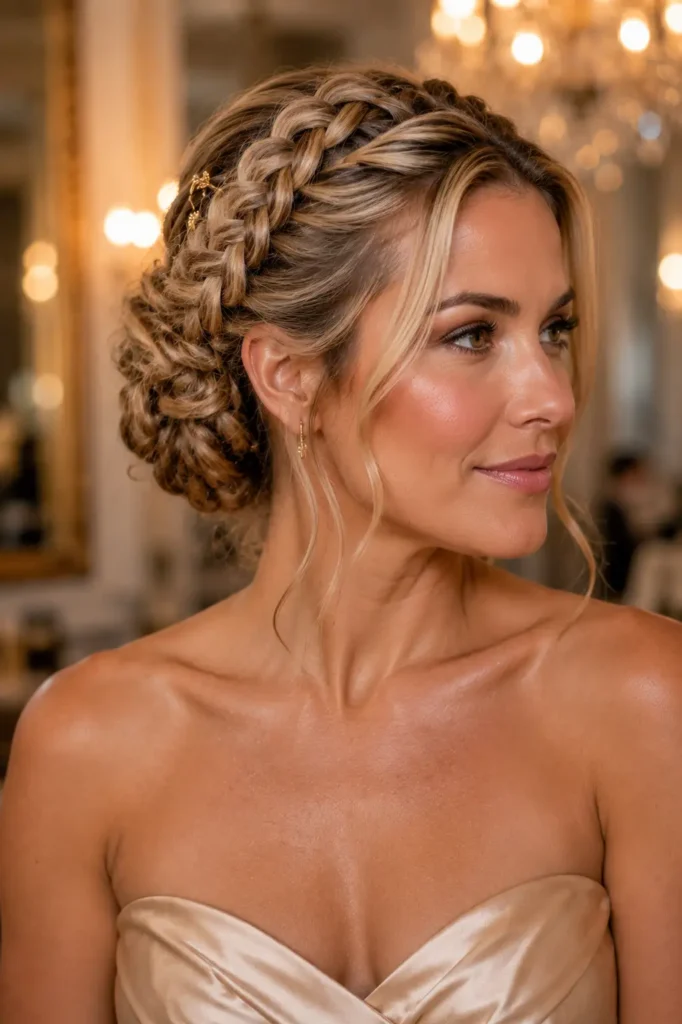
A braided updo uses a combination of cornrows, box braids, French braids, or twists pinned together into an upswept style. It can range from a formal braided chignon with tucked ends to a casual piled bun with loose pieces around the face. The variations are genuinely endless, which is why braided updos dominate formal event hairstyles from weddings to proms.
A good beginner braided updo: do two Dutch braids along the sides, then pin them over each other at the nape into a crossed bun. A few bobby pins, some hairspray, and any loose sections pinned into soft twists complete the look. It sounds complicated but takes under fifteen minutes once you’ve done it twice.
23. Passion Twists
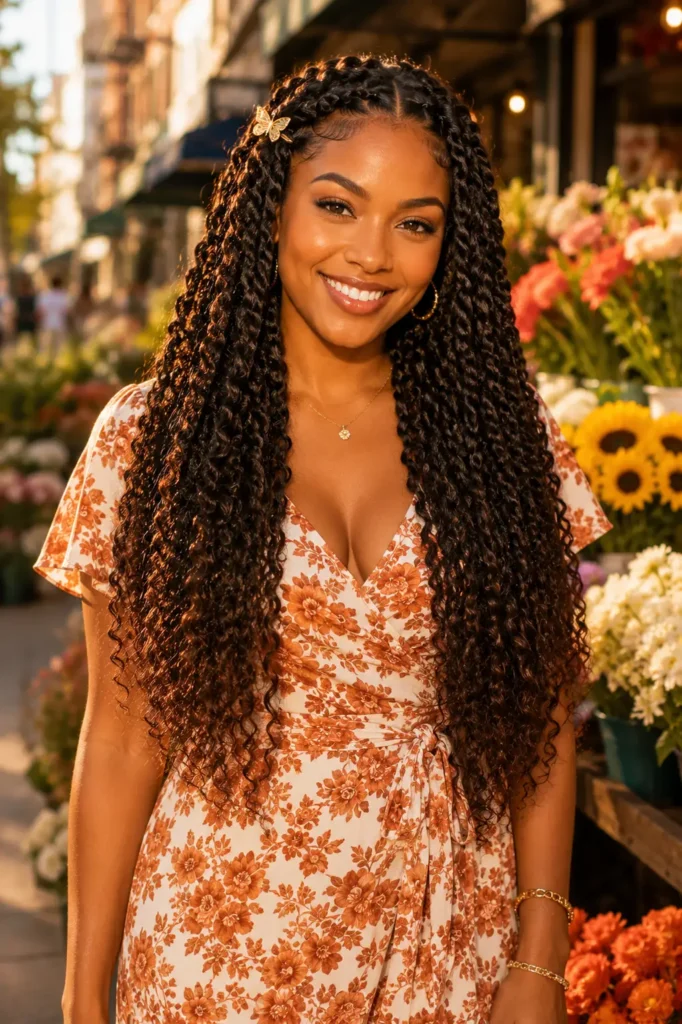
Passion twists are the newest entry on this list but have grown rapidly in popularity over the past few years. Using wavy, spring-textured braiding hair — commonly Freetress Water Wave — they create twists with soft, curly ends that have a more natural and romantic look than Senegalese twists or any smooth extension style. The result feels almost like natural curly hair that happens to be styled in twists.
Wear them loose for a free-spirited everyday look, pull them into a high puff for something more structured, or pile them into a half-up style for casual events. Apply a lightweight mousse before twisting to help the texture hold longer and reduce frizz. This is one of those 23 braid hairstyles that genuinely suits everyone.
How to Choose the Right Braid Style for Your Hair Type
Best Braid Styles for Fine or Straight Hair
Fine and straight hair can’t always grip extension styles the way thicker textures can, but it holds structural braids beautifully. French braids, Dutch braids, fishtail braids, and waterfall braids are all excellent choices that stay in place on straight hair without slipping. Start on second-day hair with a texturizing spray for significantly better hold and longevity.
If you want extensions, discuss thickness and tension carefully with your braider. Thin, fine hair benefits from smaller, lighter box braids installed with gentle tension and a knotless method. Always request a scalp-friendly approach and avoid box braids so heavy they pull on your strands.
Best Braid Styles for Natural Type 3 and Type 4 Hair
Protective styles are where natural hair genuinely thrives. Box braids, knotless braids, cornrows, Ghana braids, faux locs, and crochet styles all work beautifully on type 3 and type 4 textures because the natural coil grips extension hair well and stays secure for weeks. Install on freshly washed, well-moisturized hair and seal moisture with a lightweight oil before braiding.
Length retention is one of the biggest benefits of wearing protective braid styles consistently. Many naturalistas see their most significant growth during periods spent in cornrows or box braids because daily manipulation and friction are reduced dramatically. Pair any protective style with regular scalp oiling to maximize the benefit.
Braid Accessories That Actually Make a Difference
Accessories transform a basic braid style into something memorable. Gold spiral hair cuffs threaded onto box braids or cornrows add an editorial quality that photographs beautifully. Small seed beads or wooden beads at braid ends have a long cultural history in African braiding traditions and add lovely movement. Ribbon or velvet cord woven through a French braid dresses the style up for formal occasions without requiring any extra time.
For protective styles, a satin-lined bonnet, satin bonnet, or silk pillowcase isn’t optional — it’s maintenance. Sleeping without scalp and hair protection is the fastest way to frizz braids and shorten the life of any style you’ve invested time and money creating.
Seasonal Braid Trends to Watch in 2025
Beaded braids are having their biggest resurgence in years. Tiny gold, silver, and pearl beads threaded onto individual box braids or cornrow ends appear on fashion runways, editorial shoots, and street style photography simultaneously right now. The look draws on deep African braiding traditions while feeling completely current.
Butterfly locs with highlighted color — warm honey blonde against a natural brown base, or auburn tips against black — are dominating the faux loc space. The dimensional color creates a sun-kissed effect that looks especially beautiful in natural outdoor light. For fall, deeper shades of burgundy, chestnut, and chocolate are replacing the bright summer palettes in box braids and passion twists.
Color braids using pre-colored extension hair (rather than chemically coloring natural hair) are a smart option for anyone curious about a bold shade without commitment. A warm copper, deep plum, or silver-tipped set of box braids allows you to experiment with color and simply change your mind at your next braid appointment.
Frequently Asked Questions
Q1: How long do box braids typically last? With consistent nighttime protection in a satin bonnet, regular scalp oiling every two to three days, and edge refreshing as needed, box braids can last six to eight weeks comfortably. Knotless box braids tend to last approximately the same duration but maintain a flatter, cleaner appearance at the root throughout the style’s life.
Q2: Can I get braid styles with fine or thin hair? Yes, absolutely. French braids, Dutch braids, waterfall braids, and fishtail braids all work beautifully on fine and straight hair without any extensions. For extension styles like box braids, use a knotless installation method and request smaller, lighter braids to reduce stress on thin strands. Always discuss your hair’s condition honestly with your braider before starting.
Q3: How do I stop my braids from frizzing quickly? Three things control braid frizz consistently: a satin bonnet at night, a light anti-frizz serum or braiding mousse applied directly to the braids after installation, and minimizing how much water hits the braids outside of intentional cleansing. A diluted apple cider vinegar rinse applied with a spray bottle can refresh the scalp without causing significant frizz between full wash days.
Q4: Are braids damaging to natural hair? Braids installed correctly — at appropriate tension, on moisturized hair, for the right duration — are genuinely protective and support healthy hair growth. The damage associated with braids almost always comes from three specific errors: installation that’s too tight, leaving braids in beyond eight weeks, or removing them without proper detangling conditioner. Any of these three issues will cause breakage regardless of the style chosen.
Q5: How many packs of braiding hair do I need for box braids? For a mid-back length set of medium-sized box braids, most people need five to seven packs of Kanekalon braiding hair. Waist-length braids typically require seven to nine packs. A shorter, chin-length set needs three to four packs. Ask your specific braider for their recommendation because density and braid size vary significantly and affect how much hair you need.
Q6: What’s the difference between Ghana braids and regular cornrows? Regular cornrows maintain a consistent width from root to end and lie flat against the scalp. Ghana braids start very thin at the hairline and widen substantially as they move toward the back of the head, creating a raised, dimensional, almost sculptural look. Ghana braids also typically incorporate extension hair for that raised effect, while simple cornrows can be done on natural hair alone.
Q7: How do I take care of my scalp while wearing braids? Apply a lightweight scalp oil — jojoba, tea tree diluted in a carrier, or jamaican black castor oil — directly to your scalp every two to three days using a dropper bottle. Avoid heavy creams or thick butter-based products that build up between braids. If itching becomes persistent, a diluted witch hazel spray applied to the scalp between braids provides relief without product accumulation or frizz.
Q8: Which braid style is easiest to learn at home? Start with a classic three-strand braid until the motion becomes automatic — most people master it in a few days. Then move to French braids, which use the same motion while adding hair from the sides as you go. Once the French braid feels natural, the Dutch braid is the obvious next step since it’s the same technique with a single mechanical difference.

Sarah Williams
Hi, I’m Sarah Williams — the founder of HerStyleNest, where beauty meets modern style. I share trendy hairstyles, chic nail designs, and fashion inspiration for women who love staying stylish every season. From everyday elegance to viral beauty trends, HerStyleNest is your go-to destination for effortless fashion and beauty ideas.