
20 Short Bob Hairstyles for Dark Thin Fine Hair That Actually Add Volume
Dark fine hair has a reputation problem it doesn’t fully deserve. The flatness, the limpness by noon, the way it clings to the neck and refuses to move. All real, but mostly a length issue more than a hair issue. When you remove length, you remove weight. And when you remove weight from fine hair, it does something remarkable: it finally lifts at the root without any product doing the heavy lifting. A well-chosen bob is, at its core, a structural solution.
The other thing that makes dark hair particularly well-suited to bobs is its depth of colour. Dark pigment, whether natural black, deep espresso, or rich brunette, creates the illusion of visual thickness that lighter hair doesn’t have. A blunt edge on dark fine hair looks intentional and sharp in a way that blonde fine hair sometimes doesn’t. The color itself is doing work. The trick is finding the cut that lets the color shine while also managing what fine hair actually struggles with: gravity and volume.
1. The Blunt Chin-Length Bob
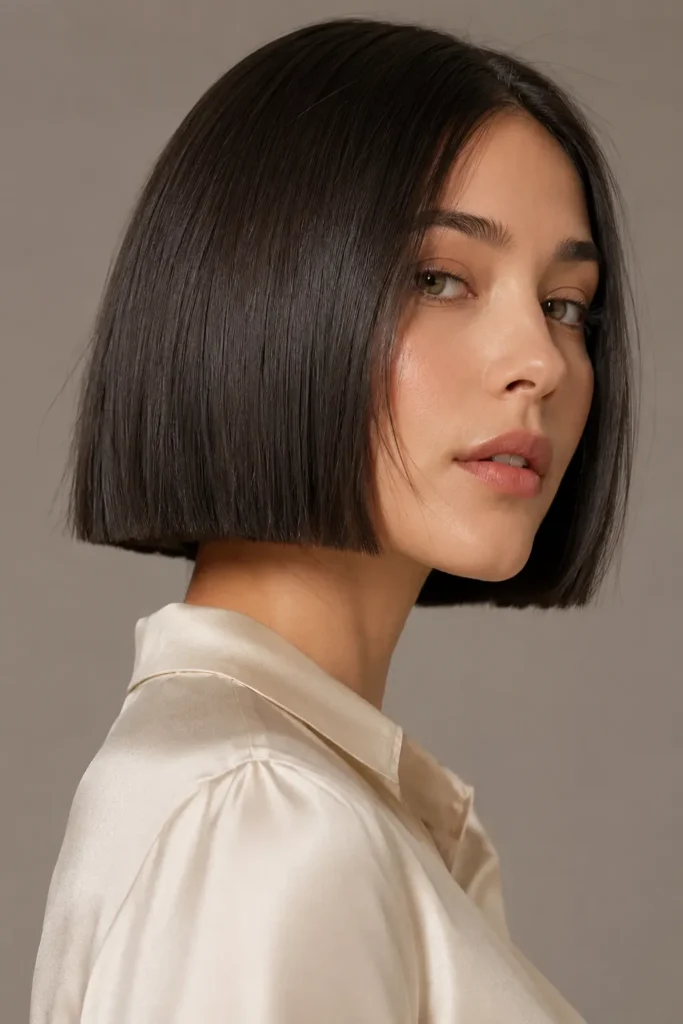
Nothing addresses flat, stringy hair faster than a clean blunt cut sitting right at chin level. The solid, unbroken line across the bottom creates an optical illusion of thicker, denser hair. For dark fine hair specifically, the dark pigment makes that blunt edge look sharp and deliberate. Ask your stylist for a flat-iron-finished blowout on the day of the cut so you can see the full shape before you take it home and style it yourself.
2. The Textured Choppy Bob
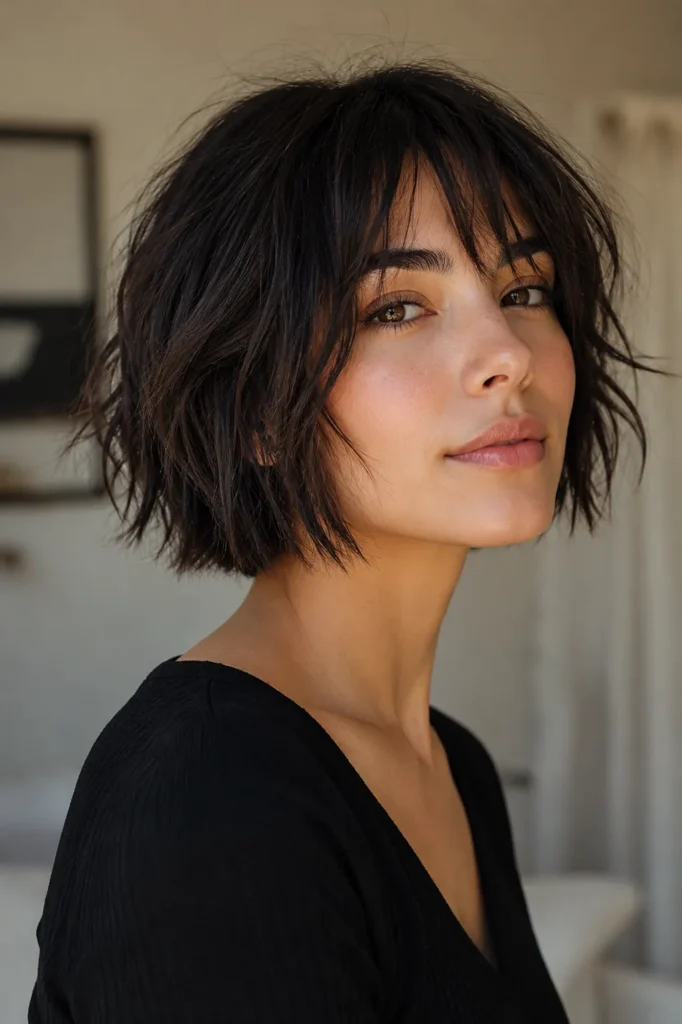
This is the style that genuinely saved my hair from looking like a wet curtain. A choppy bob uses a point-cutting technique to break up the ends, adding visible movement and texture without sacrificing length. On dark fine hair, those choppy ends catch light differently and create the appearance of actual body. It performs best air-dried with a light mousse, giving that lived-in fullness without forty minutes at the mirror with a round brush.
3. The A-Line Bob
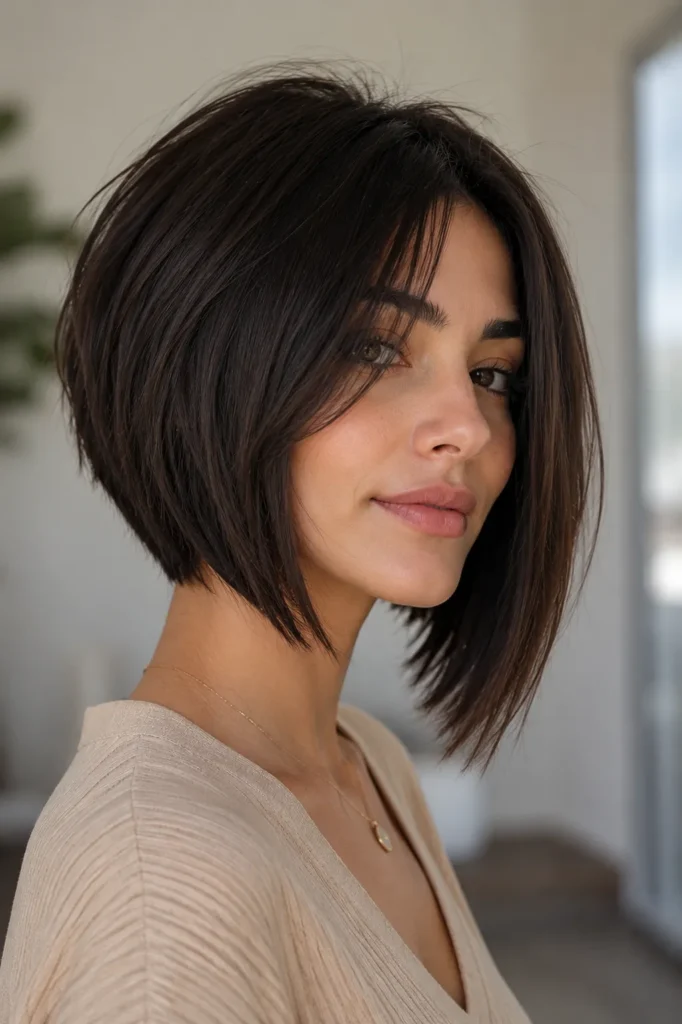
Longer in the front, shorter in the back. That diagonal drop is one of the most volume-friendly cuts for thin fine hair because the shorter back section removes the weight that pulls roots flat, while the longer front pieces frame the face with movement. It photographs beautifully, holds its shape through most of the day, and flatters nearly every face shape. A slight tousle at the crown with your fingers adds root lift without any tool.
4. The French Bob

The French bob sits at the cheekbone or just below the jaw, usually paired with blunt fringe. Its intentional simplicity is exactly what suits dark fine hair. At this shorter length, gravity has less time and distance to pull the hair flat. The style reads effortlessly chic, especially on dark hair, where the bold graphic silhouette contrasts cleanly against any skin tone. Minimal maintenance, maximum visual impact: the two qualities fine hair owners always want.
5. The Asymmetrical Bob
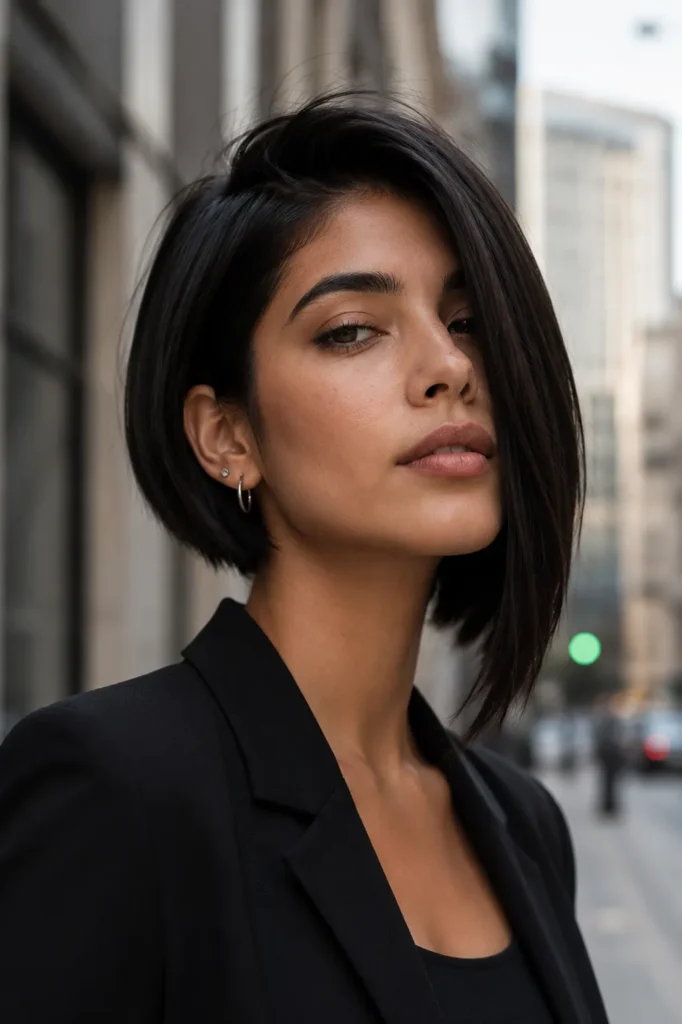
One side longer, one side shorter. It sounds risky, but asymmetry is actually one of the more volume-friendly options for thin, fine hair because it keeps the eye moving across the cut rather than landing on a single flat plane. The angled line on dark hair looks modern and intentional. Daily styling involves a flat iron pass every couple of days to maintain the shape, but it takes less time than you’d expect once you have the technique down.
6. The Shaggy Bob
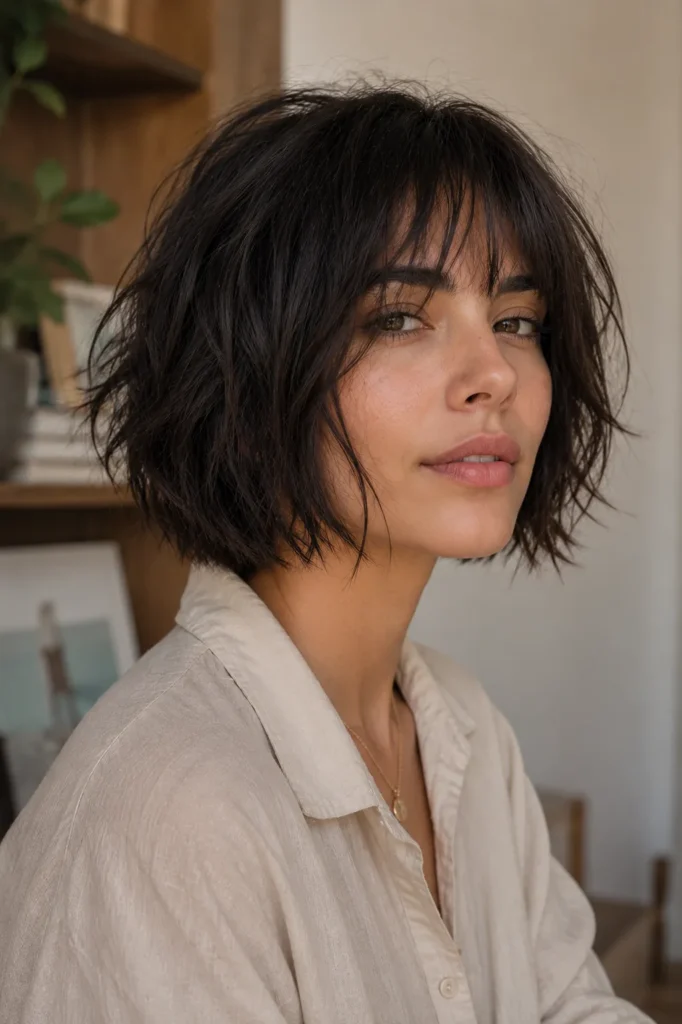
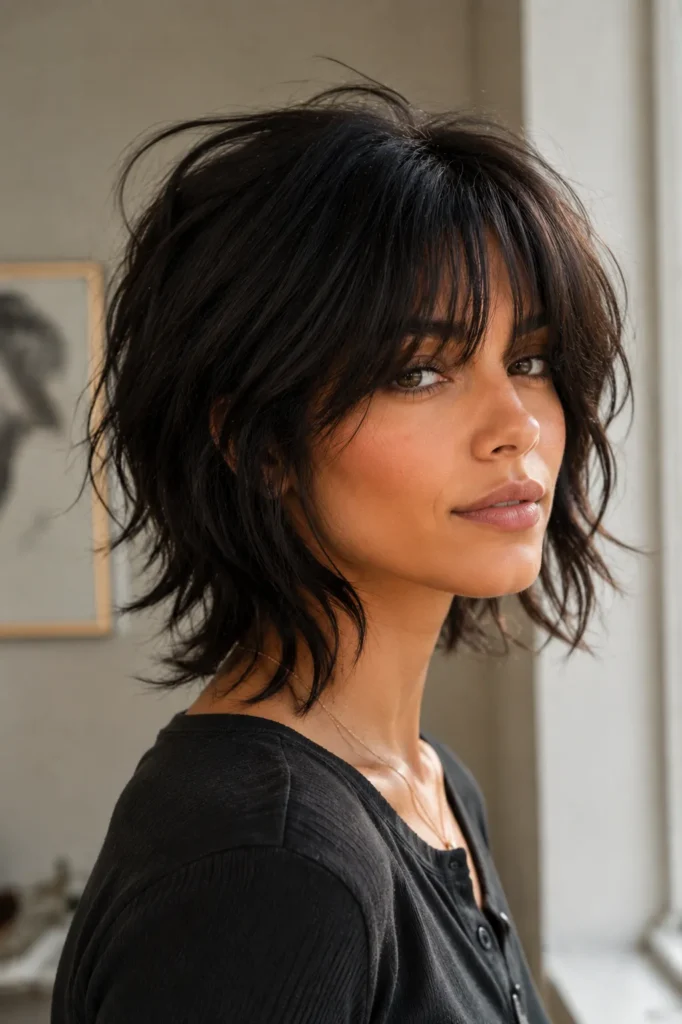
Sometimes called the Shabob, this style borrows energy from the shag cut by adding layers, wispy ends, and a slightly undone quality. Dark fine hair holds this look surprisingly well because the layers genuinely redistribute what little density exists across the whole cut rather than bunching it at the ends. The shaggy bob looks better air-dried than blow-dried, which is a genuine relief. Apply a sea salt spray to damp hair and let it do the work.
7. The Razored Bob
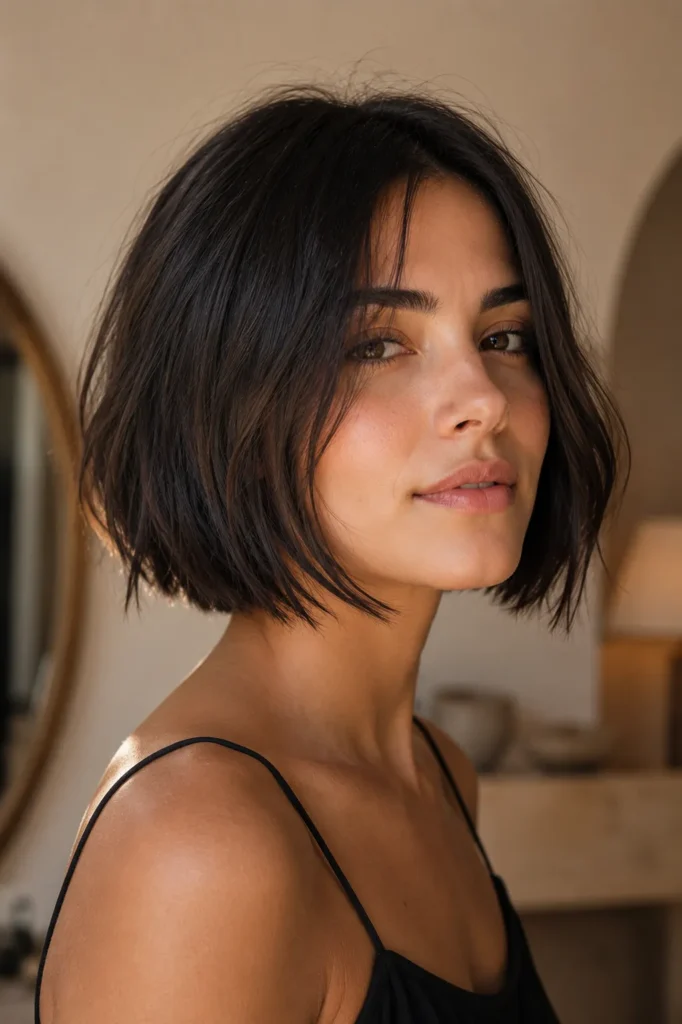
A razor cut produces softly feathered ends rather than blunt lines, and those feathered ends change how light hits the hair completely. Instead of a flat, dull edge, you get soft fraying that reads as more hair. The razored bob typically sits at or just above the chin and has a natural, low-effort appearance even on a day you haven’t styled. One caveat: razor-cut ends can dry out more quickly, so a weekly deep-conditioning mask genuinely makes a difference here.
8. The Stacked Bob
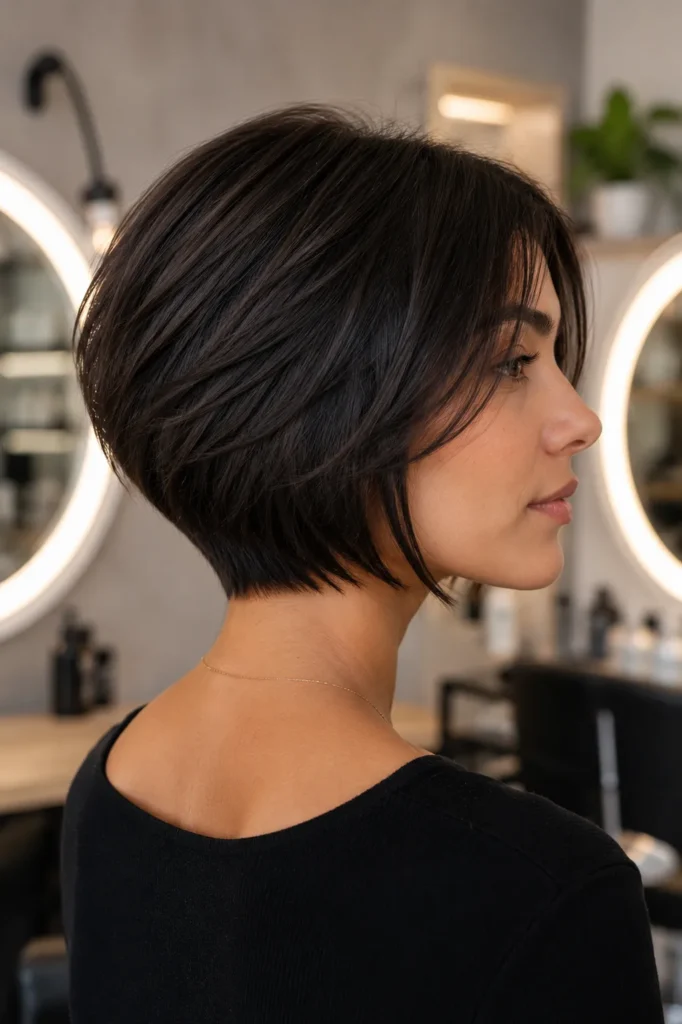
The stacked bob is built with tight, graduated layers in the back that create a rounded, architectural shape at the crown and nape. From the front, it looks like a clean classic bob. From the side and back, there is visible structure and fullness that fine hair rarely achieves on its own. This is consistently one of the most recommended short bob hairstyles for thin fine dark hair because the volume is built into the cut itself; products just maintain it.
9. The Tousled Undone Bob
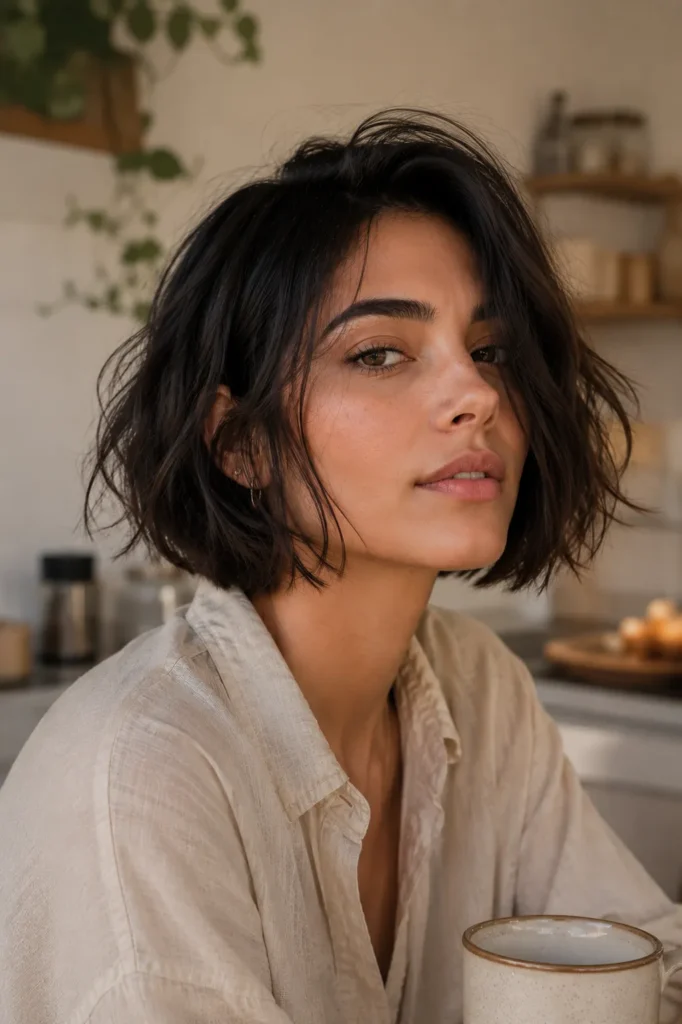
Not every day calls for a polished result, and this style was designed for the rest of the week. The tousled bob leans into the natural movement of fine hair rather than fighting it. A small amount of Moroccan Oil Light Treatment or a wax-based pomade worked through the ends gives enough texture without weighing anything down. It works particularly well if your dark hair has even the slightest natural wave, which many people discover once they cut length off.
10. The Micro Bob
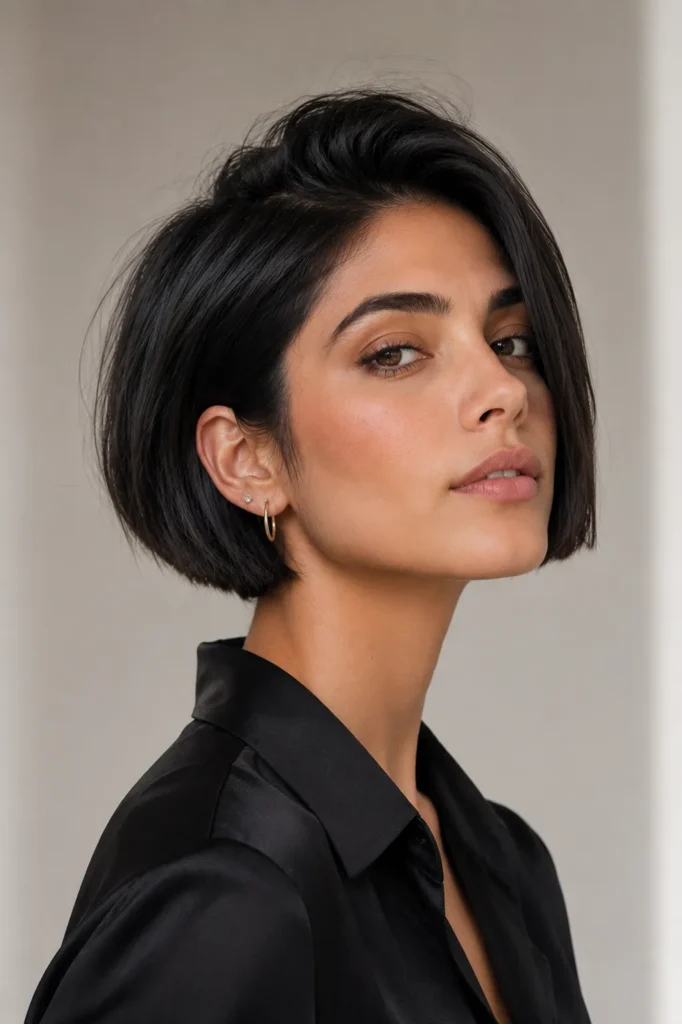
The micro bob sits above the jaw, sometimes near the ear. It sounds extreme, and on thin fine hair it delivers exactly the kind of dramatic result that helps. At this length, there is almost no weight pulling the hair down. Roots look naturally lifted. On dark hair, the style looks clean and deliberate, especially with blunt ends. Frequent trims every five to six weeks are necessary to maintain the shape, but the payoff in volume is consistent and reliable.
11. The Blunt Bob with Curtain Bangs
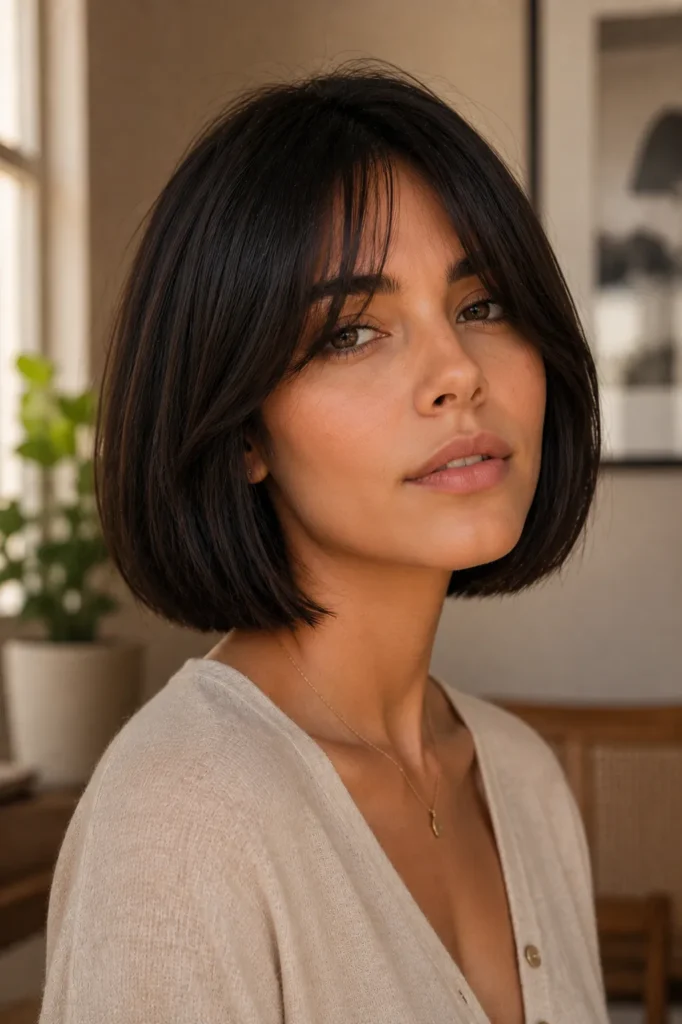
Curtain bangs on a blunt bob create a two-part illusion: the fringe adds softness and draws attention toward the eyes, while the blunt line at the bottom reads as density. For dark fine hair, this combination works because attention moves upward, away from where the hair tends to sit flattest. Curtain bangs are also one of the most forgiving fringe styles to grow out if you change your mind, which takes some of the pressure off the decision.
12. The Layered Bob for Fine Hair
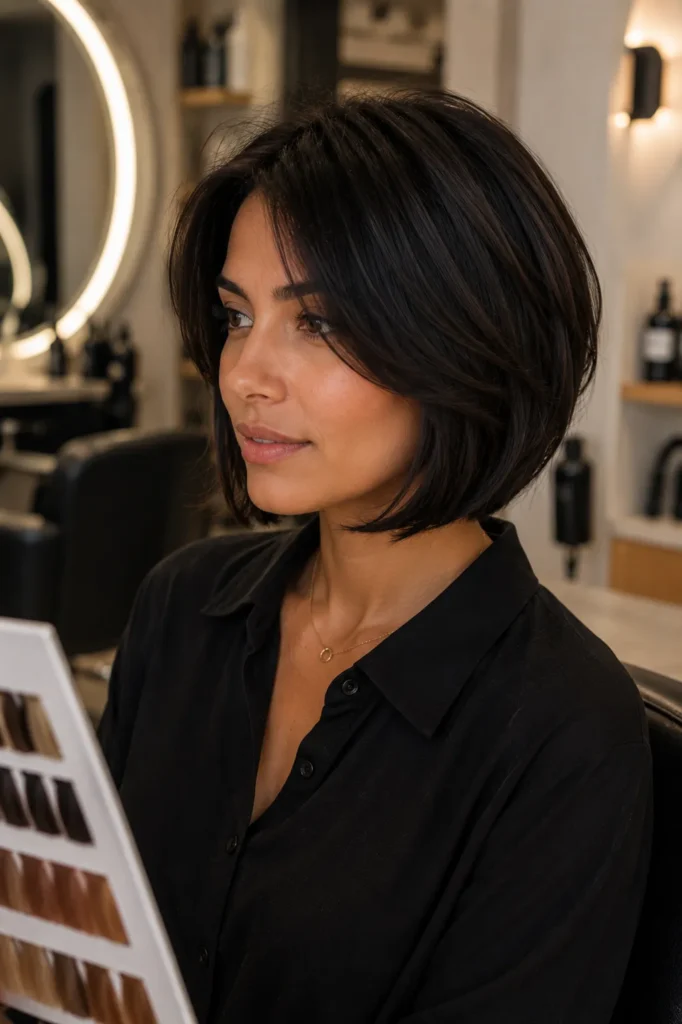
Layering fine hair is different from layering thick hair, and that distinction matters more than most people realize. On fine hair, layers should begin mid-shaft rather than at the root. Root-heavy layers remove weight from where it is needed most and make thin hair look even wispier. Mid-shaft to end layers add movement and a fuller appearance without sacrificing density near the scalp. When booking the appointment, ask for “soft, mid-length layers on fine hair” and a good stylist will know exactly what that means.
13. The Side-Parted Sleek Bob
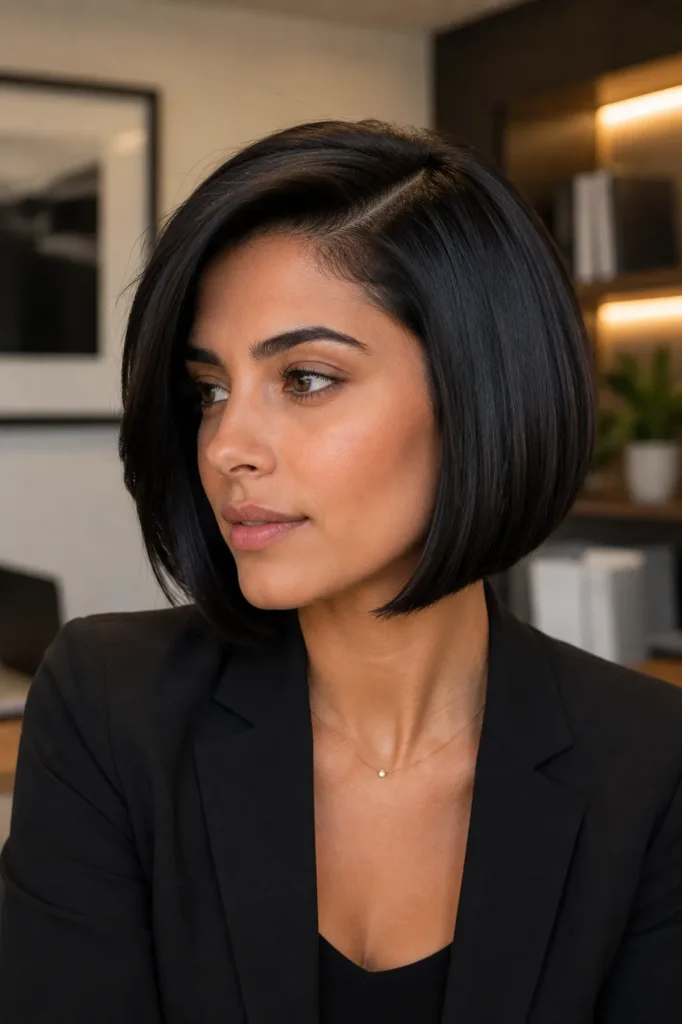
A dramatic side part lifts one side of the hair and adds volume automatically, something a center part rarely achieves on fine hair. A sleek, smoothed-down bob with a strong side part looks polished and considered. Blow dry toward the parting direction for root lift, then flat iron just the ends for a clean, salon-finished edge. On dark hair specifically, the shine that results from this technique looks excellent under any lighting.
14. The Wavy Bob
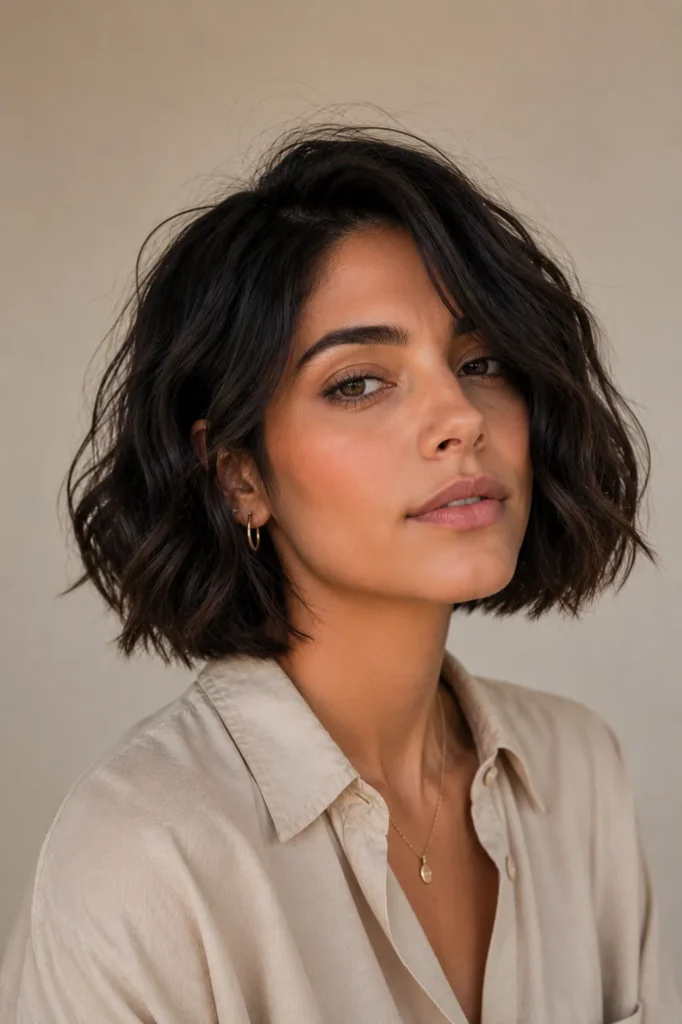
Even if your hair is naturally straight, adding waves to a short bob provides texture that fine hair genuinely needs. Use a 25mm waving iron rather than a curling iron because the waves stay looser and more natural. Work on small sections, finger-comb the waves while still warm, let them cool completely, then finish with a flexible hold spray. The waves create visual bulk that dark fine hair normally lacks, and the style holds better than tighter curls do on this hair type.
15. The Wispy Bob
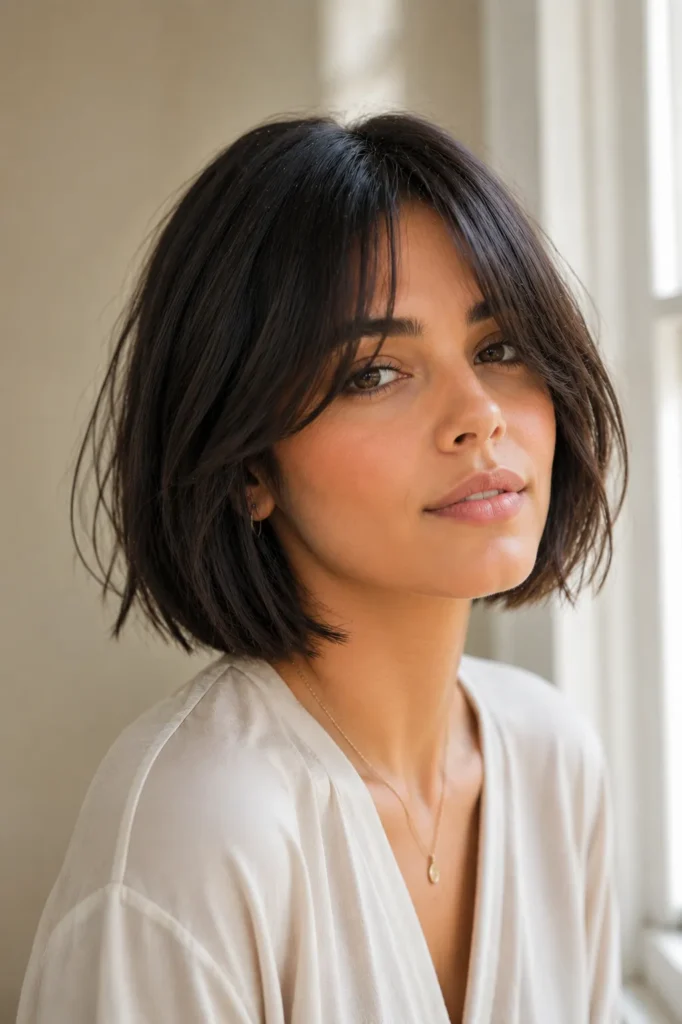
Softer and more delicate than the shaggy bob, the wispy bob works with fine hair’s natural tendency to separate into lighter sections rather than against it. Very light layers, gently feathered ends, and a relaxed finish give dark fine hair a quality that almost reads as romantic. A small amount of hair gloss oil at the ends finishes the look without weighing anything flat. This is a strong choice for anyone who wants something feminine without looking like they tried too hard.
16. The Bob with Nape Undercut
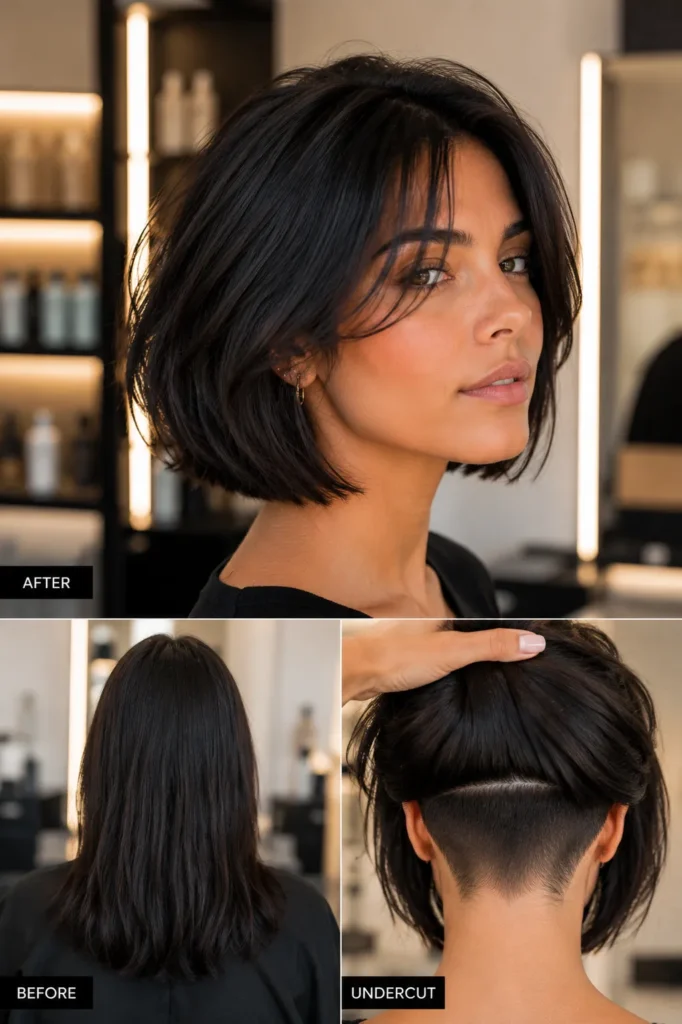
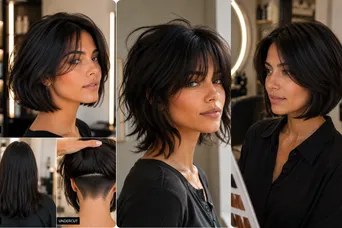
An undercut at the nape removes weight from the densest section of the back and allows the top layers to sit with more lift throughout the day. On dark fine hair, the undercut is essentially a hidden secret: invisible when hair is down, but transformative in how the bob sits and moves. This is a cut that stylists genuinely enjoy doing on fine hair clients because the before and after difference is always more dramatic than the client expected.
17. The Voluminous Blow-Dried Bob
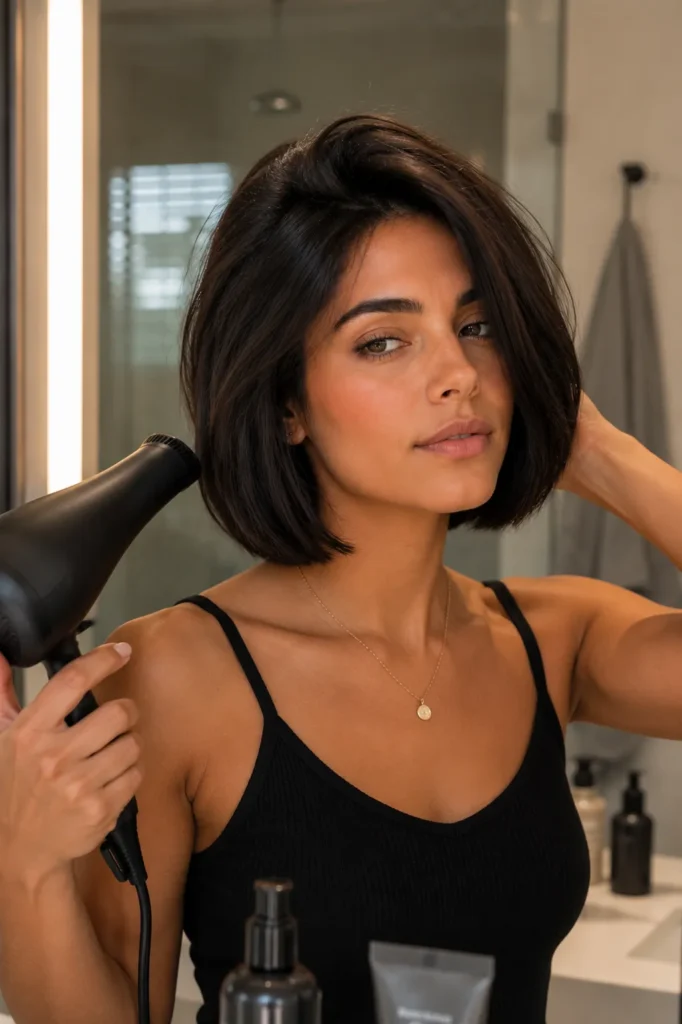
The blow-dried bob is a classic for a reason, and it is one of the most achievable at-home styles for dark fine hair. A paddle brush, a nozzle-tipped dryer, and a volumizing mousse applied to damp hair are the only tools required. Dry the roots first against their natural growth direction, then smooth the lengths downward. Finish with a light-hold spray. Once you develop the muscle memory for this routine, the whole process takes about twelve minutes.
18. The Dark Brunette Bob with Face-Framing Highlights
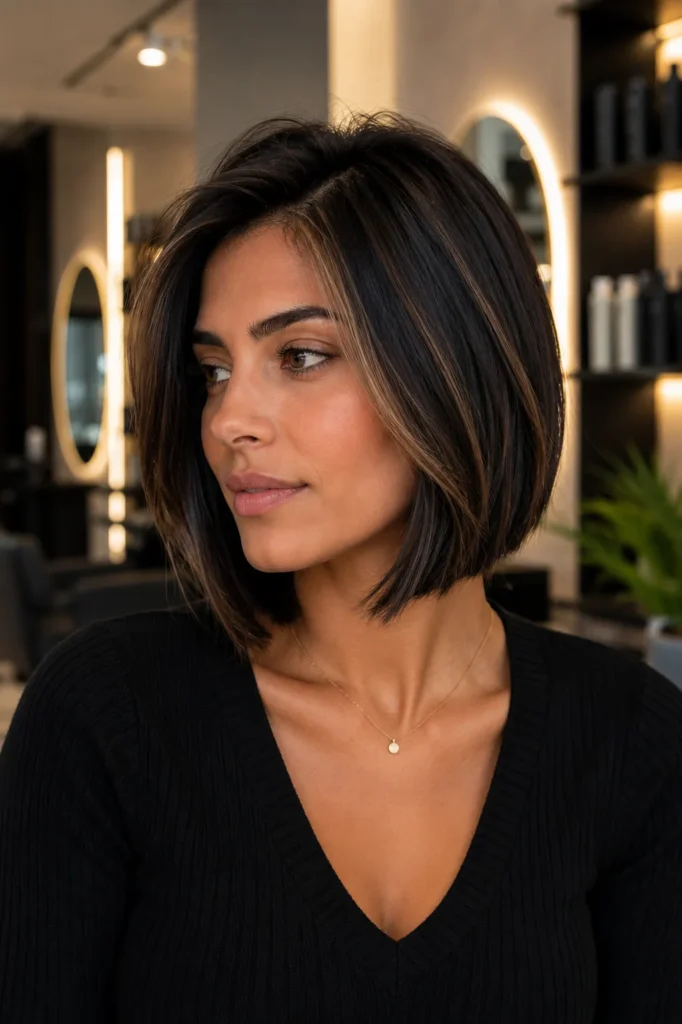
Adding a few face-framing highlights or scattered babylights to a dark brunette bob creates dimension that fine hair desperately needs. Hair without color dimension reflects light flatly, which makes it look thinner. Two or three shades lighter than your base, placed around the face and crown, make the hair appear multi-tonal and significantly fuller. This does not require a dramatic color change. A few strategically placed pieces are enough to change how the entire cut reads.
19. The Vintage 60s Bob
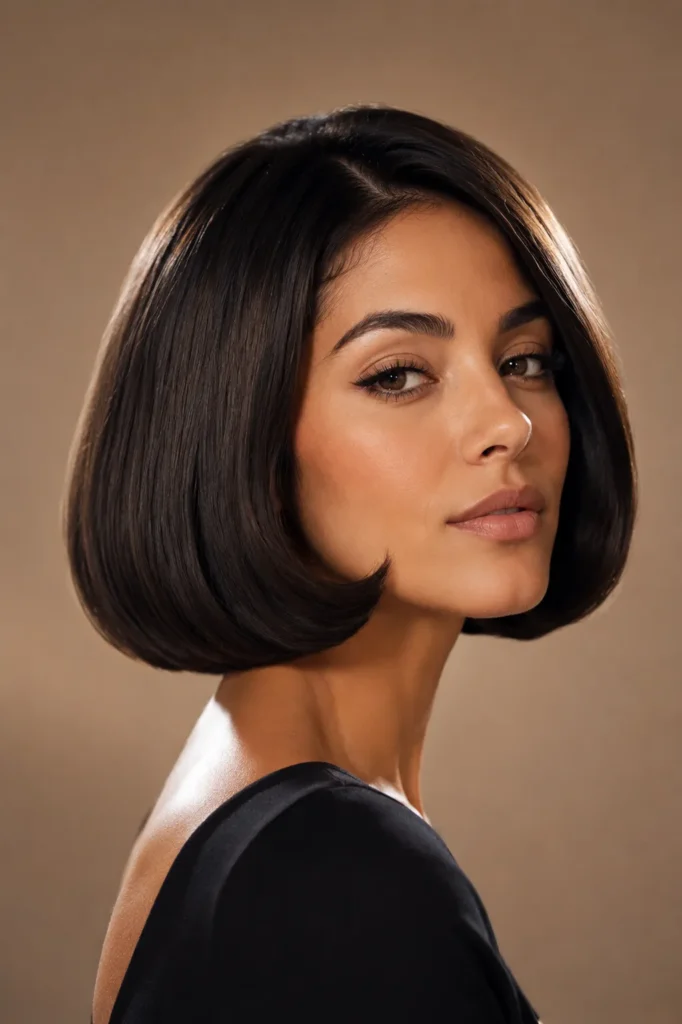
The classic 60s bob, blunt and sleek with a slight inward curl at the ends, is one of the most flattering short bob hairstyles for dark thin fine hair because it is built entirely on structure. The turned-under ends add shape and keep the bob looking intentional rather than limp. A light smoothing serum like Pantene Silky Smooth gives the high-gloss finish the style calls for. Dark hair shines especially well in this cut because the pigment reflects light cleanly.
20. The Modern Wolf-Cut Bob
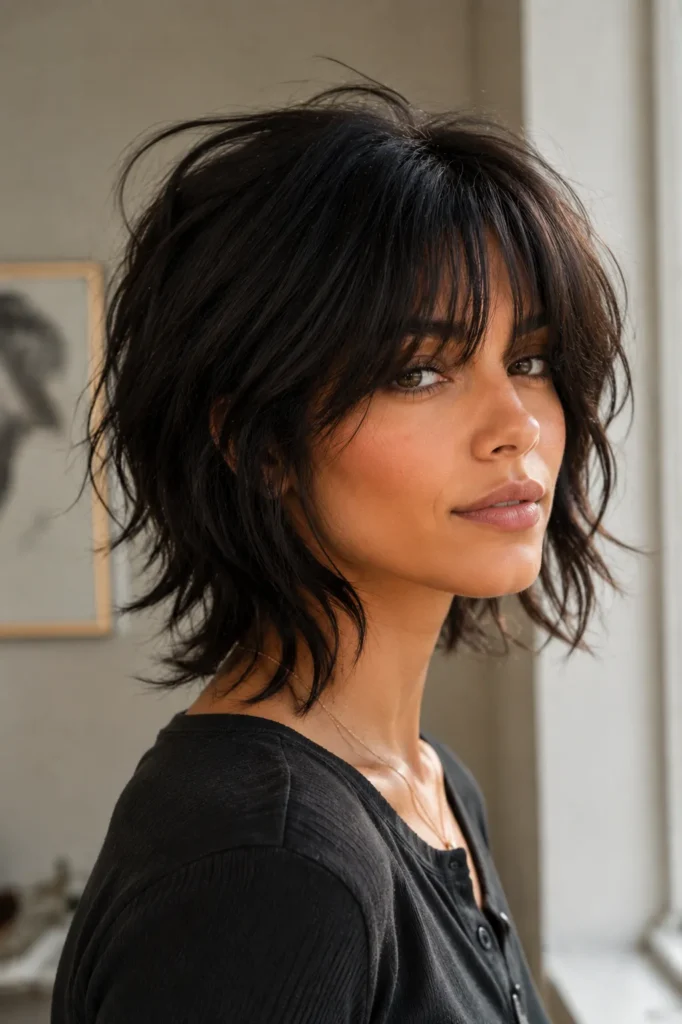
The wolf cut’s shorter bob iteration is genuinely excellent for fine hair. Heavy curtain bangs, layers that radiate from the crown, and a slightly undone finish add texture and visual volume in ways that traditional bobs cannot match. On dark hair, the multi-layered structure creates visible depth and movement that fine hair typically struggles to achieve. This style also looks better slightly grown out, which is good news for anyone who cannot make it back to the salon every six weeks.
Choosing the Right Bob for Your Face Shape
Round faces do better with longer bobs like the A-line cut, which elongates rather than widens. Square jawlines are softened by wispy or wavy bobs with textured ends rather than blunt lines that emphasize the jaw angle. Oval faces are genuinely lucky because they suit almost every cut on this list. Heart-shaped faces benefit from chin-length or slightly longer bobs that add weight around the jaw to visually balance a wider forehead.
Oblong or rectangular faces do best with bobs that add width, meaning wavy styles, side-parted cuts, or anything with volume at the sides rather than at the crown. If you are unsure which shape your face is, take a photo with your hair pulled back and trace the outline. The shape becomes obvious much faster that way than trying to assess it in the mirror while your hair is down and styled.
Frequently Asked Questions
Does a bob actually make thin fine hair look thicker? Yes, when cut correctly. A bob removes length and weight, which allows fine hair to sit with more natural lift at the roots. Blunt cuts and stacked bobs are particularly effective at creating the visual impression of denser, thicker hair. The optical illusion is real: it is not just a stylistic preference, it has a structural explanation.
What length bob is best for dark fine hair? Chin-length to just above the jaw works well for most people with dark fine hair. This length is short enough to reduce the flatness caused by weight but long enough to frame the face well. The micro bob is also excellent for maximum volume impact, though it requires more frequent trims to maintain its shape properly.
Should I get bangs with a fine hair bob? Curtain bangs and wispy fringe are the safest options. Blunt, heavy bangs can look sparse on very fine hair as they grow out, because the individual strands become visible. Curtain bangs grow out more gracefully, can be pushed aside on low-maintenance days, and they frame the face in a way that works with fine hair’s natural lightness.
How often should I trim a fine hair bob? Every six to eight weeks is the right window. Fine hair bobs lose their defining shape faster than cuts on thicker hair. Going beyond eight weeks typically means the style stops looking like a bob and starts looking like an awkward in-between length that flatters neither look. Regular appointments are what keep the cut working.
What products should I avoid on fine dark hair? Skip heavy creams, coconut-oil-based leave-ins, thick serums, and anything labeled as a smoothing or humidity-protection styler. These products are formulated for coarser textures and will flatten fine dark hair almost immediately after application. Stick to lightweight mousses, dry texture sprays, and dry shampoo for texture between washes.
Can I color-treat fine dark hair and still keep a bob? Yes, but color-treated fine hair needs more moisture maintenance. A bond-strengthening treatment like Olaplex No. 3 once per week helps maintain the hair’s structural integrity between salon visits. A bob on color-treated dark fine hair often looks more polished than longer colored hair because the ends are shorter and therefore less porous and less prone to fading unevenly.
Which bob from this list is the easiest to maintain at home? The textured choppy bob and the tousled undone bob both require the least daily effort. They are designed to look good air-dried with minimal product and do not depend on a precise blowout to look intentional. If you enjoy a bit more structure, the voluminous blow-dried bob becomes easy once you practice the technique a few times.
Is a stacked bob hard to style daily? No. The stacked shape sits at the back of the head and maintains its form without much intervention. A quick blow dry with a round brush takes about ten minutes once the technique becomes familiar. Many people find that a stacked bob requires less daily effort than longer hair because the structure is already built into the cut itself.
The twenty cuts on this list cover everything from ultra-low-maintenance to polished and precise. If you have never tried a short bob before, start with a blunt chin-length cut or a stacked bob. Both are forgiving, both work well on dark fine hair, and both will show you what this hair type is actually capable of once the weight is gone. The rest of the list will still be here when you are ready to experiment further.

Sarah Williams
Hi, I’m Sarah Williams — the founder of HerStyleNest, where beauty meets modern style. I share trendy hairstyles, chic nail designs, and fashion inspiration for women who love staying stylish every season. From everyday elegance to viral beauty trends, HerStyleNest is your go-to destination for effortless fashion and beauty ideas.