23 Prom Hairstyles That Actually Last All Night
Prom hairstyles get a lot of hype and, honestly, a lot of bad advice. The best ones have two things in common: they suit the person wearing them, and they are built to move. This guide covers 23 options that genuinely work across different hair types, face shapes, and comfort levels.

Before choosing a style, think honestly about your hair texture. Natural waves give you grip that straight hair simply does not have. Prom night is long and usually warm, so building in some humidity resistance from the start is worth the extra prep time.
Classic Prom Hairstyles That Never Go Out of Style
1. Sleek Low Chignon
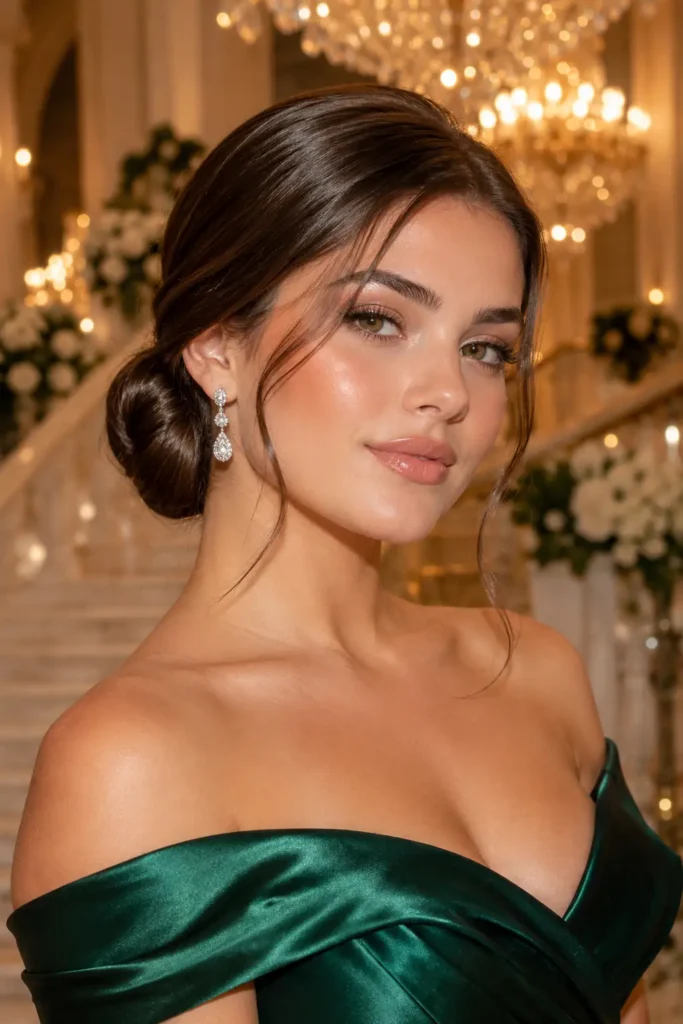
A low chignon is one of those prom hairstyles that photographs equally well at midnight. It suits oval, heart, and diamond face shapes well because the low placement balances wider foreheads. Thick hair gives more natural structure, though fine hair works fine with texturising spray applied before pinning.
Use a strong gel on the surface and at least eight bobby pins. The most common mistake is pulling everything too tight, which creates tension lines at the temples. Aim for smooth but not severe. Styling time is around thirty to forty minutes.
2. Romantic Half-Up Curls
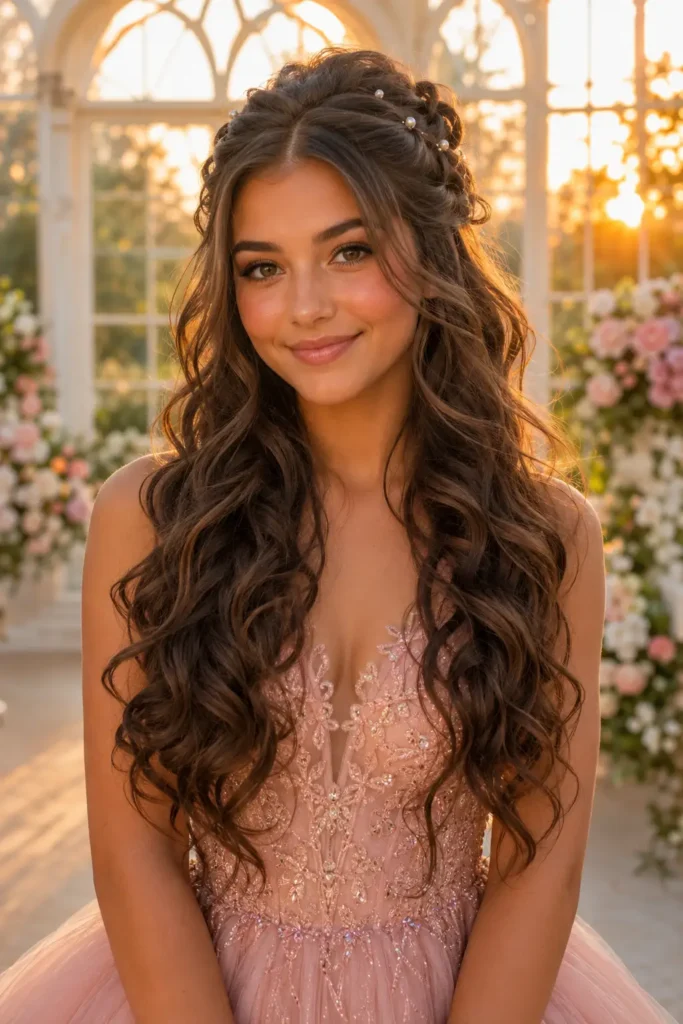
Half-up prom hairstyles hit a sweet spot between formal and relaxed. This especially flatters round faces because the crown height lengthens the face visually. Fine hair benefits from volumising mousse worked through damp hair before blow-drying, giving the curls something to grip.
Use a one-inch curling iron and let each section cool completely before releasing. Rushing this step is why curls that look perfect at home collapse before the limo arrives. A light mist of flexible hold hairspray after the curls drop keeps them soft but defined.
3. French Twist with Pearl Pins
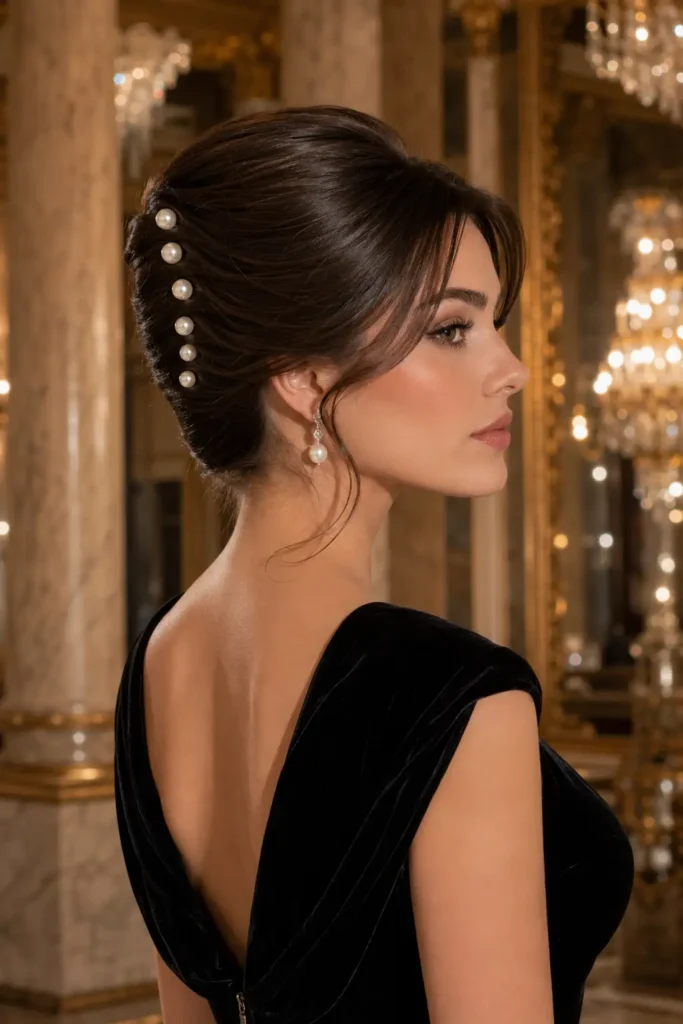
The French twist suits ballrooms and black-tie prom themes well. It works best on straight to lightly wavy textures since curly hair can resist the smooth roll needed for the twist to hold. Heart-shaped and oval face shapes carry this style particularly well.
Secure the base roll with three or four horizontal bobby pins before folding the hair over. Pearl pins along the fold reinforce the structure as well as decorating it. Skip this, and the twist loosens from the crown first. A hairstylist gets this cleaner than most DIY attempts.
4. Loose Braided Updo
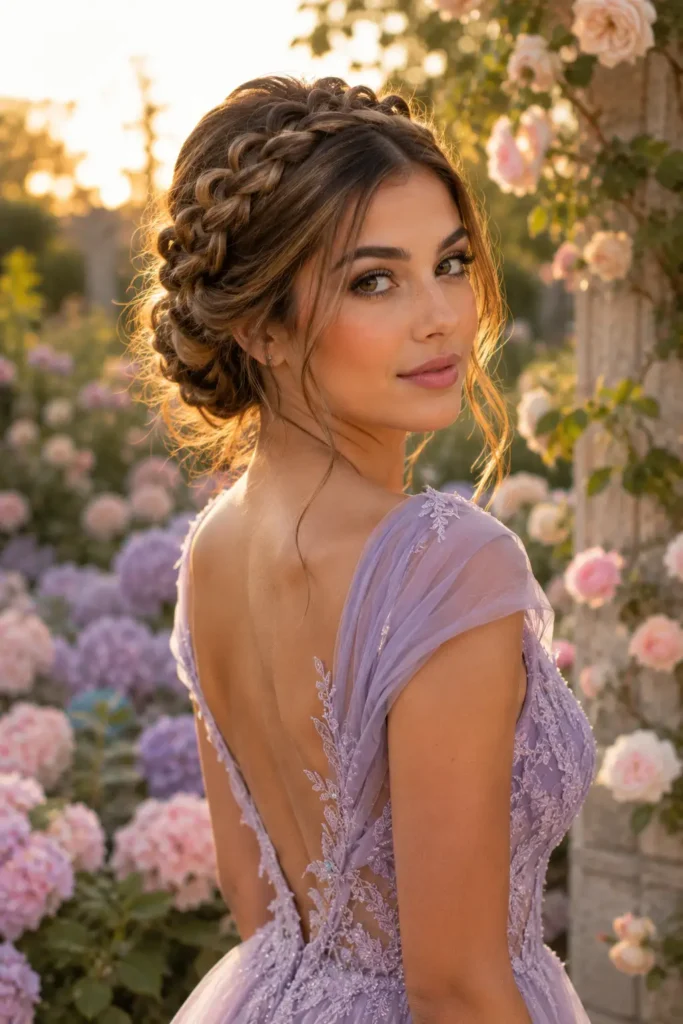
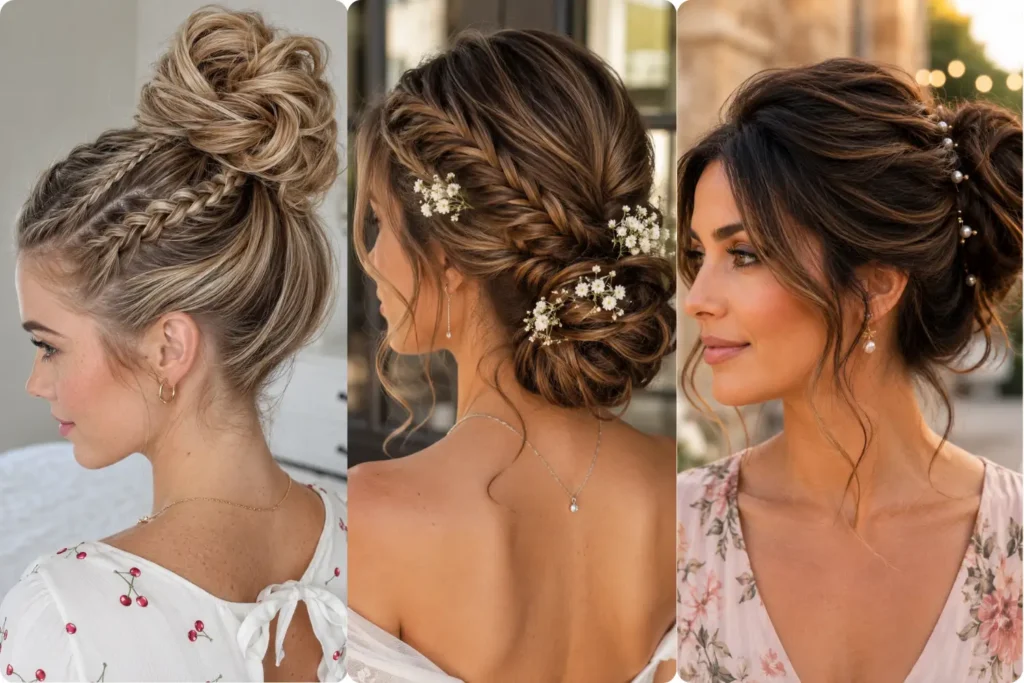
A braided updo that looks slightly undone requires more precision than it appears. The goal is controlled looseness: face-framing pieces out, the braid slightly pulled apart for texture. This style handles humidity better than smooth styles, making it a smart call for warm venues.
It suits thick and wavy hair most naturally but works on fine hair with a texturising spray applied before braiding. Use small elastics at the ends and a light shine spray over the surface. Fine hair may need a light backcomb at the crown to create visible volume.
5. Old Hollywood Waves
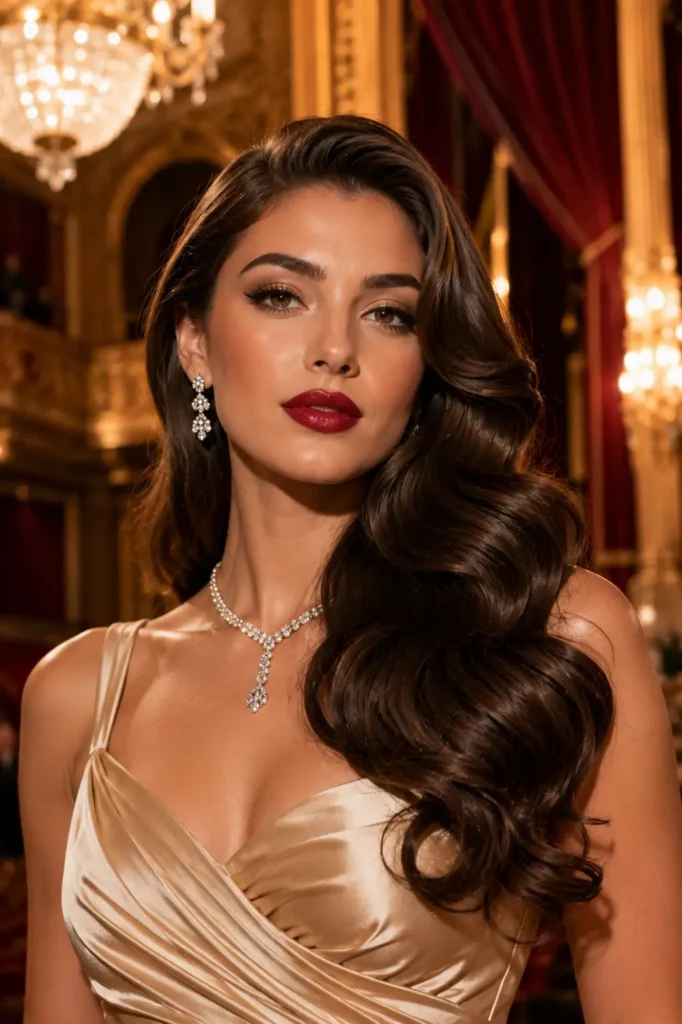
Old Hollywood waves suit nearly every face shape because the deep side part draws the eye diagonally rather than emphasising width. Straight hair produces the cleanest result since the wave pattern stays uniform. Curly hair requires significant prep time to achieve the same smooth finish.
Set large sections with a one-and-a-half-inch curling iron, pin each curl flat while it cools, then brush through with a paddle brush. Skipping the cooling step is why the waves fall out. Apply a shine spray and finger-press the waves into place. Styling time is fifty to seventy minutes.
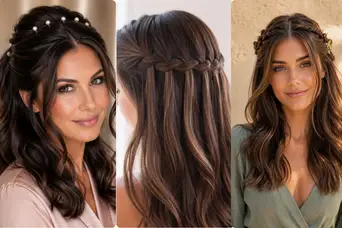
6. Waterfall Braid into Loose Curls
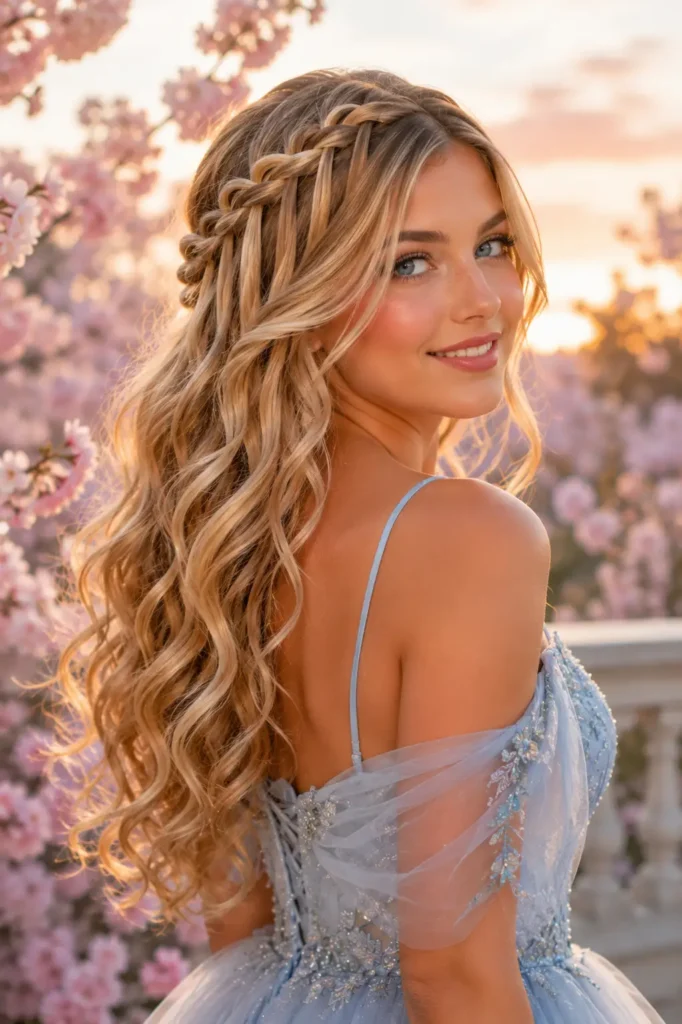
A waterfall braid drops sections through the plait and replaces them from above, creating a cascading effect along one side. It reads as intricate but takes practice rather than technical skill. The style photographs beautifully because the braid draws the eye across the face.
This suits fine to medium hair well since the braid structure creates more volume than is actually there. Use a light hair serum before braiding to reduce frizz, then curl the loose ends with a one-inch iron. Finish with a flexible hold spray so the curls continue to move naturally.
7. High Ballerina Bun
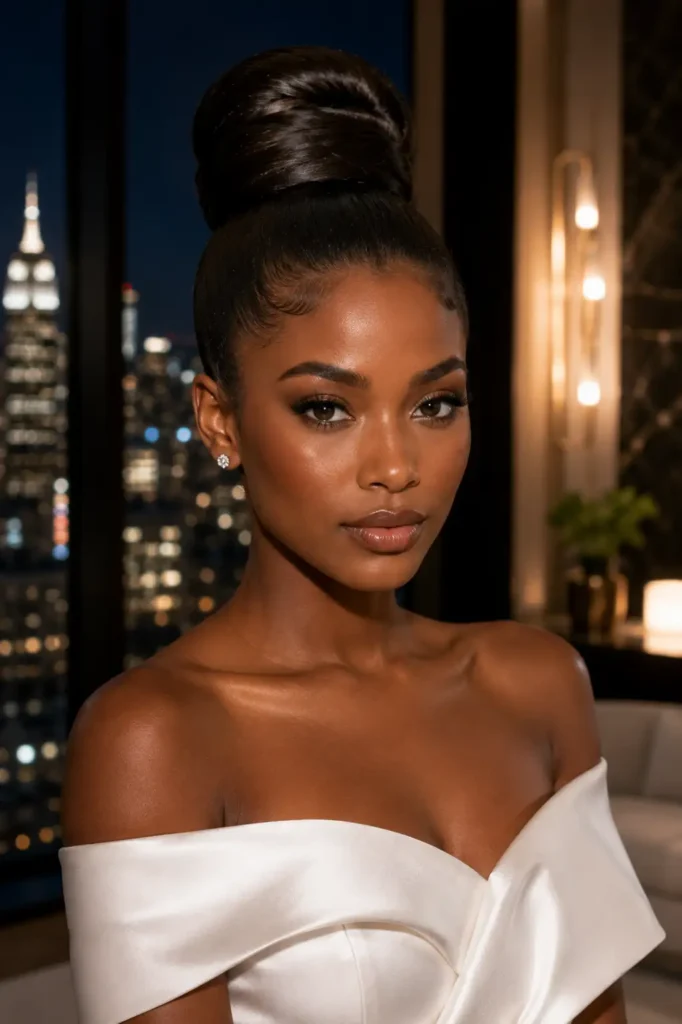
A high ballerina bun adds formality, photographs cleanly, and keeps hair off the neck entirely. It tends to look most polished on longer, straighter hair. Balayage or blonde highlights make the bun more interesting visually since colour variation shows through the twist.
Start with a tight high ponytail secured with two elastics. Twist the tail into a bun and secure with pins, or wrap it into a rope bun for more texture. The common mistake is pulling the surface before the bun is fully pinned, which causes bumps. Styling time is twenty-five to forty minutes.
8. Long Layered Curls with Side Part
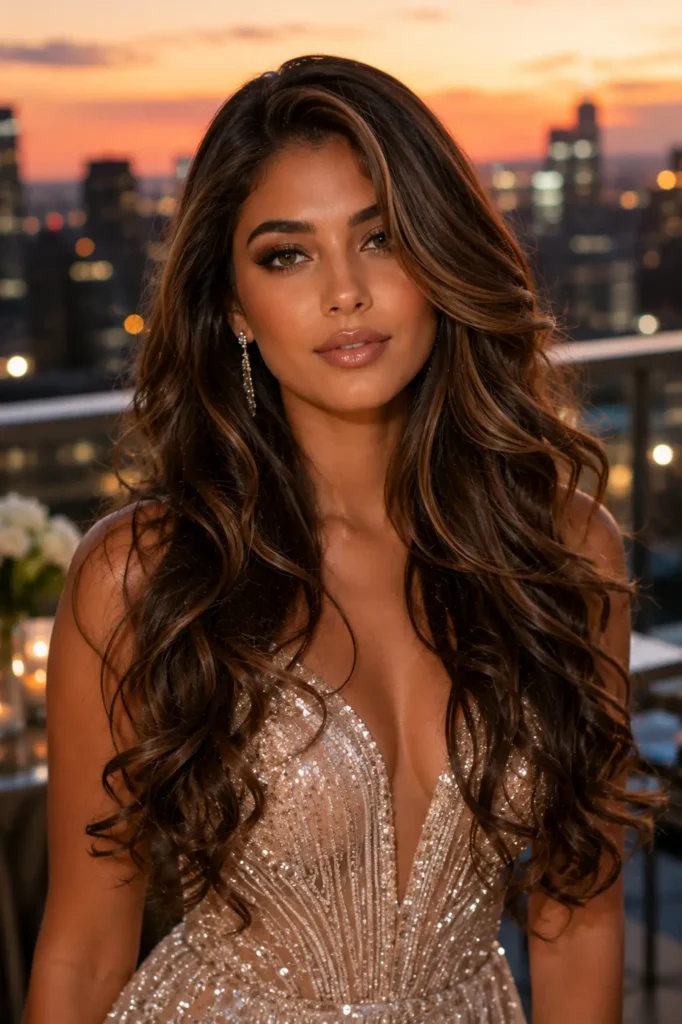
Sometimes the best prom hairstyle is wearing your hair down with intention. Long layered curls with a deep side part give a red-carpet quality without the complexity of an updo. Thick and wavy hair gets the most natural result, but most hair types can manage this style well.
Use a one-and-a-quarter-inch curling iron and work in sections from the nape upward. The common mistake is using too much product at the roots, which makes the hair look heavy rather than bouncy. Set curls with a flexible hold spray, not a stiff one. Styling time is around forty-five minutes.
9. Twisted Crown Braid
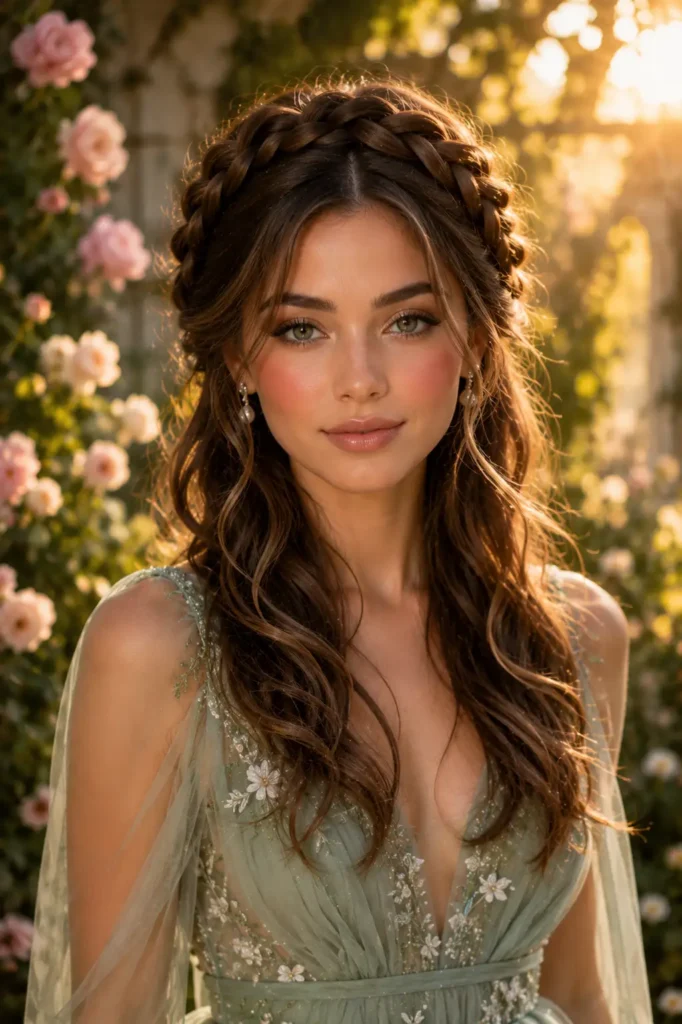
A twisted crown braid wraps around the head, and suits garden prom themes and romantic venues well. It works on medium to long hair and suits nearly every face shape. Wavy hair gives the braid a softer, more textured quality that reads beautifully in photos.
The technique is essentially two Dutch braids that meet at the back. Practising twice before prom night is worth it since the tension needs to stay consistent for the crown to lie flat. Too loose and it slides; too tight and it pulls uncomfortably by the end of the night.
10. Messy Textured Updo
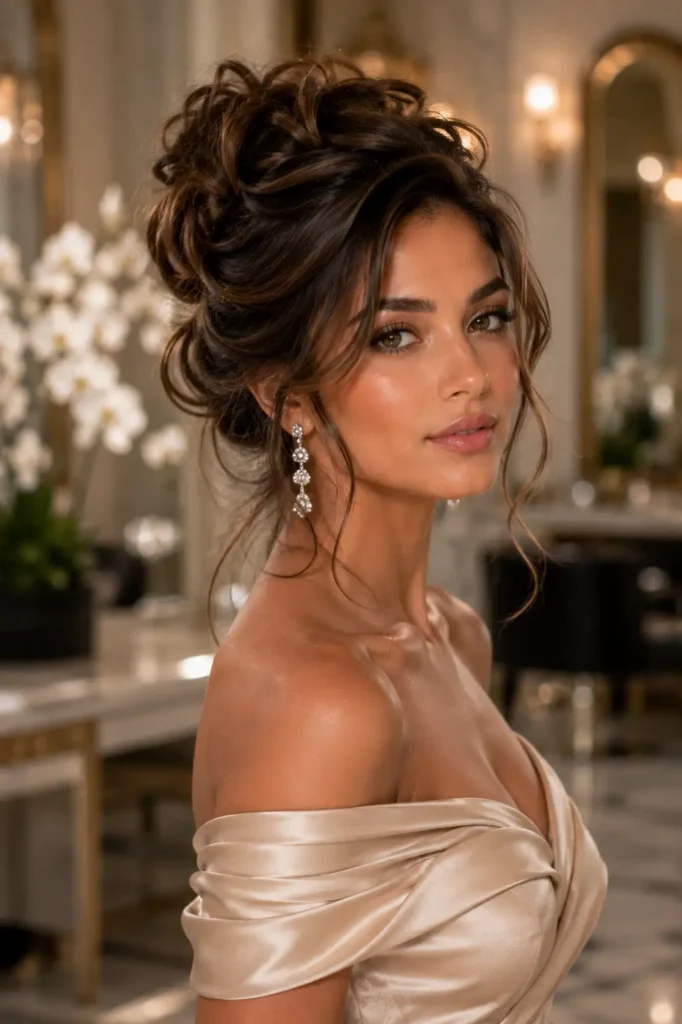
Textured updos photograph with dimension and movement rather than the flat quality of overly smooth styles. The goal is deliberate imperfection: some pieces out, some tucked in, varying tension throughout. Thick and naturally wavy hair give you the most material to build with.
Start with day-old or unwashed hair whenever possible since freshly washed hair is too slippery for this style to hold. Apply sea salt spray through damp hair and let it air dry before starting. Small fixes during the night are nearly invisible because the style is intentionally imperfect.
11. Braided Side Ponytail
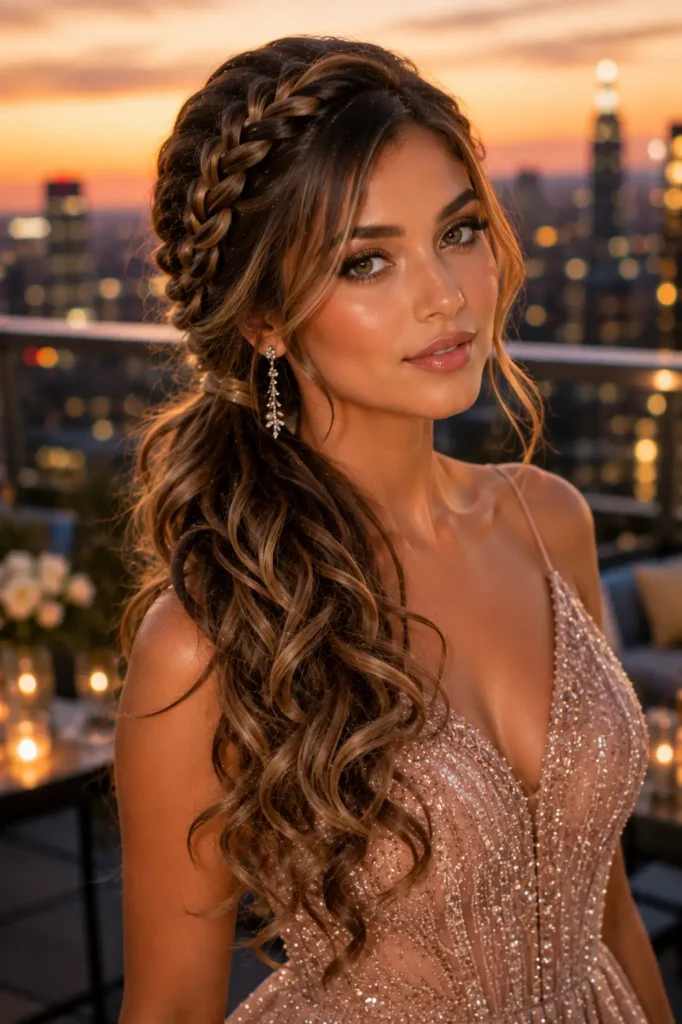
A braided side ponytail styled correctly reads as intentional and polished. A fishtail or Dutch braid along one side combined with a smooth low ponytail over one shoulder creates asymmetry that gives the style its formal quality. It works especially well with balayage or highlighted hair.
Fine hair benefits from backcombing at the crown before starting to create some lift. The most common mistake is making the braid too thick, which looks heavy rather than elegant. Apply a small amount of hair serum through the braid to keep it from frizzing. Styling time is thirty to forty-five minutes.
12. Ribbon-Tied Low Ponytail
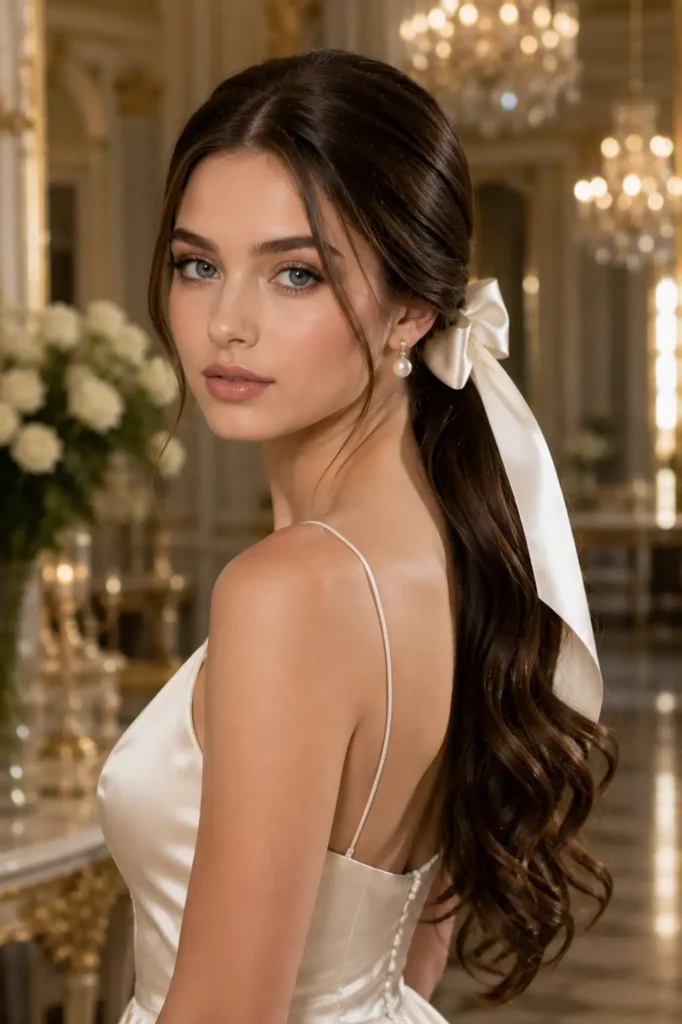
A velvet or satin ribbon tied in a full bow at the nape is a genuinely elegant finish on a low ponytail. This suits formal or romantic prom themes and works with almost any dress. It is one of the more beginner-friendly prom hairstyles, worth knowing if you are doing your own hair.
Blow-dry hair smooth, use a flat iron on any pieces that tend to bend, and apply a light shine spray before gathering. Tie the ribbon loosely first, adjust so the bow sits centred, then tighten. A mist of finishing spray holds flyaways without dulling the shine. Styling time is thirty minutes.
13. Finger Waves with Crystal Pins
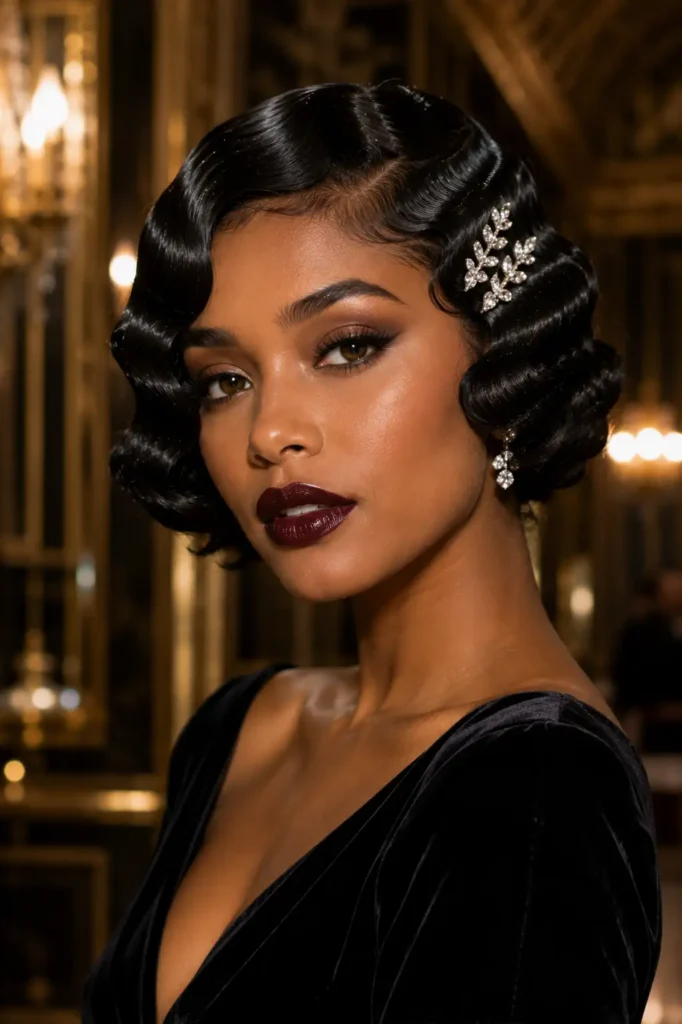
Finger waves deliver a formal result on short to chin-length hair without requiring length. The horizontal wave pattern suits round, oval, and heart face shapes by breaking up the vertical line of the face. Straight or lightly wavy hair gives the cleanest result; curly hair needs straightening first.
Use a strong styling gel and a fine-tooth comb. Press each wave into place and hold it with a wave clip while it dries. The common mistake is using too little product, so the waves lose their crimp. Let the style set for at least thirty minutes under the clips before removing.
14. Pixie with Decorative Accessories
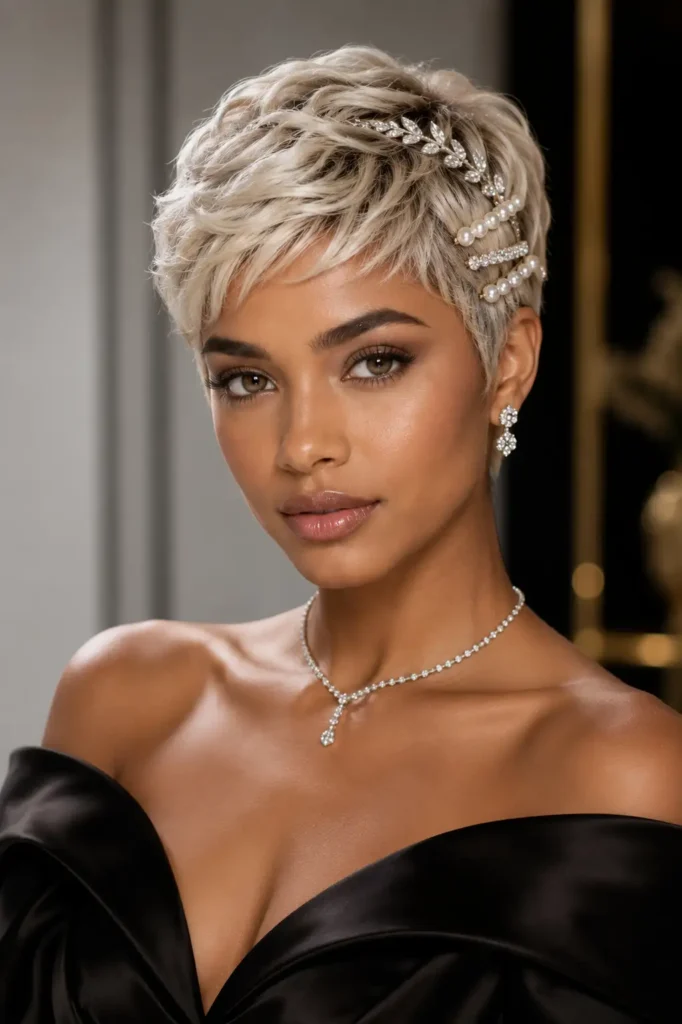
A pixie cut works for prom with the right accessories. Pearl clips, crystal pins, or a delicate headband at the natural hairline elevate the style into something deliberately fashion-forward. The key is choosing accessories that match the dress’s formality level rather than relying on hair length to do the work.
Use a small amount of pomade to define the texture before placing accessories. The practical advantage of a pixie on prom night is real: nothing to pull out of place during dancing, no pins to lose from an updo. Styling time is fifteen to twenty-five minutes with heat tools optional.
15. Slicked-Back Bob with Volume at Roots
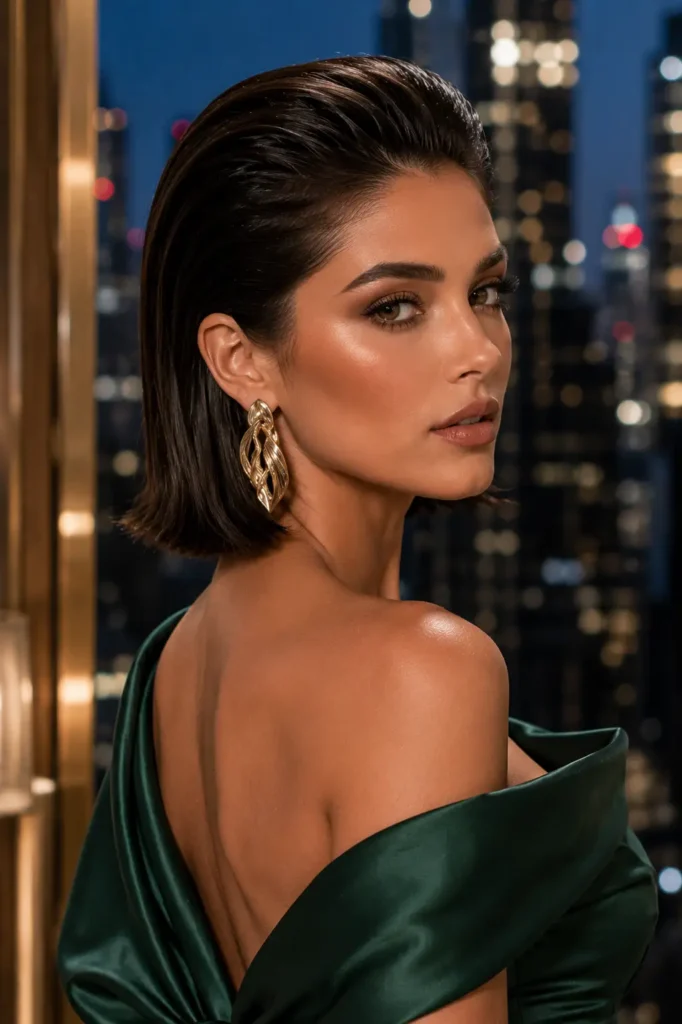
A sleek bob slicked back from the face suits bold, architectural dress choices and modern prom themes. It works on chin-length to shoulder-length hair and flatters oval and square face shapes by drawing attention to bone structure. A salon visit is worth considering for this one.
Use a volumising powder or blow-dry with a round brush at the crown before smoothing the surface down with a flat iron and gel. The lift at the base and smooth at the surface is what gives depth rather than a flat look. Finish with a firm-hold spray along the edges.
16. Defined Curls with Rhinestone Headband
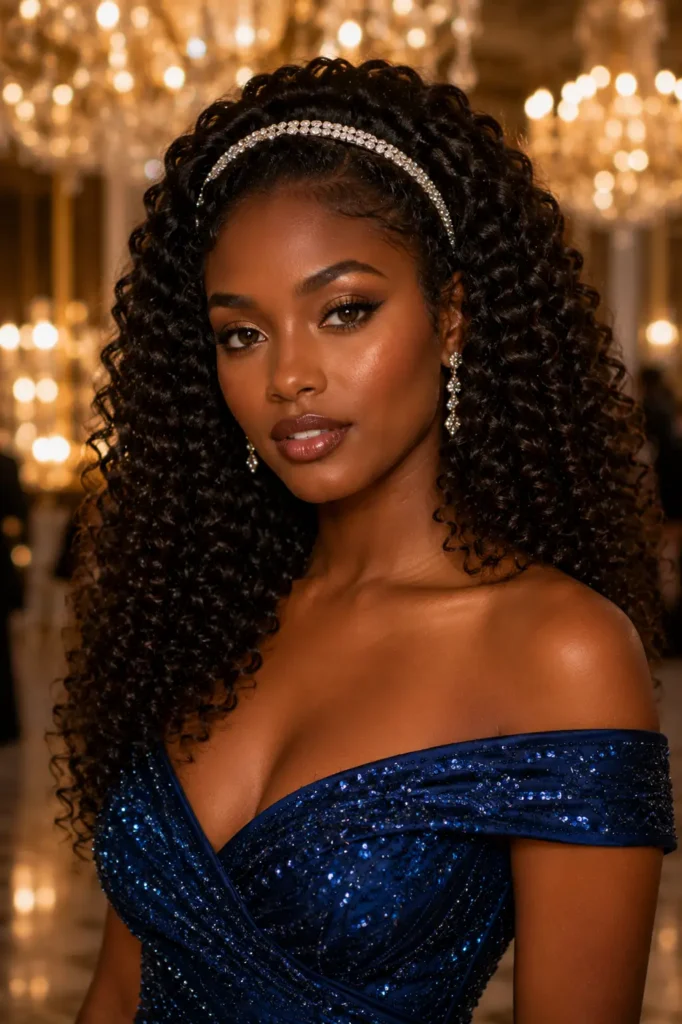
Natural curls handle humidity better than styled straight hair and hold accessories without pins. The key is preparation: a curl cream worked through soaking-wet hair, then a diffuser on low heat. Rushed drying creates frizz that no finishing product can fully correct afterwards.
A rhinestone headband placed behind the hairline adds formality without disturbing the curl pattern. Avoid pushing it too far back, which squashes the top curls and creates a flat spot at the crown. Keep it close to the hairline and use a pin behind each ear if it tends to slide.
17. Curly Half-Up Top Knot
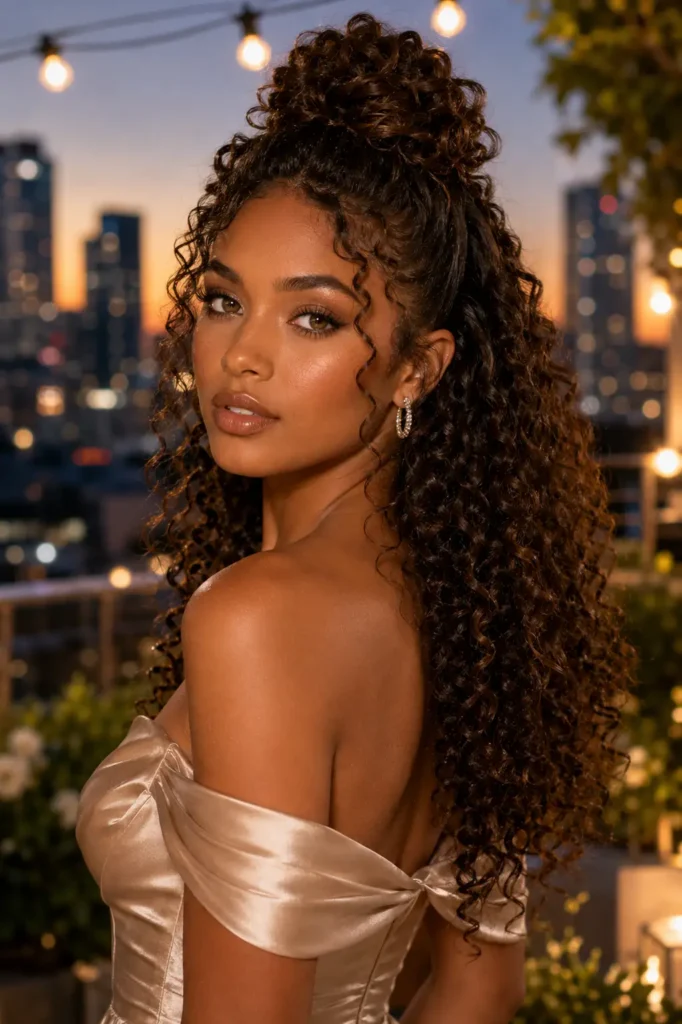
A curly half-up top knot gathers the top section into a loose knot at the crown while the lower curls fall freely. It creates height without the structural complexity of a full updo and photographs with visible texture and movement. Thick and naturally curly hair gets the most volume in the knot.
Avoid a tight elastic since it pulls curls straight. Use a loose hair tie or fabric elastic instead, then secure with a few pins pushed horizontally into the base. Leave a few curls loose around the face. Add a light oil serum after styling to boost shine without weighing the curls down.
18. Braided Halo with Natural Curls Down
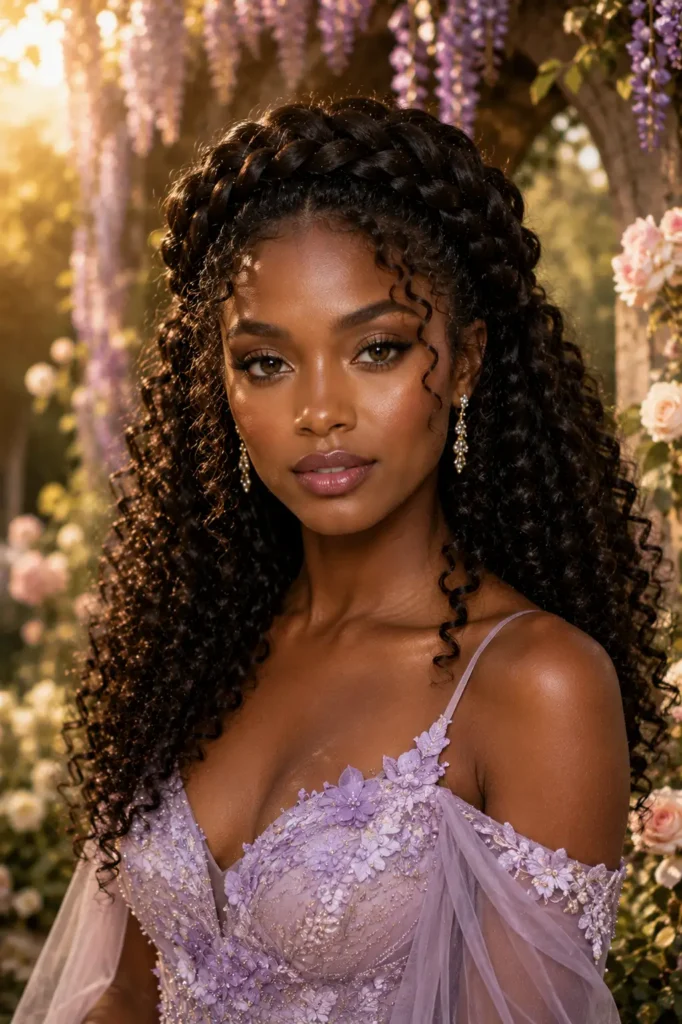
A braided halo on naturally curly hair is one of the most photogenic combinations in prom hairstyles. The braid wraps around the head while the remaining curls fall freely, creating a contrast in texture that reads beautifully. It suits medium to long curly hair across all face shapes.
Use a Dutch or French braid rather than a three-strand braid since the structure holds better against the weight of curls. The most common mistake is braiding the halo too tight, causing it to lift off the head. Keep the tension consistent but relaxed and finish with a flexible hold spray.
19. Voluminous Teased Updo for Fine Hair
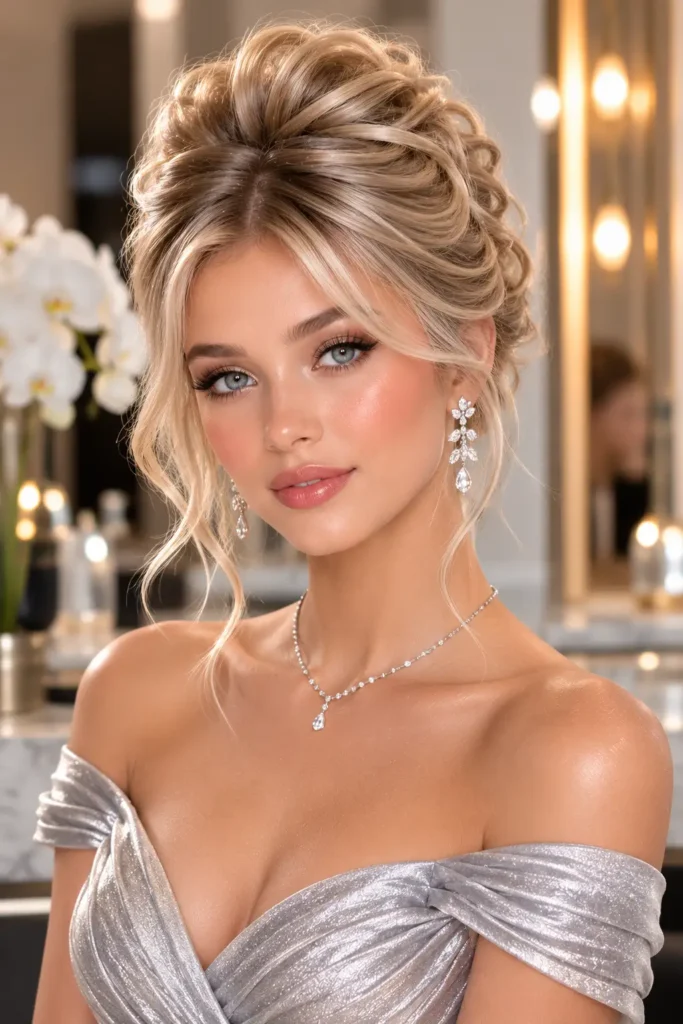
Fine hair requires texture before pinning since the natural slipperiness of fine strands works against bobby pins. Backcomb in sections at the roots, apply a texturizing spray throughout, and work on day-old hair rather than freshly washed hair. Natural oils give fine strands something to grip during pinning.
This style suits oval and heart face shapes most. A teased loosely pinned updo adds the appearance of significant volume that fine hair cannot achieve naturally. Use pins in an X pattern at each section for the best hold, and finish with a firm-hold spray from about thirty centimetres away.
20. Thick Hair Knotted Updo
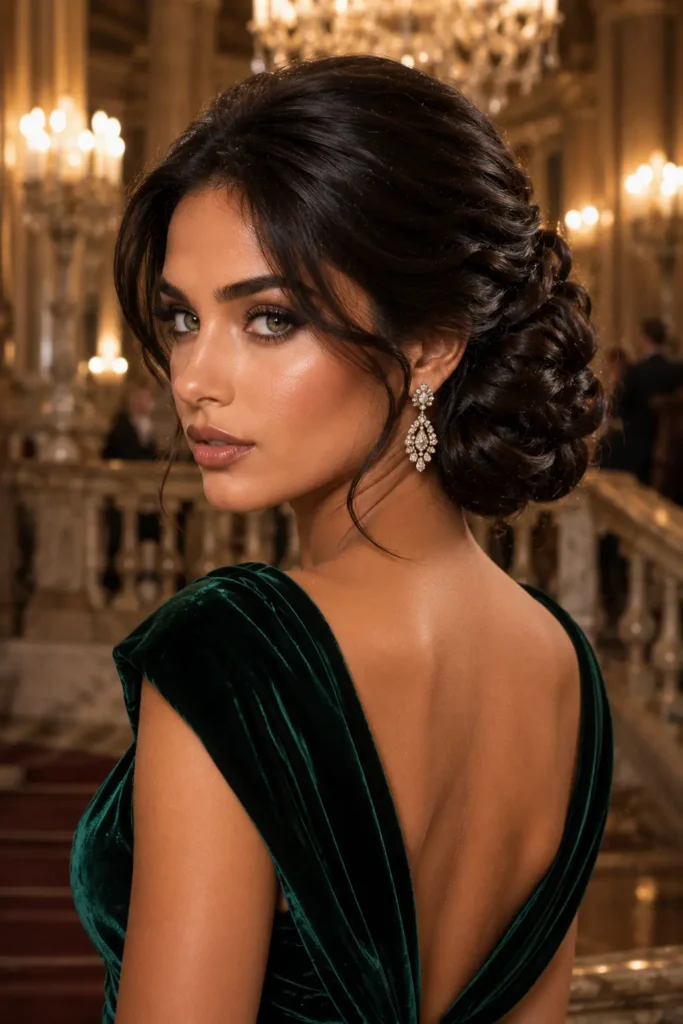
Thick hair never looks flat or thin in an updo, but weight is the real challenge. Thick hair in a high style can start pulling at pins within a couple of hours if the foundation is not solid. Mid-height to low updos distribute the weight more evenly and hold better through a long night.
Build the base with a strong elastic at the nape and pin each section individually before moving to the next. Use long pins rather than standard bobby pins since they grip further into the knot. Finish with a medium-hold spray so the style stays put without looking rigid.
21. Sleek High Ponytail with Wrapped Base
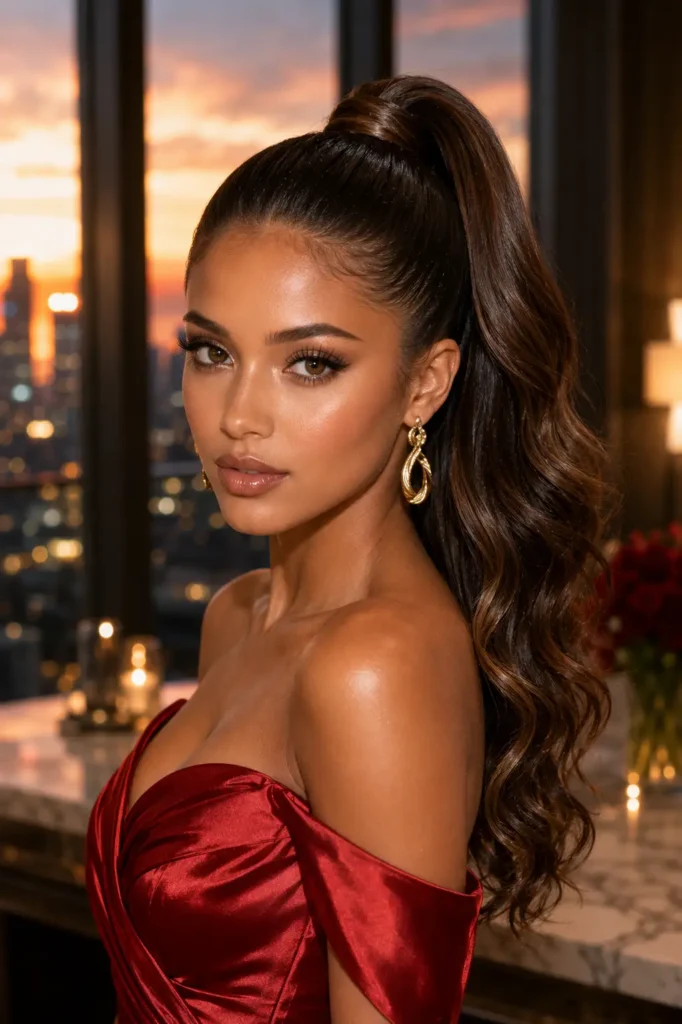
A high ponytail reads as formal when the surface is smooth and the base is wrapped cleanly. The wrapped base, where a thin section of hair winds around the elastic and pins underneath, is the detail that lifts this from casual. It suits oval, square, and diamond face shapes particularly well.
Smooth gel through the surface before gathering to avoid lumps. Pull the ponytail straight up rather than back to keep the height at the crown. Use two elastics at the base for extra hold and consider a volumising powder at the roots if your hair is fine. Styling time is twenty-five to thirty-five minutes.
22. Double Dutch Braids into Bun
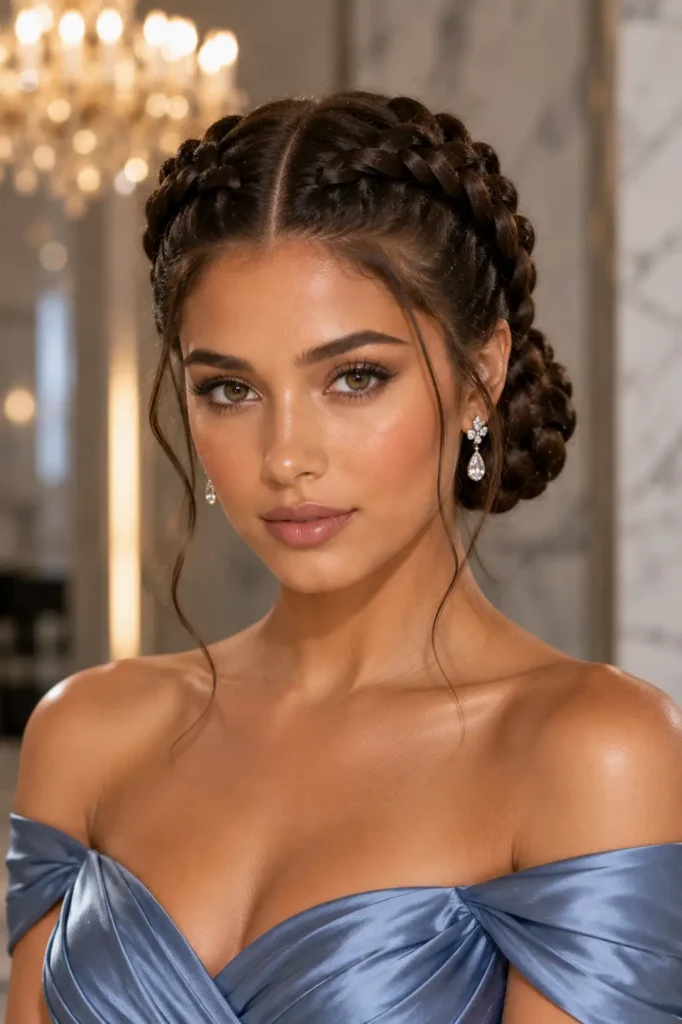
Double Dutch braids coiled into a bun have moved convincingly from athletic to formal over the past few seasons. The key is pulling the braids apart slightly after braiding before coiling into a neat bun. This suits thick to medium hair and oval or square face shapes best.
Divide the hair at the centre part and braid each section tightly to the ends, then coil and pin both around the bun point. Pulling the braid loops outward after pinning adds volume that makes the difference between a flat bun and a dimensional one. Use a firm-hold spray through the braids to reduce frizz.
23. Softly Pinned Low Bun with Wispy Fringe
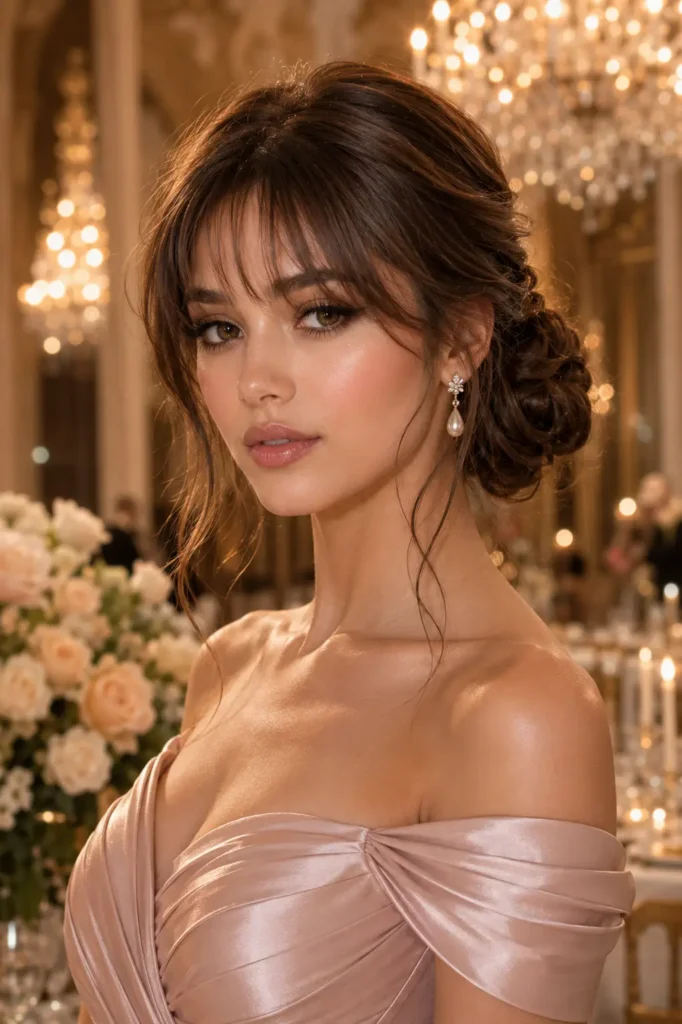
The softly pinned low bun is one of the most wearable prom hairstyles for a wide range of people. It works on oval, round, heart, and square face shapes and suits most hair types. It also holds up through an entire evening without needing more than one touch-up.
Use a light-hold gel rather than a stiff one, gather the hair at the lower nape, and fold it into the bun loosely rather than coiling it tight. The pins anchor the structure without restricting every strand, which creates the elegant looseness that rigid styles cannot. Finish with a light mist of shine spray.
Frequently Asked Questions About Prom Hairstyles
Q: How do I make my prom hairstyle last all night?
A: Prep is the biggest factor. Work on clean but not freshly washed hair, use the right products for your hair type, and let heat-styled sections cool completely before moving on. Pin methodically rather than rushing, and carry a few bobby pins and a small travel-size hairspray for touch-ups.
Q: Which prom hairstyles work best for fine hair?
A: Teased updos, braided styles, and half-up looks tend to work better than sleek all-down styles. The key is building texture before you start styling. A texturizing spray or volumizing mousse applied to damp hair, combined with day-old roots, gives fine hair the grip it needs to hold pins and structure.
Q: Can I do my prom hair myself or do I need a salon?
A: Styles like a ribbon ponytail, half-up curls, braided side ponytail, and high bun are manageable at home with practice. French twists, finger waves, and sleek chignons are harder to execute cleanly without a second pair of hands. Whatever style you choose, do a full trial run at least a week before prom.
Q: Will my prom hairstyle hold up through dancing?
A: Braids, knotted updos, and textured buns handle movement the best. Smooth styles and finger waves are more vulnerable to sweat and humidity during dancing. Whichever style you choose, a flexible hold spray rather than a stiff lacquer helps the hair move with you rather than cracking or stiffening.
Q: What prom hairstyles work for thick hair?
A: Mid-height and low updos work more reliably than high styles for thick hair since the weight distributes more evenly. Knotted updos, loose braided updos, and low chignons are all strong options. Use long pins rather than standard bobby pins, which often cannot grip deeply enough into thick hair.
Q: Should I wash my hair before prom?
A: For most updo and braided styles, day-old hair holds better than freshly washed hair. If you are wearing your hair down in curls or waves, washing the day before and blow-drying with a volumizing mousse usually gives the best base. Avoid heavy conditioning treatments right before styling.
Q: What is the best prom hairstyle for a strapless dress?
A: Any updo works well with a strapless neckline since it keeps the focus on the dress. A French twist, low chignon, or braided updo all complement a strapless silhouette without competing with the neckline. Half-up styles also work. Avoid very voluminous down styles, which can visually overpower a strapless top.
Q: How early should I start styling my hair on prom day?
A: Allow more time than you think you need. A simple ponytail or half-up style might take thirty to forty-five minutes, but an updo, finger waves, or a braided style can take an hour or more, especially if you are doing it yourself. Factor in curl cooling time, which many people underestimate significantly.
Final Thoughts
Prom night is one of those events where the hairstyle genuinely matters, not because it needs to be complicated, but because it needs to be right for you. The most photogenic styles are the ones that suit the person wearing them, fit the formality of the dress and venue, and feel comfortable enough to forget about by the time the music starts.
Whatever style you land on, do a full trial run beforehand. Use the same products, the same tools, and the same amount of time you will have on the day. That practice session is where you find out what actually holds on your hair, not on someone else. The right prom hairstyle is waiting in that run-through.
Sarah Williams
Hi, I’m Sarah Williams — the founder of HerStyleNest, where beauty meets modern style. I share trendy hairstyles, chic nail designs, and fashion inspiration for women who love staying stylish every season. From everyday elegance to viral beauty trends, HerStyleNest is your go-to destination for effortless fashion and beauty ideas.