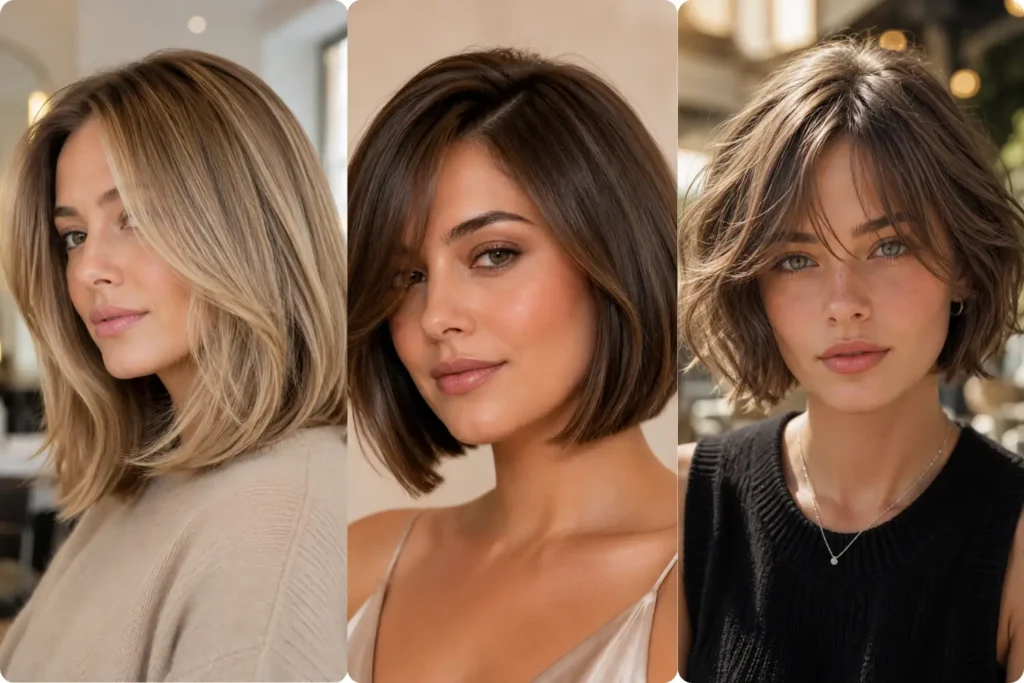
21 Chic Pixie Bob Haircuts That Are Trending in 2026
Most women with thin hair spend years chasing volume that never quite shows up. You curl it, tease it, spray it, and by noon it’s flat again. If that sounds familiar, there’s a good chance you’ve been working against your hair instead of with it.
The pixie bob is one of the few cuts that genuinely works in your favor when hair is fine. Less length means less weight pulling the strands down. A good cut adds shape and movement that product alone can’t fake. And there are far more variations than most people realize — from longer, jaw-grazing styles to super cropped ones that sit just above the ear.

Why the pixie bob works so well for thin hair
Before getting into the individual styles, it helps to understand what makes a pixie bob different from a regular bob or a full pixie cut. The pixie bob sits in between — longer in front than a traditional pixie, but shorter in back and around the nape than a classic bob. That specific shape creates structure without adding bulk.
For thin hair, weight is the enemy. When strands are long, gravity pulls them flat. A pixie bob removes that length from the areas most prone to flatness — the nape and crown — while keeping enough length at the sides and front to frame your face.
Texture is the other key factor. Most of the styles below use some form of layering, point cutting, or razor work to break up the hair’s surface. Even if each strand is fine, a textured cut makes the overall style look denser and fuller.
Have you ever noticed that a fresh haircut always looks thicker than a grown-out one? Blunt ends, visible movement, and a precise silhouette all create that illusion. The pixie bob takes full advantage of it.
1. The classic textured pixie bob
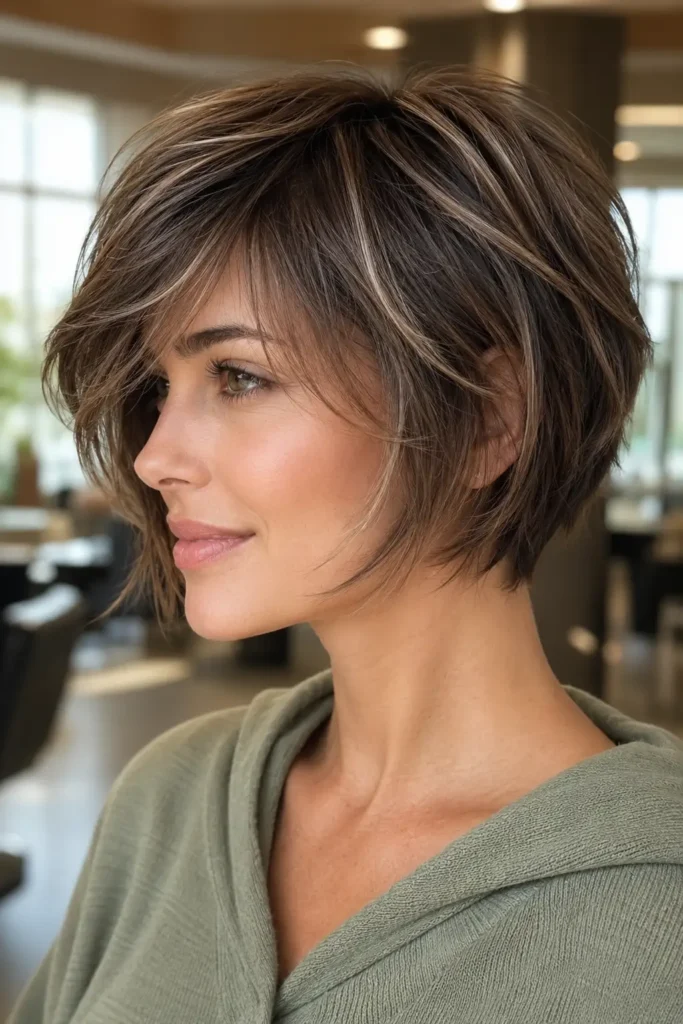
This is the baseline — a pixie bob with choppy, point-cut ends and light layering through the crown. Nothing extreme, just enough to separate the strands and give them somewhere to go. It works on almost every face shape and is a great starting point if you’ve never had a pixie-length cut before.
2. The layered A-line pixie bob
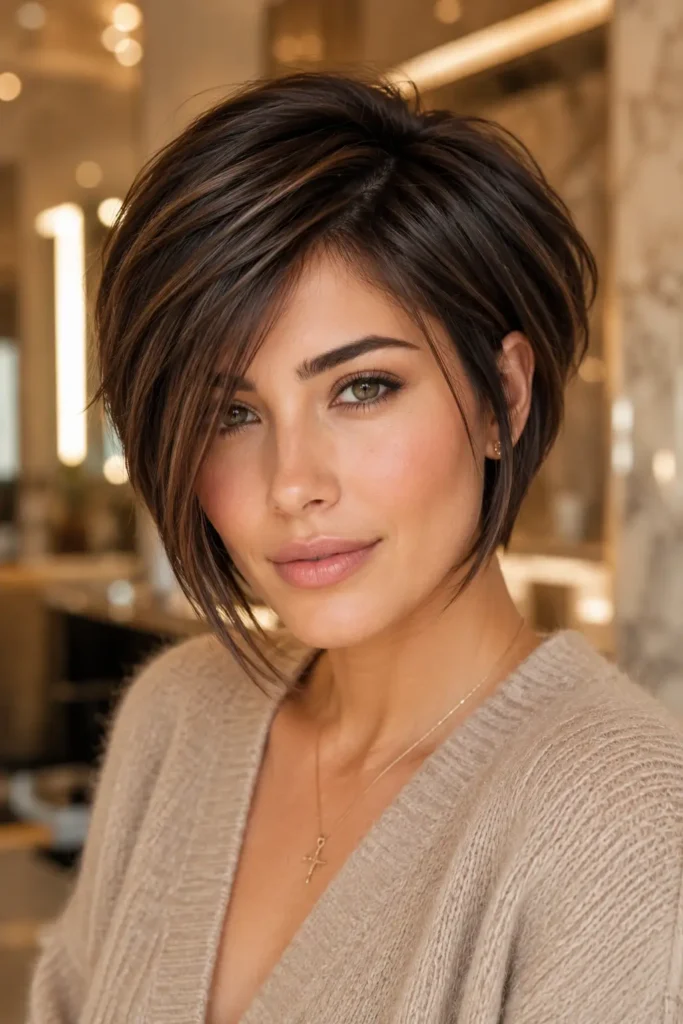
An A-line angle runs longer at the front and shorter at the back. On thin hair, this is particularly effective because the length gradually increases toward your face, where fullness matters most visually. The back stays close and clean, which removes weight right where flat roots are most obvious.
3. Choppy pixie bob with side-swept fringe
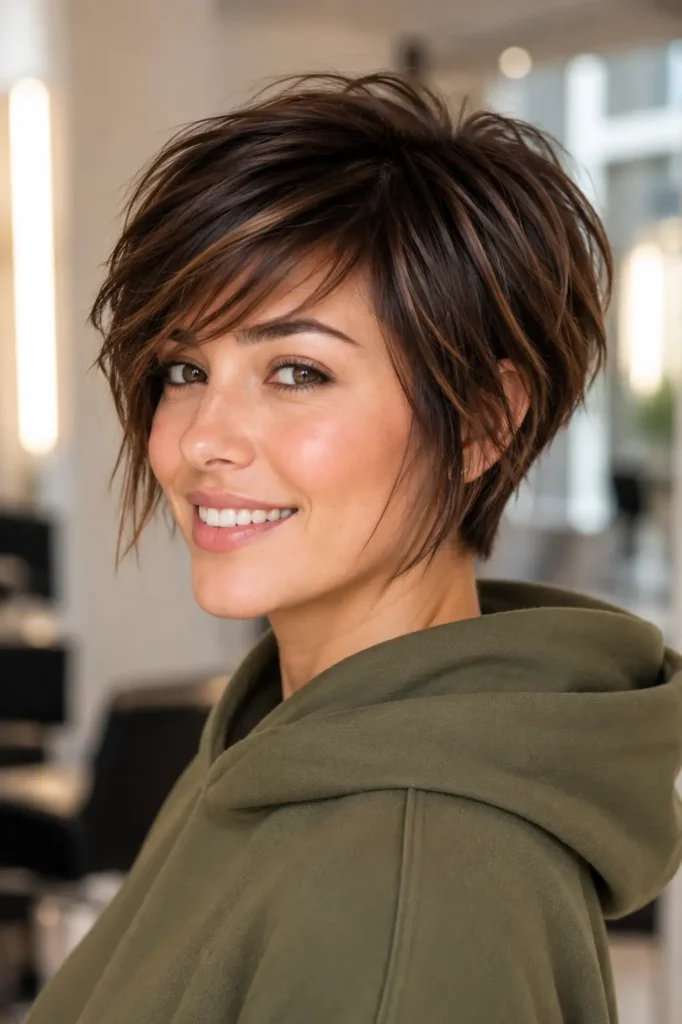
A side-swept fringe adds horizontal width across the forehead, which balances out narrow faces and creates the impression of denser hair at the front. Keep the fringe around brow length — any longer and it starts to weigh down fine strands.
4. Micro pixie bob
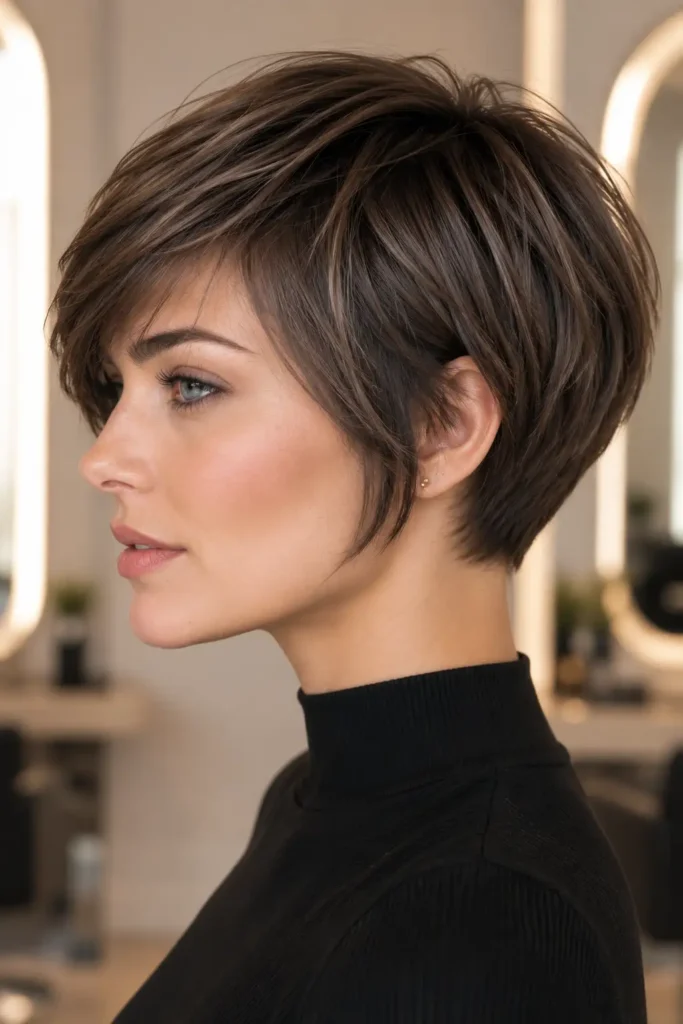
The micro version sits right at the jaw or just below, with a cropped, close-cut back. If you want the maximum volume illusion, this is the most effective option on the list. Shorter hair is almost always thicker-looking hair when it’s fine.
5. Wispy pixie bob
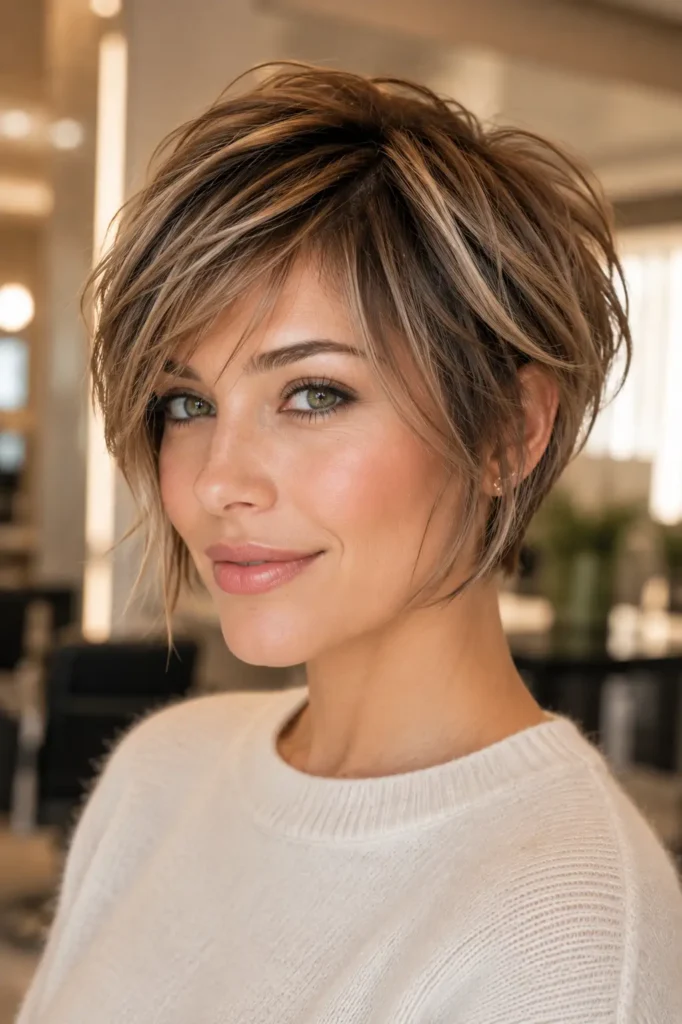
Where choppy cuts use stronger, more deliberate separation, wispy cuts are softer and more delicate. Fine, feathery ends catch the light beautifully and give thin hair a natural-looking movement that can read as effortless volume.
Ask for: feathered ends, minimal bulk removal, light interior layers that don’t disrupt the surface silhouette.
6. Asymmetric pixie bob
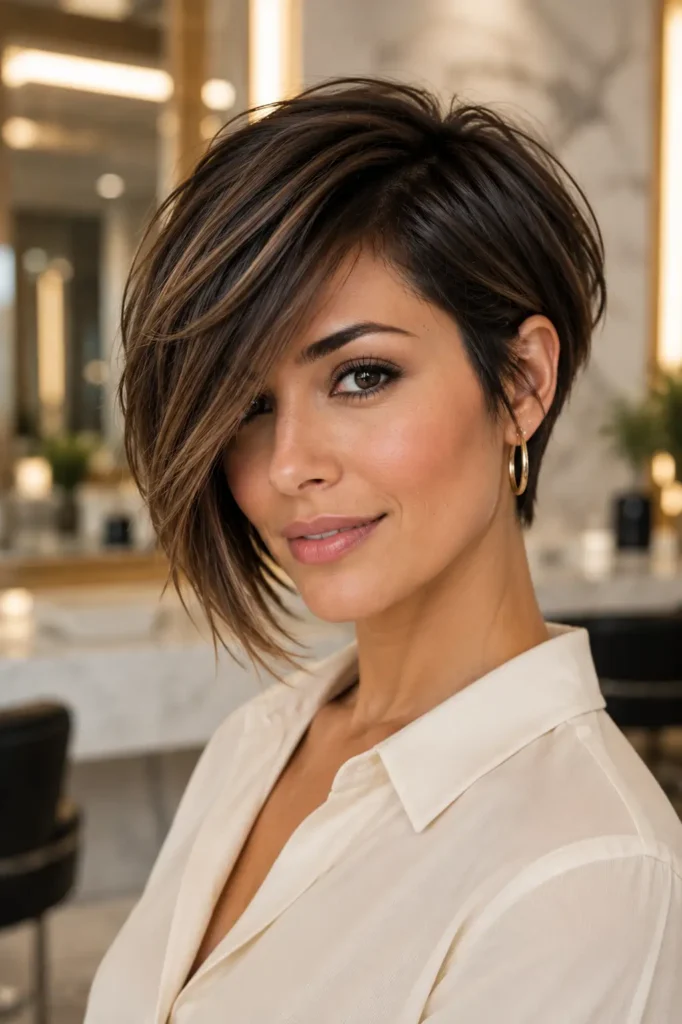
One side longer than the other is a classic way to add visual interest to fine hair. The contrast between lengths creates depth and makes the hair look more substantial than it is. An asymmetric style also tends to stay looking intentional longer than a symmetrical cut as it grows out.
Ask for: 1–2 inch length difference between sides, longer on your preferred side, disconnected nape.
7. Stacked pixie bob
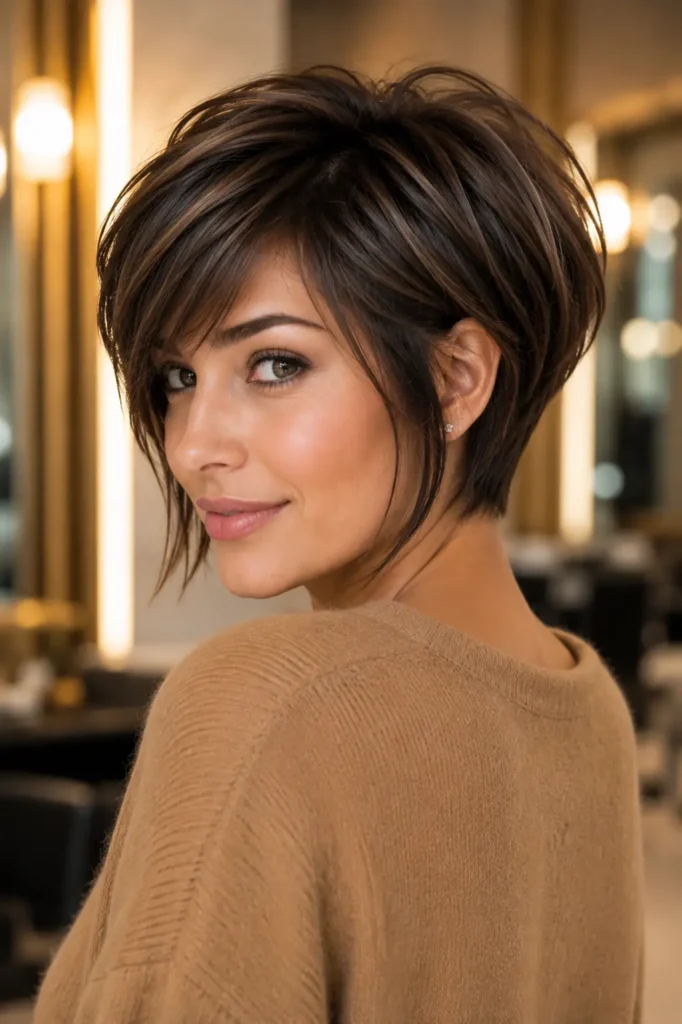
Stacking at the back means the hair is graduated in tight layers that build on each other, creating a rounded, almost mushroom-like shape at the nape. That stacked silhouette lifts the whole style and adds serious volume at the crown without any product.
Ask for: tight graduation at the back, stacked layers from the nape to the crown, longer front pieces.
8. Blunt-cut pixie bob with shattered ends
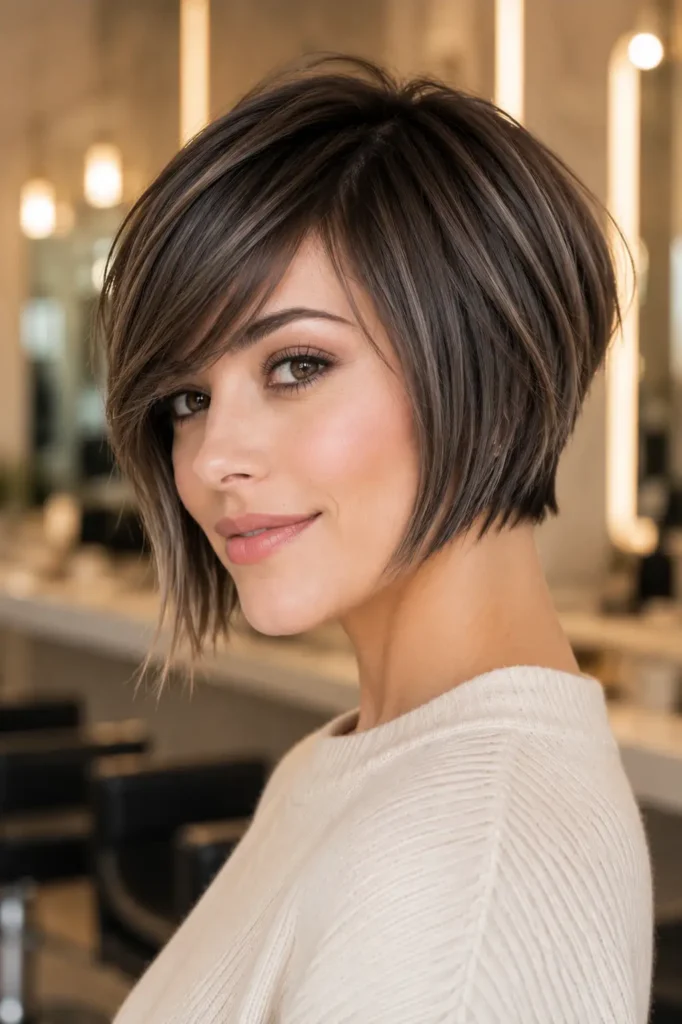
A blunt perimeter gives the hair a heavier, denser appearance because all the strands end at the same point. Add shattered ends — tiny, irregular notches into the tips — and you get a cut that looks full at the line but has movement above it.
Ask for: blunt perimeter cut, shattered ends with scissors or a razor, no heavy interior layering.
9. Wavy pixie bob
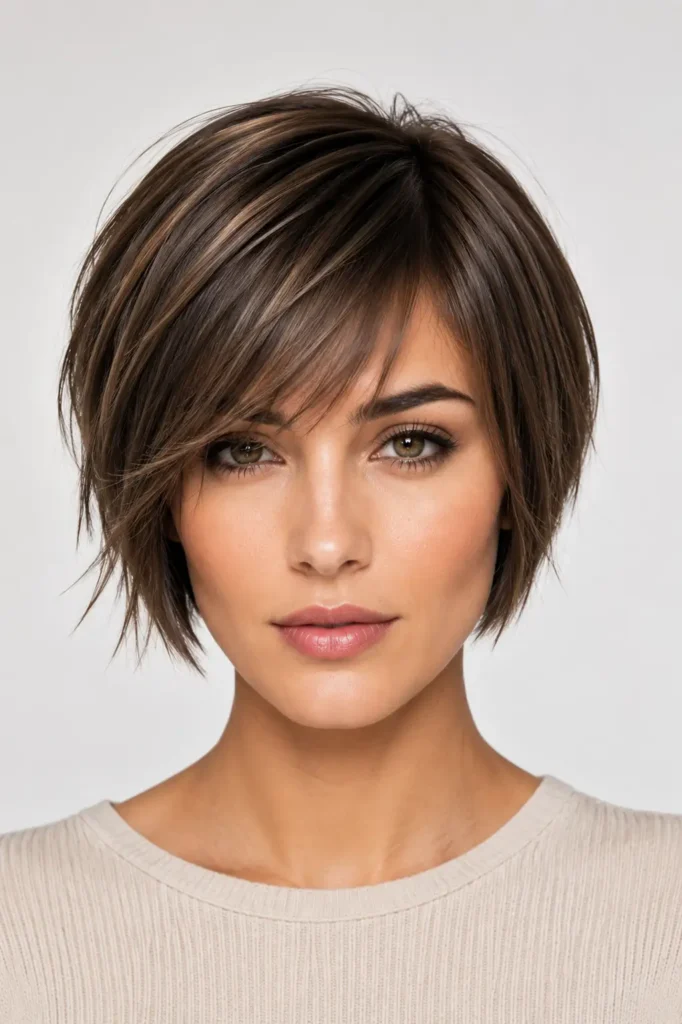
This one requires that you have some natural wave or are willing to encourage it with a texturising spray. Waves naturally separate and lift the hair, adding volume and movement that fine, straight hair struggles to achieve. A pixie bob keeps the waves from becoming heavy or droopy.
Ask for: razor-cut or point-cut ends to encourage wave formation, face-framing layers, enough length at the front to see the wave pattern.
10. Disconnected pixie bob
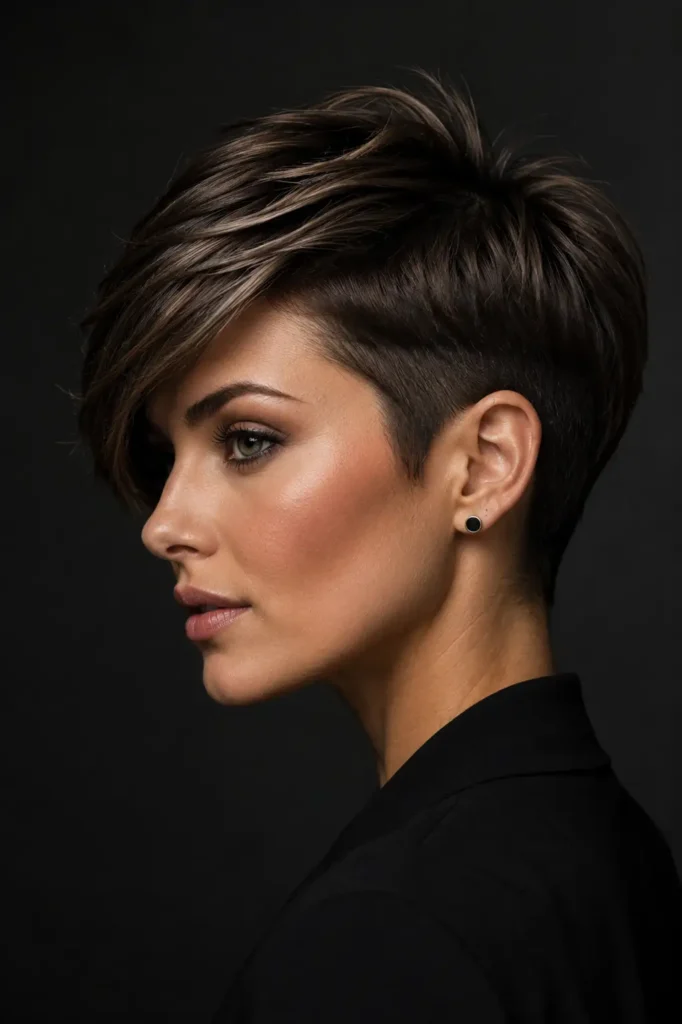
Disconnected cuts have a deliberate, obvious gap between two sections — typically the top and the sides, or the sides and the nape. That gap creates shadow and depth, making the hair at the top look noticeably fuller by contrast. It’s one of the more editorial-looking styles on this list.
Ask for: clear disconnection between the side/nape section and the top, longer crown, faded or clipped sides.
11. Textured crop with curtain fringe
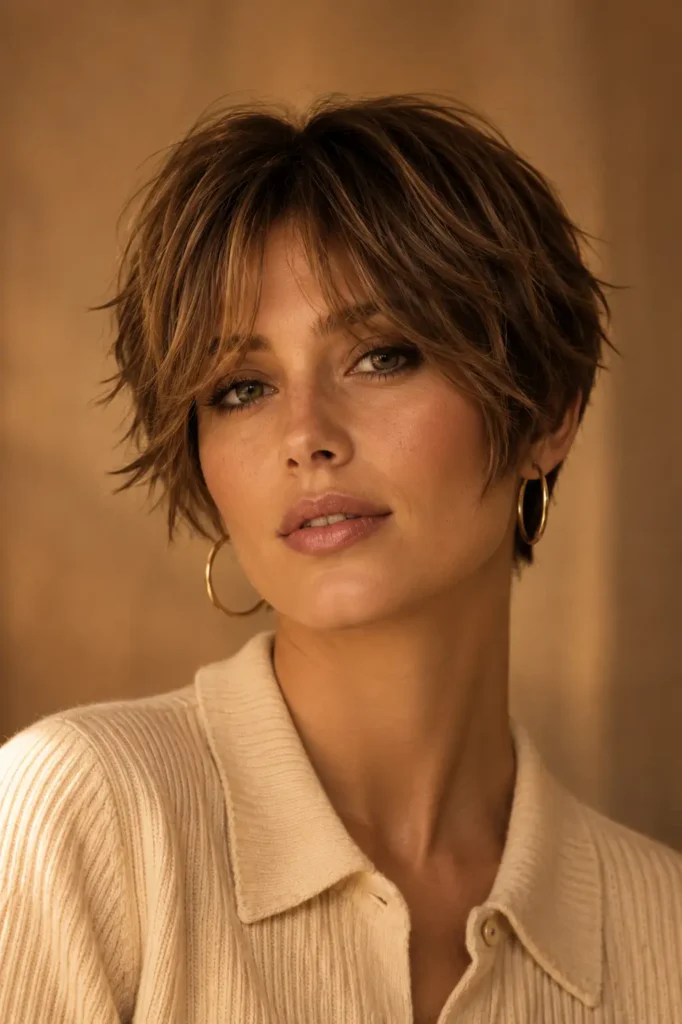
Curtain bangs part in the middle and sweep outward past the temples. They’re softer than a blunt fringe and work surprisingly well on thin hair because the parted shape doesn’t rest flatly across the forehead. Combined with a textured pixie bob body, this gives a 70s-inspired look that feels current.
Ask for: curtain bangs to the cheekbone, choppy body throughout, slight A-line or level back.
12. Pixie bob with undercut
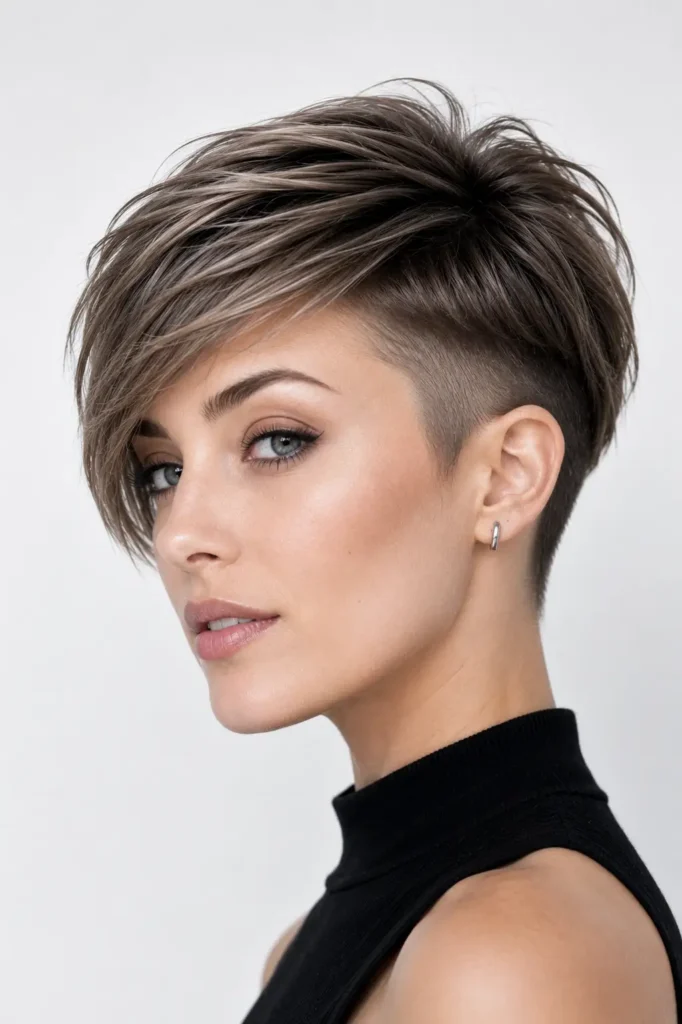
An undercut removes hair underneath the top layer, reducing weight at the nape and sides without changing the visible silhouette. The top section sits on top of the closely cropped undersection, creating lift. This is especially good if your hair tends to lie flat at the back.
Ask for: disconnected undercut at the nape, longer top section with internal layers.
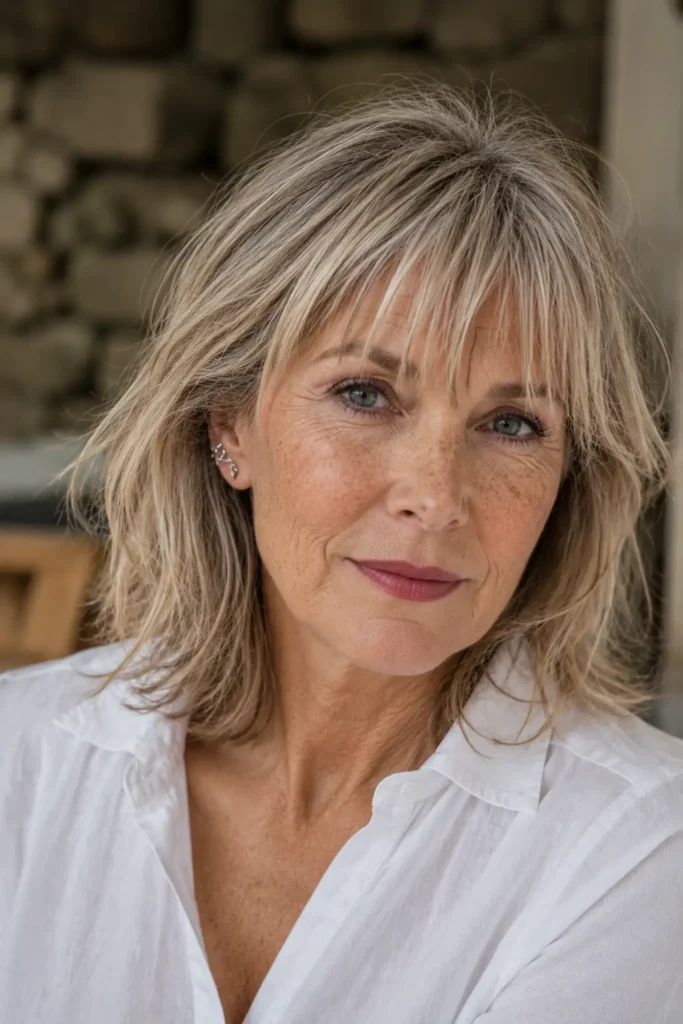
13. Soft pixie bob for women over 50
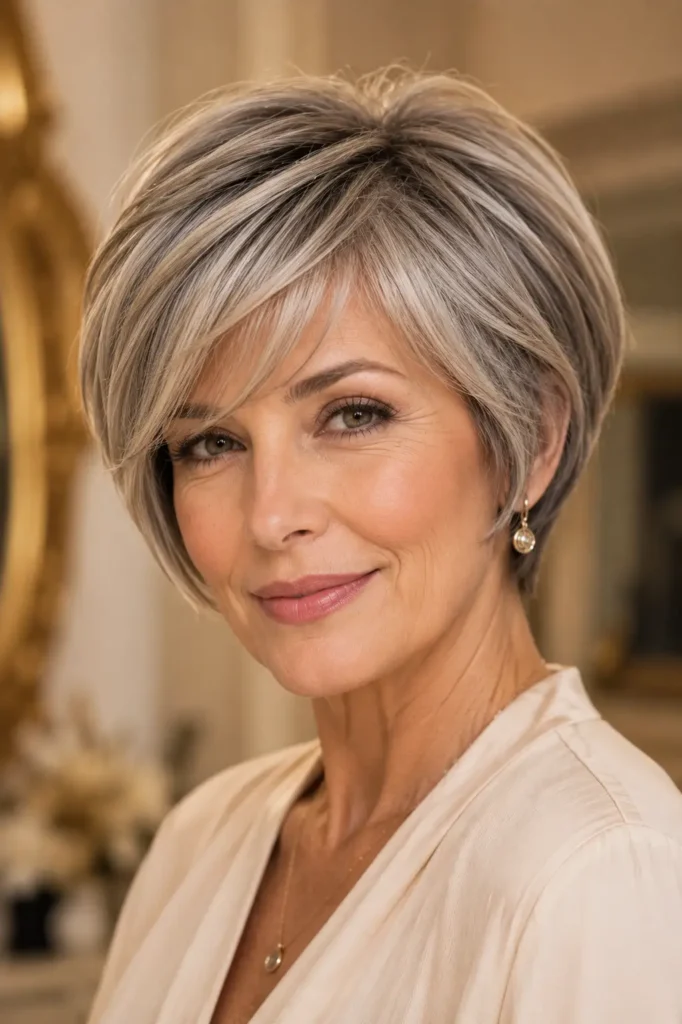
As hair gets finer with age, harsh or geometric cuts can look too severe. A softer pixie bob uses gradual layering and slightly longer lengths to create shape without hard lines. The result is polished without being rigid, and it frames the face in a way that suits mature features well.
Ask for: soft layering, face-framing pieces at the cheeks, slightly longer fringe, rounded nape rather than a sharp taper.
14. Pixie bob with root volume technique
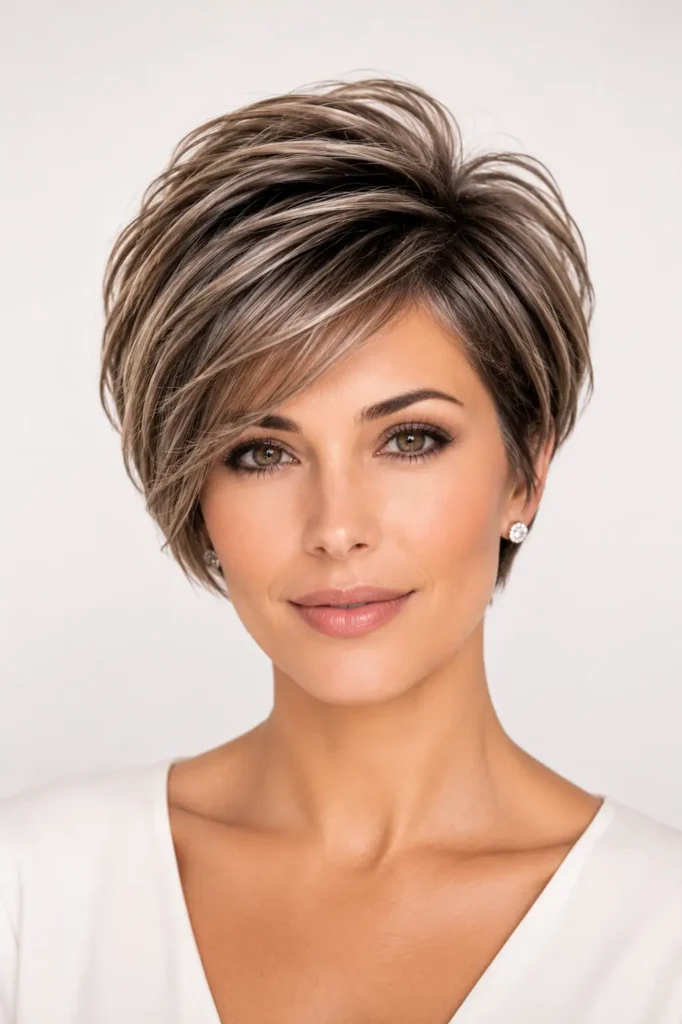
This is less a cut and more a cutting approach — the stylist uses specific techniques (back-combing, elevated cutting angles, root-directed layering) to encourage the hair to stand away from the scalp. The result is a cut that holds volume at the root even without product.
Ask for: elevated cutting angles through the crown, layers cut from root to tip rather than horizontal slices.
15. Two-toned pixie bob
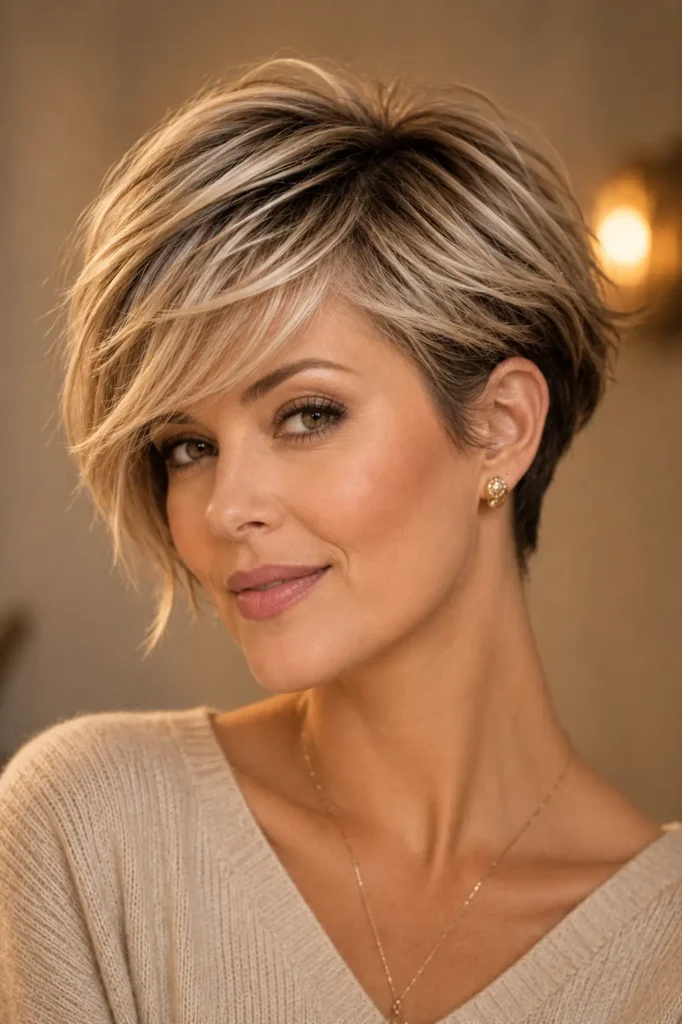
Color can do as much for fine hair as cut. A lighter shade on the top layer and a deeper tone underneath creates the illusion of depth and thickness. The contrast between the two tones makes the hair look like there’s more of it. Balayage or a simple highlight placement works better than a full bleach-out for this.
Ask for: lighter highlights on the top and through the face-framing pieces, deeper base underneath.
16. Pixie bob for straight, fine hair
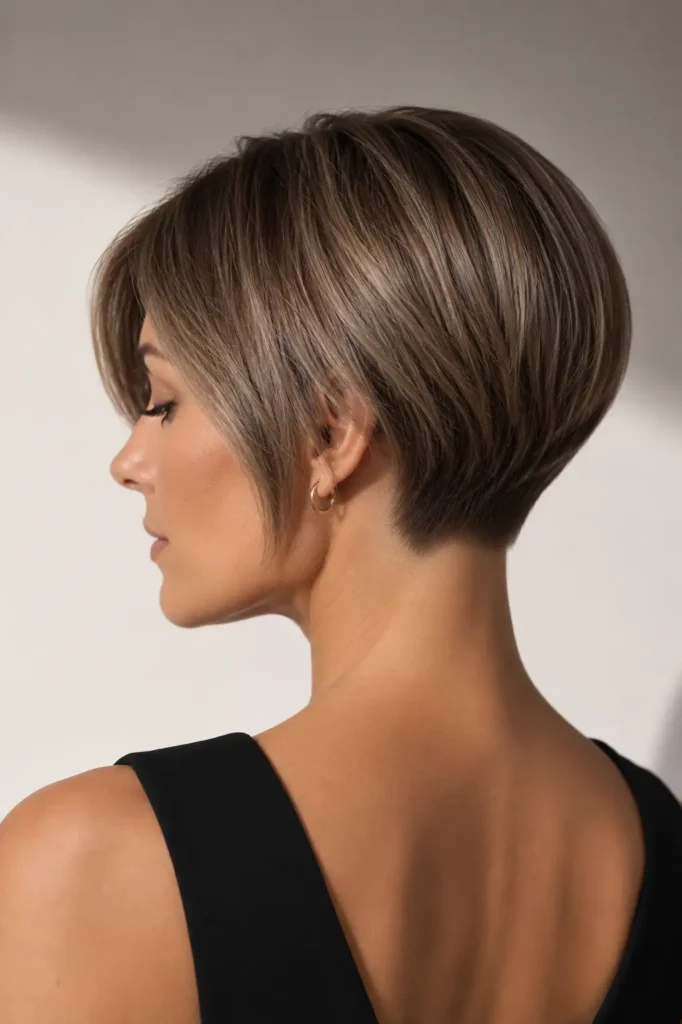
Straight hair with no wave or curl can be the hardest to add volume to. The key here is to cut the layers at a steeper angle and use a razor on the ends to slightly roughen the cuticle, which makes straight strands grip each other better and appear fuller.
Ask for: razor-finished ends, high-elevation layers, possibly a light perimeter graduation.
17. Long pixie bob (lob-adjacent)
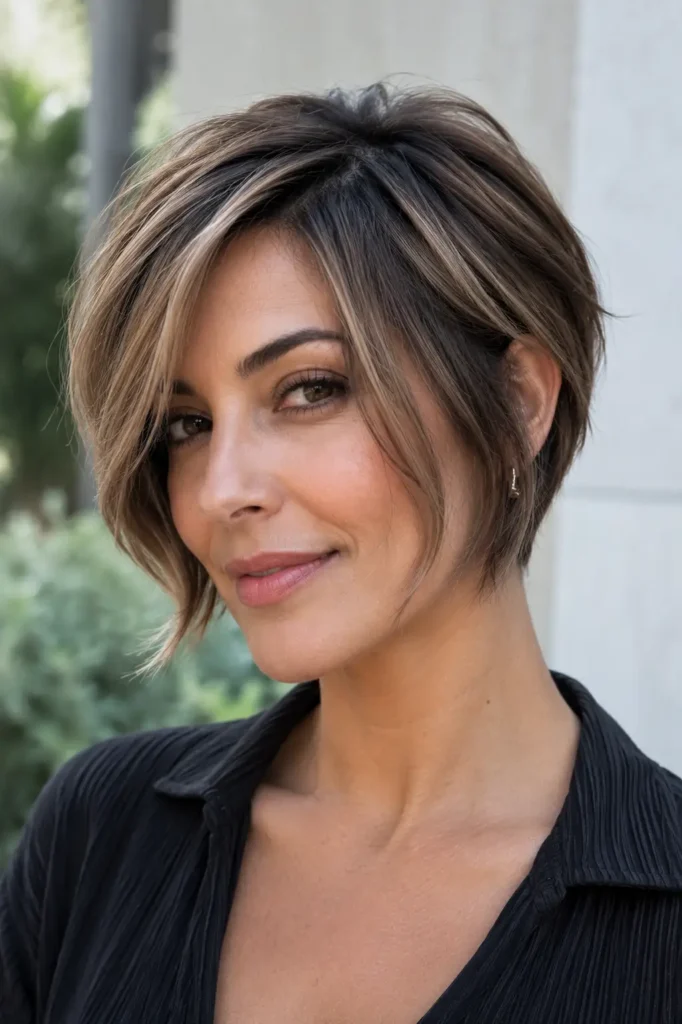
If you’re not ready to go all the way to a short pixie bob, the longer version — sitting at or just below the chin — is a gentler starting point. It still removes the flat, heavy length from the back but keeps enough length in front to ease the transition.
Ask for: chin-length front pieces, cropped or tapered back, interior layers for movement.
18. Retro-inspired pixie bob
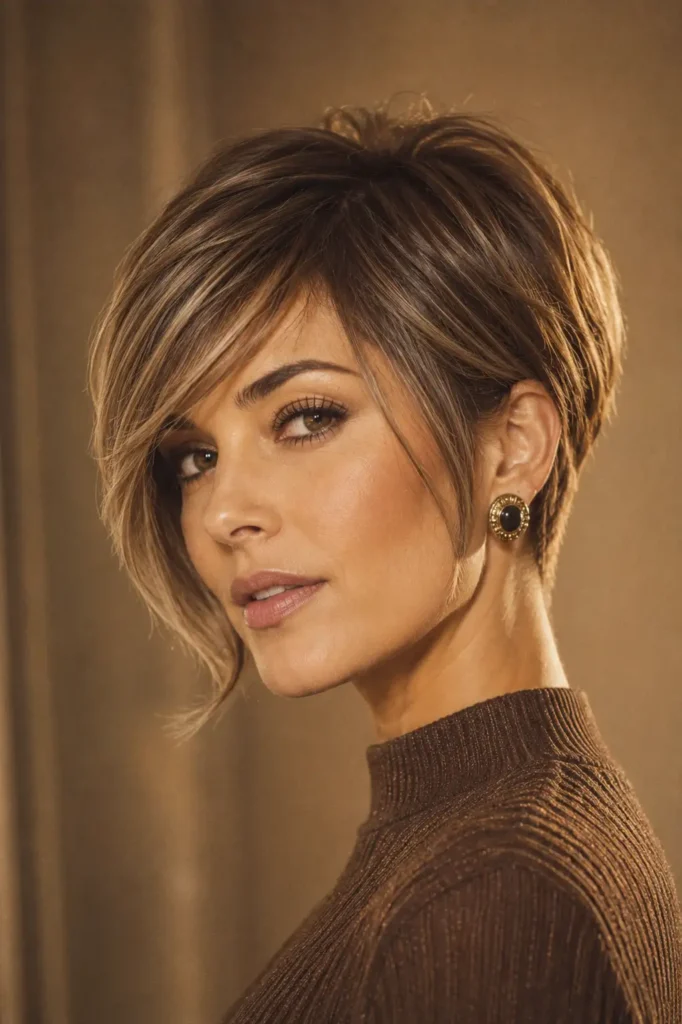
60s and 70s cuts often featured close crops at the nape with longer, swept lengths at the temples and cheeks. These shapes work naturally with fine hair because the weight is distributed toward the front of the head rather than hanging from the crown.
Ask for: close-cropped back, longer cheekbone-grazing side pieces, center-parted or swept fringe.
19. Tousled bedhead pixie bob
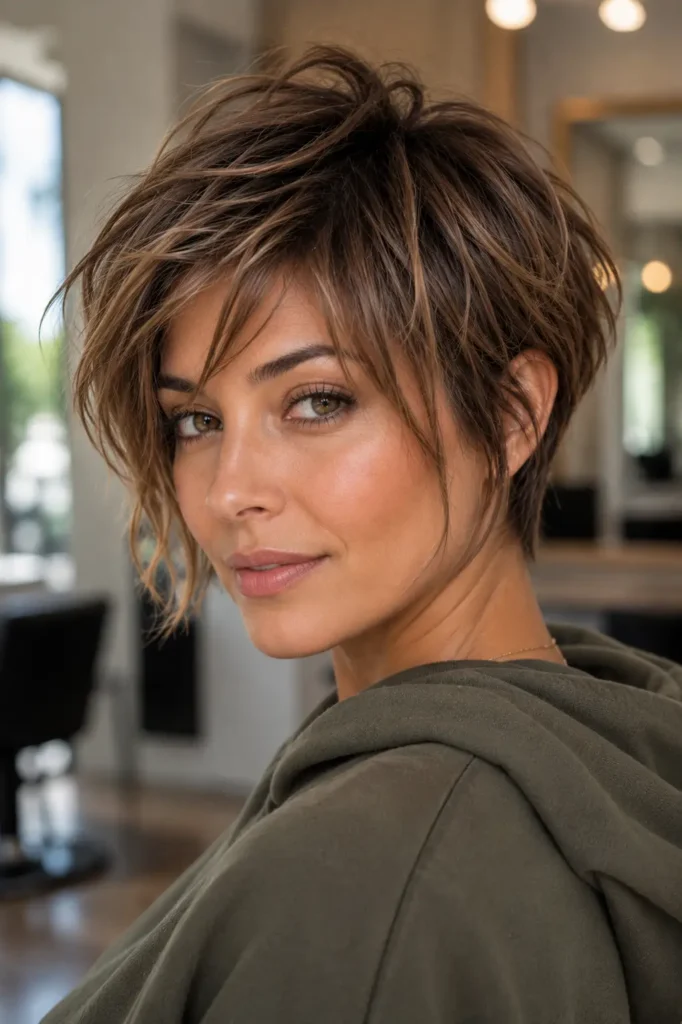
The lived-in, slightly messy look is not just a style preference — it’s actually easier to maintain with thin hair than a polished, sleek look. A tousled pixie bob uses piecy, separated texture to look intentionally effortless, and a small amount of matte paste or wax holds it without making strands look stringy.
Ask for: heavily point-cut ends, face-framing pieces, relaxed layering throughout.
20. Voluminous crown pixie bob
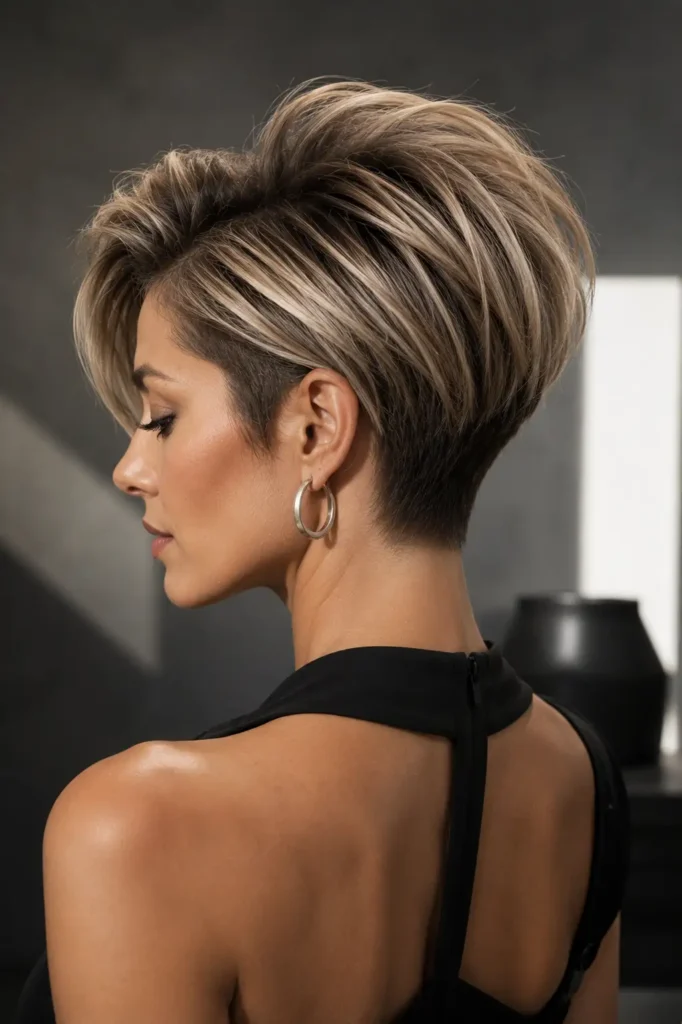
This cut puts all the emphasis on the crown, with shorter sides and a longer, lifted top section. When the top is styled upward and the sides sit close, the proportion creates a taller, fuller-looking silhouette — similar to what a round brush blowout does, but built into the haircut itself.
Ask for: shorter sides (can be clipped or tapered), longer and heavily layered crown, disconnection between sections.
21. The grown-out pixie bob
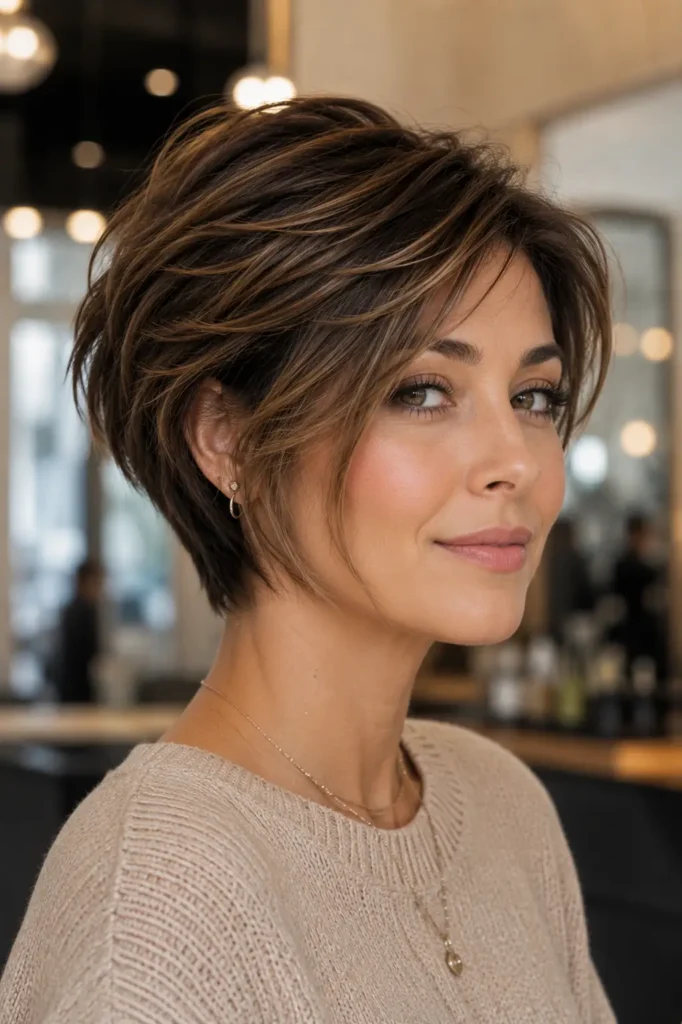
Growing out a pixie doesn’t have to look awkward. A skilled stylist can shape a growing pixie into a proper pixie bob with a few small cuts that redirect the growth. This is worth knowing if you’re on the fence — committing to a short cut doesn’t mean being locked into it. The grow-out stage can look just as intentional.
Ask for: reshaping through the nape to clean up the silhouette, light trimming at the sides to control bulk as it grows, regular trims every 6–8 weeks during the grow-out process.
Which pixie bob works for your face shape?
No face shape rules out a pixie bob — but matching the cut to your features makes the difference between a haircut that just works and one that genuinely suits you.
• Oval faces: most styles on this list work well. Asymmetric and A-line cuts are particularly flattering.
• Round faces: go for cuts with height at the crown (styles 7, 20) and avoid heavy, full fringes that add width across the forehead.
• Square faces: softer cuts (styles 3, 5, 11, 13) with wispy or curtain fringes help soften the jawline.
• Heart faces: longer front pieces that graze the chin balance a wider forehead. Styles 2 and 17 work especially well.
• Long faces: avoid very tall, volumized crown styles. A slightly fuller, side-swept look (styles 3, 8) adds width.
Styling tips that make a real difference
The cut does a lot of the work, but how you style it matters too. Three things have made the biggest difference for my clients with fine hair:
Blow-dry with your head flipped forward. This simple change lifts the roots away from the scalp while drying, setting them in a lifted position that lasts far longer than drying upright.
Use a volumizing mousse at the roots before you dry, not a spray. Mousse coats the root area more thoroughly and tends to give longer-lasting lift. Apply it when the hair is damp, not soaking wet.
Avoid heavy oils or serums on the roots. They weigh fine hair down almost instantly. If you want to use a smoothing product, apply it from mid-shaft to ends only.
For the textured, piecy styles further up the list, a small amount of matte paste (not pomade — too heavy) gives separation without looking greasy. Warm it between your fingers first, then work it through the ends in quick, light passes.
Questions to ask yourself before booking the appointment
What’s your morning routine actually like? Some of these cuts (like the voluminous crown style or the wavy pixie bob) take a few extra minutes to style. Others, like the choppy textured styles, are genuinely wash-and-go. Be honest with yourself about how much time you have.
How do you feel about regular trims? Short cuts grow out quickly and start to lose their shape within 6–8 weeks. If you can’t commit to that maintenance schedule, lean toward the longer styles (17, 18) that give you more room between appointments.
Have you had any kind of short hair before? If not, starting with a longer pixie bob (style 17) gives you a feel for short hair without the full commitment. You can always go shorter at the next appointment once you know you like it.
What to tell your stylist
Most stylists appreciate specifics over vague requests. Instead of saying “I want a pixie bob,” come in with a reference photo (or two — one showing the length you want, one showing the texture) and be ready to describe what you like about each one.
Also tell them what your hair actually does. Is it fine and straight? Fine with a slight wave that goes frizzy in humidity? Thin overall but with some coarser pieces at the nape? That information changes how they’ll approach the cut.
Ask them to explain the layering technique before they start. Any stylist who works with fine hair regularly will have a clear approach. If they start talking about bulk removal or thinning shears before layering, that’s a flag — thinning shears remove volume, which is the last thing thin hair needs.
Final thoughts
Thin hair gets a lot of unsolicited advice — avoid short cuts, stick to longer lengths to fake volume, don’t go too choppy. Most of that advice is wrong, or at least overly cautious. A well-executed pixie bob does more for thin hair than almost any long or medium-length style can.
The 21 cuts above cover a wide range of lengths, textures, and face shapes. Pick two or three that appeal to you, bring reference photos to your appointment, and have a real conversation with your stylist about what’s achievable with your specific hair. That conversation matters as much as the style you choose.
If you’re not sure where to start, the classic textured pixie bob (style 1) or the layered A-line (style 2) are the most versatile options. Both work on nearly every texture and face shape, both photograph well, and both have enough variation in how they can be finished that your stylist can personalize them easily.

Sarah Williams
Hi, I’m Sarah Williams — the founder of HerStyleNest, where beauty meets modern style. I share trendy hairstyles, chic nail designs, and fashion inspiration for women who love staying stylish every season. From everyday elegance to viral beauty trends, HerStyleNest is your go-to destination for effortless fashion and beauty ideas.